A ‘buttery’ mouthfeel or ‘meadow grass’ notes? How Australian olive oils rank against other supermarket options
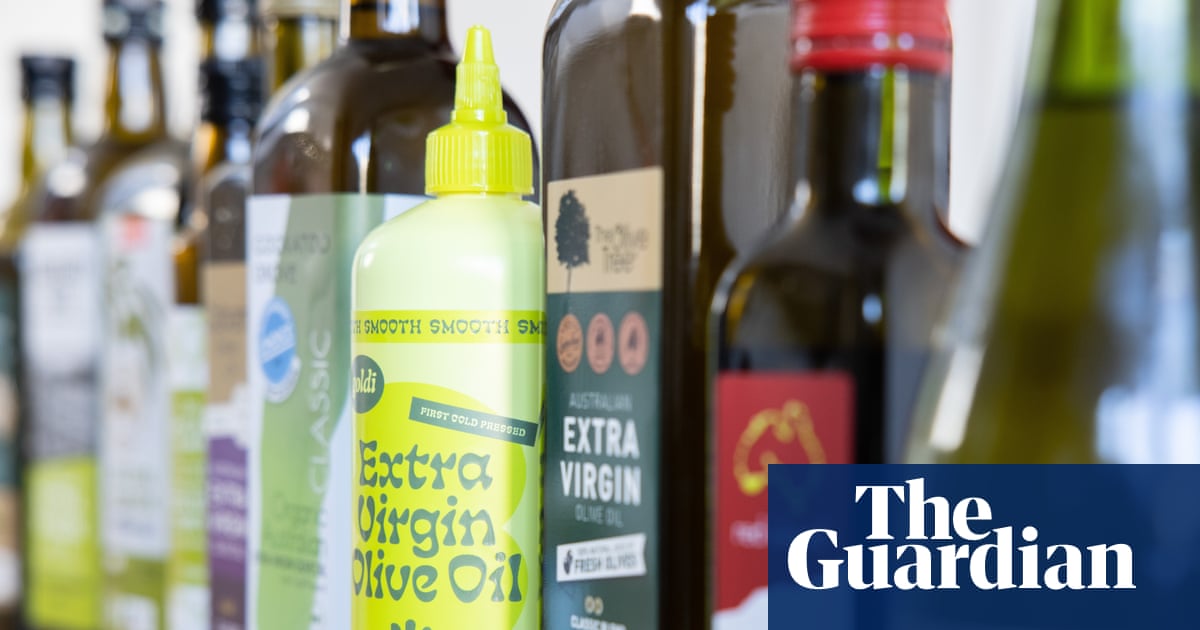
Consumer advocacy group Choice has taste tested 30 supermarket extra-virgin olive oils, and found some Australian-made oils rank higher than those imported from Italy and Spain.
“A lot of Australians are after local products, and there are a lot of Australian olive oil makers that have built quite a good reputation,” Pru Engel, Choice audience and engagement editor, said.
Australian label Cobram Extra Virgin Classic – one of the more expensive products on the list at $25 – landed third place with a score of 80, and was described as having “fruity herbaceous aromas” with a “buttery” mouthfeel by testers.
The top spot went to Italian brand Monini Classico extra virgin olive oil with a score of 88%. Costing $2.93 per 100mL and $22 for a 750mL bottle, testers described it as an “elegant and abundant oil”.
The second-best went to another Italian brand, Villa Rossi Extra Virgin Olive Oil. Testers noted it has a “good length of persistence with balanced bitterness and pungency”, though the product was the most expensive oil in the lineup with a price tag of $35 for a one-litre bottle, or $3.50 per 100mL.
The average price of recommended oils sits at roughly $22 rank. Woolworths Spanish Extra Virgin Olive Oil was named Choice’s best value pick, with a score of 78, and priced at $9 per 500mL bottle, or $1.80 per 100mL. Testers described its “native mint and some meadow grass” notes and “nice balanced bitterness and pungency.”
The olive oils were blind tested at NSW Department of Primary Industries laboratories in Wagga Wagga. Engel said the judging panel was specifically looking for “purity and freshness”, as well as fruitiness and pungency.
One of the cheapest oils was also the worst, according to Choice. Aldi Oh So Natural Organic Extra Virgin Olive Oil, priced at $8.99 per 500ml bottle or $1.80 per 100mL, received the bottom score of 60%, with testers describing the product as having a “low intensity of flavour”. The second- and third-worst oils were the Monini Organic Premium Selection Extra Virgin Olive Oil and Coles Australian Extra Virgin Oil respectively, with scores of 65% and 66%.
Speaking generally, Choice’s product review manager, Chris Barnes, said that the components of a “bad” olive oil includes having “basic” flavours and a lack of boldness.
“There is actually a specific standard when it comes to professional taste testing extra virgin olive oil … there’s chemical tests plus a specific taste test and sensory perception test, which is why we used the lab.”
Of all the 13 oils that Choice scored 76% and above, seven came from Australia, three were made in Italy, and the remaining three came from Spain – the largest producer of olive oil globally.
To make the most of a bottle of the prized elixir, Engel recommends looking out for bottles that tend to be darker and opaque, to prevent light “degrading” the oil’s quality.
“When storing olive oil, it should always be in a cool, dark place like your pantry. Don’t refrigerate it.
“A lot of people buy a big bottle of olive oil and then decant them into smaller bottles, and if you’re going to do that just ensure you are using airtight containers to avoid any contact with air or sunlight.”
As for colour, Barnes recommends not getting too swept up on whether an oil has more of a green or golden appearance, as it may “sway your perception” of its quality and natural colourway. Instead, he said to focus on “taste and mouthfeel”.
“Fruitiness, pungency, peppery characteristics, that sort of thing, should always be present in a good extra virgin olive oil.”
Read the full story at The Guardian ↗
Choice, a consumer advocacy organisation, conducted blind taste tests of 30 supermarket extra-virgin olive oils using laboratories at NSW Department of Primary Industries in Wagga Wagga. The tests evaluated purity, freshness, fruitiness and pungency. Italian brand Monini Classico achieved the highest score of 88%, followed by Villa Rossi also from Italy at the second position. Australian label Cobram Extra Virgin Classic placed third with a score of 80. Among the 13 oils scoring 76% or above, seven were Australian-made, three Italian and three Spanish. Woolworths Spanish Extra Virgin Olive Oil was identified as offering the best value at $1.80 per 100mL with a score of 78. Aldi Oh So Natural Organic Extra Virgin Olive Oil received the lowest score of 60%. Storage recommendations include keeping oils in dark, cool containers away from light and air exposure, and prioritising taste and mouthfeel characteristics such as fruitiness and pungency over visual colour when selecting oils.
Read the full story at The Guardian ↗
Consumer advocacy group Choice has taste tested 30 supermarket extra-virgin olive oils, and found some Australian-made oils rank higher than those imported from Italy and Spain.
“A lot of Australians are after local products, and there are a lot of Australian olive oil makers that have built quite a good reputation,” Pru Engel, Choice audience and engagement editor, said.
Australian label Cobram Extra Virgin Classic – one of the more expensive products on the list at $25 – landed third place with a score of 80, and was described as having “fruity herbaceous aromas” with a “buttery” mouthfeel by testers.
The top spot went to Italian brand Monini Classico extra virgin olive oil with a score of 88%. Costing $2.93 per 100mL and $22 for a 750mL bottle, testers described it as an “elegant and abundant oil”.
The second-best went to another Italian brand, Villa Rossi Extra Virgin Olive Oil. Testers noted it has a “good length of persistence with balanced bitterness and pungency”, though the product was the most expensive oil in the lineup with a price tag of $35 for a one-litre bottle, or $3.50 per 100mL.
The average price of recommended oils sits at roughly $22 rank. Woolworths Spanish Extra Virgin Olive Oil was named Choice’s best value pick, with a score of 78, and priced at $9 per 500mL bottle, or $1.80 per 100mL. Testers described its “native mint and some meadow grass” notes and “nice balanced bitterness and pungency.”
The olive oils were blind tested at NSW Department of Primary Industries laboratories in Wagga Wagga. Engel said the judging panel was specifically looking for “purity and freshness”, as well as fruitiness and pungency.
One of the cheapest oils was also the worst, according to Choice. Aldi Oh So Natural Organic Extra Virgin Olive Oil, priced at $8.99 per 500ml bottle or $1.80 per 100mL, received the bottom score of 60%, with testers describing the product as having a “low intensity of flavour”. The second- and third-worst oils were the Monini Organic Premium Selection Extra Virgin Olive Oil and Coles Australian Extra Virgin Oil respectively, with scores of 65% and 66%.
Speaking generally, Choice’s product review manager, Chris Barnes, said that the components of a “bad” olive oil includes having “basic” flavours and a lack of boldness.
“There is actually a specific standard when it comes to professional taste testing extra virgin olive oil … there’s chemical tests plus a specific taste test and sensory perception test, which is why we used the lab.”
Of all the 13 oils that Choice scored 76% and above, seven came from Australia, three were made in Italy, and the remaining three came from Spain – the largest producer of olive oil globally.
To make the most of a bottle of the prized elixir, Engel recommends looking out for bottles that tend to be darker and opaque, to prevent light “degrading” the oil’s quality.
“When storing olive oil, it should always be in a cool, dark place like your pantry. Don’t refrigerate it.
“A lot of people buy a big bottle of olive oil and then decant them into smaller bottles, and if you’re going to do that just ensure you are using airtight containers to avoid any contact with air or sunlight.”
As for colour, Barnes recommends not getting too swept up on whether an oil has more of a green or golden appearance, as it may “sway your perception” of its quality and natural colourway. Instead, he said to focus on “taste and mouthfeel”.
“Fruitiness, pungency, peppery characteristics, that sort of thing, should always be present in a good extra virgin olive oil.”
Read the full story at The Guardian ↗
Choice blind-tested 30 supermarket extra-virgin olive oils at NSW Department of Primary Industries laboratories Monini Classico (Italy) scored 88%, Villa Rossi (Italy) scored second, Cobram Extra Virgin Classic (Australia) scored 80% Of 13 oils scoring 76% or above, seven were Australian, three Italian and three Spanish Woolworths Spanish Extra Virgin Olive Oil was the best value option at $1.80 per 100mL with a score of 78 Aldi Oh So Natural Organic Extra Virgin Olive Oil scored the lowest at 60% Taste tests evaluated purity, freshness, fruitiness and pungency Oils should be stored in dark, opaque bottles in cool places rather than refrigerated Colour appearance may sway perception and should not be the primary factor in selection Fruitiness, pungency and peppery characteristics should always be present in good extra-virgin olive oil
Read the full story at The Guardian ↗
- Consumer group Choice blind-tested 30 supermarket extra-virgin olive oils; Italian Monini Classico ranked first (88%), Australian Cobram Extra Virgin Classic third (80%)
- Of 13 top-scoring oils (76%+), seven were Australian, three Italian, three Spanish
- Best-value pick: Woolworths Spanish oil at $1.80/100mL (score 78); worst performer: Aldi Oh So Natural at $1.80/100mL (score 60%)
- Taste tests evaluated purity, freshness, fruitiness and pungency using NSW Department of Primary Industries lab facilities
- Storage in cool, dark containers and focus on taste over colour preserve oil quality better than light exposure or visual assessment alone