A ‘shiny, dangling carrot’ lured Jesse into gambling. He says Labor’s reform won’t stop others being sucked in
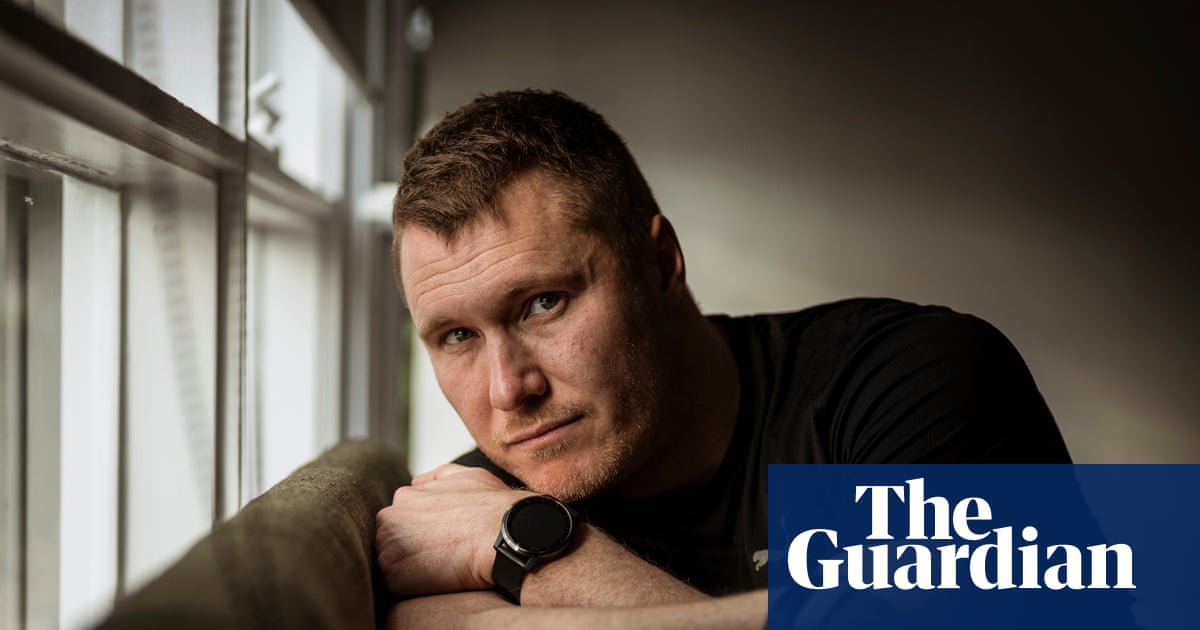
Jesse Murphy wasn’t sure what to wear when his VIP gambling manager texted him: “Looking forward to having a beer with you!”
His frequent betting had just earned the then 25-year-old free tickets to a gambling company’s corporate box at the footy with free food and alcohol. His handler was waiting for him. He told Murphy to wear a shirt before joining for drinks.
Between 2019 and 2024, these events became a regular fixture. Sometimes, it was an “all inclusive lunch and drinks throughout the afternoon”. Occasionally, they would ask him which bar the VIPs should meet at and promise “a great night”. But mostly, it was free tickets to the AFL and horse racing.
“I felt like I needed to continually keep in touch with him so I wouldn’t lose access to the benefits and offers I was receiving,” says Murphy, who hasn’t placed a bet in almost two years.
Text messages over a five-year period show VIP managers would routinely place bonus bets into Murphy’s account without asking. When he was running out of money and asked for free bets, or for bookies to match his deposits, he would get the same answer: “sorted mate”.
When Murphy texted saying he’d “had another shit week” gambling and “might have to give it up soon”, his minder sent him a link to a responsible gambling tool – but immediately supplied him with more bonus bets.
“Just added some love for you mate,” one VIP manager said.
18 March 2024
Jesse Hey mate, what bonuses are available to me after a big turnover yesterday? Have a good day ✌🏼
VIP manager Sorted for you mate, may be able to do more later today as well
Jesse Thanks mate, I blew it. But just deposited 1500 if you want to match that with whatever
VIP manager Sorted mate
20 March 2024
Jesse What have ya got for me man after the last few days
VIP manager Just added some love for you mate
Jesse Thanks bro!
VIP manager All good
By the time he eventually quit, one company had sent him $43,700 in bonus bets in just over two years. It wasn’t until he stopped gambling that the generosity disappeared. The free tickets, drinks and food dried up, too.
“I’m sure that will change back if you continue betting with [us],” his VIP manager said.
Murphy shared his experience of placing more than 15,000 bets worth nearly $1m with a parliamentary inquiry led by the late Labor MP Peta Murphy (no relation to Jesse Murphy). Its bipartisan recommendation in June 2023 was a total ban on inducements “without delay”.
This week, the Albanese government ignored that recommendation, instead placing limited restrictions on the marketing of inducements. The final form of the contentious bill – which passed the Senate on Wednesday night – will not include a ban on VIP managers rewarding gamblers with free gifts that disappear when their bets do.
The communications minister, Anika Wells, says the government will stop “the most toxic” form of inducements. But critics says the changes are just “window dressing”, “minor tweaks” and “piecemeal amendments”.
Murphy is also unconvinced.
“If these laws were in place at the start of my journey, I have no confidence they would have made my experience any different or any easier,” he says.
One of the government’s changes requires gambling companies to identify “high risk” customers and bans them from being pushed inducements. The industry will be consulted on what “high risk” means and monitor this themselves.
One Liberal MP who crossed the floor to vote against the bill, Andrew Wallace, says this is like putting “Dracula in charge of the blood bank”. It’s a criticism strongly rejected by industry lobbyists, who say they’re already tightly regulated and legally compelled to limit harm.
The Northern Territory government, which regulates most online bookmakers, already bans them from sending inducements to people showing signs of distress. But this hasn’t stopped the flow of inducements, including to a man who “binge gambled” $40,000 in an 11-hour session and was assigned a VIP manager.
“Bad actors are already ignoring these laws in the Northern Territory,” said one senior gambling insider unable to comment publicly.
In May, lawyers for Australia’s biggest gambling companies appeared at a coronial inquest into the death of Kyle Hudson. The Melbourne man had gambled $895,733 online in the four years from his 18th birthday to the day he took his own life.
The inquest was told that Hudson was repeatedly drawn back into gambling by inducements. From the time he opened his account until the day he died, he received 489 inducements. The companies said he was “betting within limits” and that he never met their highest risk threshold.
Associate professor Sean Cowlishaw, an expert in gambling harm who was called to give evidence in the inquest, said the government’s changes to inducements were a small improvement but ultimately weak.
“I don’t think the changes are going to make any substantive difference to most people in terms of reducing harms, including suicide risks,” Cowlishaw says. “I just can’t believe they haven’t gone harder on inducements, it was such low hanging fruit for them.”
His frustration is shared by Kate, whose name has been withheld for privacy reasons. Her 24-year-old brother ended his life in the middle of a crippling gambling addiction. Kate has appeared before two parliamentary inquiries into gambling and addressed politicians in Canberra, urging them to adopt the Murphy review’s recommendations.
She says her brother complained to her about receiving inducements that encouraged him to keep gambling. His suicide note, tendered to parliament, said he was “pathologically addicted to gambling and cannot get myself to stop”.
“This bill doesn’t touch the surface,” Kate says.
When Mark Kempster confronted his gambling addiction – which led to him losing $100,000 and accessing his superannuation – he listed himself on a self-exclusion register. Gambling companies were banned from contacting him, but they still did.
One of the changes introduced by the government will stop gambling companies from sending inducements to people within 14 days of their account being created, or within 90 days of coming off the national self-exclusion register, BetStop.
While this change has been welcomed by some experts, Kempster, who works for the Alliance for Gambling Reform, says it “will do absolutely nothing to stop the companies from preying on people”.
“Why are these inducements suddenly safe for people to receive on day 15?” says Kempster.
VIP managers will now be banned from receiving a commission from their clients’ activity. Many major bookmakers ended this practice years ago, although it is still employed by smaller operators.
In parliament, the prime minister said the changes would “meaningfully increase protections for those who most need it”.
“This legislation, across the board, will make an enormous difference,” Anthony Albanese said.
In his Frankston home, Murphy worries the government’s changes – presented as “the most significant reforms to online gambling in Australia’s history” – won’t stop another generation of young men falling into addiction.
He says inducements should have been banned, as recommended by the bipartisan inquiry.
“It would take away the shiny, dangling carrot that lures us in beyond our control,” Murphy says. “For me, that would have been a real sign that people were being put first.”
Those pushing for tougher laws fear the government’s appetite for further reforms will be nonexistent once these changes pass the Senate.
As he waits for the coroner to deliver findings into Hudson’s death and the behaviour of gambling companies, Cowlishaw agrees.
“If this is the response, it’s going to delay significant reforms for potentially another generation,” he says.
“This was the opportunity to do something proportional to the risk.”
Read the full story at The Guardian ↗ · The Guardian ↗ · The Guardian ↗
The government says it’s stopping ‘the most toxic’ gambling company strategies. Former addicts say it will do ‘absolutely nothing’. Get our breaking news email , free app or daily…
This lens runs the verified story through Cinnamon's AI — wired in the next step.
Jesse Murphy wasn’t sure what to wear when his VIP gambling manager texted him: “Looking forward to having a beer with you!”
His frequent betting had just earned the then 25-year-old free tickets to a gambling company’s corporate box at the footy with free food and alcohol. His handler was waiting for him. He told Murphy to wear a shirt before joining for drinks.
Between 2019 and 2024, these events became a regular fixture. Sometimes, it was an “all inclusive lunch and drinks throughout the afternoon”. Occasionally, they would ask him which bar the VIPs should meet at and promise “a great night”. But mostly, it was free tickets to the AFL and horse racing.
“I felt like I needed to continually keep in touch with him so I wouldn’t lose access to the benefits and offers I was receiving,” says Murphy, who hasn’t placed a bet in almost two years.
Text messages over a five-year period show VIP managers would routinely place bonus bets into Murphy’s account without asking. When he was running out of money and asked for free bets, or for bookies to match his deposits, he would get the same answer: “sorted mate”.
When Murphy texted saying he’d “had another shit week” gambling and “might have to give it up soon”, his minder sent him a link to a responsible gambling tool – but immediately supplied him with more bonus bets.
“Just added some love for you mate,” one VIP manager said.
18 March 2024
Jesse Hey mate, what bonuses are available to me after a big turnover yesterday? Have a good day ✌🏼
VIP manager Sorted for you mate, may be able to do more later today as well
Jesse Thanks mate, I blew it. But just deposited 1500 if you want to match that with whatever
VIP manager Sorted mate
20 March 2024
Jesse What have ya got for me man after the last few days
VIP manager Just added some love for you mate
Jesse Thanks bro!
VIP manager All good
By the time he eventually quit, one company had sent him $43,700 in bonus bets in just over two years. It wasn’t until he stopped gambling that the generosity disappeared. The free tickets, drinks and food dried up, too.
“I’m sure that will change back if you continue betting with [us],” his VIP manager said.
Murphy shared his experience of placing more than 15,000 bets worth nearly $1m with a parliamentary inquiry led by the late Labor MP Peta Murphy (no relation to Jesse Murphy). Its bipartisan recommendation in June 2023 was a total ban on inducements “without delay”.
This week, the Albanese government ignored that recommendation, instead placing limited restrictions on the marketing of inducements. The final form of the contentious bill – which passed the Senate on Wednesday night – will not include a ban on VIP managers rewarding gamblers with free gifts that disappear when their bets do.
The communications minister, Anika Wells, says the government will stop “the most toxic” form of inducements. But critics says the changes are just “window dressing”, “minor tweaks” and “piecemeal amendments”.
Murphy is also unconvinced.
“If these laws were in place at the start of my journey, I have no confidence they would have made my experience any different or any easier,” he says.
One of the government’s changes requires gambling companies to identify “high risk” customers and bans them from being pushed inducements. The industry will be consulted on what “high risk” means and monitor this themselves.
One Liberal MP who crossed the floor to vote against the bill, Andrew Wallace, says this is like putting “Dracula in charge of the blood bank”. It’s a criticism strongly rejected by industry lobbyists, who say they’re already tightly regulated and legally compelled to limit harm.
The Northern Territory government, which regulates most online bookmakers, already bans them from sending inducements to people showing signs of distress. But this hasn’t stopped the flow of inducements, including to a man who “binge gambled” $40,000 in an 11-hour session and was assigned a VIP manager.
“Bad actors are already ignoring these laws in the Northern Territory,” said one senior gambling insider unable to comment publicly.
In May, lawyers for Australia’s biggest gambling companies appeared at a coronial inquest into the death of Kyle Hudson. The Melbourne man had gambled $895,733 online in the four years from his 18th birthday to the day he took his own life.
The inquest was told that Hudson was repeatedly drawn back into gambling by inducements. From the time he opened his account until the day he died, he received 489 inducements. The companies said he was “betting within limits” and that he never met their highest risk threshold.
Associate professor Sean Cowlishaw, an expert in gambling harm who was called to give evidence in the inquest, said the government’s changes to inducements were a small improvement but ultimately weak.
“I don’t think the changes are going to make any substantive difference to most people in terms of reducing harms, including suicide risks,” Cowlishaw says. “I just can’t believe they haven’t gone harder on inducements, it was such low hanging fruit for them.”
His frustration is shared by Kate, whose name has been withheld for privacy reasons. Her 24-year-old brother ended his life in the middle of a crippling gambling addiction. Kate has appeared before two parliamentary inquiries into gambling and addressed politicians in Canberra, urging them to adopt the Murphy review’s recommendations.
She says her brother complained to her about receiving inducements that encouraged him to keep gambling. His suicide note, tendered to parliament, said he was “pathologically addicted to gambling and cannot get myself to stop”.
“This bill doesn’t touch the surface,” Kate says.
When Mark Kempster confronted his gambling addiction – which led to him losing $100,000 and accessing his superannuation – he listed himself on a self-exclusion register. Gambling companies were banned from contacting him, but they still did.
One of the changes introduced by the government will stop gambling companies from sending inducements to people within 14 days of their account being created, or within 90 days of coming off the national self-exclusion register, BetStop.
While this change has been welcomed by some experts, Kempster, who works for the Alliance for Gambling Reform, says it “will do absolutely nothing to stop the companies from preying on people”.
“Why are these inducements suddenly safe for people to receive on day 15?” says Kempster.
VIP managers will now be banned from receiving a commission from their clients’ activity. Many major bookmakers ended this practice years ago, although it is still employed by smaller operators.
In parliament, the prime minister said the changes would “meaningfully increase protections for those who most need it”.
“This legislation, across the board, will make an enormous difference,” Anthony Albanese said.
In his Frankston home, Murphy worries the government’s changes – presented as “the most significant reforms to online gambling in Australia’s history” – won’t stop another generation of young men falling into addiction.
He says inducements should have been banned, as recommended by the bipartisan inquiry.
“It would take away the shiny, dangling carrot that lures us in beyond our control,” Murphy says. “For me, that would have been a real sign that people were being put first.”
Those pushing for tougher laws fear the government’s appetite for further reforms will be nonexistent once these changes pass the Senate.
As he waits for the coroner to deliver findings into Hudson’s death and the behaviour of gambling companies, Cowlishaw agrees.
“If this is the response, it’s going to delay significant reforms for potentially another generation,” he says.
“This was the opportunity to do something proportional to the risk.”
Read the full story at The Guardian ↗ · The Guardian ↗ · The Guardian ↗
Jesse Murphy wasn’t sure what to wear when his VIP gambling manager texted him: “Looking forward to having a beer with you!”
His frequent betting had just earned the then 25-year-old free tickets to a gambling company’s corporate box at the footy with free food and alcohol. His handler was waiting for him. He told Murphy to wear a shirt before joining for drinks.
Between 2019 and 2024, these events became a regular fixture. Sometimes, it was an “all inclusive lunch and drinks throughout the afternoon”. Occasionally, they would ask him which bar the VIPs should meet at and promise “a great night”. But mostly, it was free tickets to the AFL and horse racing.
“I felt like I needed to continually keep in touch with him so I wouldn’t lose access to the benefits and offers I was receiving,” says Murphy, who hasn’t placed a bet in almost two years.
Text messages over a five-year period show VIP managers would routinely place bonus bets into Murphy’s account without asking. When he was running out of money and asked for free bets, or for bookies to match his deposits, he would get the same answer: “sorted mate”.
When Murphy texted saying he’d “had another shit week” gambling and “might have to give it up soon”, his minder sent him a link to a responsible gambling tool – but immediately supplied him with more bonus bets.
“Just added some love for you mate,” one VIP manager said.
18 March 2024
Jesse Hey mate, what bonuses are available to me after a big turnover yesterday? Have a good day ✌🏼
VIP manager Sorted for you mate, may be able to do more later today as well
Jesse Thanks mate, I blew it. But just deposited 1500 if you want to match that with whatever
VIP manager Sorted mate
20 March 2024
Jesse What have ya got for me man after the last few days
VIP manager Just added some love for you mate
Jesse Thanks bro!
VIP manager All good
By the time he eventually quit, one company had sent him $43,700 in bonus bets in just over two years. It wasn’t until he stopped gambling that the generosity disappeared. The free tickets, drinks and food dried up, too.
“I’m sure that will change back if you continue betting with [us],” his VIP manager said.
Murphy shared his experience of placing more than 15,000 bets worth nearly $1m with a parliamentary inquiry led by the late Labor MP Peta Murphy (no relation to Jesse Murphy). Its bipartisan recommendation in June 2023 was a total ban on inducements “without delay”.
This week, the Albanese government ignored that recommendation, instead placing limited restrictions on the marketing of inducements. The final form of the contentious bill – which passed the Senate on Wednesday night – will not include a ban on VIP managers rewarding gamblers with free gifts that disappear when their bets do.
The communications minister, Anika Wells, says the government will stop “the most toxic” form of inducements. But critics says the changes are just “window dressing”, “minor tweaks” and “piecemeal amendments”.
Murphy is also unconvinced.
“If these laws were in place at the start of my journey, I have no confidence they would have made my experience any different or any easier,” he says.
One of the government’s changes requires gambling companies to identify “high risk” customers and bans them from being pushed inducements. The industry will be consulted on what “high risk” means and monitor this themselves.
One Liberal MP who crossed the floor to vote against the bill, Andrew Wallace, says this is like putting “Dracula in charge of the blood bank”. It’s a criticism strongly rejected by industry lobbyists, who say they’re already tightly regulated and legally compelled to limit harm.
The Northern Territory government, which regulates most online bookmakers, already bans them from sending inducements to people showing signs of distress. But this hasn’t stopped the flow of inducements, including to a man who “binge gambled” $40,000 in an 11-hour session and was assigned a VIP manager.
“Bad actors are already ignoring these laws in the Northern Territory,” said one senior gambling insider unable to comment publicly.
In May, lawyers for Australia’s biggest gambling companies appeared at a coronial inquest into the death of Kyle Hudson. The Melbourne man had gambled $895,733 online in the four years from his 18th birthday to the day he took his own life.
The inquest was told that Hudson was repeatedly drawn back into gambling by inducements. From the time he opened his account until the day he died, he received 489 inducements. The companies said he was “betting within limits” and that he never met their highest risk threshold.
Associate professor Sean Cowlishaw, an expert in gambling harm who was called to give evidence in the inquest, said the government’s changes to inducements were a small improvement but ultimately weak.
“I don’t think the changes are going to make any substantive difference to most people in terms of reducing harms, including suicide risks,” Cowlishaw says. “I just can’t believe they haven’t gone harder on inducements, it was such low hanging fruit for them.”
His frustration is shared by Kate, whose name has been withheld for privacy reasons. Her 24-year-old brother ended his life in the middle of a crippling gambling addiction. Kate has appeared before two parliamentary inquiries into gambling and addressed politicians in Canberra, urging them to adopt the Murphy review’s recommendations.
She says her brother complained to her about receiving inducements that encouraged him to keep gambling. His suicide note, tendered to parliament, said he was “pathologically addicted to gambling and cannot get myself to stop”.
“This bill doesn’t touch the surface,” Kate says.
When Mark Kempster confronted his gambling addiction – which led to him losing $100,000 and accessing his superannuation – he listed himself on a self-exclusion register. Gambling companies were banned from contacting him, but they still did.
One of the changes introduced by the government will stop gambling companies from sending inducements to people within 14 days of their account being created, or within 90 days of coming off the national self-exclusion register, BetStop.
While this change has been welcomed by some experts, Kempster, who works for the Alliance for Gambling Reform, says it “will do absolutely nothing to stop the companies from preying on people”.
“Why are these inducements suddenly safe for people to receive on day 15?” says Kempster.
VIP managers will now be banned from receiving a commission from their clients’ activity. Many major bookmakers ended this practice years ago, although it is still employed by smaller operators.
In parliament, the prime minister said the changes would “meaningfully increase protections for those who most need it”.
“This legislation, across the board, will make an enormous difference,” Anthony Albanese said.
In his Frankston home, Murphy worries the government’s changes – presented as “the most significant reforms to online gambling in Australia’s history” – won’t stop another generation of young men falling into addiction.
He says inducements should have been banned, as recommended by the bipartisan inquiry.
“It would take away the shiny, dangling carrot that lures us in beyond our control,” Murphy says. “For me, that would have been a real sign that people were being put first.”
Those pushing for tougher laws fear the government’s appetite for further reforms will be nonexistent once these changes pass the Senate.
As he waits for the coroner to deliver findings into Hudson’s death and the behaviour of gambling companies, Cowlishaw agrees.
“If this is the response, it’s going to delay significant reforms for potentially another generation,” he says.
“This was the opportunity to do something proportional to the risk.”
Read the full story at The Guardian ↗ · The Guardian ↗ · The Guardian ↗
This lens runs the verified story through Cinnamon's AI — wired in the next step.
- The government says it’s stopping ‘the most toxic’ gambling company strategies.
- Former addicts say it will do ‘absolutely nothing’.
- Get our breaking news email , free app or daily…