Abdul El-Sayed welcomes Trump's plan to cut Israel aid, calls for end to arms sales
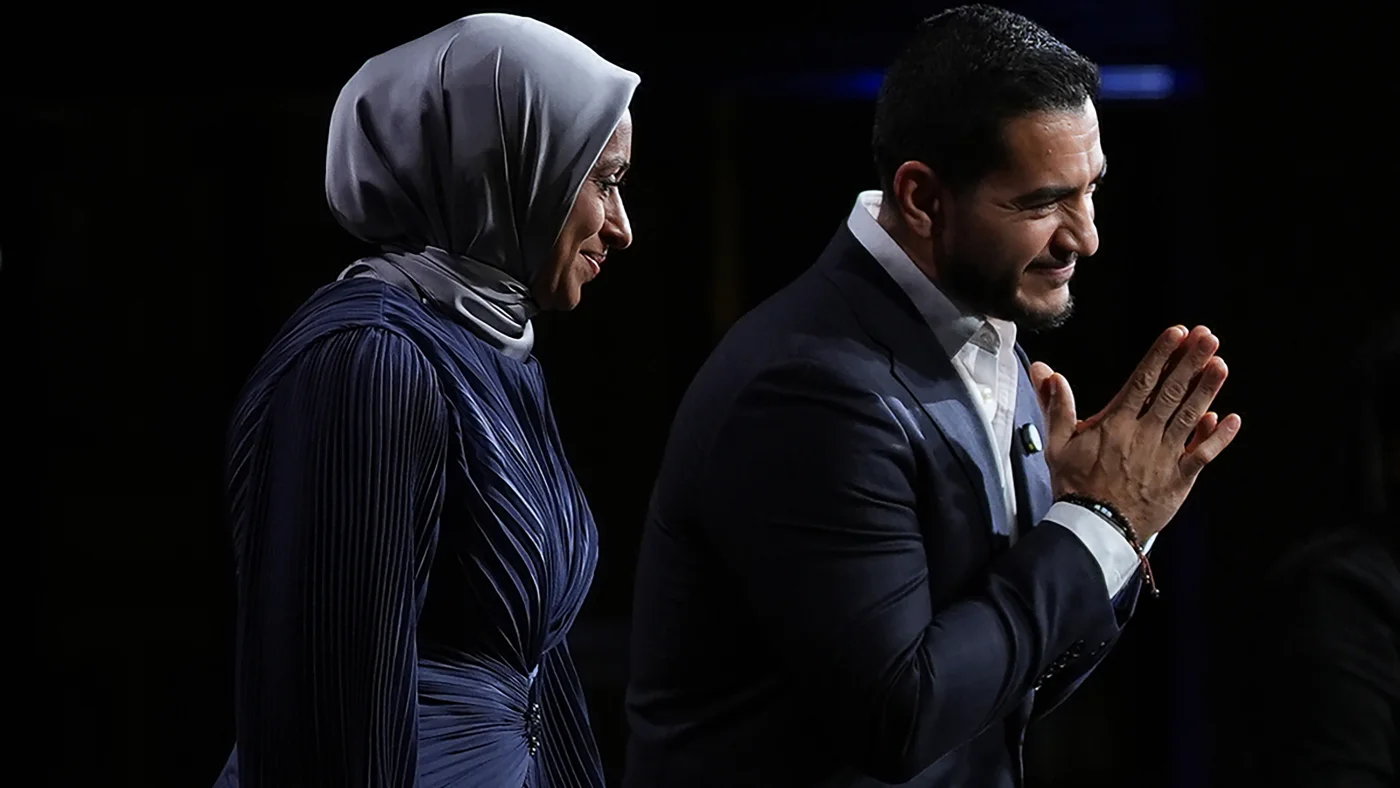 ✓
Abdul El-Sayed with his wife, Sarah Jukaku, during an election night watch party in Detroit. Salwan Georges/Getty Images hide caption
Salwan Georges/Getty Images
Democrat Abdul El-Sayed made history in Michigan, defeating Republican Mike Rogers to become the first Muslim elected to the U.S. Senate as his party reclaimed control of Congress.
The 42-year-old former public health official campaigned on lowering costs, Medicare for All and getting corporate money out of politics. Rogers, backed by President Trump, repeatedly attacked El-Sayed over his Muslim faith and opposition to U.S. military aid to Israel.
But Israel and the war in Gaza became a defining fault line in the race. Haley Stevens, whom El-Sayed defeated in the Democratic primary, endorsed Rogers just days before the election amid a bitter dispute over Israel.
After a campaign marked by heated disagreements over Israel, El-Sayed now finds himself on the same side of an issue as Trump.
The president announced plans to end roughly $4 billion in annual military aid to Israel by the end of the year, though he offered no details on how the cuts would work.
Speaking to Morning Edition after his victory, El-Sayed welcomed the proposal.
"I think the president is actually right on this policy," he said. "I'd also like to see us stop selling weaponry that gets used to do the worst things, including genocide and apartheid, to Israel."
The U.S. provides Israel with $3.8 billion in annual military aid under an agreement that runs through 2028.
His argument goes beyond Israel. El-Sayed also questioned U.S. military support for Egypt, Saudi Arabia, Jordan and Pakistan, saying American tax dollars should be spent at home.
Winning Michigan's Senate seat, however, doesn't mean every division within his party has disappeared.
During a visit to Michigan before the election, NPR's Michel Martin heard concerns about El-Sayed from some Jewish and Black voters. Asked whether he still had work to do to win their support, El-Sayed said the election results challenged that narrative.
"There's always more work to do. There's always more to build. There's always more conversations to have," he said.
Listen to the full interview live by clicking on the blue button above.
The digital version was edited by Treye Green.
Read the full story at Al Jazeera ↗ · BBC ↗ · NPR ↗
Michigan's first Muslim senator-elect, Abdul El-Sayed, discusses his historic victory, an unlikely agreement with Trump on Israel military aid and the political divisions that…
This lens runs the verified story through Cinnamon's AI — wired in the next step.
Abdul El-Sayed with his wife, Sarah Jukaku, during an election night watch party in Detroit. Salwan Georges/Getty Images hide caption
Salwan Georges/Getty Images
Democrat Abdul El-Sayed made history in Michigan, defeating Republican Mike Rogers to become the first Muslim elected to the U.S. Senate as his party reclaimed control of Congress.
The 42-year-old former public health official campaigned on lowering costs, Medicare for All and getting corporate money out of politics. Rogers, backed by President Trump, repeatedly attacked El-Sayed over his Muslim faith and opposition to U.S. military aid to Israel.
But Israel and the war in Gaza became a defining fault line in the race. Haley Stevens, whom El-Sayed defeated in the Democratic primary, endorsed Rogers just days before the election amid a bitter dispute over Israel.
After a campaign marked by heated disagreements over Israel, El-Sayed now finds himself on the same side of an issue as Trump.
The president announced plans to end roughly $4 billion in annual military aid to Israel by the end of the year, though he offered no details on how the cuts would work.
Speaking to Morning Edition after his victory, El-Sayed welcomed the proposal.
"I think the president is actually right on this policy," he said. "I'd also like to see us stop selling weaponry that gets used to do the worst things, including genocide and apartheid, to Israel."
The U.S. provides Israel with $3.8 billion in annual military aid under an agreement that runs through 2028.
His argument goes beyond Israel. El-Sayed also questioned U.S. military support for Egypt, Saudi Arabia, Jordan and Pakistan, saying American tax dollars should be spent at home.
Winning Michigan's Senate seat, however, doesn't mean every division within his party has disappeared.
During a visit to Michigan before the election, NPR's Michel Martin heard concerns about El-Sayed from some Jewish and Black voters. Asked whether he still had work to do to win their support, El-Sayed said the election results challenged that narrative.
"There's always more work to do. There's always more to build. There's always more conversations to have," he said.
Listen to the full interview live by clicking on the blue button above.
The digital version was edited by Treye Green.
Read the full story at Al Jazeera ↗ · BBC ↗ · NPR ↗
This lens runs the verified story through Cinnamon's AI — wired in the next step.
- Michigan's first Muslim senator-elect, Abdul El-Sayed, discusses his historic victory, an unlikely agreement with Trump on Israel military aid and the political divisions that…