‘Act on the evidence outside the window’: Andy Burnham urged to stick to net zero targets if he becomes PM
Britain’s net zero economy is booming. The sector is worth £100bn a year to the UK, has outpaced other sectors, and supports higher-paying jobs than the average.
For a union leader to suggest that the man who has overseen this impressive record – the energy secretary, Ed Miliband – would be a “noose around the neck” of job creation, as Unite’s Sharon Graham has done, might seem extraordinary.
But the debate on net zero is often suffused with more wasted heat and less useful light than an old-style incandescent bulb. Andy Burnham, the prospective next prime minister, is coming under pressure to join the ranks of the sceptics, and reverse Labour’s longstanding championing of the move to renewable energy and low-carbon industry. There are many reasons why he should resist.
“Net zero is one of the few glues that unites Labour’s coalition,” says Luke Tryl, the executive director of More in Common, the non-profit research agency. “There is limited electoral benefit to ditching it and much potential harm.”
More than 60% of people support net zero and climate action, numerous polls suggest. Although it is eclipsed by the cost of living as a priority for voters, the appeal crosses political divides – about a third of Reform voters support the target, despite the onslaught against it from Nigel Farage and Richard Tice.
At the other end of the spectrum, Labour haemorrhaged votes to the strongly pro-climate Green party and Liberal Democrats at the local elections. YouGov polling showed that for every 2024 Labour voter who switched to Reform, about six voted instead for the Liberal Democrats or the Green party. In many cases, it was the switch by Labour voters to the left that gave Reform the leg-up to win seats, rather than Labour voters moving right.
These outcomes suggest Labour has little to gain electorally from weakening on net zero, and a lot to lose. But Joe Dromey, the general secretary of the Fabian Society, says that message does not seem to have got through to all sections of the party.
“Quite a few people have been learning the wrong lessons from the very painful defeats in the local elections,” he says. “While Labour lost seats to Reform, they lost votes to the other progressive parties. But those voters are much more likely to consider voting Labour again in the future – they’re available to win back. Watering down Labour’s bold contributions to green policy and net zero would do more harm than good.”
Political calculation aside, measures to tackle the climate crisis and reduce the UK’s dependence on imported oil and gas can also deliver economically. While Unite and GMB, unions with members reliant on the oil and gas sector, have called for an end to the ban on new North Sea drilling, most unions support net zero.
Jobs in the North Sea have been in steady decline for more than 15 years, and opening new fields is unlikely to stem the losses for long, as more than 90% of the oil and gas has already been extracted. Even under the previous Conservative government, the 36,000 direct jobs in the North Sea, and the 200,000 estimated to be in the supply chain, in 2013 fell to about 30,000 directly employed and 100,000 supporting jobs by 2024.
Burnham has frequently called for “reindustrialisation”, which some have interpreted as being in opposition to net zero. But Alasdair Johnstone, from the Energy and Climate Intelligence Unit thinktank, says that doesn’t have to be the case.
“The clean tech revolution is already driving clean reindustrialisation in areas such as the Humber and North East,” he says. “Thousands of small businesses and more than a million jobs are now dependent on the net zero economy. And the world is clearly shifting towards electrification, so any new industry needs to be clean if it’s going to survive into the future.”
Any perception of wavering on net zero could be damaging, he adds. “Many of the UK’s main auto factories are already retooling for electric vehicles. Signals and consistency matter, so investors deciding where to put their money will be carefully listening to what emerges from Burnham’s camp in the coming weeks.”
Burnham had a strong record on the environment while mayor of Manchester, where he declared a target of carbon neutrality by 2038 and championed clean energy, electric buses, insulation and nature projects. “This record shows he understands the importance of these issues and is willing to fight for them,” says Robbie MacPherson, a Kennedy scholar at Harvard University, and former head of the UK’s all-party parliamentary group on climate.
“As MP for Makerfield, he knows the importance of ensuring communities are prepared for proliferating climate impacts such as flooding. As future leader of the Labour party he has the responsibility to bring to life the most ambitious climate and clean energy programme that any British government has been elected on.”
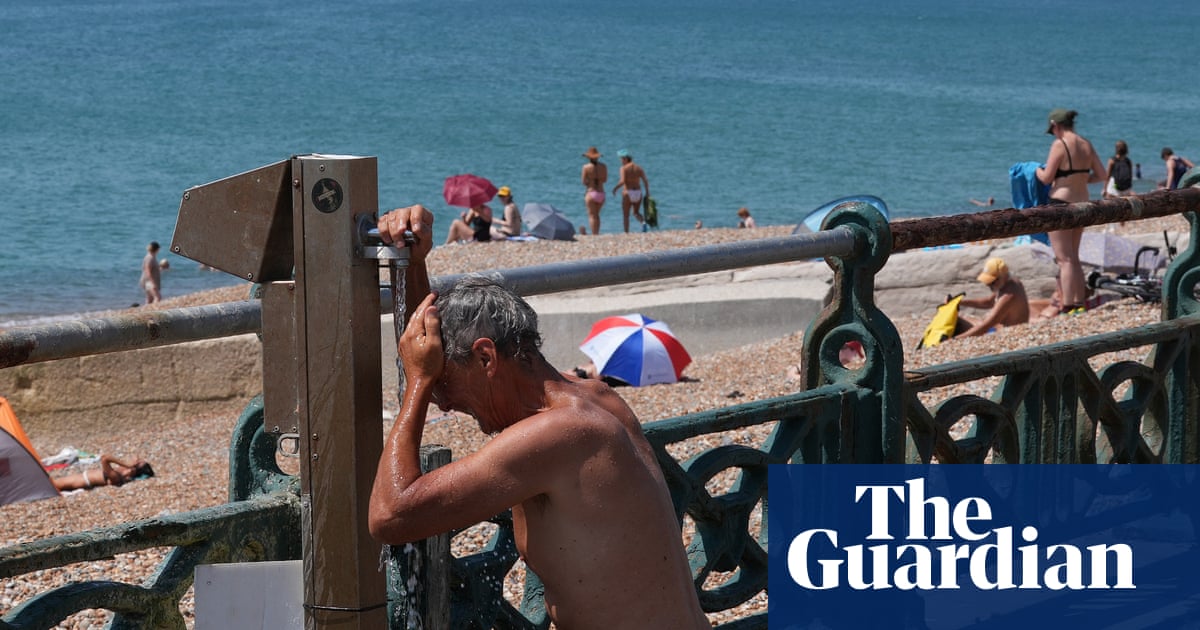
This week’s record heatwave, the year’s second so far, has given a foretaste of the threat the climate crisis poses to the UK. Schools have been forced to close, transport has been in chaos and productivity has been damaged, not counting the likely loss of life. European economies, including the UK, stand to lose $600bn from extreme heat by 2030, according to one estimate.
The required response should be clear, says Angharad Hopkinson, a political campaigner at Greenpeace UK. “The only way off this hellish treadmill is to reduce our dependence on fossil fuels. Our next prime minister needs to act on the evidence outside their window, and the advice of their scientific advisers, and stay the course on climate policies. The alternative is parched reservoirs, unaffordable food, shuttered hospitals and schools and wildly fluctuating bills each time a new oil war is kindled.”
Read the full story at The Guardian ↗
Andy Burnham, potential next Labour prime minister, is being urged to maintain the party's net zero and climate commitments rather than retreat from them. The net zero economy currently contributes £100bn annually to the UK and supports jobs with above-average wages. Recent polling shows over 60% of voters support net zero across the political spectrum, including a third of Reform supporters. In local elections, Labour lost significantly more votes to the Liberal Democrats and Greens—parties stronger on climate—than to Reform, suggesting electoral risk in weakening environmental policy. North Sea oil and gas employment has declined steadily from 236,000 jobs in 2013 to approximately 130,000 by 2024. Economists argue that clean technology is already driving reindustrialization in regions like the Humber and North East, and that consistent policy signals are critical to attracting manufacturing investment. Burnham's record as Manchester mayor included carbon neutrality targets and clean energy projects. The UK faces mounting climate impacts including record heatwaves and estimated economic losses of €600bn from extreme heat by 2030.
Read the full story at The Guardian ↗
Britain’s net zero economy is booming. The sector is worth £100bn a year to the UK, has outpaced other sectors, and supports higher-paying jobs than the average.
For a union leader to suggest that the man who has overseen this impressive record – the energy secretary, Ed Miliband – would be a “noose around the neck” of job creation, as Unite’s Sharon Graham has done, might seem extraordinary.
But the debate on net zero is often suffused with more wasted heat and less useful light than an old-style incandescent bulb. Andy Burnham, the prospective next prime minister, is coming under pressure to join the ranks of the sceptics, and reverse Labour’s longstanding championing of the move to renewable energy and low-carbon industry. There are many reasons why he should resist.
“Net zero is one of the few glues that unites Labour’s coalition,” says Luke Tryl, the executive director of More in Common, the non-profit research agency. “There is limited electoral benefit to ditching it and much potential harm.”
More than 60% of people support net zero and climate action, numerous polls suggest. Although it is eclipsed by the cost of living as a priority for voters, the appeal crosses political divides – about a third of Reform voters support the target, despite the onslaught against it from Nigel Farage and Richard Tice.
At the other end of the spectrum, Labour haemorrhaged votes to the strongly pro-climate Green party and Liberal Democrats at the local elections. YouGov polling showed that for every 2024 Labour voter who switched to Reform, about six voted instead for the Liberal Democrats or the Green party. In many cases, it was the switch by Labour voters to the left that gave Reform the leg-up to win seats, rather than Labour voters moving right.
These outcomes suggest Labour has little to gain electorally from weakening on net zero, and a lot to lose. But Joe Dromey, the general secretary of the Fabian Society, says that message does not seem to have got through to all sections of the party.
“Quite a few people have been learning the wrong lessons from the very painful defeats in the local elections,” he says. “While Labour lost seats to Reform, they lost votes to the other progressive parties. But those voters are much more likely to consider voting Labour again in the future – they’re available to win back. Watering down Labour’s bold contributions to green policy and net zero would do more harm than good.”
Political calculation aside, measures to tackle the climate crisis and reduce the UK’s dependence on imported oil and gas can also deliver economically. While Unite and GMB, unions with members reliant on the oil and gas sector, have called for an end to the ban on new North Sea drilling, most unions support net zero.
Jobs in the North Sea have been in steady decline for more than 15 years, and opening new fields is unlikely to stem the losses for long, as more than 90% of the oil and gas has already been extracted. Even under the previous Conservative government, the 36,000 direct jobs in the North Sea, and the 200,000 estimated to be in the supply chain, in 2013 fell to about 30,000 directly employed and 100,000 supporting jobs by 2024.
Burnham has frequently called for “reindustrialisation”, which some have interpreted as being in opposition to net zero. But Alasdair Johnstone, from the Energy and Climate Intelligence Unit thinktank, says that doesn’t have to be the case.
“The clean tech revolution is already driving clean reindustrialisation in areas such as the Humber and North East,” he says. “Thousands of small businesses and more than a million jobs are now dependent on the net zero economy. And the world is clearly shifting towards electrification, so any new industry needs to be clean if it’s going to survive into the future.”
Any perception of wavering on net zero could be damaging, he adds. “Many of the UK’s main auto factories are already retooling for electric vehicles. Signals and consistency matter, so investors deciding where to put their money will be carefully listening to what emerges from Burnham’s camp in the coming weeks.”
Burnham had a strong record on the environment while mayor of Manchester, where he declared a target of carbon neutrality by 2038 and championed clean energy, electric buses, insulation and nature projects. “This record shows he understands the importance of these issues and is willing to fight for them,” says Robbie MacPherson, a Kennedy scholar at Harvard University, and former head of the UK’s all-party parliamentary group on climate.
“As MP for Makerfield, he knows the importance of ensuring communities are prepared for proliferating climate impacts such as flooding. As future leader of the Labour party he has the responsibility to bring to life the most ambitious climate and clean energy programme that any British government has been elected on.”
This week’s record heatwave, the year’s second so far, has given a foretaste of the threat the climate crisis poses to the UK. Schools have been forced to close, transport has been in chaos and productivity has been damaged, not counting the likely loss of life. European economies, including the UK, stand to lose $600bn from extreme heat by 2030, according to one estimate.
The required response should be clear, says Angharad Hopkinson, a political campaigner at Greenpeace UK. “The only way off this hellish treadmill is to reduce our dependence on fossil fuels. Our next prime minister needs to act on the evidence outside their window, and the advice of their scientific advisers, and stay the course on climate policies. The alternative is parched reservoirs, unaffordable food, shuttered hospitals and schools and wildly fluctuating bills each time a new oil war is kindled.”
Read the full story at The Guardian ↗
Britain's net zero economy is worth £100bn per year and outpaces other sectors More than 60% of people support net zero and climate action according to polling About one-third of Reform voters support net zero targets In 2024 local elections, for every two Labour voters who switched to Reform, about six voted for the Liberal Democrats or Green party instead North Sea oil and gas jobs declined from 236,000 in 2013 to approximately 130,000 by 2024 More than 90% of North Sea oil and gas reserves have already been extracted The clean tech sector already employs more than one million people and operates thousands of small businesses Europe and the UK could lose $600bn from extreme heat by 2030 Record heatwaves this year have closed schools and disrupted transport Burnham declared a carbon neutrality target of 2038 while mayor of Manchester and championed clean energy projects Net zero is one of the few glues that unites Labour's coalition Abandoning net zero would deliver more electoral harm than benefit to Labour Labour voters who switched to the Greens or Liberal Democrats are more likely to return to Labour in future elections than Reform voters Perceived wavering on net zero would be damaging to investment decisions Reindustrialization and net zero are compatible rather than opposed goals
Read the full story at The Guardian ↗
- Britain's net zero economy is worth £100bn annually and supports higher-paying jobs than average sectors
- Over 60% of voters support net zero across political divides; Labour lost more votes to pro-climate parties than to Reform in local elections
- North Sea oil and gas jobs have declined from 236,000 to 130,000 between 2013 and 2024 despite extraction continuing
- Andy Burnham faces pressure to weaken Labour's net zero commitment, but economists warn this could damage investment signals and reindustrialization
- Record heatwaves this year have highlighted climate risks; UK estimates show potential €600bn losses from extreme heat by 2030