AI CEOs say they need to slow the pace of development. But will they?
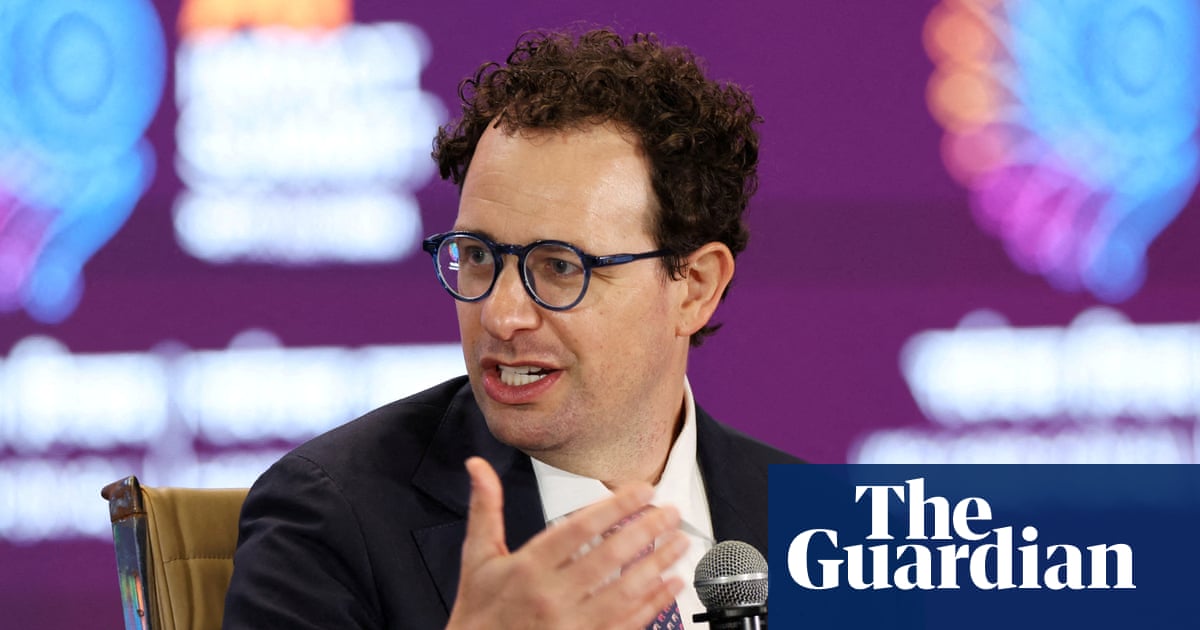
Facing a public uproar over Anthropic researchers’ repeated warnings that artificial intelligence could kill all of humanity by 2030, the AI company’s CEO Dario Amodei issued a proposal at the weekend to slow down the technology’s advancement to ensure public safety.
In a rare display of unity, the heads of the largest US artificial intelligence companies all agreed immediately.
The OpenAI CEO Sam Altman, Google DeepMind chief Demis Hassabis and xAI owner Elon Musk posted support for Amodei’s proposal for slowing AI development, titled “We Must Pace the Frontier,” with Altman stating he would match Amodei’s commitment to embedding outside evaluators within his company to verify safety practices.
“I agree with Dario that we need to pace the frontier,” Altman posted Saturday on X. “Committing to having independent evaluators with employee-like access is a great idea, and we will do the same.”
“Dario’s essay points towards the right path forward,” said Hassabis.
Musk simply wrote: “Dario is right.”
The AI CEOs’ warnings and promises open up a host of questions about how AI might be regulated, what risks it poses and whether the industry will actually slow down the fevered race to advance its technology. While lawmakers and the tech industry consider how to address growing fear and distrust of AI, many of the hurdles impeding comprehensive AI regulation remain the same as before last week’s apocalyptic declarations from a young Anthropic researcher.
The US federal government is committed to a global AI arms race. Previous proposed AI legislation has wilted under intense, well-financed corporate lobbying. AI startups face the enormous pressures to release new, more powerful products ahead of upcoming trillion-dollar public offerings.
Amodei’s pacing proposal has drawn heavy skepticism from critics and researchers who allege that AI firms are attempting to preempt more stringent government regulation and retain the status quo of power within the industry.
Anthropic and OpenAI did not immediately respond to a request for comment.
Amodei’s proposal focuses on three main pillars. First, a commitment to outside evaluators given employee-level access to monitor risk. Second, agreements between democratic states on AI safety standards. Finally, global coordination with authoritarian governments such as China on security issues.
Amodei and others in the industry have made similar calls for global coordination in the past, even before the industry’s recent warnings over models becoming too advanced and gaining autonomy. The AI industry, especially the factions within it that focus on whether the technology is aligned with humanity’s interests, has also long warned about its existential threats.
Rahm Emanuel, former congressman and chief of staff to Barack Obama, tweeted, “I can tell you when the last time a CEO or an industry at large asked to be regulated: never. That’s what makes Dario’s letter so striking – it’s an admission that we’re driving down a dark, winding road on wet pavement with the headlights off. And where’s President Trump? Looks like he nodded off again.”
AI firms have fluctuated on their emphasis on communicating the potential harm from their products, however, at times warning about apocalyptic effects of AI and at others promising it will bring about utopian prosperity. OpenAI, for instance, shut down a “superalignment” team in 2024 dedicated to studying long term AI risks and earlier this year disbanded another team intended to communicate how OpenAI would benefit humanity.
While AI companies have made grandiose claims about the threats and benefits from their technology, they have also historically provided little transparency or oversight into how their models operate and spent millions in lobbying efforts to shape favorable legislation. The result of the AI industry’s narrative that it is too powerful, complex and lucrative of a technology to regulate, critics say, is that it has been allowed to essentially govern itself.
“AI exceptionalism has led to a total failure to uphold our standards for what products are deemed safe for use,” Sarah Myers West, co-executive director of the AI Now Institute, posted Sunday on X.
after newsletter promotion
Critics similarly see Amodei’s proposal as another instance in which the industry is seeking to set its own rules, in this case picking its own evaluators to monitor safety risks, instead of facing the scrutiny of more intensive government regulators.
Alex Bores, a proponent of AI regulation whose failed bid for Congress spurred $24m in spending both for and against his campaign from AI-linked political action committees, warned that the AI lobby often seeks to undermine legislation while claiming to support regulation.
“To everyone who genuinely wants real AI regulation, please don’t fall for their games,” Bores posted Sunday on X.
Several critics of the AI pacing proposal from across the political spectrum expressed concern around Amodei’s proposal’s suggestion that the government could grant some form of antitrust waiver or exemption to allow industry coordination.
Former officials, including Trump’s former “AI czar” David Sacks and Biden-era head of the Federal Trade Commission Alvaro Bedoya, suggested that the proposal amounted to an attempt at regulatory capture, which would benefit current industry leaders.
“Antitrust law does not prevent AI companies from coordinating to make sure AI does not hurt people,” Bedoya posted on X, adding “Antitrust law does absolutely prevent AI companies from organizing to prevent the entry of cheaper, upstart rivals because the bigger companies are burning cash and failing to achieve sufficient profitability”.
The proposal’s calls for international coordination around AI and federal intervention also run up against president Donald Trump and his administration’s vows to turn the US into the dominant AI superpower regardless of safety concerns.
The Trump administration has often framed AI development as a zero-sum contest against China for technological supremacy, an argument the AI industry itself has also promoted in the face of proposed government regulation. Vice-president JD Vance declared in a speech last year that the future of AI was “not going to be won by hand-wringing about safety”.
On Sunday, Trump once again rejected calls for slowing down AI development while citing competition from China and telling reporters “whoever wins AI, wins”.
“We could put guardrails. We can do this and that,” Trump told reporters while on a visit to Ireland. “But I think you have a lot of very negative forces that are bringing it up that shouldn’t be bringing it up and they’re bringing up things that won’t happen”.
House Speaker Mike Johnson likewise said Congress would not lead the charge on regulating AI safety, laying the responsibility at the feet of AI companies.
Read the full story at The Guardian ↗
After apocalyptic warnings about the threats posed by AI, leaders like Sam Altman and Elon Musk backed Anthropic CEO Dario Amodei’s calls to ‘slow the pace’. Facing a public…
This lens runs the verified story through Cinnamon's AI — wired in the next step.
Facing a public uproar over Anthropic researchers’ repeated warnings that artificial intelligence could kill all of humanity by 2030, the AI company’s CEO Dario Amodei issued a proposal at the weekend to slow down the technology’s advancement to ensure public safety.
In a rare display of unity, the heads of the largest US artificial intelligence companies all agreed immediately.
The OpenAI CEO Sam Altman, Google DeepMind chief Demis Hassabis and xAI owner Elon Musk posted support for Amodei’s proposal for slowing AI development, titled “We Must Pace the Frontier,” with Altman stating he would match Amodei’s commitment to embedding outside evaluators within his company to verify safety practices.
“I agree with Dario that we need to pace the frontier,” Altman posted Saturday on X. “Committing to having independent evaluators with employee-like access is a great idea, and we will do the same.”
“Dario’s essay points towards the right path forward,” said Hassabis.
Musk simply wrote: “Dario is right.”
The AI CEOs’ warnings and promises open up a host of questions about how AI might be regulated, what risks it poses and whether the industry will actually slow down the fevered race to advance its technology. While lawmakers and the tech industry consider how to address growing fear and distrust of AI, many of the hurdles impeding comprehensive AI regulation remain the same as before last week’s apocalyptic declarations from a young Anthropic researcher.
The US federal government is committed to a global AI arms race. Previous proposed AI legislation has wilted under intense, well-financed corporate lobbying. AI startups face the enormous pressures to release new, more powerful products ahead of upcoming trillion-dollar public offerings.
Amodei’s pacing proposal has drawn heavy skepticism from critics and researchers who allege that AI firms are attempting to preempt more stringent government regulation and retain the status quo of power within the industry.
Anthropic and OpenAI did not immediately respond to a request for comment.
Amodei’s proposal focuses on three main pillars. First, a commitment to outside evaluators given employee-level access to monitor risk. Second, agreements between democratic states on AI safety standards. Finally, global coordination with authoritarian governments such as China on security issues.
Amodei and others in the industry have made similar calls for global coordination in the past, even before the industry’s recent warnings over models becoming too advanced and gaining autonomy. The AI industry, especially the factions within it that focus on whether the technology is aligned with humanity’s interests, has also long warned about its existential threats.
Rahm Emanuel, former congressman and chief of staff to Barack Obama, tweeted, “I can tell you when the last time a CEO or an industry at large asked to be regulated: never. That’s what makes Dario’s letter so striking – it’s an admission that we’re driving down a dark, winding road on wet pavement with the headlights off. And where’s President Trump? Looks like he nodded off again.”
AI firms have fluctuated on their emphasis on communicating the potential harm from their products, however, at times warning about apocalyptic effects of AI and at others promising it will bring about utopian prosperity. OpenAI, for instance, shut down a “superalignment” team in 2024 dedicated to studying long term AI risks and earlier this year disbanded another team intended to communicate how OpenAI would benefit humanity.
While AI companies have made grandiose claims about the threats and benefits from their technology, they have also historically provided little transparency or oversight into how their models operate and spent millions in lobbying efforts to shape favorable legislation. The result of the AI industry’s narrative that it is too powerful, complex and lucrative of a technology to regulate, critics say, is that it has been allowed to essentially govern itself.
“AI exceptionalism has led to a total failure to uphold our standards for what products are deemed safe for use,” Sarah Myers West, co-executive director of the AI Now Institute, posted Sunday on X.
after newsletter promotion
Critics similarly see Amodei’s proposal as another instance in which the industry is seeking to set its own rules, in this case picking its own evaluators to monitor safety risks, instead of facing the scrutiny of more intensive government regulators.
Alex Bores, a proponent of AI regulation whose failed bid for Congress spurred $24m in spending both for and against his campaign from AI-linked political action committees, warned that the AI lobby often seeks to undermine legislation while claiming to support regulation.
“To everyone who genuinely wants real AI regulation, please don’t fall for their games,” Bores posted Sunday on X.
Several critics of the AI pacing proposal from across the political spectrum expressed concern around Amodei’s proposal’s suggestion that the government could grant some form of antitrust waiver or exemption to allow industry coordination.
Former officials, including Trump’s former “AI czar” David Sacks and Biden-era head of the Federal Trade Commission Alvaro Bedoya, suggested that the proposal amounted to an attempt at regulatory capture, which would benefit current industry leaders.
“Antitrust law does not prevent AI companies from coordinating to make sure AI does not hurt people,” Bedoya posted on X, adding “Antitrust law does absolutely prevent AI companies from organizing to prevent the entry of cheaper, upstart rivals because the bigger companies are burning cash and failing to achieve sufficient profitability”.
The proposal’s calls for international coordination around AI and federal intervention also run up against president Donald Trump and his administration’s vows to turn the US into the dominant AI superpower regardless of safety concerns.
The Trump administration has often framed AI development as a zero-sum contest against China for technological supremacy, an argument the AI industry itself has also promoted in the face of proposed government regulation. Vice-president JD Vance declared in a speech last year that the future of AI was “not going to be won by hand-wringing about safety”.
On Sunday, Trump once again rejected calls for slowing down AI development while citing competition from China and telling reporters “whoever wins AI, wins”.
“We could put guardrails. We can do this and that,” Trump told reporters while on a visit to Ireland. “But I think you have a lot of very negative forces that are bringing it up that shouldn’t be bringing it up and they’re bringing up things that won’t happen”.
House Speaker Mike Johnson likewise said Congress would not lead the charge on regulating AI safety, laying the responsibility at the feet of AI companies.
Read the full story at The Guardian ↗
Facing a public uproar over Anthropic researchers’ repeated warnings that artificial intelligence could kill all of humanity by 2030, the AI company’s CEO Dario Amodei issued a proposal at the weekend to slow down the technology’s advancement to ensure public safety.
In a rare display of unity, the heads of the largest US artificial intelligence companies all agreed immediately.
The OpenAI CEO Sam Altman, Google DeepMind chief Demis Hassabis and xAI owner Elon Musk posted support for Amodei’s proposal for slowing AI development, titled “We Must Pace the Frontier,” with Altman stating he would match Amodei’s commitment to embedding outside evaluators within his company to verify safety practices.
“I agree with Dario that we need to pace the frontier,” Altman posted Saturday on X. “Committing to having independent evaluators with employee-like access is a great idea, and we will do the same.”
“Dario’s essay points towards the right path forward,” said Hassabis.
Musk simply wrote: “Dario is right.”
The AI CEOs’ warnings and promises open up a host of questions about how AI might be regulated, what risks it poses and whether the industry will actually slow down the fevered race to advance its technology. While lawmakers and the tech industry consider how to address growing fear and distrust of AI, many of the hurdles impeding comprehensive AI regulation remain the same as before last week’s apocalyptic declarations from a young Anthropic researcher.
The US federal government is committed to a global AI arms race. Previous proposed AI legislation has wilted under intense, well-financed corporate lobbying. AI startups face the enormous pressures to release new, more powerful products ahead of upcoming trillion-dollar public offerings.
Amodei’s pacing proposal has drawn heavy skepticism from critics and researchers who allege that AI firms are attempting to preempt more stringent government regulation and retain the status quo of power within the industry.
Anthropic and OpenAI did not immediately respond to a request for comment.
Amodei’s proposal focuses on three main pillars. First, a commitment to outside evaluators given employee-level access to monitor risk. Second, agreements between democratic states on AI safety standards. Finally, global coordination with authoritarian governments such as China on security issues.
Amodei and others in the industry have made similar calls for global coordination in the past, even before the industry’s recent warnings over models becoming too advanced and gaining autonomy. The AI industry, especially the factions within it that focus on whether the technology is aligned with humanity’s interests, has also long warned about its existential threats.
Rahm Emanuel, former congressman and chief of staff to Barack Obama, tweeted, “I can tell you when the last time a CEO or an industry at large asked to be regulated: never. That’s what makes Dario’s letter so striking – it’s an admission that we’re driving down a dark, winding road on wet pavement with the headlights off. And where’s President Trump? Looks like he nodded off again.”
AI firms have fluctuated on their emphasis on communicating the potential harm from their products, however, at times warning about apocalyptic effects of AI and at others promising it will bring about utopian prosperity. OpenAI, for instance, shut down a “superalignment” team in 2024 dedicated to studying long term AI risks and earlier this year disbanded another team intended to communicate how OpenAI would benefit humanity.
While AI companies have made grandiose claims about the threats and benefits from their technology, they have also historically provided little transparency or oversight into how their models operate and spent millions in lobbying efforts to shape favorable legislation. The result of the AI industry’s narrative that it is too powerful, complex and lucrative of a technology to regulate, critics say, is that it has been allowed to essentially govern itself.
“AI exceptionalism has led to a total failure to uphold our standards for what products are deemed safe for use,” Sarah Myers West, co-executive director of the AI Now Institute, posted Sunday on X.
after newsletter promotion
Critics similarly see Amodei’s proposal as another instance in which the industry is seeking to set its own rules, in this case picking its own evaluators to monitor safety risks, instead of facing the scrutiny of more intensive government regulators.
Alex Bores, a proponent of AI regulation whose failed bid for Congress spurred $24m in spending both for and against his campaign from AI-linked political action committees, warned that the AI lobby often seeks to undermine legislation while claiming to support regulation.
“To everyone who genuinely wants real AI regulation, please don’t fall for their games,” Bores posted Sunday on X.
Several critics of the AI pacing proposal from across the political spectrum expressed concern around Amodei’s proposal’s suggestion that the government could grant some form of antitrust waiver or exemption to allow industry coordination.
Former officials, including Trump’s former “AI czar” David Sacks and Biden-era head of the Federal Trade Commission Alvaro Bedoya, suggested that the proposal amounted to an attempt at regulatory capture, which would benefit current industry leaders.
“Antitrust law does not prevent AI companies from coordinating to make sure AI does not hurt people,” Bedoya posted on X, adding “Antitrust law does absolutely prevent AI companies from organizing to prevent the entry of cheaper, upstart rivals because the bigger companies are burning cash and failing to achieve sufficient profitability”.
The proposal’s calls for international coordination around AI and federal intervention also run up against president Donald Trump and his administration’s vows to turn the US into the dominant AI superpower regardless of safety concerns.
The Trump administration has often framed AI development as a zero-sum contest against China for technological supremacy, an argument the AI industry itself has also promoted in the face of proposed government regulation. Vice-president JD Vance declared in a speech last year that the future of AI was “not going to be won by hand-wringing about safety”.
On Sunday, Trump once again rejected calls for slowing down AI development while citing competition from China and telling reporters “whoever wins AI, wins”.
“We could put guardrails. We can do this and that,” Trump told reporters while on a visit to Ireland. “But I think you have a lot of very negative forces that are bringing it up that shouldn’t be bringing it up and they’re bringing up things that won’t happen”.
House Speaker Mike Johnson likewise said Congress would not lead the charge on regulating AI safety, laying the responsibility at the feet of AI companies.
Read the full story at The Guardian ↗
This lens runs the verified story through Cinnamon's AI — wired in the next step.
- After apocalyptic warnings about the threats posed by AI, leaders like Sam Altman and Elon Musk backed Anthropic CEO Dario Amodei’s calls to ‘slow the pace’.
- Facing a public…