Andy Burnham promises to end Labour infighting as he becomes party’s leader
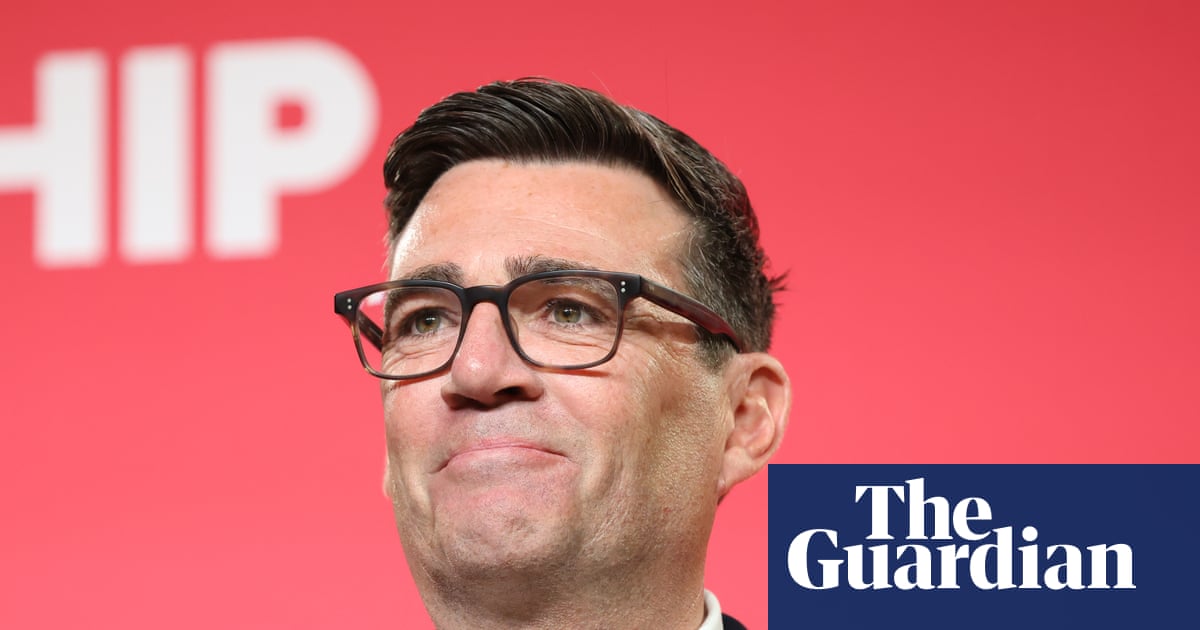 ✓
✓Andy Burnham pledged to lead a united Labour government free of infighting and factional politics as he took over as leader, despite anxiety on the left of party about the prospect of Shabana Mahmood as chancellor.
Burnham, who will become prime minister on Monday, set out a distinctly leftwing vision for Britain. He promised to undo the Thatcherism of the 1980s, bring in more public ownership of utilities, find the money to fix social care and build a new generation of council homes.
But he also insisted he would be “pro-business”, just as he was as mayor of Greater Manchester.
Arguing that his election was the most significant change in British politics for 40 years, Burnham said this was the “last chance” for Labour to get things right. He appealed for unity in order to “beat Britain’s new right”.
“Factionalism has bedevilled us. Today we moved beyond it,” he said, pledging to lead a “distinctively Labour” government that would not seek to copy the Tories, Greens or Reform UK.
However, he is already facing tensions within the party over his choice of key members of his cabinet, which will be unveiled on Monday after Keir Starmer has visited Buckingham Palace to hand over the role of prime minister.
He defended his decision to delay the announcement of his appointments, saying it would be “chaos” to do so before entering No 10 and he had not yet fully made up his mind.
Although no final decisions have been made, Mahmood, who is on the Blue Labour right of the party, is the frontrunner to enter the Treasury, ahead of the left’s choice, Ed Miliband.
There was also speculation that Burnham would put Jonny Reynolds, a key ally and the current chief whip, in charge of a bigger business department taking back control over science policy and possibly energy. Other potential moves include Wes Streeting as a candidate to be defence secretary.
Burnham addressed MPs on Friday afternoon after his confirmation as leader at a special party conference in London. Many MPs are privately unhappy about the idea of making Mahmood chancellor, with one senior MP describing it as “mad” and “not the answer”, the soft left having been led to believe they would get Miliband, who had helped Burnham’s leadership efforts.
Burnham had been considering Miliband for the job, but big business was concerned it could spook the markets and several of the largest unions were unhappy about his stance on net zero and North Sea drilling. At this point, Burnham appears to have turned towards Mahmood, but the party’s reaction has been mixed, given her role in enforcing controversial hardline immigration changes under Starmer.
Several trade unions welcomed Burnham’s confirmation as leader on Friday but also told him they wanted to see change. Unison said Burnham “must get this right and bring back the hope he promises”, while Usdaw said “our members will now rightly expect his vision to be translated into action”.
Burnham won the overwhelming support of MPs, trade unions and party branches, making him the only choice to take over from Starmer.
At the special party conference at the TUC headquarters in London on Friday, Burnham was declared leader by Mahmood, who is also chair of the party’s ruling executive and accompanied him into the hall.
Addressing a room of senior Labour politicians and supporters, Burnham said the country was “crying out for a new politics”. But he also said it was Labour’s “last chance to change” and the party must do so as a united movement.
“This is a proud moment you have given me and my family, and an emotional one,” he said. “It is one for which I am ready; ready to lead and to build on the foundation laid by one person more than any other. Under Keir Starmer’s leadership, we went from our worst defeat to one of the best victories in history.”
Despite praising Starmer, Burnham sought to draw a line under the past by asking whether Labour had “been good enough”, and pledging to “do better”.
“First, I will work relentlessly to build a culture of one Labour team, because change starts with us,” he said. “We won’t beat Britain’s new right if we are consumed by infighting and pulling in different directions. That is an indulgence.”
Although he has not yet set out detailed policies, Burnham said the broad areas where he wanted to focus were handing power to communities, being a pro-business leader, and building more social and council housing.
“I want people to understand the thinking behind the political direction I set,” he said, as he made the case that too much power was centralised in Westminster or handed to private companies.
Speaking later to reporters, he said one of the most urgent moves would be to “grasp the nettle” on fixing social care, saying the NHS could not recover while people were stuck in hospital without care at home.
He said it “will require something difficult” but he would not kick the can down the road.
“I will expend political capital on bringing forward a plan to fix social care, and I’m not going to waste time, because every time that we waste another year, thousands and thousands more people don’t get the care that they need,” he added.
Addressing criticism that he had been too focused on the north, given his mayoral role, Burnham said he would be a leader for the north, south, east, west, Scotland, Wales and Northern Ireland.
“This is a moment to speak for all parts of the country and unite people in a common cause,” he said. “I love every part of the country, all of the accents and different traditions and some of the football clubs. But I also feel they can be more than they are.”
He promised to “take power back from Westminster and Whitehall and give it back to the place where you live”.
He also paid tribute to some of his heroes in the Labour party, thanking David Blunkett, Neil Kinnock and Margaret Beckett for supporting his career and inspiring his political path.
Labour MPs took the decision to oust Starmer as leader partly because of the party’s low standing in the polls, with the government trailing Reform UK and at times neck and neck with the Conservatives.
Nigel Farage, the Reform UK leader, criticised Burnham as “vacuous” and “the great chameleon of British politics”, as he celebrated his party’s win in a police and crime commissioner election in Norfolk.
The Conservatives expressed concern that Burnham was elected while parliament was not sitting, meaning he would not face MPs for the rest of the summer.
Kevin Hollinrake, the Conservative party chair, said: “Andy Burnham says he has a plan, so what is it? The leader of the Labour party, and soon-to-be prime minister, should come to parliament and explain it.
“Instead, the government spared his blushes by cancelling the Conservatives’ vote that would have brought him before parliament on Monday.
“It’s not too late for Andy Burnham to do the right thing, make a statement, and answer questions from members of parliament on Monday about his ‘plan’.
“But the truth is that, whether it is Keir Starmer or Andy Burnham, the real problem is the high-tax, high-spend Labour MPs behind them.”
Read the full story at The Guardian ↗ · Al Jazeera ↗ · Al Jazeera ↗
Government has ‘last chance’ to get it right, says incoming PM, while anxiety surrounds his choice of chancellor. Andy Burnham pledged to lead a united Labour government free of…
This lens runs the verified story through Cinnamon's AI — wired in the next step.
Andy Burnham pledged to lead a united Labour government free of infighting and factional politics as he took over as leader, despite anxiety on the left of party about the prospect of Shabana Mahmood as chancellor.
Burnham, who will become prime minister on Monday, set out a distinctly leftwing vision for Britain. He promised to undo the Thatcherism of the 1980s, bring in more public ownership of utilities, find the money to fix social care and build a new generation of council homes.
But he also insisted he would be “pro-business”, just as he was as mayor of Greater Manchester.
Arguing that his election was the most significant change in British politics for 40 years, Burnham said this was the “last chance” for Labour to get things right. He appealed for unity in order to “beat Britain’s new right”.
“Factionalism has bedevilled us. Today we moved beyond it,” he said, pledging to lead a “distinctively Labour” government that would not seek to copy the Tories, Greens or Reform UK.
However, he is already facing tensions within the party over his choice of key members of his cabinet, which will be unveiled on Monday after Keir Starmer has visited Buckingham Palace to hand over the role of prime minister.
He defended his decision to delay the announcement of his appointments, saying it would be “chaos” to do so before entering No 10 and he had not yet fully made up his mind.
Although no final decisions have been made, Mahmood, who is on the Blue Labour right of the party, is the frontrunner to enter the Treasury, ahead of the left’s choice, Ed Miliband.
There was also speculation that Burnham would put Jonny Reynolds, a key ally and the current chief whip, in charge of a bigger business department taking back control over science policy and possibly energy. Other potential moves include Wes Streeting as a candidate to be defence secretary.
Burnham addressed MPs on Friday afternoon after his confirmation as leader at a special party conference in London. Many MPs are privately unhappy about the idea of making Mahmood chancellor, with one senior MP describing it as “mad” and “not the answer”, the soft left having been led to believe they would get Miliband, who had helped Burnham’s leadership efforts.
Burnham had been considering Miliband for the job, but big business was concerned it could spook the markets and several of the largest unions were unhappy about his stance on net zero and North Sea drilling. At this point, Burnham appears to have turned towards Mahmood, but the party’s reaction has been mixed, given her role in enforcing controversial hardline immigration changes under Starmer.
Several trade unions welcomed Burnham’s confirmation as leader on Friday but also told him they wanted to see change. Unison said Burnham “must get this right and bring back the hope he promises”, while Usdaw said “our members will now rightly expect his vision to be translated into action”.
Burnham won the overwhelming support of MPs, trade unions and party branches, making him the only choice to take over from Starmer.
At the special party conference at the TUC headquarters in London on Friday, Burnham was declared leader by Mahmood, who is also chair of the party’s ruling executive and accompanied him into the hall.
Addressing a room of senior Labour politicians and supporters, Burnham said the country was “crying out for a new politics”. But he also said it was Labour’s “last chance to change” and the party must do so as a united movement.
“This is a proud moment you have given me and my family, and an emotional one,” he said. “It is one for which I am ready; ready to lead and to build on the foundation laid by one person more than any other. Under Keir Starmer’s leadership, we went from our worst defeat to one of the best victories in history.”
Despite praising Starmer, Burnham sought to draw a line under the past by asking whether Labour had “been good enough”, and pledging to “do better”.
“First, I will work relentlessly to build a culture of one Labour team, because change starts with us,” he said. “We won’t beat Britain’s new right if we are consumed by infighting and pulling in different directions. That is an indulgence.”
Although he has not yet set out detailed policies, Burnham said the broad areas where he wanted to focus were handing power to communities, being a pro-business leader, and building more social and council housing.
“I want people to understand the thinking behind the political direction I set,” he said, as he made the case that too much power was centralised in Westminster or handed to private companies.
Speaking later to reporters, he said one of the most urgent moves would be to “grasp the nettle” on fixing social care, saying the NHS could not recover while people were stuck in hospital without care at home.
He said it “will require something difficult” but he would not kick the can down the road.
“I will expend political capital on bringing forward a plan to fix social care, and I’m not going to waste time, because every time that we waste another year, thousands and thousands more people don’t get the care that they need,” he added.
Addressing criticism that he had been too focused on the north, given his mayoral role, Burnham said he would be a leader for the north, south, east, west, Scotland, Wales and Northern Ireland.
“This is a moment to speak for all parts of the country and unite people in a common cause,” he said. “I love every part of the country, all of the accents and different traditions and some of the football clubs. But I also feel they can be more than they are.”
He promised to “take power back from Westminster and Whitehall and give it back to the place where you live”.
He also paid tribute to some of his heroes in the Labour party, thanking David Blunkett, Neil Kinnock and Margaret Beckett for supporting his career and inspiring his political path.
Labour MPs took the decision to oust Starmer as leader partly because of the party’s low standing in the polls, with the government trailing Reform UK and at times neck and neck with the Conservatives.
Nigel Farage, the Reform UK leader, criticised Burnham as “vacuous” and “the great chameleon of British politics”, as he celebrated his party’s win in a police and crime commissioner election in Norfolk.
The Conservatives expressed concern that Burnham was elected while parliament was not sitting, meaning he would not face MPs for the rest of the summer.
Kevin Hollinrake, the Conservative party chair, said: “Andy Burnham says he has a plan, so what is it? The leader of the Labour party, and soon-to-be prime minister, should come to parliament and explain it.
“Instead, the government spared his blushes by cancelling the Conservatives’ vote that would have brought him before parliament on Monday.
“It’s not too late for Andy Burnham to do the right thing, make a statement, and answer questions from members of parliament on Monday about his ‘plan’.
“But the truth is that, whether it is Keir Starmer or Andy Burnham, the real problem is the high-tax, high-spend Labour MPs behind them.”
Read the full story at The Guardian ↗ · Al Jazeera ↗ · Al Jazeera ↗
Andy Burnham pledged to lead a united Labour government free of infighting and factional politics as he took over as leader, despite anxiety on the left of party about the prospect of Shabana Mahmood as chancellor.
Burnham, who will become prime minister on Monday, set out a distinctly leftwing vision for Britain. He promised to undo the Thatcherism of the 1980s, bring in more public ownership of utilities, find the money to fix social care and build a new generation of council homes.
But he also insisted he would be “pro-business”, just as he was as mayor of Greater Manchester.
Arguing that his election was the most significant change in British politics for 40 years, Burnham said this was the “last chance” for Labour to get things right. He appealed for unity in order to “beat Britain’s new right”.
“Factionalism has bedevilled us. Today we moved beyond it,” he said, pledging to lead a “distinctively Labour” government that would not seek to copy the Tories, Greens or Reform UK.
However, he is already facing tensions within the party over his choice of key members of his cabinet, which will be unveiled on Monday after Keir Starmer has visited Buckingham Palace to hand over the role of prime minister.
He defended his decision to delay the announcement of his appointments, saying it would be “chaos” to do so before entering No 10 and he had not yet fully made up his mind.
Although no final decisions have been made, Mahmood, who is on the Blue Labour right of the party, is the frontrunner to enter the Treasury, ahead of the left’s choice, Ed Miliband.
There was also speculation that Burnham would put Jonny Reynolds, a key ally and the current chief whip, in charge of a bigger business department taking back control over science policy and possibly energy. Other potential moves include Wes Streeting as a candidate to be defence secretary.
Burnham addressed MPs on Friday afternoon after his confirmation as leader at a special party conference in London. Many MPs are privately unhappy about the idea of making Mahmood chancellor, with one senior MP describing it as “mad” and “not the answer”, the soft left having been led to believe they would get Miliband, who had helped Burnham’s leadership efforts.
Burnham had been considering Miliband for the job, but big business was concerned it could spook the markets and several of the largest unions were unhappy about his stance on net zero and North Sea drilling. At this point, Burnham appears to have turned towards Mahmood, but the party’s reaction has been mixed, given her role in enforcing controversial hardline immigration changes under Starmer.
Several trade unions welcomed Burnham’s confirmation as leader on Friday but also told him they wanted to see change. Unison said Burnham “must get this right and bring back the hope he promises”, while Usdaw said “our members will now rightly expect his vision to be translated into action”.
Burnham won the overwhelming support of MPs, trade unions and party branches, making him the only choice to take over from Starmer.
At the special party conference at the TUC headquarters in London on Friday, Burnham was declared leader by Mahmood, who is also chair of the party’s ruling executive and accompanied him into the hall.
Addressing a room of senior Labour politicians and supporters, Burnham said the country was “crying out for a new politics”. But he also said it was Labour’s “last chance to change” and the party must do so as a united movement.
“This is a proud moment you have given me and my family, and an emotional one,” he said. “It is one for which I am ready; ready to lead and to build on the foundation laid by one person more than any other. Under Keir Starmer’s leadership, we went from our worst defeat to one of the best victories in history.”
Despite praising Starmer, Burnham sought to draw a line under the past by asking whether Labour had “been good enough”, and pledging to “do better”.
“First, I will work relentlessly to build a culture of one Labour team, because change starts with us,” he said. “We won’t beat Britain’s new right if we are consumed by infighting and pulling in different directions. That is an indulgence.”
Although he has not yet set out detailed policies, Burnham said the broad areas where he wanted to focus were handing power to communities, being a pro-business leader, and building more social and council housing.
“I want people to understand the thinking behind the political direction I set,” he said, as he made the case that too much power was centralised in Westminster or handed to private companies.
Speaking later to reporters, he said one of the most urgent moves would be to “grasp the nettle” on fixing social care, saying the NHS could not recover while people were stuck in hospital without care at home.
He said it “will require something difficult” but he would not kick the can down the road.
“I will expend political capital on bringing forward a plan to fix social care, and I’m not going to waste time, because every time that we waste another year, thousands and thousands more people don’t get the care that they need,” he added.
Addressing criticism that he had been too focused on the north, given his mayoral role, Burnham said he would be a leader for the north, south, east, west, Scotland, Wales and Northern Ireland.
“This is a moment to speak for all parts of the country and unite people in a common cause,” he said. “I love every part of the country, all of the accents and different traditions and some of the football clubs. But I also feel they can be more than they are.”
He promised to “take power back from Westminster and Whitehall and give it back to the place where you live”.
He also paid tribute to some of his heroes in the Labour party, thanking David Blunkett, Neil Kinnock and Margaret Beckett for supporting his career and inspiring his political path.
Labour MPs took the decision to oust Starmer as leader partly because of the party’s low standing in the polls, with the government trailing Reform UK and at times neck and neck with the Conservatives.
Nigel Farage, the Reform UK leader, criticised Burnham as “vacuous” and “the great chameleon of British politics”, as he celebrated his party’s win in a police and crime commissioner election in Norfolk.
The Conservatives expressed concern that Burnham was elected while parliament was not sitting, meaning he would not face MPs for the rest of the summer.
Kevin Hollinrake, the Conservative party chair, said: “Andy Burnham says he has a plan, so what is it? The leader of the Labour party, and soon-to-be prime minister, should come to parliament and explain it.
“Instead, the government spared his blushes by cancelling the Conservatives’ vote that would have brought him before parliament on Monday.
“It’s not too late for Andy Burnham to do the right thing, make a statement, and answer questions from members of parliament on Monday about his ‘plan’.
“But the truth is that, whether it is Keir Starmer or Andy Burnham, the real problem is the high-tax, high-spend Labour MPs behind them.”
Read the full story at The Guardian ↗ · Al Jazeera ↗ · Al Jazeera ↗
This lens runs the verified story through Cinnamon's AI — wired in the next step.
- Government has ‘last chance’ to get it right, says incoming PM, while anxiety surrounds his choice of chancellor.
- Andy Burnham pledged to lead a united Labour government free of…