Assignment
Use BBC.com or the new BBC App to listen to BBC podcasts, Radio 4 and the World Service outside the UK.
Find out how to listen to other BBC stations
World Service,·04 Aug 2026,·26 mins
Available for over a year
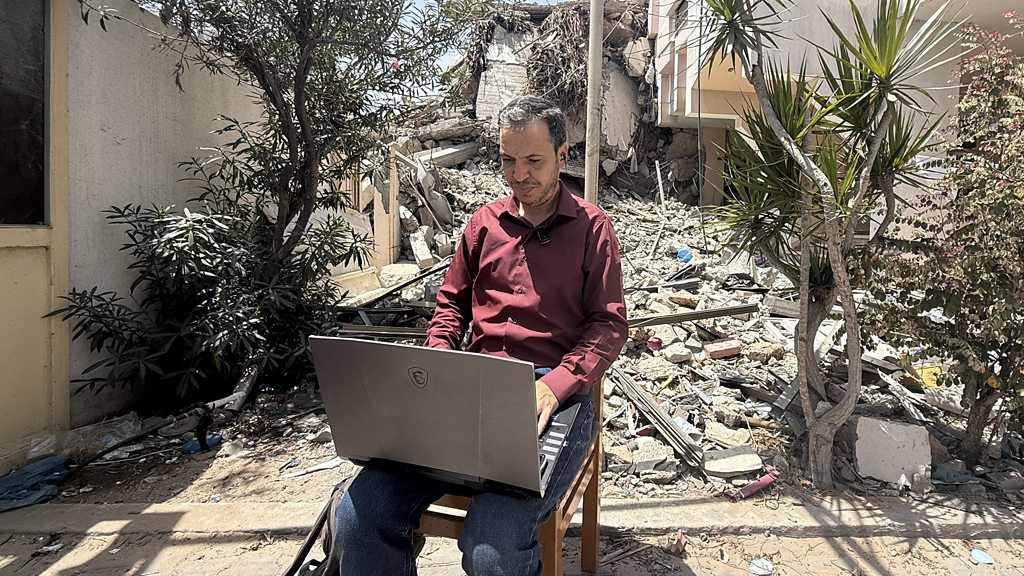
How amid the tents and the rubble Gaza is developing once again as an unlikely tech hub. Even before the 7 October 2023 attack and the subsequent war between Israel and Hamas, NGOs, with the backing of Google, had sought to develop tech start-ups in the Gaza strip. The digital economy was one of the few areas in which young Gazans in particular could seek to earn money for their families. During the two years of war they struggled for food and water. Forced to move from place to place, most of them lost their homes, their work, sometimes their laptops and plenty lost family members. Now 80% of Gazans are unemployed and have no income. Many of them live amid the rubble in tents. Stable electricity and internet are difficult to come by. And yet co-working hubs have begun to pop up, giving well educated graduates a chance to work remotely for foreign companies as coders, software engineers and app developers. With Israel controlling what comes in and out of Gaza, they still face significant obstacles, not least finding decent internet, electricity and spare parts for their laptops. And with near-daily bombings continuing, Gaza’s wider recovery remains uncertain. Yolande Knell reports on how its tech workers give a glimpse of a brighter, possible future, open to the world beyond Gaza’s borders. (Photo: A man sits on a chair outside and is typing on the keyboard of a laptop on his lap. Behind him is a small tree and shrubs and rubble from destroyed apartments bathed in sunlight. He has short brown hair and wears a maroon long-sleeved shirt and jeans) Producer: John Murphy Studio engineer: Gareth Jones Programme co-ordinator: Gemma Ashman Editor: Penny Murphy
Read the full story at BBC ↗
Gaza's tech sector is experiencing modest revival through remote work opportunities, even amid widespread economic hardship. Before the October 2023 war, NGOs backed by Google had begun developing tech start-ups in the territory. Since the conflict, 80% of Gazans face unemployment and live without stable homes or infrastructure. Despite these conditions, co-working hubs have begun operating, connecting educated Gazans with remote positions as software engineers and developers for international companies. Significant barriers persist: Israeli restrictions on material imports, unreliable electricity and internet connectivity, and the difficulty of sourcing laptop components. The sector represents a potential income path for young workers, though broader economic stability remains constrained by security conditions and infrastructure limitations.
Read the full story at BBC ↗
Use BBC.com or the new BBC App to listen to BBC podcasts, Radio 4 and the World Service outside the UK.
Find out how to listen to other BBC stations
World Service,·04 Aug 2026,·26 mins
Available for over a year
How amid the tents and the rubble Gaza is developing once again as an unlikely tech hub. Even before the 7 October 2023 attack and the subsequent war between Israel and Hamas, NGOs, with the backing of Google, had sought to develop tech start-ups in the Gaza strip. The digital economy was one of the few areas in which young Gazans in particular could seek to earn money for their families. During the two years of war they struggled for food and water. Forced to move from place to place, most of them lost their homes, their work, sometimes their laptops and plenty lost family members. Now 80% of Gazans are unemployed and have no income. Many of them live amid the rubble in tents. Stable electricity and internet are difficult to come by. And yet co-working hubs have begun to pop up, giving well educated graduates a chance to work remotely for foreign companies as coders, software engineers and app developers. With Israel controlling what comes in and out of Gaza, they still face significant obstacles, not least finding decent internet, electricity and spare parts for their laptops. And with near-daily bombings continuing, Gaza’s wider recovery remains uncertain. Yolande Knell reports on how its tech workers give a glimpse of a brighter, possible future, open to the world beyond Gaza’s borders. (Photo: A man sits on a chair outside and is typing on the keyboard of a laptop on his lap. Behind him is a small tree and shrubs and rubble from destroyed apartments bathed in sunlight. He has short brown hair and wears a maroon long-sleeved shirt and jeans) Producer: John Murphy Studio engineer: Gareth Jones Programme co-ordinator: Gemma Ashman Editor: Penny Murphy
Read the full story at BBC ↗
Before October 2023, NGOs backed by Google sought to develop tech start-ups in Gaza Gaza's digital economy was positioned as one of few income-generating sectors available to young Gazans The two-year conflict displaced most Gaza residents from their homes and caused widespread loss of work and possessions Currently 80% of Gazans are unemployed with no income Co-working hubs have begun operating in Gaza These hubs enable remote work for foreign companies in coding, software engineering, and app development Israel controls what enters and exits Gaza Tech workers face obstacles including inadequate internet, electricity, and laptop component availability Near-daily bombings continue in Gaza Tech activity offers 'a glimpse of a brighter, possible future'
Read the full story at BBC ↗
- Gaza's unemployment stands at 80% following two years of war; most residents lack stable homes, electricity, and internet access
- Co-working hubs have emerged in Gaza, enabling educated graduates to work remotely as software engineers and developers for foreign companies
- Tech sector development in Gaza was supported by NGOs and Google before the October 2023 conflict; this digital economy offers income opportunities for young Gazans
- Israeli controls on goods entering Gaza create significant obstacles to tech work, including limited internet, electricity, and laptop components
- Ongoing security concerns and infrastructure challenges make Gaza's broader economic recovery uncertain despite emerging tech activity