Atmosphere in Iran remains highly charged after Ayatollah’s funeral and escalation of grievances with US
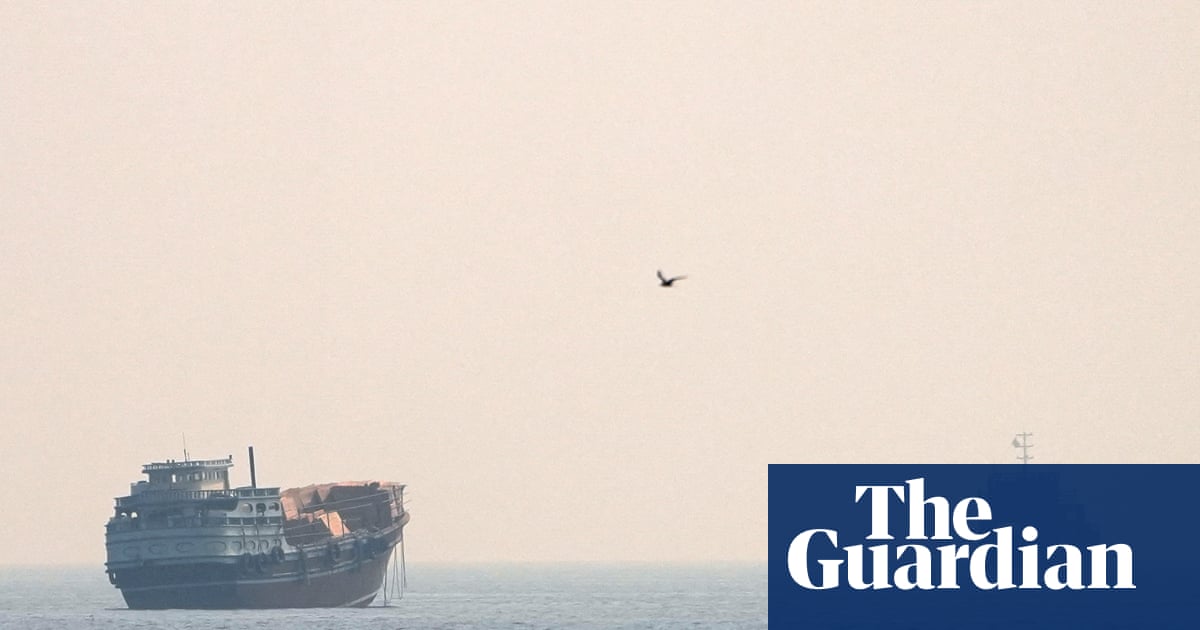
Before a foreign ministry press briefing at the Grand Hotel Tehran, the assembled reporters were asked to stand for the national anthem that duly blared from fuzzy speakers.
At the podium, the ministry spokesperson, Esmail Baghaei, claimed the world was witnessing a turning point in the history of Shia Islam. A century from now, he claimed, the assassinated Ayatollah Ali Khamenei would be revered as a second Imam Hussain, the martyred grandson of the prophet Muhammad. Donald Trump, meanwhile, would be seen as a latterday Yazid, the tyrannical 7th century caliph.
Normally one of the most level-headed diplomats in the foreign ministry, Baghaei portrayed Iran as the victim of an epochal struggle to protect its independence.
Although the streets outside were returning to a form of normality after Khamenei’s funeral procession, the deep wave of religiosity and patriotism it unleashed had not abated, only moved on to Najaf in Iraq, where the supreme leader’s coffin was taken to the shrine of Imam Ali. The atmosphere in Iran could not be more highly charged.
So a foul-tempered Donald Trump picked a particularly sensitive moment at the Nato summit in Turkey to describe Iranians as “garbage”, “cancer”, “devils” and “scum”. He declared further talks with Iran a waste of time.
It is tempting to see the latest military flare-up, including Tuesday’s exchange of fire in the strait of Hormuz, as just the product of an unfortunate juxtaposition. Trump, aggrieved at Europe’s supposed free-riding at Nato, was generally lashing out; Iran, gripped by grief and religious fervour, was asserting itself as “a brave and resilient nation that harbours no fear of threats or bluster”.
On that basis, optimists may hope the current mood may dissipate like a dark passing cloud. After all, Trump left the door open for further talks, and spoke of Israel leaving Lebanon, a key Iranian demand.
Unfortunately, such optimism may be misplaced. It seems just as likely that it is not Iran’s diplomats but the military who are now making the decisions, since all the supposed confidence-building measures have fallen flat.
There may be no circuit breaker to end the cycle of Iranian attacks on shipping in the strait of Hormuz, US strikes on the southern Iranian coastline and Iranian counter-attacks on US military bases in Bahrain and Kuwait.
Eric Brewer, a former US national security adviser, said Trump may be reaping the consequences of what he sowed. “He accepted a vague agreement that postponed many issues to the future because he was concerned about the economic consequences of continuing the war and doubted further bombing would bring much success,” Brewer said.
Vali Nasr, author of Iran’s Grand Strategy, warned that the current escalation could easily lead to an end of the memorandum of understanding (MOU), which was designed to lead to substantial peace talks. “Iran believes the US wants to use it to gain control of the strait from Tehran – and if that is the case, Iran must be prepared to go to war over this issue,” Nasr said.
Ellie Geranmayeh, middle east analyst at the European Council on Foreign Relations, said the problem is partly about sequencing: “Iran does not want to cede its leverage over the strait before a broader deal is reached on US economic relief. [But] for Trump, the reopening of the strait is the heart of the MOU and without it he will be under immense pressure from Republican hawks to resume war with Iran.”
Baghaei insisted that the MOU clearly referred to continued Iranian control of the strait for at least 60 days, and argued that the recent US-Omani attempt to create a new southern route through the strait – the shipping lane that Iran attacked three times on Tuesday – is incompatible with the agreement.
“The problem here is that the US is interfering in Iran’s business,” he said.
Iranian diplomats know the articles of the MOU by heart, as the agreement was designed by Iran to defer discussion of the nuclear issue until Iran has first received tangible gains, such as sanctions relief.
For them, any attempt to reopen the strait through demining and permissions would be seen as the decommissioning of its chief weapon.
The recent surge of ships through the southern route – and the accompanying fall in oil prices – was alarming and premature. Iran needed to take back control, or risk losing its leverage to secure sanctions relief and a ceasefire in Lebanon.
By contrast, the US says the main objective settled in the MOU was the reopening of the strait, and that an Iranian veto of the route was never part of the deal.
To compound the crisis, the US on Tuesday revoked its sanctions waiver on Iran’s oil exports only 17 days after its introduction. The waiver had been the one tangible benefit Iran had received from the deal.
Those close to the crisis are aiming to create a joint system of notification for ships passing through the strait in which both Iran and the members of the Gulf Co-operation Council would have a say. Such a move would be a loosening of Iranian sovereignty, but not an abandonment.
But behind that piece of diplomacy is a bigger problem: Iranian diplomats insist that in future all ships transiting the strait will have to pay a security fee – a proposal that is universally rejected, but that Iran still seems unwilling to give up.
For the moment the only constraint on a return to all out-war is that it has been tried, and failed.
Read the full story at The Guardian ↗
Iran is experiencing elevated political and religious sentiment following Ayatollah Khamenei's funeral. Simultaneously, a dispute has emerged over control of shipping routes in the Strait of Hormuz. The US and Iran signed a memorandum of understanding recently, but disagree fundamentally on its terms: Iran interprets it as preserving its control over the strait for 60 days and as precondition to broader nuclear and sanctions negotiations, while the US views strait reopening as the agreement's core objective. On Tuesday, military exchanges occurred in the strait, and the US revoked an oil export sanctions waiver it had introduced 17 days earlier—the primary tangible benefit Iran had received. Iran has attacked shipping on a newly promoted southern route three times. Diplomatic efforts are exploring joint notification systems for vessel transit, though Iran continues to demand security fees that other parties reject. Analysts note military actors may now be driving Iranian policy, raising the risk of sustained escalation cycles.
Read the full story at The Guardian ↗
Before a foreign ministry press briefing at the Grand Hotel Tehran, the assembled reporters were asked to stand for the national anthem that duly blared from fuzzy speakers.
At the podium, the ministry spokesperson, Esmail Baghaei, claimed the world was witnessing a turning point in the history of Shia Islam. A century from now, he claimed, the assassinated Ayatollah Ali Khamenei would be revered as a second Imam Hussain, the martyred grandson of the prophet Muhammad. Donald Trump, meanwhile, would be seen as a latterday Yazid, the tyrannical 7th century caliph.
Normally one of the most level-headed diplomats in the foreign ministry, Baghaei portrayed Iran as the victim of an epochal struggle to protect its independence.
Although the streets outside were returning to a form of normality after Khamenei’s funeral procession, the deep wave of religiosity and patriotism it unleashed had not abated, only moved on to Najaf in Iraq, where the supreme leader’s coffin was taken to the shrine of Imam Ali. The atmosphere in Iran could not be more highly charged.
So a foul-tempered Donald Trump picked a particularly sensitive moment at the Nato summit in Turkey to describe Iranians as “garbage”, “cancer”, “devils” and “scum”. He declared further talks with Iran a waste of time.
It is tempting to see the latest military flare-up, including Tuesday’s exchange of fire in the strait of Hormuz, as just the product of an unfortunate juxtaposition. Trump, aggrieved at Europe’s supposed free-riding at Nato, was generally lashing out; Iran, gripped by grief and religious fervour, was asserting itself as “a brave and resilient nation that harbours no fear of threats or bluster”.
On that basis, optimists may hope the current mood may dissipate like a dark passing cloud. After all, Trump left the door open for further talks, and spoke of Israel leaving Lebanon, a key Iranian demand.
Unfortunately, such optimism may be misplaced. It seems just as likely that it is not Iran’s diplomats but the military who are now making the decisions, since all the supposed confidence-building measures have fallen flat.
There may be no circuit breaker to end the cycle of Iranian attacks on shipping in the strait of Hormuz, US strikes on the southern Iranian coastline and Iranian counter-attacks on US military bases in Bahrain and Kuwait.
Eric Brewer, a former US national security adviser, said Trump may be reaping the consequences of what he sowed. “He accepted a vague agreement that postponed many issues to the future because he was concerned about the economic consequences of continuing the war and doubted further bombing would bring much success,” Brewer said.
Vali Nasr, author of Iran’s Grand Strategy, warned that the current escalation could easily lead to an end of the memorandum of understanding (MOU), which was designed to lead to substantial peace talks. “Iran believes the US wants to use it to gain control of the strait from Tehran – and if that is the case, Iran must be prepared to go to war over this issue,” Nasr said.
Ellie Geranmayeh, middle east analyst at the European Council on Foreign Relations, said the problem is partly about sequencing: “Iran does not want to cede its leverage over the strait before a broader deal is reached on US economic relief. [But] for Trump, the reopening of the strait is the heart of the MOU and without it he will be under immense pressure from Republican hawks to resume war with Iran.”
Baghaei insisted that the MOU clearly referred to continued Iranian control of the strait for at least 60 days, and argued that the recent US-Omani attempt to create a new southern route through the strait – the shipping lane that Iran attacked three times on Tuesday – is incompatible with the agreement.
“The problem here is that the US is interfering in Iran’s business,” he said.
Iranian diplomats know the articles of the MOU by heart, as the agreement was designed by Iran to defer discussion of the nuclear issue until Iran has first received tangible gains, such as sanctions relief.
For them, any attempt to reopen the strait through demining and permissions would be seen as the decommissioning of its chief weapon.
The recent surge of ships through the southern route – and the accompanying fall in oil prices – was alarming and premature. Iran needed to take back control, or risk losing its leverage to secure sanctions relief and a ceasefire in Lebanon.
By contrast, the US says the main objective settled in the MOU was the reopening of the strait, and that an Iranian veto of the route was never part of the deal.
To compound the crisis, the US on Tuesday revoked its sanctions waiver on Iran’s oil exports only 17 days after its introduction. The waiver had been the one tangible benefit Iran had received from the deal.
Those close to the crisis are aiming to create a joint system of notification for ships passing through the strait in which both Iran and the members of the Gulf Co-operation Council would have a say. Such a move would be a loosening of Iranian sovereignty, but not an abandonment.
But behind that piece of diplomacy is a bigger problem: Iranian diplomats insist that in future all ships transiting the strait will have to pay a security fee – a proposal that is universally rejected, but that Iran still seems unwilling to give up.
For the moment the only constraint on a return to all out-war is that it has been tried, and failed.
Read the full story at The Guardian ↗
Ayatollah Ali Khamenei was assassinated; his funeral occurred recently and his coffin was taken to the shrine of Imam Ali in Najaf, Iraq Iran's foreign ministry spokesperson Esmail Baghaei claimed at a briefing that the world was witnessing a turning point in Shia Islamic history and compared Khamenei to Imam Hussain and Trump to the 7th century caliph Yazid A military exchange of fire occurred in the Strait of Hormuz on Tuesday; Iran attacked a newly promoted southern shipping route three times that day The US revoked its sanctions waiver on Iran's oil exports 17 days after introducing it A memorandum of understanding between the US and Iran exists; Iran states it clearly refers to continued Iranian control of the strait for at least 60 days, while the US says reopening the strait was the main objective and an Iranian veto was never part of the agreement Iran interprets the MOU as deferring nuclear discussions until Iran receives tangible gains such as sanctions relief and a ceasefire in Lebanon The atmospheric tension in Iran following Khamenei's funeral has remained highly charged rather than dissipating Analysts warn that military actors rather than diplomats may now be making decisions for Iran The recent surge in ships through the southern route and accompanying fall in oil prices was premature and alarming to Iran, which needed to regain control to maintain leverage Iran's demand for security fees from transiting ships represents ongoing leverage it is unwilling to abandon A joint notification system would represent a loosening but not abandonment of Iranian sovereignty over the strait
Read the full story at The Guardian ↗
- Iran's leadership is in a heightened state after Ayatollah Khamenei's funeral, with religious and nationalist sentiment mobilized across the country and into Iraq
- A dispute over shipping routes in the Strait of Hormuz has escalated between the US and Iran, with Tuesday involving military exchanges and the US revoking an oil export sanctions waiver after 17 days
- The core disagreement centers on whether a recent US-Omani memorandum of understanding grants Iran continued control of the strait or permits unrestricted reopening; both sides interpret it differently
- Military rather than diplomatic actors may now be driving Iranian decision-making, creating risk of continued cycles of attack and counter-attack
- Efforts to establish a joint notification system for strait transit offer potential de-escalation, though Iran continues to demand security fees from transiting ships