Avoid rare species and only take what you need: how to forage and save money on your food shopping
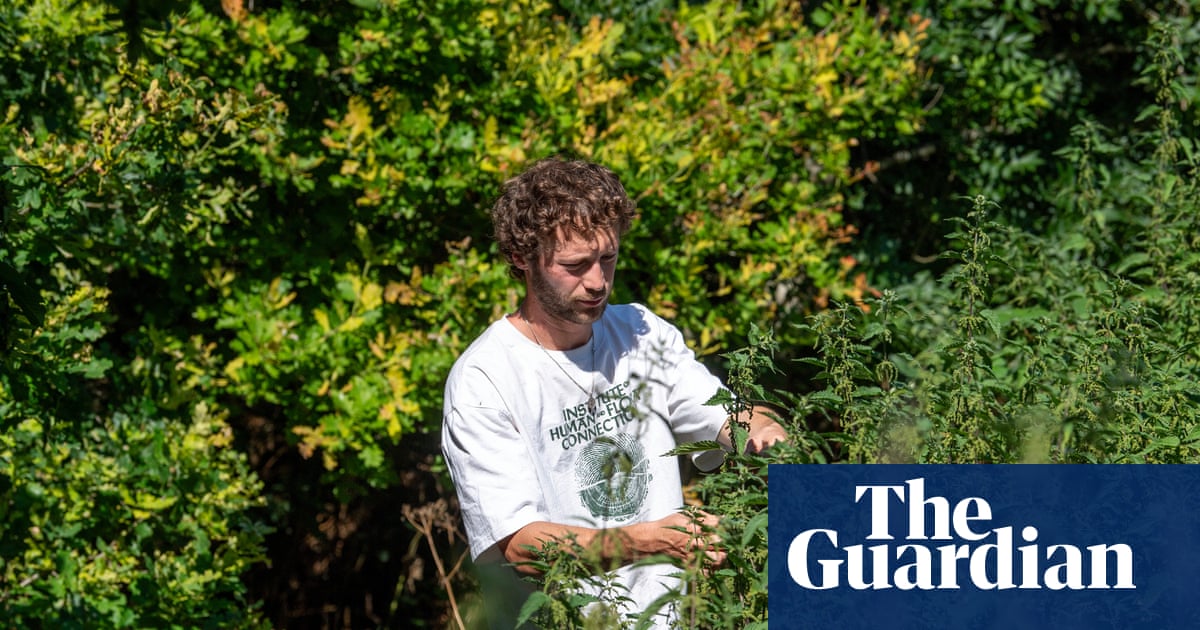
Angus Morton crouches behind a cricket pavilion in a London park to snip stinging nettles from an unkempt patch of greenery.
“They’re so abundant and they’re so good,” says Morton, a regenerative gardener who pops out once a week to forage bits for dinner. “I use them in pesto, tea … I’ve even seen someone putting them in croquetas.”
Morton, who posts regularly about his foraging exploits online, is one of a growing number of people venturing into the wild in search of food. He says he shaves hundreds of pounds off his food bill each month, fermenting pine needles to carbonate drinks, picking ivy for soap and harvesting wild mushrooms for dinner.
But as reports of an early heatwave-ripened blackberry crop flood social media, he offers a warning.
“It’s important for this to thrive naturally,” he says, as he pours hot water over the leaves he gathered to make nettle tea. “As humans we should be working with it and not taking advantage of it. Only take what you need – about 10% of what’s there – so it has the chance to grow back. If you take more than you need, you’re going to ruin it.”
The increased popularity of foraging has prompted concern that pickers could put pressure on habitats and green spaces by over-harvesting fungi, flowers and fruit. Conservation groups advise foragers to take only small quantities, avoid rare species and leave enough for wildlife to consume.
Some have gone further by forbidding harvesting altogether. Last autumn, Surrey Wildlife Trust reminded visitors that mushroom picking was banned on its reserves to help protect fungi and the wildlife that depends on them. London Wildlife Trust also forbids picking at Walthamstow Wetlands, where wild plants, fruits and seeds provide food and habitat for birds and other animals.
But some foragers and ecologists argue that responsible gathering of wild food can help biodiversity by teaching people to recognise the nature around them – and give them a reason to protect it.
John Rensten, a foraging teacher and author of The Edible City: A Year of Wild Food, says foraging can be a biodiversity booster. “I believe in getting people to interact with landscape in order to want to protect it,” he says. “You feel connected towards it and you feel ownership of it and a desire to want to protect it and nurture it.”
Foraging teaches people about their environment, says Rensten, and this is the first step in battling biodiversity loss. He has seen as much delivering foraging courses. “The best comment we ever get from anybody is the guy who says, ‘I’ve been coming here 25 years and I’m never going to look at this place in the same way again.’
“He’s the guy who’s going to be protesting if they’re trying to nibble away at the end of the park with the housing development. We’ve taken thousands of people and made them become protectors of scruffy overgrown little bit of urban landscapes that they once wouldn’t have cared less about.”
Ecological studies suggest people with greater knowledge of local plants and wildlife are more likely to value green spaces and support their protection. “This is so important because we are living in a silent extinction of experience crisis,” says Dr Ingo Kowarik, a former urban ecologist at the Technical University of Berlin.
“Young people have decreasing context of nature,” he says. “This feeds back to biodiversity conservation because we know that nature connectedness is positively linked to environmental behaviour.”
The benefits can go beyond simply changing attitudes, says Mallika Sardeshpande, an ecologist at the Swedish University of Agricultural Science who has studied urban foraging in South African cities. She says incorporating edible plants into the design of public spaces can support wildlife.
“There are examples where urban planners start planting herbs and flowers in beds that people enjoy picking, and that in turn attracts bees and other insect pollinators,” she says. “So there’s a trickle-down effect as well.”
Planting fruit trees, flowering herbs and other edible species in urban areas can provide food for people while creating habitat for insects and birds, she says. “In some ways, foraging is enhancing biodiversity because it is bringing back the species that have systematically been excluded from urban green spaces.”
Back in London, Morton’s nettles are unlikely to feature in any new multimillion-pound regeneration schemes. But foragers say this is the point: connecting with local natural offerings, whatever that might look like.
“People should learn about foraging and know the problems with it and the benefits as well,” he says. “I try to incorporate foraging with my meals every week. But I try to be conscious of what I’m doing. If I was to go here every week, there wouldn’t be any left.”
Read the full story at The Guardian ↗
While there are fears that people harvesting their food could put pressure on habitats, some ecologists suggest responsible foraging can boost conservation and biodiversity. Angus…
This lens runs the verified story through Cinnamon's AI — wired in the next step.
Angus Morton crouches behind a cricket pavilion in a London park to snip stinging nettles from an unkempt patch of greenery.
“They’re so abundant and they’re so good,” says Morton, a regenerative gardener who pops out once a week to forage bits for dinner. “I use them in pesto, tea … I’ve even seen someone putting them in croquetas.”
Morton, who posts regularly about his foraging exploits online, is one of a growing number of people venturing into the wild in search of food. He says he shaves hundreds of pounds off his food bill each month, fermenting pine needles to carbonate drinks, picking ivy for soap and harvesting wild mushrooms for dinner.
But as reports of an early heatwave-ripened blackberry crop flood social media, he offers a warning.
“It’s important for this to thrive naturally,” he says, as he pours hot water over the leaves he gathered to make nettle tea. “As humans we should be working with it and not taking advantage of it. Only take what you need – about 10% of what’s there – so it has the chance to grow back. If you take more than you need, you’re going to ruin it.”
The increased popularity of foraging has prompted concern that pickers could put pressure on habitats and green spaces by over-harvesting fungi, flowers and fruit. Conservation groups advise foragers to take only small quantities, avoid rare species and leave enough for wildlife to consume.
Some have gone further by forbidding harvesting altogether. Last autumn, Surrey Wildlife Trust reminded visitors that mushroom picking was banned on its reserves to help protect fungi and the wildlife that depends on them. London Wildlife Trust also forbids picking at Walthamstow Wetlands, where wild plants, fruits and seeds provide food and habitat for birds and other animals.
But some foragers and ecologists argue that responsible gathering of wild food can help biodiversity by teaching people to recognise the nature around them – and give them a reason to protect it.
John Rensten, a foraging teacher and author of The Edible City: A Year of Wild Food, says foraging can be a biodiversity booster. “I believe in getting people to interact with landscape in order to want to protect it,” he says. “You feel connected towards it and you feel ownership of it and a desire to want to protect it and nurture it.”
Foraging teaches people about their environment, says Rensten, and this is the first step in battling biodiversity loss. He has seen as much delivering foraging courses. “The best comment we ever get from anybody is the guy who says, ‘I’ve been coming here 25 years and I’m never going to look at this place in the same way again.’
“He’s the guy who’s going to be protesting if they’re trying to nibble away at the end of the park with the housing development. We’ve taken thousands of people and made them become protectors of scruffy overgrown little bit of urban landscapes that they once wouldn’t have cared less about.”
Ecological studies suggest people with greater knowledge of local plants and wildlife are more likely to value green spaces and support their protection. “This is so important because we are living in a silent extinction of experience crisis,” says Dr Ingo Kowarik, a former urban ecologist at the Technical University of Berlin.
“Young people have decreasing context of nature,” he says. “This feeds back to biodiversity conservation because we know that nature connectedness is positively linked to environmental behaviour.”
The benefits can go beyond simply changing attitudes, says Mallika Sardeshpande, an ecologist at the Swedish University of Agricultural Science who has studied urban foraging in South African cities. She says incorporating edible plants into the design of public spaces can support wildlife.
“There are examples where urban planners start planting herbs and flowers in beds that people enjoy picking, and that in turn attracts bees and other insect pollinators,” she says. “So there’s a trickle-down effect as well.”
Planting fruit trees, flowering herbs and other edible species in urban areas can provide food for people while creating habitat for insects and birds, she says. “In some ways, foraging is enhancing biodiversity because it is bringing back the species that have systematically been excluded from urban green spaces.”
Back in London, Morton’s nettles are unlikely to feature in any new multimillion-pound regeneration schemes. But foragers say this is the point: connecting with local natural offerings, whatever that might look like.
“People should learn about foraging and know the problems with it and the benefits as well,” he says. “I try to incorporate foraging with my meals every week. But I try to be conscious of what I’m doing. If I was to go here every week, there wouldn’t be any left.”
Read the full story at The Guardian ↗
Angus Morton crouches behind a cricket pavilion in a London park to snip stinging nettles from an unkempt patch of greenery.
“They’re so abundant and they’re so good,” says Morton, a regenerative gardener who pops out once a week to forage bits for dinner. “I use them in pesto, tea … I’ve even seen someone putting them in croquetas.”
Morton, who posts regularly about his foraging exploits online, is one of a growing number of people venturing into the wild in search of food. He says he shaves hundreds of pounds off his food bill each month, fermenting pine needles to carbonate drinks, picking ivy for soap and harvesting wild mushrooms for dinner.
But as reports of an early heatwave-ripened blackberry crop flood social media, he offers a warning.
“It’s important for this to thrive naturally,” he says, as he pours hot water over the leaves he gathered to make nettle tea. “As humans we should be working with it and not taking advantage of it. Only take what you need – about 10% of what’s there – so it has the chance to grow back. If you take more than you need, you’re going to ruin it.”
The increased popularity of foraging has prompted concern that pickers could put pressure on habitats and green spaces by over-harvesting fungi, flowers and fruit. Conservation groups advise foragers to take only small quantities, avoid rare species and leave enough for wildlife to consume.
Some have gone further by forbidding harvesting altogether. Last autumn, Surrey Wildlife Trust reminded visitors that mushroom picking was banned on its reserves to help protect fungi and the wildlife that depends on them. London Wildlife Trust also forbids picking at Walthamstow Wetlands, where wild plants, fruits and seeds provide food and habitat for birds and other animals.
But some foragers and ecologists argue that responsible gathering of wild food can help biodiversity by teaching people to recognise the nature around them – and give them a reason to protect it.
John Rensten, a foraging teacher and author of The Edible City: A Year of Wild Food, says foraging can be a biodiversity booster. “I believe in getting people to interact with landscape in order to want to protect it,” he says. “You feel connected towards it and you feel ownership of it and a desire to want to protect it and nurture it.”
Foraging teaches people about their environment, says Rensten, and this is the first step in battling biodiversity loss. He has seen as much delivering foraging courses. “The best comment we ever get from anybody is the guy who says, ‘I’ve been coming here 25 years and I’m never going to look at this place in the same way again.’
“He’s the guy who’s going to be protesting if they’re trying to nibble away at the end of the park with the housing development. We’ve taken thousands of people and made them become protectors of scruffy overgrown little bit of urban landscapes that they once wouldn’t have cared less about.”
Ecological studies suggest people with greater knowledge of local plants and wildlife are more likely to value green spaces and support their protection. “This is so important because we are living in a silent extinction of experience crisis,” says Dr Ingo Kowarik, a former urban ecologist at the Technical University of Berlin.
“Young people have decreasing context of nature,” he says. “This feeds back to biodiversity conservation because we know that nature connectedness is positively linked to environmental behaviour.”
The benefits can go beyond simply changing attitudes, says Mallika Sardeshpande, an ecologist at the Swedish University of Agricultural Science who has studied urban foraging in South African cities. She says incorporating edible plants into the design of public spaces can support wildlife.
“There are examples where urban planners start planting herbs and flowers in beds that people enjoy picking, and that in turn attracts bees and other insect pollinators,” she says. “So there’s a trickle-down effect as well.”
Planting fruit trees, flowering herbs and other edible species in urban areas can provide food for people while creating habitat for insects and birds, she says. “In some ways, foraging is enhancing biodiversity because it is bringing back the species that have systematically been excluded from urban green spaces.”
Back in London, Morton’s nettles are unlikely to feature in any new multimillion-pound regeneration schemes. But foragers say this is the point: connecting with local natural offerings, whatever that might look like.
“People should learn about foraging and know the problems with it and the benefits as well,” he says. “I try to incorporate foraging with my meals every week. But I try to be conscious of what I’m doing. If I was to go here every week, there wouldn’t be any left.”
Read the full story at The Guardian ↗
This lens runs the verified story through Cinnamon's AI — wired in the next step.
- While there are fears that people harvesting their food could put pressure on habitats, some ecologists suggest responsible foraging can boost conservation and biodiversity.