Beveridge revisited: Simon Callow film celebrates the radical co-founder of Britain’s welfare state
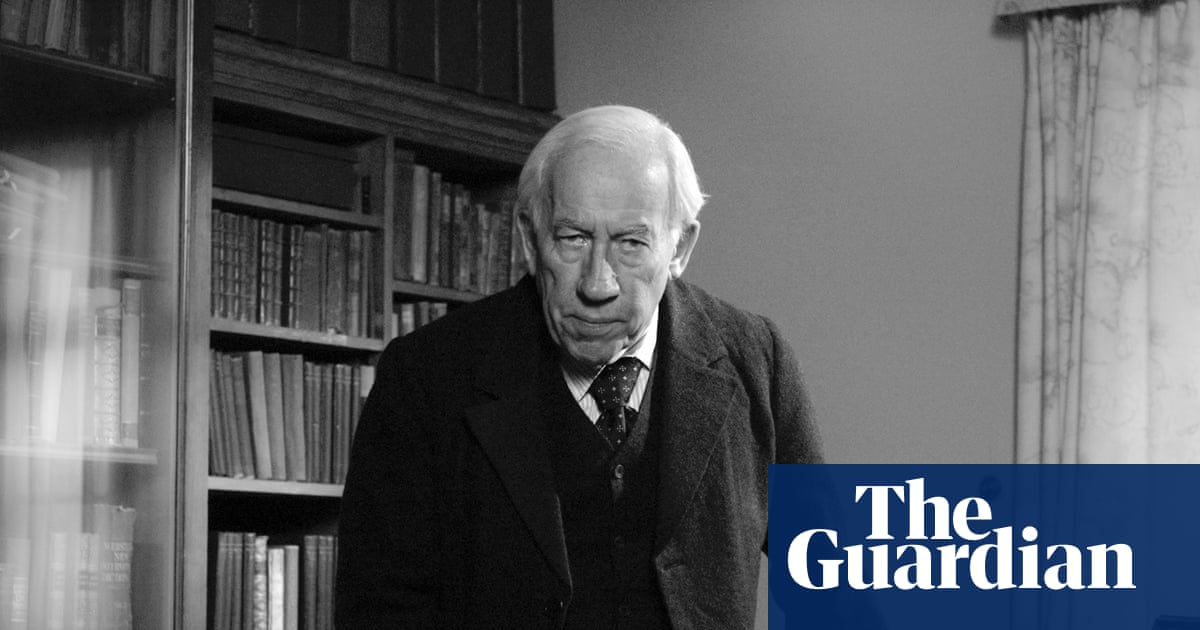
A new film that addresses issues fundamental to the new prime minister’s declared mission will star Simon Callow as a historical British political figure.
The hero of The Man With the Plan is William Beveridge, who helped to lay the foundations of the postwar welfare state. It shows that the Liberal peer was much more radical than is usually assumed – and certainly far more so than Churchill anticipated when he asked Beveridge to draw up a report into the future of Britain’s fragmented social insurance and national health system after the second world war.
Despite its misleadingly dull title, Social Insurance and Allied Services, Beveridge’s report caused a sensation: on the day it was published in 1942, a mile-long queue formed outside the government’s stationery office in Kingsway, central London. More than 650,000 copies were sold.
Now The Man With the Plan is about to tour the country, to be shown mainly in small venues including libraries and community centres.
It was written and directed by Christine Edzard, who, with Olivier Stockman, the film’s producer, runs Sands Films Studio in Rotherhithe in London, where the film was shot. It is the home of the film studio; the Sands Films Cinema Club, which organises public screenings; a music room which hosts live events and concerts; and an acclaimed collection of period costumes. Edzard and Stockman’s previous films include Little Dorrit, As You Like It and, in 2018, an adaptation of Czech classic The Good Soldier Schwejk.
In The Man With the Plan, a young student called Flea, played by newcomer Sophie Jenkin, embarks on a journey and comes across Beveridge’s “five giants”: want, disease, squalor (voiced by Miriam Margolyes), idleness and ignorance. Puzzled by sceptics and opponents of the plan, she confronts a landlord, a skiver, some journalists (portrayed as sheep), politicians and city traders as well as the devil (played by a seductive Alan Cox).
Participants in the film include campaigning standup comedian Mark Thomas and Sir Michael Marmot, professor of epidemiology and public health at University College London. Beveridge’s words are spoken verbatim by actor Simon Callow. Prevention of ill health may begin with health centres, says Beveridge, but it also “spreads into problems of sanitation, housing, nutrition. One of the main efforts should be directed to improving housing – there lies the scope for raising standards of living and improving health and defeating the giant squalor.”
Beveridge continues: “A satisfactory scheme of social insurance also assumes the maintenance of employment and the prevention of mass unemployment: the giant idleness.”
During her travels, Flea faces fierce opposition to a “living wage”, defence spending, the role of the private sector in the NHS, and the privatisation of public utilities. Beveridge’s opponents mock his ambition to abolish want, and the need for an economic policy to maintain productive employment.
A sneering choir sings: “Minimum wages cause unemployment … minimum wages cause inflation … minimum wages cause spiralling prices … What of the nation’s debt? Think of the national debt! What of our defence spending? Defence from what?” A narrator intervenes to remind viewers that “the state is the people. The state is not some dictator or Google or Amazon – or ‘they’. The state is you. You!”
Flea asks Marmot whether he thinks Beveridge’s plan could be possible today. He replies: “Not just possible today, but necessary, vital, today. We have to address the causes of the causes – and they reside in those five giants of Beveridge. So we need social action, we need to rediscover the public good.”
For many people, probably most, this is utopian. But, as this film shows, the charge of utopianism should not be used as an excuse for political leaders simply to reject all his ambitious aims, as successive governments have done. Andy Burnham take note.
Read the full story at The Guardian ↗
Christine Edzard’s The Man With the Plan tours the country with a timely message about tackling want, disease, squalor, idleness and ignorance. A new film that addresses issues…
This lens runs the verified story through Cinnamon's AI — wired in the next step.
A new film that addresses issues fundamental to the new prime minister’s declared mission will star Simon Callow as a historical British political figure.
The hero of The Man With the Plan is William Beveridge, who helped to lay the foundations of the postwar welfare state. It shows that the Liberal peer was much more radical than is usually assumed – and certainly far more so than Churchill anticipated when he asked Beveridge to draw up a report into the future of Britain’s fragmented social insurance and national health system after the second world war.
Despite its misleadingly dull title, Social Insurance and Allied Services, Beveridge’s report caused a sensation: on the day it was published in 1942, a mile-long queue formed outside the government’s stationery office in Kingsway, central London. More than 650,000 copies were sold.
Now The Man With the Plan is about to tour the country, to be shown mainly in small venues including libraries and community centres.
It was written and directed by Christine Edzard, who, with Olivier Stockman, the film’s producer, runs Sands Films Studio in Rotherhithe in London, where the film was shot. It is the home of the film studio; the Sands Films Cinema Club, which organises public screenings; a music room which hosts live events and concerts; and an acclaimed collection of period costumes. Edzard and Stockman’s previous films include Little Dorrit, As You Like It and, in 2018, an adaptation of Czech classic The Good Soldier Schwejk.
In The Man With the Plan, a young student called Flea, played by newcomer Sophie Jenkin, embarks on a journey and comes across Beveridge’s “five giants”: want, disease, squalor (voiced by Miriam Margolyes), idleness and ignorance. Puzzled by sceptics and opponents of the plan, she confronts a landlord, a skiver, some journalists (portrayed as sheep), politicians and city traders as well as the devil (played by a seductive Alan Cox).
Participants in the film include campaigning standup comedian Mark Thomas and Sir Michael Marmot, professor of epidemiology and public health at University College London. Beveridge’s words are spoken verbatim by actor Simon Callow. Prevention of ill health may begin with health centres, says Beveridge, but it also “spreads into problems of sanitation, housing, nutrition. One of the main efforts should be directed to improving housing – there lies the scope for raising standards of living and improving health and defeating the giant squalor.”
Beveridge continues: “A satisfactory scheme of social insurance also assumes the maintenance of employment and the prevention of mass unemployment: the giant idleness.”
During her travels, Flea faces fierce opposition to a “living wage”, defence spending, the role of the private sector in the NHS, and the privatisation of public utilities. Beveridge’s opponents mock his ambition to abolish want, and the need for an economic policy to maintain productive employment.
A sneering choir sings: “Minimum wages cause unemployment … minimum wages cause inflation … minimum wages cause spiralling prices … What of the nation’s debt? Think of the national debt! What of our defence spending? Defence from what?” A narrator intervenes to remind viewers that “the state is the people. The state is not some dictator or Google or Amazon – or ‘they’. The state is you. You!”
Flea asks Marmot whether he thinks Beveridge’s plan could be possible today. He replies: “Not just possible today, but necessary, vital, today. We have to address the causes of the causes – and they reside in those five giants of Beveridge. So we need social action, we need to rediscover the public good.”
For many people, probably most, this is utopian. But, as this film shows, the charge of utopianism should not be used as an excuse for political leaders simply to reject all his ambitious aims, as successive governments have done. Andy Burnham take note.
Read the full story at The Guardian ↗
A new film that addresses issues fundamental to the new prime minister’s declared mission will star Simon Callow as a historical British political figure.
The hero of The Man With the Plan is William Beveridge, who helped to lay the foundations of the postwar welfare state. It shows that the Liberal peer was much more radical than is usually assumed – and certainly far more so than Churchill anticipated when he asked Beveridge to draw up a report into the future of Britain’s fragmented social insurance and national health system after the second world war.
Despite its misleadingly dull title, Social Insurance and Allied Services, Beveridge’s report caused a sensation: on the day it was published in 1942, a mile-long queue formed outside the government’s stationery office in Kingsway, central London. More than 650,000 copies were sold.
Now The Man With the Plan is about to tour the country, to be shown mainly in small venues including libraries and community centres.
It was written and directed by Christine Edzard, who, with Olivier Stockman, the film’s producer, runs Sands Films Studio in Rotherhithe in London, where the film was shot. It is the home of the film studio; the Sands Films Cinema Club, which organises public screenings; a music room which hosts live events and concerts; and an acclaimed collection of period costumes. Edzard and Stockman’s previous films include Little Dorrit, As You Like It and, in 2018, an adaptation of Czech classic The Good Soldier Schwejk.
In The Man With the Plan, a young student called Flea, played by newcomer Sophie Jenkin, embarks on a journey and comes across Beveridge’s “five giants”: want, disease, squalor (voiced by Miriam Margolyes), idleness and ignorance. Puzzled by sceptics and opponents of the plan, she confronts a landlord, a skiver, some journalists (portrayed as sheep), politicians and city traders as well as the devil (played by a seductive Alan Cox).
Participants in the film include campaigning standup comedian Mark Thomas and Sir Michael Marmot, professor of epidemiology and public health at University College London. Beveridge’s words are spoken verbatim by actor Simon Callow. Prevention of ill health may begin with health centres, says Beveridge, but it also “spreads into problems of sanitation, housing, nutrition. One of the main efforts should be directed to improving housing – there lies the scope for raising standards of living and improving health and defeating the giant squalor.”
Beveridge continues: “A satisfactory scheme of social insurance also assumes the maintenance of employment and the prevention of mass unemployment: the giant idleness.”
During her travels, Flea faces fierce opposition to a “living wage”, defence spending, the role of the private sector in the NHS, and the privatisation of public utilities. Beveridge’s opponents mock his ambition to abolish want, and the need for an economic policy to maintain productive employment.
A sneering choir sings: “Minimum wages cause unemployment … minimum wages cause inflation … minimum wages cause spiralling prices … What of the nation’s debt? Think of the national debt! What of our defence spending? Defence from what?” A narrator intervenes to remind viewers that “the state is the people. The state is not some dictator or Google or Amazon – or ‘they’. The state is you. You!”
Flea asks Marmot whether he thinks Beveridge’s plan could be possible today. He replies: “Not just possible today, but necessary, vital, today. We have to address the causes of the causes – and they reside in those five giants of Beveridge. So we need social action, we need to rediscover the public good.”
For many people, probably most, this is utopian. But, as this film shows, the charge of utopianism should not be used as an excuse for political leaders simply to reject all his ambitious aims, as successive governments have done. Andy Burnham take note.
Read the full story at The Guardian ↗
This lens runs the verified story through Cinnamon's AI — wired in the next step.
- Christine Edzard’s The Man With the Plan tours the country with a timely message about tackling want, disease, squalor, idleness and ignorance.
- A new film that addresses issues…