Big fall in oil, gas and cargo ships taking US-backed Hormuz route after new strikes
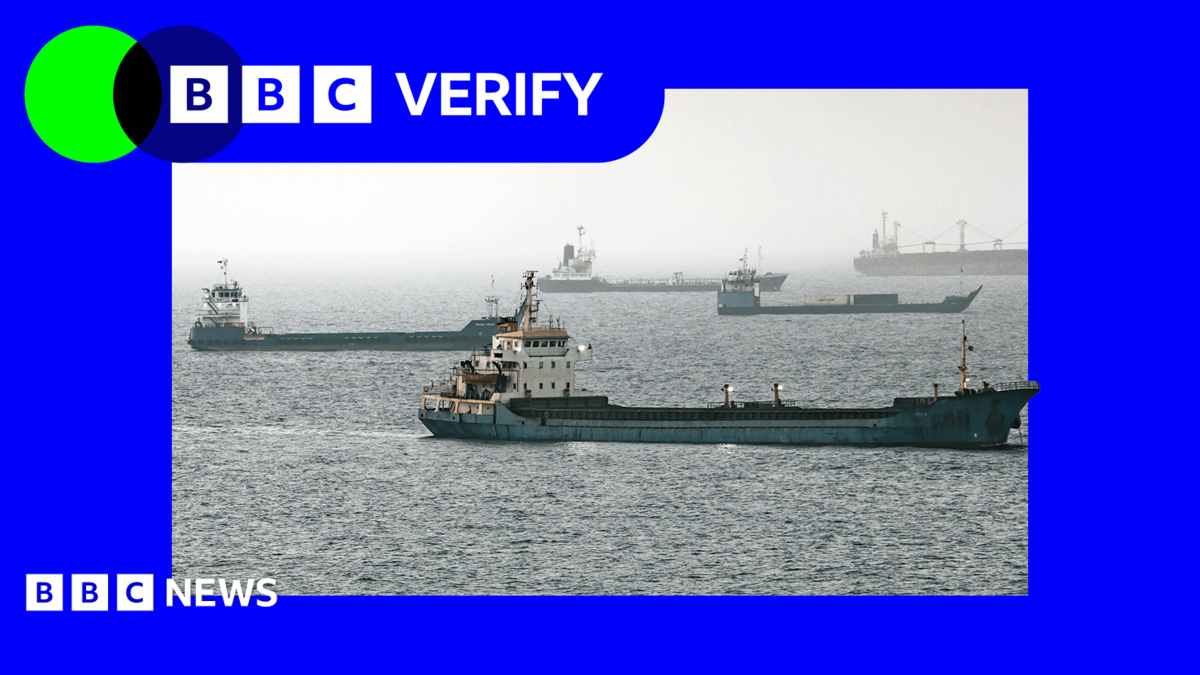
Traffic through the Strait of Hormuz has fallen steeply after a series of tit-for-tat strikes by the US and Iran following an attack on three tankers earlier this week.
Just 23 tankers and cargo ships crossed the critical Gulf waterway on Wednesday, according to the maritime intelligence firm Kpler, down from 47 from a week before.
The three ships that were struck this week were using a US-recommended route through Omani waters. Iran has repeatedly said the only "safe" route is separate route through its waters.
For decades vessels have been given free passage through the strait, through which more than a fifth of the world's oil and gas supplies as well as fertiliser shipments and other vital goods flow.
Before the conflict began an average of 138 ships crossed through the strait each day, according to the Joint Maritime Information Center (JMIC), a multinational maritime group including the US.
After the US and Israel launched its first strikes on Iran on 28 February, this fell to just a handful of ships per day,
Iran effectively closing the strait by attacking ships attempting to cross and laying mines and the US responded with a blockade on all shipping to and from Iranian ports.
A deal to end the war, which was signed on 17 June, included steps to re-open the strait. Washington also agreed to lift its naval blockade and ease sanctions on Iranian oil exports.
Following the agreement overall traffic levels in the strait did initially increase to a peak of 72 ships on 24 June.
Throughout its negotiations with the US, Iran has insisted it has the right to control movement through the strait and introduce fees for ships to pass.
The US and its Gulf allies, as well as governments in Europe and Asia, oppose this and say passage through the strait must return to being free and open as it was before the conflict began.
After the deal to end the war, the Iranian government set out a system of lanes through the north of the waterway close to the Iranian coast, which it said all traffic must use.
"The only safe route for the passage of commercial ships and oil tankers in the strait is the route determined by the Islamic Republic of Iran," Iran's top military command, Khatam al-Anbiya Central Headquarters, reiterated after this week's ship strikes.
After the deal was signed, the JMIC recommended instead that ships take a different route through Omani waters in the south of the strait.
The number of ships using this Omani route grew to a peak of 28 vessels on 25 June, Kpler's data shows, overtaking the number of transits via the Iranian route.
Then on 25 and 27 June two ships in Omani waters were struck with Iran warning all vessels to only use its approved routes.
President Donald Trump accused Iran of a "foolish violation" of its truce and the US military conducted strikes on Iranian targets.
Iran in turn accused the US of violating their interim deal and said it had struck targets linked to American forces in the region.
The number of ships transiting via the Omani route initially slumped following the strikes, before continuing at a lower level than before.
Read the full story at BBC ↗
Shipping traffic through the Strait of Hormuz has declined significantly following recent military strikes. On Wednesday, 23 ships transited the waterway compared with 47 a week earlier. The decline follows an attack on three tankers using a route through Omani waters that international maritime authorities had recommended. Iran's military command reiterated that it considers only routes through northern Iranian-controlled waters safe for passage. A ceasefire agreement signed in June had initially increased traffic to 72 ships daily, but subsequent strikes on vessels in Omani waters prompted the decline. The underlying dispute concerns whether shipping should transit freely as historically practised, or whether Iran may control routes and impose fees. The US, its Gulf allies, and other governments maintain that passage should remain free and open.
Read the full story at BBC ↗
Traffic through the Strait of Hormuz has fallen steeply after a series of tit-for-tat strikes by the US and Iran following an attack on three tankers earlier this week.
Just 23 tankers and cargo ships crossed the critical Gulf waterway on Wednesday, according to the maritime intelligence firm Kpler, down from 47 from a week before.
The three ships that were struck this week were using a US-recommended route through Omani waters. Iran has repeatedly said the only "safe" route is separate route through its waters.
For decades vessels have been given free passage through the strait, through which more than a fifth of the world's oil and gas supplies as well as fertiliser shipments and other vital goods flow.
Before the conflict began an average of 138 ships crossed through the strait each day, according to the Joint Maritime Information Center (JMIC), a multinational maritime group including the US.
After the US and Israel launched its first strikes on Iran on 28 February, this fell to just a handful of ships per day,
Iran effectively closing the strait by attacking ships attempting to cross and laying mines and the US responded with a blockade on all shipping to and from Iranian ports.
A deal to end the war, which was signed on 17 June, included steps to re-open the strait. Washington also agreed to lift its naval blockade and ease sanctions on Iranian oil exports.
Following the agreement overall traffic levels in the strait did initially increase to a peak of 72 ships on 24 June.
Throughout its negotiations with the US, Iran has insisted it has the right to control movement through the strait and introduce fees for ships to pass.
The US and its Gulf allies, as well as governments in Europe and Asia, oppose this and say passage through the strait must return to being free and open as it was before the conflict began.
After the deal to end the war, the Iranian government set out a system of lanes through the north of the waterway close to the Iranian coast, which it said all traffic must use.
"The only safe route for the passage of commercial ships and oil tankers in the strait is the route determined by the Islamic Republic of Iran," Iran's top military command, Khatam al-Anbiya Central Headquarters, reiterated after this week's ship strikes.
After the deal was signed, the JMIC recommended instead that ships take a different route through Omani waters in the south of the strait.
The number of ships using this Omani route grew to a peak of 28 vessels on 25 June, Kpler's data shows, overtaking the number of transits via the Iranian route.
Then on 25 and 27 June two ships in Omani waters were struck with Iran warning all vessels to only use its approved routes.
President Donald Trump accused Iran of a "foolish violation" of its truce and the US military conducted strikes on Iranian targets.
Iran in turn accused the US of violating their interim deal and said it had struck targets linked to American forces in the region.
The number of ships transiting via the Omani route initially slumped following the strikes, before continuing at a lower level than before.
Read the full story at BBC ↗
Traffic through the Strait of Hormuz fell to 23 tankers and cargo ships on Wednesday, down from 47 the previous week. Three ships were struck this week while using a US-recommended route through Omani waters. Iran's military command stated that the only safe route for commercial shipping is the route determined by Iran through northern waters. Before the recent conflict, an average of 138 ships crossed the strait daily. A ceasefire agreement signed on 17 June included steps to reopen the strait, with the US agreeing to lift its naval blockade and ease sanctions on Iranian oil exports. Following the agreement, traffic initially increased to a peak of 72 ships on 24 June. Iran has insisted it has the right to control movement through the strait and introduce fees for ships to pass. The US, its Gulf allies, and governments in Europe and Asia oppose Iranian control and fees, saying passage must remain free and open as before. President Donald Trump characterised Iranian actions as a foolish violation of the truce. Iran accused the US of violating the interim deal.
Read the full story at BBC ↗
- Traffic through the Strait of Hormuz has fallen sharply to 23 ships on Wednesday, down from 47 the previous week, following tit-for-tat strikes between the US and Iran.
- Three tankers were struck this week while using a US-recommended route through Omani waters; Iran insists ships use only Iranian-controlled northern routes.
- A June ceasefire deal initially restored traffic to 72 ships daily, but renewed strikes have reversed gains as shipping companies reassess route safety.
- The dispute centres on passage fees and route control: Iran claims the right to charge and mandate routes; the US and allies demand free, open transit as before the conflict.