British Steel taken into public ownership to protect 'vital' UK supply
 ✓
✓British Steel has been taken into public ownership in what the government said was a bid to "protect UK steelmaking".
The future of the steelworks, which employs roughly 2,700 people in Scunthorpe and supports many other industries in north Lincolnshire, has been dogged by uncertainty over recent years.
"Today's decision secures the future of steelmaking in the UK, protects skilled jobs and safeguards a vital national capability," Prime Minister Sir Keir Starmer said.
The UK government took control of British Steel operations in Scunthorpe last year, though it has since remained under the ownership of the Chinese firm Jingye Group.
Jingye has said it has begun the process of seeking compensation for nationalisation, having previously said the business was losing £700,000 a day. However, the UK government has said it could limit or refuse compensation.
The BBC has been unable to get a response from Jingye to Thursday's announcement.
Starmer added: "British Steel is part of the fabric of our nation and a cornerstone of Britain's industrial strength.
"This government will always act in the national interest to support British industry, strengthen our economy and ensure the industries we rely on can thrive long into the future."
In March, the National Audit Office released a report noting that the Scunthorpe steelworks was costing the government about £1.3m a day.
The government had previously sought private investors to take control of the steel manufacturer, initially stopping short of full nationalisation.
"British Steel now belongs to the British people, and our focus is on the future: stabilising the business, backing the communities that rely on it and building a sustainable, competitive and decarbonised steel sector for the years ahead," Business Secretary Peter Kyle said.
On Wednesday, Parliament passed legislation allowing the government to bring the steel industry into public ownership under circumstances where it met a public interest test.
A spokesperson for the Department for Business and Trade had confirmed on Wednesday the government was "strongly minded" to use the new powers in the case of British Steel.
"The Steel Act gives us powers to nationalise steel companies where it's necessary in the public interest, to protect a foundation industry that supports our critical national infrastructure, economy and defence," the department said in a statement.
Business Secretary Peter Kyle told the BBC the government will need to cover the running costs "for the immediate future".
He said an independent assessor will determine whether Jingye should be compensated for the nationalisation based on the value of the company.
"But let me be really clear, there is an alternative here - that we let this business go bust," he said.
"If that business disappears, we will lose the ability for primary steel production in our country, we will become entirely dependent on global supply."
The government seized control of the Scunthorpe plant in April 2025 after Jingye flagged the potential closure of the last two remaining blast furnaces.
If the furnaces had been starved of fuel and gone out, the UK would no longer have had the capability to produce "virgin steel" because the process of restarting them would have been extremely difficult and costly.
Simon Boyd, managing director of Reid Steel, a structural steel manufacturer in Dorset, said the nationalisation "had to be done".
Boyd, whose company buys thousands of tonnes from British Steel each year, told the BBC's Today programme Jingye had been "sabotaging the infrastructure" at the company and the government "had to step in".
He said the government would need to invest heavily in British Steel and would not see a return for 10-20 years.
But he said it "now belongs to the British people". A bid to sell it on to private investors would have required government support, and in the past has been seen to "benefit the private companies and not the British people", he added.
Virgin steel-making involves iron being extracted from its original source to be purified and treated to make all types of steel used in major construction projects, such as new buildings and railways.
If the plant stopped producing virgin steel, the UK would become the only member of the G7 group of leading economies without the ability to make it. The government views that as a risk to the UK's economic security.
Jingye bought British Steel in 2020 one year after it was placed in compulsory liquidation by its previous owner, private equity group Greybull Capital.
Announcing the move to take British Steel into public ownership, the government said a strong domestic steel industry was "critical" to its plans to reindustrialise Britain and to "reduce reliance on overseas supply chains for strategically important materials".
Read the full story at BBC ↗ · BBC ↗ · The Guardian ↗
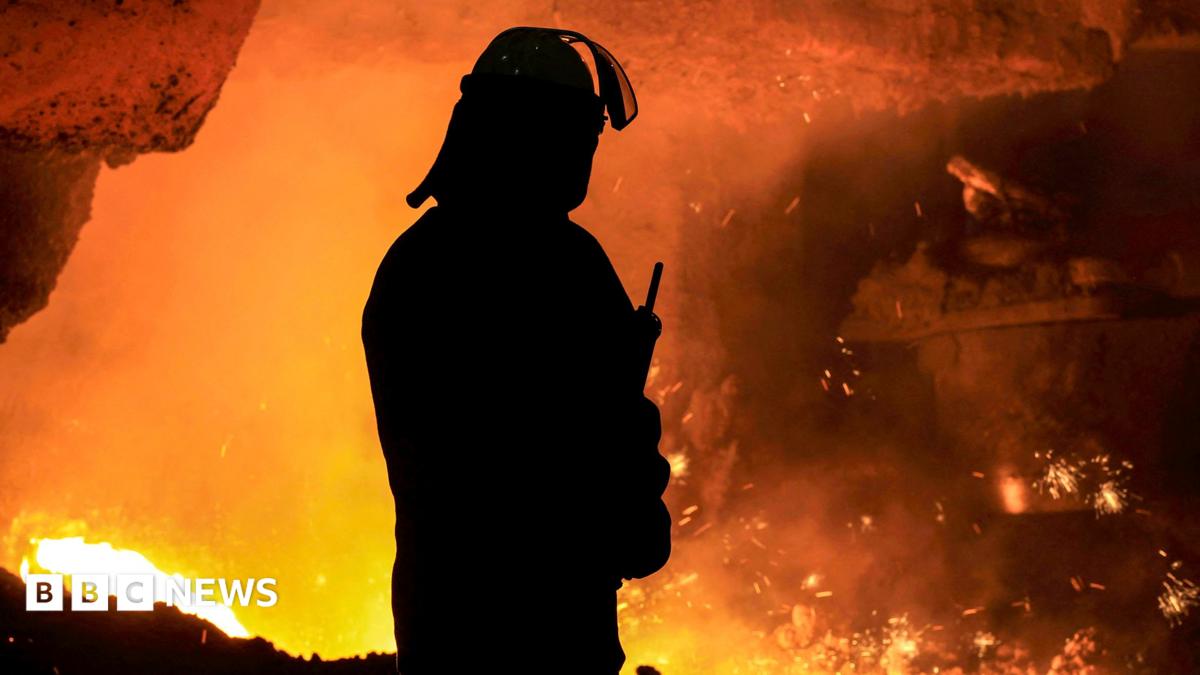
The Scunthorpe steelworks has been officially nationalised under new government powers passed this week
This lens runs the verified story through Cinnamon's AI — wired in the next step.
British Steel has been taken into public ownership in what the government said was a bid to "protect UK steelmaking".
The future of the steelworks, which employs roughly 2,700 people in Scunthorpe and supports many other industries in north Lincolnshire, has been dogged by uncertainty over recent years.
"Today's decision secures the future of steelmaking in the UK, protects skilled jobs and safeguards a vital national capability," Prime Minister Sir Keir Starmer said.
The UK government took control of British Steel operations in Scunthorpe last year, though it has since remained under the ownership of the Chinese firm Jingye Group.
Jingye has said it has begun the process of seeking compensation for nationalisation, having previously said the business was losing £700,000 a day. However, the UK government has said it could limit or refuse compensation.
The BBC has been unable to get a response from Jingye to Thursday's announcement.
Starmer added: "British Steel is part of the fabric of our nation and a cornerstone of Britain's industrial strength.
"This government will always act in the national interest to support British industry, strengthen our economy and ensure the industries we rely on can thrive long into the future."
In March, the National Audit Office released a report noting that the Scunthorpe steelworks was costing the government about £1.3m a day.
The government had previously sought private investors to take control of the steel manufacturer, initially stopping short of full nationalisation.
"British Steel now belongs to the British people, and our focus is on the future: stabilising the business, backing the communities that rely on it and building a sustainable, competitive and decarbonised steel sector for the years ahead," Business Secretary Peter Kyle said.
On Wednesday, Parliament passed legislation allowing the government to bring the steel industry into public ownership under circumstances where it met a public interest test.
A spokesperson for the Department for Business and Trade had confirmed on Wednesday the government was "strongly minded" to use the new powers in the case of British Steel.
"The Steel Act gives us powers to nationalise steel companies where it's necessary in the public interest, to protect a foundation industry that supports our critical national infrastructure, economy and defence," the department said in a statement.
Business Secretary Peter Kyle told the BBC the government will need to cover the running costs "for the immediate future".
He said an independent assessor will determine whether Jingye should be compensated for the nationalisation based on the value of the company.
"But let me be really clear, there is an alternative here - that we let this business go bust," he said.
"If that business disappears, we will lose the ability for primary steel production in our country, we will become entirely dependent on global supply."
The government seized control of the Scunthorpe plant in April 2025 after Jingye flagged the potential closure of the last two remaining blast furnaces.
If the furnaces had been starved of fuel and gone out, the UK would no longer have had the capability to produce "virgin steel" because the process of restarting them would have been extremely difficult and costly.
Simon Boyd, managing director of Reid Steel, a structural steel manufacturer in Dorset, said the nationalisation "had to be done".
Boyd, whose company buys thousands of tonnes from British Steel each year, told the BBC's Today programme Jingye had been "sabotaging the infrastructure" at the company and the government "had to step in".
He said the government would need to invest heavily in British Steel and would not see a return for 10-20 years.
But he said it "now belongs to the British people". A bid to sell it on to private investors would have required government support, and in the past has been seen to "benefit the private companies and not the British people", he added.
Virgin steel-making involves iron being extracted from its original source to be purified and treated to make all types of steel used in major construction projects, such as new buildings and railways.
If the plant stopped producing virgin steel, the UK would become the only member of the G7 group of leading economies without the ability to make it. The government views that as a risk to the UK's economic security.
Jingye bought British Steel in 2020 one year after it was placed in compulsory liquidation by its previous owner, private equity group Greybull Capital.
Announcing the move to take British Steel into public ownership, the government said a strong domestic steel industry was "critical" to its plans to reindustrialise Britain and to "reduce reliance on overseas supply chains for strategically important materials".
Read the full story at BBC ↗ · BBC ↗ · The Guardian ↗
British Steel has been taken into public ownership in what the government said was a bid to "protect UK steelmaking".
The future of the steelworks, which employs roughly 2,700 people in Scunthorpe and supports many other industries in north Lincolnshire, has been dogged by uncertainty over recent years.
"Today's decision secures the future of steelmaking in the UK, protects skilled jobs and safeguards a vital national capability," Prime Minister Sir Keir Starmer said.
The UK government took control of British Steel operations in Scunthorpe last year, though it has since remained under the ownership of the Chinese firm Jingye Group.
Jingye has said it has begun the process of seeking compensation for nationalisation, having previously said the business was losing £700,000 a day. However, the UK government has said it could limit or refuse compensation.
The BBC has been unable to get a response from Jingye to Thursday's announcement.
Starmer added: "British Steel is part of the fabric of our nation and a cornerstone of Britain's industrial strength.
"This government will always act in the national interest to support British industry, strengthen our economy and ensure the industries we rely on can thrive long into the future."
In March, the National Audit Office released a report noting that the Scunthorpe steelworks was costing the government about £1.3m a day.
The government had previously sought private investors to take control of the steel manufacturer, initially stopping short of full nationalisation.
"British Steel now belongs to the British people, and our focus is on the future: stabilising the business, backing the communities that rely on it and building a sustainable, competitive and decarbonised steel sector for the years ahead," Business Secretary Peter Kyle said.
On Wednesday, Parliament passed legislation allowing the government to bring the steel industry into public ownership under circumstances where it met a public interest test.
A spokesperson for the Department for Business and Trade had confirmed on Wednesday the government was "strongly minded" to use the new powers in the case of British Steel.
"The Steel Act gives us powers to nationalise steel companies where it's necessary in the public interest, to protect a foundation industry that supports our critical national infrastructure, economy and defence," the department said in a statement.
Business Secretary Peter Kyle told the BBC the government will need to cover the running costs "for the immediate future".
He said an independent assessor will determine whether Jingye should be compensated for the nationalisation based on the value of the company.
"But let me be really clear, there is an alternative here - that we let this business go bust," he said.
"If that business disappears, we will lose the ability for primary steel production in our country, we will become entirely dependent on global supply."
The government seized control of the Scunthorpe plant in April 2025 after Jingye flagged the potential closure of the last two remaining blast furnaces.
If the furnaces had been starved of fuel and gone out, the UK would no longer have had the capability to produce "virgin steel" because the process of restarting them would have been extremely difficult and costly.
Simon Boyd, managing director of Reid Steel, a structural steel manufacturer in Dorset, said the nationalisation "had to be done".
Boyd, whose company buys thousands of tonnes from British Steel each year, told the BBC's Today programme Jingye had been "sabotaging the infrastructure" at the company and the government "had to step in".
He said the government would need to invest heavily in British Steel and would not see a return for 10-20 years.
But he said it "now belongs to the British people". A bid to sell it on to private investors would have required government support, and in the past has been seen to "benefit the private companies and not the British people", he added.
Virgin steel-making involves iron being extracted from its original source to be purified and treated to make all types of steel used in major construction projects, such as new buildings and railways.
If the plant stopped producing virgin steel, the UK would become the only member of the G7 group of leading economies without the ability to make it. The government views that as a risk to the UK's economic security.
Jingye bought British Steel in 2020 one year after it was placed in compulsory liquidation by its previous owner, private equity group Greybull Capital.
Announcing the move to take British Steel into public ownership, the government said a strong domestic steel industry was "critical" to its plans to reindustrialise Britain and to "reduce reliance on overseas supply chains for strategically important materials".
Read the full story at BBC ↗ · BBC ↗ · The Guardian ↗
This lens runs the verified story through Cinnamon's AI — wired in the next step.
- The Scunthorpe steelworks has been officially nationalised under new government powers passed this week