Carney asks Canada's provinces to end US alcohol ban as trade deal nears
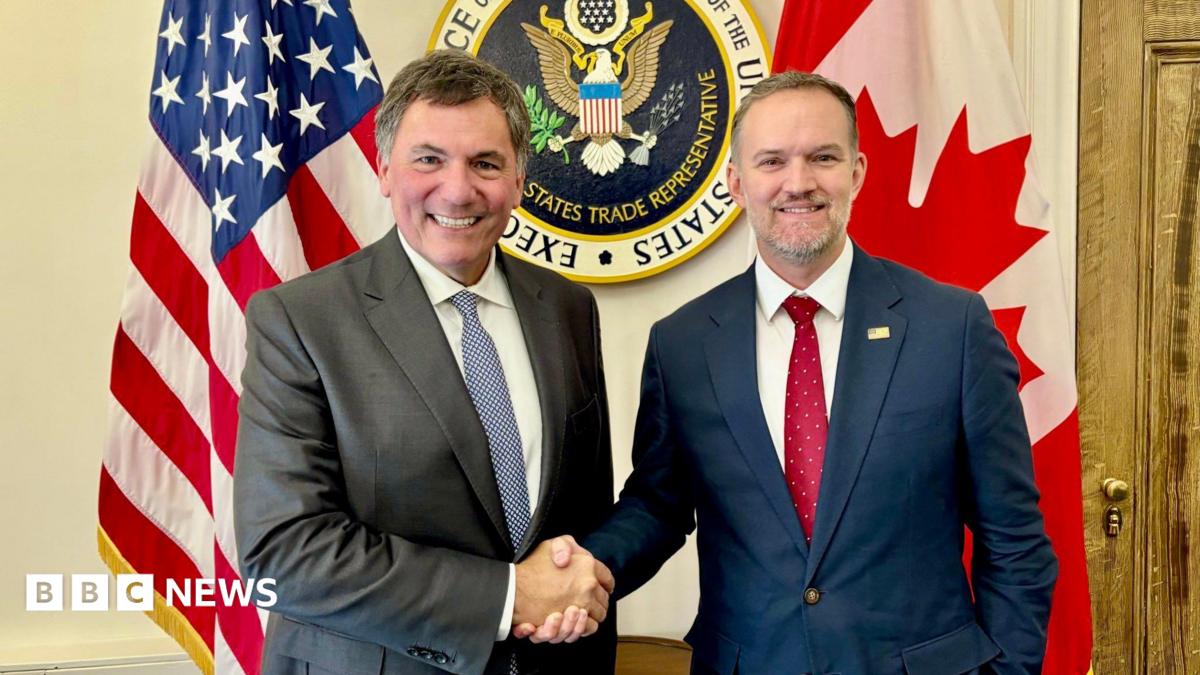
Canada has been in pursuit of a deal that would have the US drop or reduce tariffs on its steel, aluminium, automobiles and lumber.
Under a deal that could be completed by Friday evening, US tariffs on Canadian steel and aluminum would reportedly be cut to 25% from 50%.
The US may also lower its headline tariff rate on Canadian-made vehicles from 25% to 15%, according to reports from US and Canadian media.
The prime minister met his cabinet and leaders of Canadian provinces on Wednesday afternoon to brief them.
Following Carney's meeting, Nova Scotia Premier Tim Houston said the prime minister asked provinces to return US alcohol to Canadian markets.
"It's been something that has kind of really bothered the United States for so many reasons," Houston said. "Now, whether Canadians will really buy it when it's back on the shelf, that's a whole other discussion."
Most Canadian provinces banned US alcohol sales last year in retaliation to Trump's tariffs.
The US wine and spirits industry says they have seen exports to Canada drop by more than 70% since the boycott went into effect early last year.
Speaking to reporters on Thursday, Manitoba Premier Wab Kinew said his government is not keen to restore US alcohol sales but would in order to present a united Canadian front.
"I wouldn't say that he was begging us, but what is a step before begging?" Kinew said of Carney's request to the premiers, adding that he believed that bringing US alcohol sales back is imperative for finalising the deal.
Kinew said he does not expect to be satisfied with the final deal and that he believes Canada should fight because Trump is "very weak".
The US has been asking for a number of concessions from Canada, including removing its remaining retaliatory tariffs on American vehicles and adjusting its dairy quotas to allow greater access for US cheese producers.
US-Canada trade minister Dominic LeBlanc has said that Canada's dairy supply management programme - which oversees production quotas and sets pricing and import quotas on dairy, eggs and poultry - will remain "entirely intact".
Quebec premier Christine Fréchette, whose province is home to Canada's dairy industry, said she spoke to the prime minister on Thursday morning to get more clarity on the deal.
She said the province is analysing it to determine its impact on the Quebec economy.
If the deal is "globally positive, it is possible that we put the alcohol back on the shelves", Fréchette added.
Polls suggest that a majority of Canadians would be unhappy if the Carney government made significant concessions to the US, with 56% surveyed by polling firm Leger, external saying they wanted Canada to take a hardline approach.
But business organisations from both sides of the border have lobbied for a deal to be reached, cautioning that additional tariffs between the two trading partners would be harmful for both countries.
Dennis Darby, president of Canadian Manufacturers and Exporters and a member of Carney's advisory committee on Canada-US trade, told the BBC on Wednesday he was optimistic a finalised deal was on the horizon.
He added that businesses hoped this would be the first step towards a return to the terms set under the North American free-trade agreement, known as USMCA, with most goods flowing tariff-free through Canada, the US and Mexico.
Additional reporting by Peter Hoskins
Read the full story at BBC ↗
An agreement preventing a new wave of US tariffs is close and could include an end to Canada's boycott of US wine and spirits
This lens runs the verified story through Cinnamon's AI — wired in the next step.
Canada has been in pursuit of a deal that would have the US drop or reduce tariffs on its steel, aluminium, automobiles and lumber.
Under a deal that could be completed by Friday evening, US tariffs on Canadian steel and aluminum would reportedly be cut to 25% from 50%.
The US may also lower its headline tariff rate on Canadian-made vehicles from 25% to 15%, according to reports from US and Canadian media.
The prime minister met his cabinet and leaders of Canadian provinces on Wednesday afternoon to brief them.
Following Carney's meeting, Nova Scotia Premier Tim Houston said the prime minister asked provinces to return US alcohol to Canadian markets.
"It's been something that has kind of really bothered the United States for so many reasons," Houston said. "Now, whether Canadians will really buy it when it's back on the shelf, that's a whole other discussion."
Most Canadian provinces banned US alcohol sales last year in retaliation to Trump's tariffs.
The US wine and spirits industry says they have seen exports to Canada drop by more than 70% since the boycott went into effect early last year.
Speaking to reporters on Thursday, Manitoba Premier Wab Kinew said his government is not keen to restore US alcohol sales but would in order to present a united Canadian front.
"I wouldn't say that he was begging us, but what is a step before begging?" Kinew said of Carney's request to the premiers, adding that he believed that bringing US alcohol sales back is imperative for finalising the deal.
Kinew said he does not expect to be satisfied with the final deal and that he believes Canada should fight because Trump is "very weak".
The US has been asking for a number of concessions from Canada, including removing its remaining retaliatory tariffs on American vehicles and adjusting its dairy quotas to allow greater access for US cheese producers.
US-Canada trade minister Dominic LeBlanc has said that Canada's dairy supply management programme - which oversees production quotas and sets pricing and import quotas on dairy, eggs and poultry - will remain "entirely intact".
Quebec premier Christine Fréchette, whose province is home to Canada's dairy industry, said she spoke to the prime minister on Thursday morning to get more clarity on the deal.
She said the province is analysing it to determine its impact on the Quebec economy.
If the deal is "globally positive, it is possible that we put the alcohol back on the shelves", Fréchette added.
Polls suggest that a majority of Canadians would be unhappy if the Carney government made significant concessions to the US, with 56% surveyed by polling firm Leger, external saying they wanted Canada to take a hardline approach.
But business organisations from both sides of the border have lobbied for a deal to be reached, cautioning that additional tariffs between the two trading partners would be harmful for both countries.
Dennis Darby, president of Canadian Manufacturers and Exporters and a member of Carney's advisory committee on Canada-US trade, told the BBC on Wednesday he was optimistic a finalised deal was on the horizon.
He added that businesses hoped this would be the first step towards a return to the terms set under the North American free-trade agreement, known as USMCA, with most goods flowing tariff-free through Canada, the US and Mexico.
Additional reporting by Peter Hoskins
Read the full story at BBC ↗
Canada has been in pursuit of a deal that would have the US drop or reduce tariffs on its steel, aluminium, automobiles and lumber.
Under a deal that could be completed by Friday evening, US tariffs on Canadian steel and aluminum would reportedly be cut to 25% from 50%.
The US may also lower its headline tariff rate on Canadian-made vehicles from 25% to 15%, according to reports from US and Canadian media.
The prime minister met his cabinet and leaders of Canadian provinces on Wednesday afternoon to brief them.
Following Carney's meeting, Nova Scotia Premier Tim Houston said the prime minister asked provinces to return US alcohol to Canadian markets.
"It's been something that has kind of really bothered the United States for so many reasons," Houston said. "Now, whether Canadians will really buy it when it's back on the shelf, that's a whole other discussion."
Most Canadian provinces banned US alcohol sales last year in retaliation to Trump's tariffs.
The US wine and spirits industry says they have seen exports to Canada drop by more than 70% since the boycott went into effect early last year.
Speaking to reporters on Thursday, Manitoba Premier Wab Kinew said his government is not keen to restore US alcohol sales but would in order to present a united Canadian front.
"I wouldn't say that he was begging us, but what is a step before begging?" Kinew said of Carney's request to the premiers, adding that he believed that bringing US alcohol sales back is imperative for finalising the deal.
Kinew said he does not expect to be satisfied with the final deal and that he believes Canada should fight because Trump is "very weak".
The US has been asking for a number of concessions from Canada, including removing its remaining retaliatory tariffs on American vehicles and adjusting its dairy quotas to allow greater access for US cheese producers.
US-Canada trade minister Dominic LeBlanc has said that Canada's dairy supply management programme - which oversees production quotas and sets pricing and import quotas on dairy, eggs and poultry - will remain "entirely intact".
Quebec premier Christine Fréchette, whose province is home to Canada's dairy industry, said she spoke to the prime minister on Thursday morning to get more clarity on the deal.
She said the province is analysing it to determine its impact on the Quebec economy.
If the deal is "globally positive, it is possible that we put the alcohol back on the shelves", Fréchette added.
Polls suggest that a majority of Canadians would be unhappy if the Carney government made significant concessions to the US, with 56% surveyed by polling firm Leger, external saying they wanted Canada to take a hardline approach.
But business organisations from both sides of the border have lobbied for a deal to be reached, cautioning that additional tariffs between the two trading partners would be harmful for both countries.
Dennis Darby, president of Canadian Manufacturers and Exporters and a member of Carney's advisory committee on Canada-US trade, told the BBC on Wednesday he was optimistic a finalised deal was on the horizon.
He added that businesses hoped this would be the first step towards a return to the terms set under the North American free-trade agreement, known as USMCA, with most goods flowing tariff-free through Canada, the US and Mexico.
Additional reporting by Peter Hoskins
Read the full story at BBC ↗
This lens runs the verified story through Cinnamon's AI — wired in the next step.
- An agreement preventing a new wave of US tariffs is close and could include an end to Canada's boycott of US wine and spirits