China is concealing scale of flood disaster, say Tibet campaigners
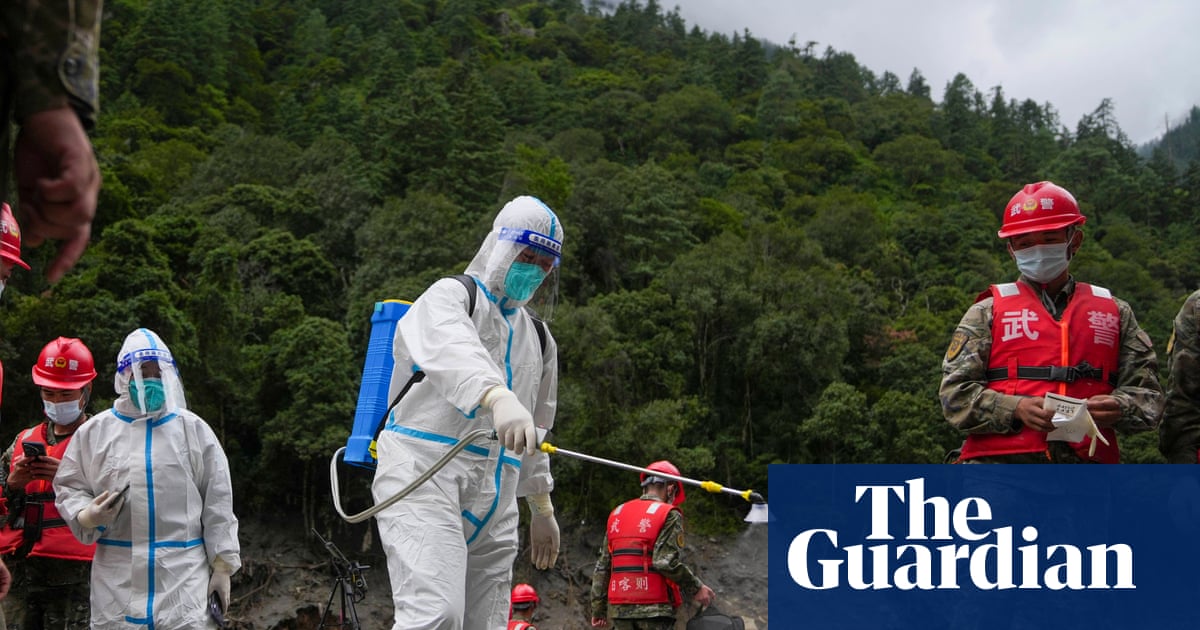
A Tibetan advocacy group says hundreds of homes were destroyed on the Tibetan side of the border in last week’s deadly floods, raising questions about Beijing’s official account of the scale of the disaster.
Public discussion about the flash floods has been restricted, with security officials in Tibet announcing on Sunday that it had penalised at least 10 people for sharing “false disaster information”. There was no further information on the nature of the penalties.
Chinese authorities say 16 people have been confirmed dead and 546 are missing, including 261 foreign citizens. But the International Campaign for Tibet says its sources believe the number of casualties is significantly higher, with at least 300 homes destroyed.
Tencho Gyatso, the president of the campaign group, told the Guardian: “What is visible in Nepal exposes what is being concealed in Tibet. Four villages – Sale, Serchung, Labi and Rizi – were among the hardest hit, with approximately 300 homes reportedly destroyed and many people still missing.”
She said the “little information that we can gather from the ground” suggested the numbers affected were “far higher” than Chinese officials had reported.
On 26 August, the collapse of a glacier triggered deadly floods along the Nepal-Tibet border, destroying entire villages. The death toll on the Nepal side has passed 900, with more than 4,000 missing. Tourists from India, the US, Britain, Australia and Canada among others remain unaccounted for in the mountainous region that is popular with trekkers and pilgrims.
Advocacy groups say there has been a stark contrast in the amount of information presented on either side of the border. Chinese coverage has been dominated by official state media reports, with few unofficial accounts about the scale of the disaster and its aftermath.
Independent verification is extremely difficult in Tibet, where foreign journalists face severe restrictions. Tibetans can face imprisonment for sharing information with journalists and advocacy groups outside China.
Gyatso said: “Officially released glimpses, however important, cannot tell us what is happening across all affected communities.”
Her Tibetan advocacy group said several sources reported that survivors had been moved to Gyirong, which is about 30km (18 miles) from the border crossing that was hit by the flooding. They are said to be under strict management and restricted from communicating freely.
According to a report posted on 27 August on the Tibet Daily, a state-run newspaper, two Tibetans were detained for questioning for posting “rumours” that more than 1,000 people had been swept away close to the border.
Gyatso said: “The Chinese government portrays it like it’s only happening in Nepal and there’s nothing across the border. For any type of crisis, the way China handles it is that there is no crisis. The party is in control.”
Posts relating to the disaster continued to trend on Chinese social media on Monday, with many comments echoing official narratives and supporting rescue efforts.
A Weibo post by Hu Xijin – a prominent Chinese commentator and former chief editor of the state-run Global Times – attracted more than 300 comments and thousands of likes. He accused a small number of voices of seeking to “stir controversy by fabricating baseless claims”.
However, one comment under his post questioned why all the updates were coming from the Nepali side of the border.
On Sunday, Tibetan public security officials said they had penalised people for sharing misleading information or “disrupting online order” with posts about the disaster.
In one case, a user identified only as Zhang disputed the official death toll, posting: “Clearly thousands of people were swept away, yet the authorities reported only three deaths and 265 people missing.”
Another user named Zhou said: “In this wave of mudslides, one entire village was wiped out. It was definitely more than a thousand [deaths].”
Maya Wang of Human Rights Watch said: “The instinct of the Chinese government is always to kind of control and to ensure the narrative which is to portray itself as a very efficient government.
“There have been questions raised over how the development of the valleys in an ecologically fragile and geologically fragile area may have related to this disaster.”
Human rights groups say that Beijing maintains tight controls over movement, religion and information in Tibet. Tibetan groups in exile have long been critical of large-scale development in the region, which they consider geologically fragile.
A Chinese foreign ministry spokesperson said on Monday that the release of information about the floods and mudslide near its border with Nepal was transparent and timely.
“Malicious smear campaigns and hype using the disaster situation does not align with popular sentiment,” said Guo Jiakun, in response to allegations that China censored videos of the disaster and understated the number of missing people.
When asked about allegations that China ignored warnings from scientists over hydropower construction, he said: “We firmly oppose such baseless and malicious speculation.”
Additional reporting by Yu-chen Li in Taipei
Read the full story at The Guardian ↗
Rights group claims 300 homes were destroyed in Tibet and number of missing people is ‘far higher’ than Beijing admits. A Tibetan advocacy group says hundreds of homes were…
This lens runs the verified story through Cinnamon's AI — wired in the next step.
A Tibetan advocacy group says hundreds of homes were destroyed on the Tibetan side of the border in last week’s deadly floods, raising questions about Beijing’s official account of the scale of the disaster.
Public discussion about the flash floods has been restricted, with security officials in Tibet announcing on Sunday that it had penalised at least 10 people for sharing “false disaster information”. There was no further information on the nature of the penalties.
Chinese authorities say 16 people have been confirmed dead and 546 are missing, including 261 foreign citizens. But the International Campaign for Tibet says its sources believe the number of casualties is significantly higher, with at least 300 homes destroyed.
Tencho Gyatso, the president of the campaign group, told the Guardian: “What is visible in Nepal exposes what is being concealed in Tibet. Four villages – Sale, Serchung, Labi and Rizi – were among the hardest hit, with approximately 300 homes reportedly destroyed and many people still missing.”
She said the “little information that we can gather from the ground” suggested the numbers affected were “far higher” than Chinese officials had reported.
On 26 August, the collapse of a glacier triggered deadly floods along the Nepal-Tibet border, destroying entire villages. The death toll on the Nepal side has passed 900, with more than 4,000 missing. Tourists from India, the US, Britain, Australia and Canada among others remain unaccounted for in the mountainous region that is popular with trekkers and pilgrims.
Advocacy groups say there has been a stark contrast in the amount of information presented on either side of the border. Chinese coverage has been dominated by official state media reports, with few unofficial accounts about the scale of the disaster and its aftermath.
Independent verification is extremely difficult in Tibet, where foreign journalists face severe restrictions. Tibetans can face imprisonment for sharing information with journalists and advocacy groups outside China.
Gyatso said: “Officially released glimpses, however important, cannot tell us what is happening across all affected communities.”
Her Tibetan advocacy group said several sources reported that survivors had been moved to Gyirong, which is about 30km (18 miles) from the border crossing that was hit by the flooding. They are said to be under strict management and restricted from communicating freely.
According to a report posted on 27 August on the Tibet Daily, a state-run newspaper, two Tibetans were detained for questioning for posting “rumours” that more than 1,000 people had been swept away close to the border.
Gyatso said: “The Chinese government portrays it like it’s only happening in Nepal and there’s nothing across the border. For any type of crisis, the way China handles it is that there is no crisis. The party is in control.”
Posts relating to the disaster continued to trend on Chinese social media on Monday, with many comments echoing official narratives and supporting rescue efforts.
A Weibo post by Hu Xijin – a prominent Chinese commentator and former chief editor of the state-run Global Times – attracted more than 300 comments and thousands of likes. He accused a small number of voices of seeking to “stir controversy by fabricating baseless claims”.
However, one comment under his post questioned why all the updates were coming from the Nepali side of the border.
On Sunday, Tibetan public security officials said they had penalised people for sharing misleading information or “disrupting online order” with posts about the disaster.
In one case, a user identified only as Zhang disputed the official death toll, posting: “Clearly thousands of people were swept away, yet the authorities reported only three deaths and 265 people missing.”
Another user named Zhou said: “In this wave of mudslides, one entire village was wiped out. It was definitely more than a thousand [deaths].”
Maya Wang of Human Rights Watch said: “The instinct of the Chinese government is always to kind of control and to ensure the narrative which is to portray itself as a very efficient government.
“There have been questions raised over how the development of the valleys in an ecologically fragile and geologically fragile area may have related to this disaster.”
Human rights groups say that Beijing maintains tight controls over movement, religion and information in Tibet. Tibetan groups in exile have long been critical of large-scale development in the region, which they consider geologically fragile.
A Chinese foreign ministry spokesperson said on Monday that the release of information about the floods and mudslide near its border with Nepal was transparent and timely.
“Malicious smear campaigns and hype using the disaster situation does not align with popular sentiment,” said Guo Jiakun, in response to allegations that China censored videos of the disaster and understated the number of missing people.
When asked about allegations that China ignored warnings from scientists over hydropower construction, he said: “We firmly oppose such baseless and malicious speculation.”
Additional reporting by Yu-chen Li in Taipei
Read the full story at The Guardian ↗
A Tibetan advocacy group says hundreds of homes were destroyed on the Tibetan side of the border in last week’s deadly floods, raising questions about Beijing’s official account of the scale of the disaster.
Public discussion about the flash floods has been restricted, with security officials in Tibet announcing on Sunday that it had penalised at least 10 people for sharing “false disaster information”. There was no further information on the nature of the penalties.
Chinese authorities say 16 people have been confirmed dead and 546 are missing, including 261 foreign citizens. But the International Campaign for Tibet says its sources believe the number of casualties is significantly higher, with at least 300 homes destroyed.
Tencho Gyatso, the president of the campaign group, told the Guardian: “What is visible in Nepal exposes what is being concealed in Tibet. Four villages – Sale, Serchung, Labi and Rizi – were among the hardest hit, with approximately 300 homes reportedly destroyed and many people still missing.”
She said the “little information that we can gather from the ground” suggested the numbers affected were “far higher” than Chinese officials had reported.
On 26 August, the collapse of a glacier triggered deadly floods along the Nepal-Tibet border, destroying entire villages. The death toll on the Nepal side has passed 900, with more than 4,000 missing. Tourists from India, the US, Britain, Australia and Canada among others remain unaccounted for in the mountainous region that is popular with trekkers and pilgrims.
Advocacy groups say there has been a stark contrast in the amount of information presented on either side of the border. Chinese coverage has been dominated by official state media reports, with few unofficial accounts about the scale of the disaster and its aftermath.
Independent verification is extremely difficult in Tibet, where foreign journalists face severe restrictions. Tibetans can face imprisonment for sharing information with journalists and advocacy groups outside China.
Gyatso said: “Officially released glimpses, however important, cannot tell us what is happening across all affected communities.”
Her Tibetan advocacy group said several sources reported that survivors had been moved to Gyirong, which is about 30km (18 miles) from the border crossing that was hit by the flooding. They are said to be under strict management and restricted from communicating freely.
According to a report posted on 27 August on the Tibet Daily, a state-run newspaper, two Tibetans were detained for questioning for posting “rumours” that more than 1,000 people had been swept away close to the border.
Gyatso said: “The Chinese government portrays it like it’s only happening in Nepal and there’s nothing across the border. For any type of crisis, the way China handles it is that there is no crisis. The party is in control.”
Posts relating to the disaster continued to trend on Chinese social media on Monday, with many comments echoing official narratives and supporting rescue efforts.
A Weibo post by Hu Xijin – a prominent Chinese commentator and former chief editor of the state-run Global Times – attracted more than 300 comments and thousands of likes. He accused a small number of voices of seeking to “stir controversy by fabricating baseless claims”.
However, one comment under his post questioned why all the updates were coming from the Nepali side of the border.
On Sunday, Tibetan public security officials said they had penalised people for sharing misleading information or “disrupting online order” with posts about the disaster.
In one case, a user identified only as Zhang disputed the official death toll, posting: “Clearly thousands of people were swept away, yet the authorities reported only three deaths and 265 people missing.”
Another user named Zhou said: “In this wave of mudslides, one entire village was wiped out. It was definitely more than a thousand [deaths].”
Maya Wang of Human Rights Watch said: “The instinct of the Chinese government is always to kind of control and to ensure the narrative which is to portray itself as a very efficient government.
“There have been questions raised over how the development of the valleys in an ecologically fragile and geologically fragile area may have related to this disaster.”
Human rights groups say that Beijing maintains tight controls over movement, religion and information in Tibet. Tibetan groups in exile have long been critical of large-scale development in the region, which they consider geologically fragile.
A Chinese foreign ministry spokesperson said on Monday that the release of information about the floods and mudslide near its border with Nepal was transparent and timely.
“Malicious smear campaigns and hype using the disaster situation does not align with popular sentiment,” said Guo Jiakun, in response to allegations that China censored videos of the disaster and understated the number of missing people.
When asked about allegations that China ignored warnings from scientists over hydropower construction, he said: “We firmly oppose such baseless and malicious speculation.”
Additional reporting by Yu-chen Li in Taipei
Read the full story at The Guardian ↗
This lens runs the verified story through Cinnamon's AI — wired in the next step.
- Rights group claims 300 homes were destroyed in Tibet and number of missing people is ‘far higher’ than Beijing admits.
- A Tibetan advocacy group says hundreds of homes were…