Coalition denies flag-burning ban an attempt to undercut One Nation as Labor says push has ‘element of desperation’
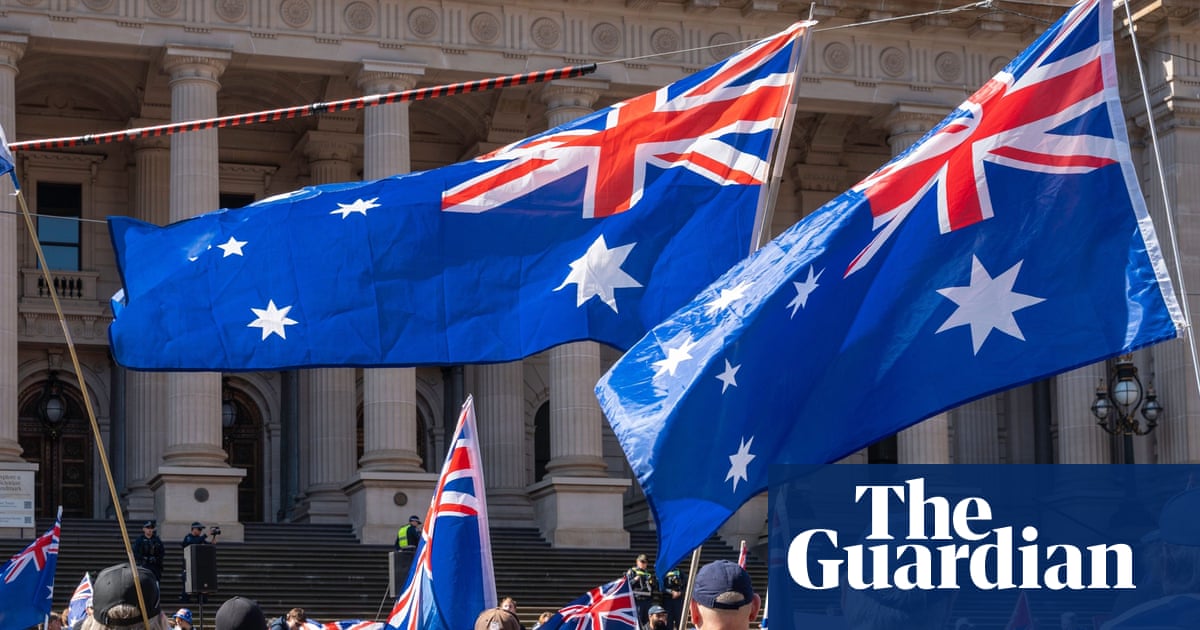
Angus Taylor has rejected claims the Coalition’s push to criminalise burning of the Australian flag is an attempt to undercut One Nation, insisting penalties of up to a year in prison are necessary to “stand up for our country”.
The One Nation leader, Pauline Hanson, has previously called for criminal penalties for flag burning, with a petition by the party attracting approximately 50,000 signatures last year.
Under the policy announced on Sunday, anyone convicted under a new criminal offence of serious public desecration of the Australian flag would face up to 12 months’ imprisonment, provided their actions were reckless in inciting hatred or violence, or threatened public order or caused a public disturbance.
A new criminal offence would also be created for deliberately damaging, defacing, desecrating or destroying war memorials and other significant sites commemorating Australia’s history.
The plan would also “protect” Australia Day on 26 January by enshrining it in law, requiring a national plebiscite to change the timing of national day celebrations.
“We have seen on recent Australia Days and Anzac Days burning of the Australian flag, graffiti on monuments, war memorial monuments around Australia,” Taylor said.
“It’s completely unacceptable, completely unacceptable. So it’s time to stand up for Australia, our heritage, our history.”
Sign up for Guardian Australia’s Politics, really newsletter here
Challenged over whether the plan was about trying to dint One Nation’s political support ahead of the next election, Taylor told News24 it was “not about that” and the laws would “help the country”.
“It is a symbol, it is part of our nation and our heritage that really matters.
“To see it being burnt is unacceptable to most Australians and certainly unacceptable to me, and I think it’s appropriate that a penalty of up to a year imprisonment is established.”
Former Liberal prime minister John Howard rejected previous attempts to criminalise flag burning, including in 2002, describing the act as a matter of free speech.
Howard called flag burning “repugnant” but said the right to protest was part of the “free speech code that we have in this country”.
after newsletter promotion
In September 2025, Hanson said a law against flag burning would ensure the national symbol got the reverence it deserved.
“We should bring back those assemblies in our schools where we all stood every morning while our flag was raised, and we must punish and penalise those who would desecrate our flag and disrespect our nation and the Australian people,” she said.
The assistant foreign affairs minister, Matt Thistlethwaite, said on Sunday the Coalition’s policy was unnecessary.
“There’s been several attempts over the last 10 years, or longer than that, 30 years, around this issue, and it may impinge on Australians’ freedom of expression and their freedom of speech,” he said on Sunday.
“I think that there’s a bit of an element of desperation there, trying to chase One Nation, and further to the right, and to capture some of those votes,” he said.
The Australian flag was flown for the first time in September 1901, after it was chosen in a design competition established by the country’s first prime minister, Sir Edmund Barton.
The competition attracted nearly 33,000 entries, of which 5 near identical designs were awarded equal first place. The design was modified to its current form in 1908, including the seven-pointed federation star.
Laws enacted by the Howard government in 1998 required that the flag could only be changed with the agreement of the Australian people.
Read the full story at The Guardian ↗ · The Guardian ↗
Policy unveiled on Sunday would create new criminal offences for flag burning and defacing historical monuments, and legislate 26 January as Australia Day. Follow our Australia…
This lens runs the verified story through Cinnamon's AI — wired in the next step.
Angus Taylor has rejected claims the Coalition’s push to criminalise burning of the Australian flag is an attempt to undercut One Nation, insisting penalties of up to a year in prison are necessary to “stand up for our country”.
The One Nation leader, Pauline Hanson, has previously called for criminal penalties for flag burning, with a petition by the party attracting approximately 50,000 signatures last year.
Under the policy announced on Sunday, anyone convicted under a new criminal offence of serious public desecration of the Australian flag would face up to 12 months’ imprisonment, provided their actions were reckless in inciting hatred or violence, or threatened public order or caused a public disturbance.
A new criminal offence would also be created for deliberately damaging, defacing, desecrating or destroying war memorials and other significant sites commemorating Australia’s history.
The plan would also “protect” Australia Day on 26 January by enshrining it in law, requiring a national plebiscite to change the timing of national day celebrations.
“We have seen on recent Australia Days and Anzac Days burning of the Australian flag, graffiti on monuments, war memorial monuments around Australia,” Taylor said.
“It’s completely unacceptable, completely unacceptable. So it’s time to stand up for Australia, our heritage, our history.”
Sign up for Guardian Australia’s Politics, really newsletter here
Challenged over whether the plan was about trying to dint One Nation’s political support ahead of the next election, Taylor told News24 it was “not about that” and the laws would “help the country”.
“It is a symbol, it is part of our nation and our heritage that really matters.
“To see it being burnt is unacceptable to most Australians and certainly unacceptable to me, and I think it’s appropriate that a penalty of up to a year imprisonment is established.”
Former Liberal prime minister John Howard rejected previous attempts to criminalise flag burning, including in 2002, describing the act as a matter of free speech.
Howard called flag burning “repugnant” but said the right to protest was part of the “free speech code that we have in this country”.
after newsletter promotion
In September 2025, Hanson said a law against flag burning would ensure the national symbol got the reverence it deserved.
“We should bring back those assemblies in our schools where we all stood every morning while our flag was raised, and we must punish and penalise those who would desecrate our flag and disrespect our nation and the Australian people,” she said.
The assistant foreign affairs minister, Matt Thistlethwaite, said on Sunday the Coalition’s policy was unnecessary.
“There’s been several attempts over the last 10 years, or longer than that, 30 years, around this issue, and it may impinge on Australians’ freedom of expression and their freedom of speech,” he said on Sunday.
“I think that there’s a bit of an element of desperation there, trying to chase One Nation, and further to the right, and to capture some of those votes,” he said.
The Australian flag was flown for the first time in September 1901, after it was chosen in a design competition established by the country’s first prime minister, Sir Edmund Barton.
The competition attracted nearly 33,000 entries, of which 5 near identical designs were awarded equal first place. The design was modified to its current form in 1908, including the seven-pointed federation star.
Laws enacted by the Howard government in 1998 required that the flag could only be changed with the agreement of the Australian people.
Read the full story at The Guardian ↗ · The Guardian ↗
Angus Taylor has rejected claims the Coalition’s push to criminalise burning of the Australian flag is an attempt to undercut One Nation, insisting penalties of up to a year in prison are necessary to “stand up for our country”.
The One Nation leader, Pauline Hanson, has previously called for criminal penalties for flag burning, with a petition by the party attracting approximately 50,000 signatures last year.
Under the policy announced on Sunday, anyone convicted under a new criminal offence of serious public desecration of the Australian flag would face up to 12 months’ imprisonment, provided their actions were reckless in inciting hatred or violence, or threatened public order or caused a public disturbance.
A new criminal offence would also be created for deliberately damaging, defacing, desecrating or destroying war memorials and other significant sites commemorating Australia’s history.
The plan would also “protect” Australia Day on 26 January by enshrining it in law, requiring a national plebiscite to change the timing of national day celebrations.
“We have seen on recent Australia Days and Anzac Days burning of the Australian flag, graffiti on monuments, war memorial monuments around Australia,” Taylor said.
“It’s completely unacceptable, completely unacceptable. So it’s time to stand up for Australia, our heritage, our history.”
Sign up for Guardian Australia’s Politics, really newsletter here
Challenged over whether the plan was about trying to dint One Nation’s political support ahead of the next election, Taylor told News24 it was “not about that” and the laws would “help the country”.
“It is a symbol, it is part of our nation and our heritage that really matters.
“To see it being burnt is unacceptable to most Australians and certainly unacceptable to me, and I think it’s appropriate that a penalty of up to a year imprisonment is established.”
Former Liberal prime minister John Howard rejected previous attempts to criminalise flag burning, including in 2002, describing the act as a matter of free speech.
Howard called flag burning “repugnant” but said the right to protest was part of the “free speech code that we have in this country”.
after newsletter promotion
In September 2025, Hanson said a law against flag burning would ensure the national symbol got the reverence it deserved.
“We should bring back those assemblies in our schools where we all stood every morning while our flag was raised, and we must punish and penalise those who would desecrate our flag and disrespect our nation and the Australian people,” she said.
The assistant foreign affairs minister, Matt Thistlethwaite, said on Sunday the Coalition’s policy was unnecessary.
“There’s been several attempts over the last 10 years, or longer than that, 30 years, around this issue, and it may impinge on Australians’ freedom of expression and their freedom of speech,” he said on Sunday.
“I think that there’s a bit of an element of desperation there, trying to chase One Nation, and further to the right, and to capture some of those votes,” he said.
The Australian flag was flown for the first time in September 1901, after it was chosen in a design competition established by the country’s first prime minister, Sir Edmund Barton.
The competition attracted nearly 33,000 entries, of which 5 near identical designs were awarded equal first place. The design was modified to its current form in 1908, including the seven-pointed federation star.
Laws enacted by the Howard government in 1998 required that the flag could only be changed with the agreement of the Australian people.
Read the full story at The Guardian ↗ · The Guardian ↗
This lens runs the verified story through Cinnamon's AI — wired in the next step.
- Policy unveiled on Sunday would create new criminal offences for flag burning and defacing historical monuments, and legislate 26 January as Australia Day.
- Follow our Australia…