Country diary: I always dreamed of a safe, scenic footpath. Finally, my wish has been granted | John Gilbey
Where the lane heading north from the village joins the main road, a small, venerable stone barn used to stand. Like me, it had seen better days. I walked past it twice a day on my journey to and from work, hoping to catch a glimpse of the semi-resident barn owl that used it as an outpost. Sadly, the barn was demolished years ago and the owls are now less frequent visitors, but the site where it stood is changing once again.
A network of paths between villages has long been proposed to promote active travel, and sections have appeared over recent years. Now, these routes are starting to connect and form a resource for walkers and cyclists.
Before this initiative, my walk to work involved a perilous venture along the edge of the trunk road in the gap between tarmac and hawthorn hedge. This required strong nerves, quick reactions and a fluorescent coat sourced from the local farmers’ co-op. I had more than a few near misses, especially on dark winter days, and I dreamed that one day a footpath would appear.
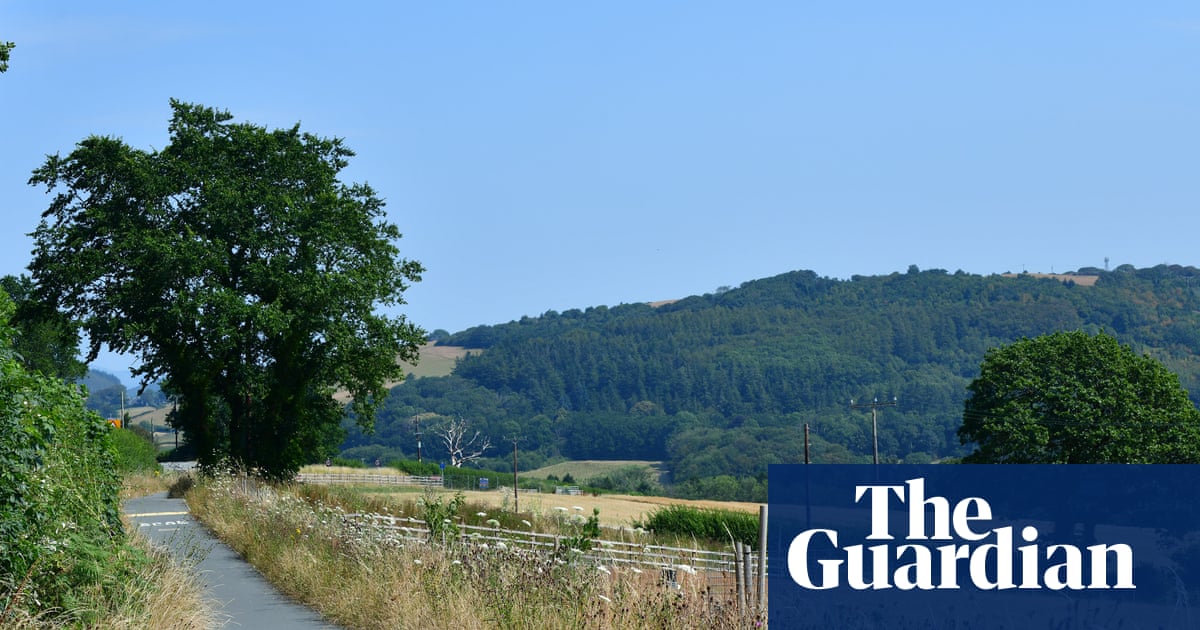
Today, more than 30 years later, I am walking that new path for the first time. Carved into the top of the fields below the hedge, it is safely separated from the road, and the traffic is barely visible. What can be seen, much more clearly than before, is the sweeping expanse of farmed landscape below me, leading the eye eastward into a range of wooded valleys with the Cambrian mountains beyond.
The disturbed ground around the path has been seeded with plants that attract pollinating insects, and bees and butterflies are active among the flower heads. Well-protected hardwood saplings have been planted to one day replicate some of the mature trees in the hedgerow above.
Eventually, this path will connect to the railway station in the next village, adding extra options for car-free travel. For now, I am thankful that schemes of this kind – which should benefit communities for generations to come – are deemed worthy of investment. Satisfied, I turn for home, making a mental note to return with some water for the young trees.
Read the full story at The Guardian ↗
Comins Coch, Ceredigion: It took more than 30 years, but now I am walking it for the first time – and no hi-vis clothing is necessary. It will benefit the community for…
This lens runs the verified story through Cinnamon's AI — wired in the next step.
Where the lane heading north from the village joins the main road, a small, venerable stone barn used to stand. Like me, it had seen better days. I walked past it twice a day on my journey to and from work, hoping to catch a glimpse of the semi-resident barn owl that used it as an outpost. Sadly, the barn was demolished years ago and the owls are now less frequent visitors, but the site where it stood is changing once again.
A network of paths between villages has long been proposed to promote active travel, and sections have appeared over recent years. Now, these routes are starting to connect and form a resource for walkers and cyclists.
Before this initiative, my walk to work involved a perilous venture along the edge of the trunk road in the gap between tarmac and hawthorn hedge. This required strong nerves, quick reactions and a fluorescent coat sourced from the local farmers’ co-op. I had more than a few near misses, especially on dark winter days, and I dreamed that one day a footpath would appear.
Today, more than 30 years later, I am walking that new path for the first time. Carved into the top of the fields below the hedge, it is safely separated from the road, and the traffic is barely visible. What can be seen, much more clearly than before, is the sweeping expanse of farmed landscape below me, leading the eye eastward into a range of wooded valleys with the Cambrian mountains beyond.
The disturbed ground around the path has been seeded with plants that attract pollinating insects, and bees and butterflies are active among the flower heads. Well-protected hardwood saplings have been planted to one day replicate some of the mature trees in the hedgerow above.
Eventually, this path will connect to the railway station in the next village, adding extra options for car-free travel. For now, I am thankful that schemes of this kind – which should benefit communities for generations to come – are deemed worthy of investment. Satisfied, I turn for home, making a mental note to return with some water for the young trees.
Read the full story at The Guardian ↗
Where the lane heading north from the village joins the main road, a small, venerable stone barn used to stand. Like me, it had seen better days. I walked past it twice a day on my journey to and from work, hoping to catch a glimpse of the semi-resident barn owl that used it as an outpost. Sadly, the barn was demolished years ago and the owls are now less frequent visitors, but the site where it stood is changing once again.
A network of paths between villages has long been proposed to promote active travel, and sections have appeared over recent years. Now, these routes are starting to connect and form a resource for walkers and cyclists.
Before this initiative, my walk to work involved a perilous venture along the edge of the trunk road in the gap between tarmac and hawthorn hedge. This required strong nerves, quick reactions and a fluorescent coat sourced from the local farmers’ co-op. I had more than a few near misses, especially on dark winter days, and I dreamed that one day a footpath would appear.
Today, more than 30 years later, I am walking that new path for the first time. Carved into the top of the fields below the hedge, it is safely separated from the road, and the traffic is barely visible. What can be seen, much more clearly than before, is the sweeping expanse of farmed landscape below me, leading the eye eastward into a range of wooded valleys with the Cambrian mountains beyond.
The disturbed ground around the path has been seeded with plants that attract pollinating insects, and bees and butterflies are active among the flower heads. Well-protected hardwood saplings have been planted to one day replicate some of the mature trees in the hedgerow above.
Eventually, this path will connect to the railway station in the next village, adding extra options for car-free travel. For now, I am thankful that schemes of this kind – which should benefit communities for generations to come – are deemed worthy of investment. Satisfied, I turn for home, making a mental note to return with some water for the young trees.
Read the full story at The Guardian ↗
This lens runs the verified story through Cinnamon's AI — wired in the next step.
- Comins Coch, Ceredigion: It took more than 30 years, but now I am walking it for the first time – and no hi-vis clothing is necessary.
- It will benefit the community for…