Do you know your 'sweat score'? The rise of hydration tech
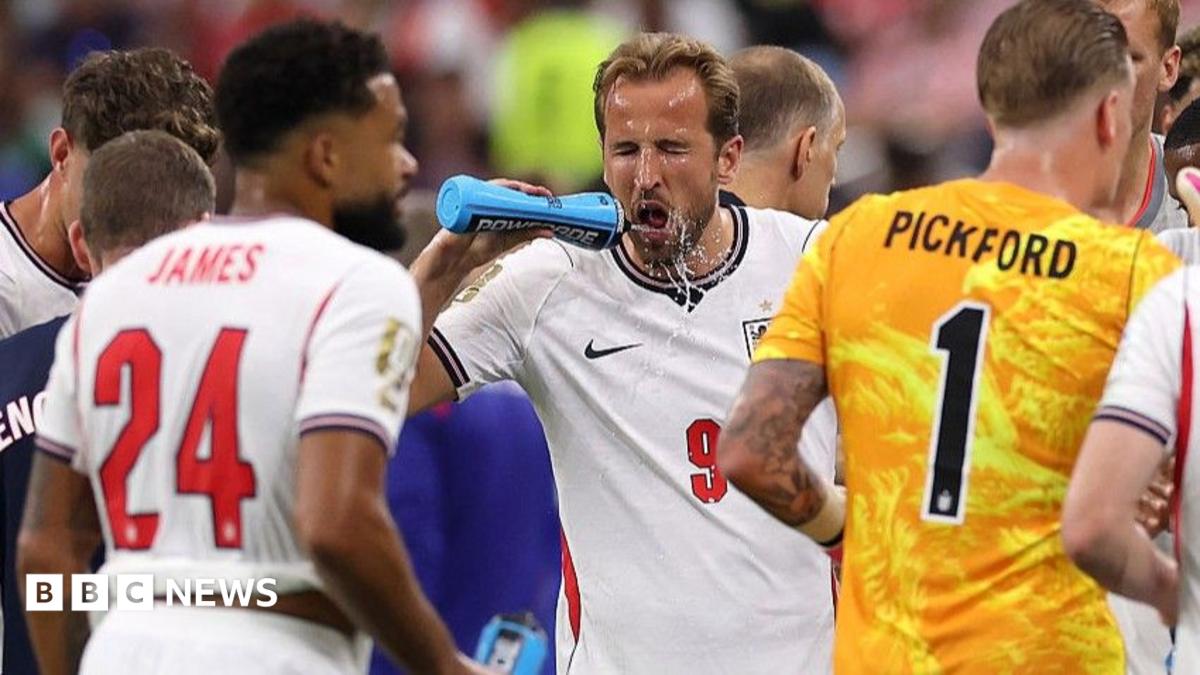
Booing fans and disgruntled pundits. One of the biggest controversies of the 2026 World Cup so far has been the hydration breaks, which – while not entirely new – are for the first time occurring twice during every match in the tournament.
The breaks aren't really about hydration, some spectators say. They're just an opportunity for certain broadcasters to show more ads, they break up the natural flow of games, and are unnecessary in air conditioned stadiums.
Whether or not you agree with these complaints, there's no doubt that hydration itself is an increasingly prominent point of discussion worldwide.
"Hydration is a key issue," says Andreas Flouris at the University of Thessaly in Greece. "We definitely see it, from a scientific point of view, gaining more and more attention."
Climate change is intensifying heatwaves, and in response public health campaigns, external are encouraging people to drink more fluids.
It is in this context that hydration-focused gadgets have flooded the consumer electronics market in recent years. They range from sweat monitors to toilet bowl urine-analysers. But do they work?
Not drinking sufficient water is a common problem. A 2023 study suggested, external that one in four UK adults aged 65 or older were dehydrated, due to not drinking sufficient fluids.
And a 2018 study by Flouris, external and colleagues assessed hydration levels in 139 workers around Europe. They found that 70% were dehydrated to a level that could negatively affect their thinking and control of their movements.
Purveyors of hydration tech say their products can help. Years ago, gadgets such as the Apple Watch and Fitbit made step-counting popular, says Roozbeh Ghaffari, co-founder and chief executive of US-based Epicore Biosystems. But why stop there? "Sweat has been the next chapter," he asserts.
His company is one of several that makes sweat-analysing devices. In Epicore Biosystems' case, that includes single-use sticky patches and sleeve-like wearables, which track the flow rate of sweat as it emerges from your skin, the sweat's sodium (salt) content, and skin temperature, among other metrics.
A new armband and app combo also offer to evaluate your "hydration readiness" based on "real-time sweat data". The idea is to avoid dehydration creeping up on you.
"With this new generation of our wearables, we could figure out what type of risk profile you have based on your sweat score," says Ghaffari.
Some of Epicore Biosystems' devices vibrate gently when they calculate that it is time for you to take a swig of fluid, to avoid becoming dehydrated.
The company says its devices are used by athletes but also workers on building sites, at oil and gas facilities, and on the ground at airports, where exposure to high temperatures and physical exertion are common features of the job.
Flouris is a little sceptical of sweat-sensing.
Referring to various unnamed devices that analyse sweat, which he has evaluated in the lab, he says, "Most of these products that we've tested do not show the level of accuracy that you would expect." The results of his experiments are as-yet unpublished.
Sweat sensors, Flouris suggests, work best when worn during long bouts of physical activity – such as a marathon. But they struggle when the exertion is more varied and intermittent. Think a footballer switching from walking to suddenly running very quickly.
In response, Ghaffari says he and his colleagues have published peer-reviewed papers, external on the accuracy of Epicore Biosystems' gadgets.
He acknowledges that analysing sweat loss over short intervals up to 20 minutes long "can be challenging" but says his company's products appear effective for 30-minute, or longer, workouts.
Perhaps the most common hydration-focused products available are the smart water bottles that remind you to take a sip throughout the day.
"We try to make it fun," says Cem Bakiş, head of business development at WaterH, which has a glowing ring that blinks in order to prompt its owner to take a drink. "You can add friends, you can earn points."
Some smart water bottles work by estimating the weight of liquid in them, and how that changes over time as the drink inside is consumed. But WaterH takes a different approach.
Sensors detect when the water bottle is tipped at an angle, and also the flow rate of fluid as it leaves the vessel. The water bottle will immediately recognise when you've had a sufficient quantity of liquid, stresses Bakiş.
I point out that, while some reviews online are positive, other comments criticise the accuracy of these measurements. This is often an issue with how the device is calibrated, and easily rectified, responds Bakiş.
If you don't want to take instructions in hydration from a water bottle, though, you always have the option of asking your toilet how things are going.
Vivoo makes a urine-analysing gizmo that sits on the rim of a toilet bowl, promising to help you understand your hydration "like never before".
The device uses optical sensors to work out your "urine specific gravity" – a measure of urine's density compared to clean water. The denser it is, the more dehydrated you are, generally. Small print on Vivoo's website emphasises that its products are not intended to provide medical diagnoses.
Urine-based measurements are used to evaluate hydration in scientific studies, says Flouris. Though he notes that there can be some delay between a person entering a dehydrated state, and this becoming detectable in their urine.
Hydration-monitoring gadgets are "interesting", says Tamara Hew-Butler at Wayne State University – though she questions whether they might raise people's anxiety about their health.
More metrics, reminders and goal-setting are not necessarily what everyone needs. "It's added some information – but it's also, I think, added a bit of an emotional burden," she says.
Bakiş says the WaterH smart bottle is intended to help people "build a habit" rather than stress them out.
A spokeswoman for Vivoo acknowledges the concern that frequent health-tracking could become anxiety-inducing. "Vivoo's smart toilet technology is designed around passive, routine-based testing," she says. "Users do not need to take additional steps or repeatedly check an app throughout the day."
Hew-Butler says hydration tech could have some special uses. For example, sweat monitors that alert a coach to one or two members of a team becoming dehydrated. Those individuals might not otherwise speak up independently because "they don't want to appear weak", suggests Hew-Butler.
"What technology does is it gives us this immediate result," she says. Ultimately, avoiding dehydration, and also over-hydration are important – but the human body is more adaptable than we sometimes assume, adds Hew-Butler. "There is a little bit more of a range of safety there."
Read the full story at BBC ↗
Hydration technology has expanded rapidly in consumer markets, including sweat monitors, smart water bottles, and toilet-based urine analysers. This occurs as climate change intensifies heatwaves and public health campaigns emphasise fluid intake. Research confirms dehydration is common: studies found 70% of European workers at levels impairing cognition and movement, and one in four UK adults over 65 insufficient. Sweat-sensing devices track sweat flow rate, sodium content, and skin temperature; companies claim they help athletes and workers in high-heat environments. However, independent testing shows inconsistent accuracy. Sweat sensors perform better during sustained activity lasting 30 minutes or more, but struggle with intermittent exertion like sports play. Smart water bottles estimate consumption via weight or flow-rate sensors, though calibration issues affect accuracy. Toilet-based urine analysers measure density to infer hydration status, a method used in scientific research but with potential delays in detection. Some experts raise concerns that additional health metrics and reminders may increase anxiety rather than benefit users, though others note niche applications such as coaching alerts.
Read the full story at BBC ↗
Booing fans and disgruntled pundits. One of the biggest controversies of the 2026 World Cup so far has been the hydration breaks, which – while not entirely new – are for the first time occurring twice during every match in the tournament.
The breaks aren't really about hydration, some spectators say. They're just an opportunity for certain broadcasters to show more ads, they break up the natural flow of games, and are unnecessary in air conditioned stadiums.
Whether or not you agree with these complaints, there's no doubt that hydration itself is an increasingly prominent point of discussion worldwide.
"Hydration is a key issue," says Andreas Flouris at the University of Thessaly in Greece. "We definitely see it, from a scientific point of view, gaining more and more attention."
Climate change is intensifying heatwaves, and in response public health campaigns, external are encouraging people to drink more fluids.
It is in this context that hydration-focused gadgets have flooded the consumer electronics market in recent years. They range from sweat monitors to toilet bowl urine-analysers. But do they work?
Not drinking sufficient water is a common problem. A 2023 study suggested, external that one in four UK adults aged 65 or older were dehydrated, due to not drinking sufficient fluids.
And a 2018 study by Flouris, external and colleagues assessed hydration levels in 139 workers around Europe. They found that 70% were dehydrated to a level that could negatively affect their thinking and control of their movements.
Purveyors of hydration tech say their products can help. Years ago, gadgets such as the Apple Watch and Fitbit made step-counting popular, says Roozbeh Ghaffari, co-founder and chief executive of US-based Epicore Biosystems. But why stop there? "Sweat has been the next chapter," he asserts.
His company is one of several that makes sweat-analysing devices. In Epicore Biosystems' case, that includes single-use sticky patches and sleeve-like wearables, which track the flow rate of sweat as it emerges from your skin, the sweat's sodium (salt) content, and skin temperature, among other metrics.
A new armband and app combo also offer to evaluate your "hydration readiness" based on "real-time sweat data". The idea is to avoid dehydration creeping up on you.
"With this new generation of our wearables, we could figure out what type of risk profile you have based on your sweat score," says Ghaffari.
Some of Epicore Biosystems' devices vibrate gently when they calculate that it is time for you to take a swig of fluid, to avoid becoming dehydrated.
The company says its devices are used by athletes but also workers on building sites, at oil and gas facilities, and on the ground at airports, where exposure to high temperatures and physical exertion are common features of the job.
Flouris is a little sceptical of sweat-sensing.
Referring to various unnamed devices that analyse sweat, which he has evaluated in the lab, he says, "Most of these products that we've tested do not show the level of accuracy that you would expect." The results of his experiments are as-yet unpublished.
Sweat sensors, Flouris suggests, work best when worn during long bouts of physical activity – such as a marathon. But they struggle when the exertion is more varied and intermittent. Think a footballer switching from walking to suddenly running very quickly.
In response, Ghaffari says he and his colleagues have published peer-reviewed papers, external on the accuracy of Epicore Biosystems' gadgets.
He acknowledges that analysing sweat loss over short intervals up to 20 minutes long "can be challenging" but says his company's products appear effective for 30-minute, or longer, workouts.
Perhaps the most common hydration-focused products available are the smart water bottles that remind you to take a sip throughout the day.
"We try to make it fun," says Cem Bakiş, head of business development at WaterH, which has a glowing ring that blinks in order to prompt its owner to take a drink. "You can add friends, you can earn points."
Some smart water bottles work by estimating the weight of liquid in them, and how that changes over time as the drink inside is consumed. But WaterH takes a different approach.
Sensors detect when the water bottle is tipped at an angle, and also the flow rate of fluid as it leaves the vessel. The water bottle will immediately recognise when you've had a sufficient quantity of liquid, stresses Bakiş.
I point out that, while some reviews online are positive, other comments criticise the accuracy of these measurements. This is often an issue with how the device is calibrated, and easily rectified, responds Bakiş.
If you don't want to take instructions in hydration from a water bottle, though, you always have the option of asking your toilet how things are going.
Vivoo makes a urine-analysing gizmo that sits on the rim of a toilet bowl, promising to help you understand your hydration "like never before".
The device uses optical sensors to work out your "urine specific gravity" – a measure of urine's density compared to clean water. The denser it is, the more dehydrated you are, generally. Small print on Vivoo's website emphasises that its products are not intended to provide medical diagnoses.
Urine-based measurements are used to evaluate hydration in scientific studies, says Flouris. Though he notes that there can be some delay between a person entering a dehydrated state, and this becoming detectable in their urine.
Hydration-monitoring gadgets are "interesting", says Tamara Hew-Butler at Wayne State University – though she questions whether they might raise people's anxiety about their health.
More metrics, reminders and goal-setting are not necessarily what everyone needs. "It's added some information – but it's also, I think, added a bit of an emotional burden," she says.
Bakiş says the WaterH smart bottle is intended to help people "build a habit" rather than stress them out.
A spokeswoman for Vivoo acknowledges the concern that frequent health-tracking could become anxiety-inducing. "Vivoo's smart toilet technology is designed around passive, routine-based testing," she says. "Users do not need to take additional steps or repeatedly check an app throughout the day."
Hew-Butler says hydration tech could have some special uses. For example, sweat monitors that alert a coach to one or two members of a team becoming dehydrated. Those individuals might not otherwise speak up independently because "they don't want to appear weak", suggests Hew-Butler.
"What technology does is it gives us this immediate result," she says. Ultimately, avoiding dehydration, and also over-hydration are important – but the human body is more adaptable than we sometimes assume, adds Hew-Butler. "There is a little bit more of a range of safety there."
Read the full story at BBC ↗
Hydration-focused consumer electronics including sweat monitors, smart water bottles, and urine analysers have entered the market in recent years. Climate change is intensifying heatwaves, prompting public health campaigns encouraging increased fluid intake. A 2023 study found one in four UK adults aged 65 or older were dehydrated due to insufficient fluid intake. A 2018 study by Flouris and colleagues found 70% of 139 European workers showed dehydration levels that could negatively affect thinking and motor control. Sweat-analysing devices track sweat flow rate, sodium content, and skin temperature, with some offering 'hydration readiness' scores and vibrating alerts. Independent laboratory testing by researchers has found most tested sweat-analysing devices do not show expected levels of accuracy. Sweat sensors perform more effectively during sustained physical activity of 30 minutes or longer, but struggle with varied and intermittent exertion. Smart water bottles estimate fluid consumption by measuring weight changes or detecting tilt angle and flow rate; accuracy depends on calibration. Urine analysers measure urine specific gravity—density compared to water—as an indicator of hydration status; this method is used in scientific studies. Urine-based hydration measurements can show a delay between dehydration onset and detectability in urine. Hydration technology could motivate some athletes to drink by removing shame or social barriers to speaking up about dehydration. Adding more health metrics and reminders may increase emotional burden and anxiety rather than benefit users. The human body has greater adaptability in hydration tolerance than commonly assumed, with a wider safety range than marketing may suggest.
Read the full story at BBC ↗
- Hydration-monitoring wearables have proliferated across consumer electronics, ranging from sweat-sensing patches to toilet-bowl urine analysers, amid growing public health focus on fluid intake and climate-driven heatwaves.
- Scientific evidence shows dehydration is widespread: 70% of European workers studied showed levels affecting cognition and motor control; one in four UK adults over 65 are dehydrated.
- Sweat sensors perform inconsistently in lab testing; they work better during sustained activity (30+ minutes) than intermittent exertion, and require careful calibration—accuracy remains disputed among researchers.
- Smart water bottles and urine analysers are common but their reliability depends heavily on calibration and user technique; experts question whether more metrics reduce anxiety or increase it.