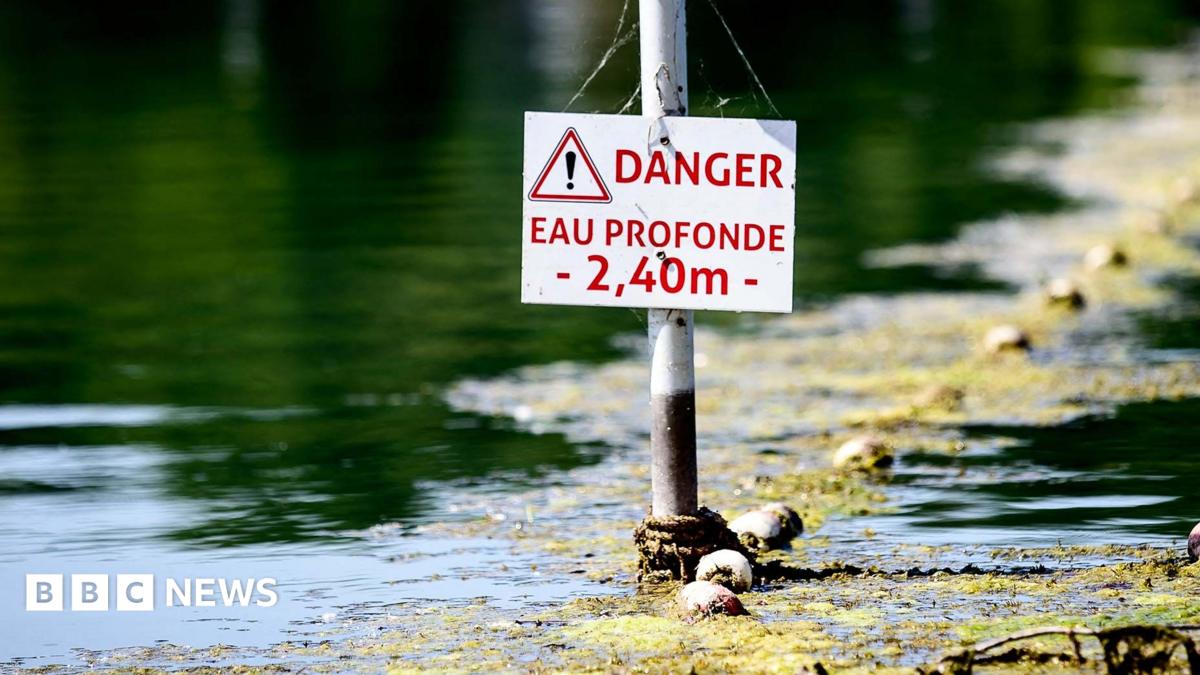
Drowning deaths soar in France as Europe buckles in peak of heatwave
Meanwhile, in Spain temperatures are set to peak above 40C in some areas, with red alerts in Andalusia in the south, and Cantabria and the Basque Country in the north, on the third day of a national heatwave.
Spain is more exposed to the effects of climate change than almost any other European country. State weather service Aemet says June heatwaves are becoming increasingly common, with 10 recorded in mainland Spain between 2000 and 2025, and just two in the previous 25 years.
And in Italy, a red heatwave alert has been declared in 15 cities, including Rome, Milan, Florence, Turin and Venice. The alert signals conditions that can pose health risks even to healthy adults, not just the elderly or chronically ill.
Météo France said the red alert in much of France would be extended on Wednesday afternoon from 54 to 58 of the country's 96 metropolitan departments, to include several areas in the north west.
The president of the Île-de-France region which covers the entire Paris area, Valérie Pécresse, urged people not to travel and to work from home instead: "The rail tracks cannot withstand temperatures above 50C. So we'll have a lot of disruption to public transport."
The Eiffel Tower said it was closing early on Tuesday because of the high temperatures forecast in the capital. Instead of staying open until 00:45 at night, it said it was closing at 16:00 (14:00 GMT) and the last entry to the tower was at 12:15. Some 6.75 million people entered the monument last year.
The world's most visited museum, the Louvre, said it was bringing forward its closing time from Wednesday to Saturday from 18:00 to 16:00 local time. The Louvre said its historic building "remains fragile, external and is not sufficiently adapted to climate change", adding that the "build-up of heat is at its highest at the end of the day, and intensified by the volume of visitors".
The heatwave also meant a nuclear power plant in southwest France had to be shut down on Monday night because water temperatures in the River Garonne were set to reach 28C on Tuesday. Under French laws, water used to cool the reactors at the Golfech plant must not exceed that temperature.
Spanish forecasters say temperatures on the Iberian peninsula will start to fall from Wednesday onwards, however they are set to peak in the Netherlands and Belgium, as well as Germany on Friday.
The Dutch weather service, the KNMI, has issued a Code Orange weather alert which refers to a "high chance of dangerous weather" in southern and central areas from Wednesday to Friday.
After meeting on Tuesday, Belgium's Risk Management Group said it was activating the "alert phase of the national ozone and heat plan" for only the second time. The first occasion was in August 2020, although no specific national measures have been announced, other than to raise awareness and call for extra care for the elderly and children.
Climate change is driving up temperatures around the world - but particularly in Europe. It is the fastest warming content, heating up twice as fast as the global average, according to the Copernicus climate service, external.
This is causing increased summer heatwaves, greater pressure on Europe's water supply, and more intense wildfires. Last year, more than 1 million hectares burnt across Europe - a record level - with Spain particularly affected.
With additional reporting by Esme Stallard
Read the full story at BBC ↗
Europe is experiencing a significant heatwave affecting multiple countries. France has expanded red heat alerts to 58 of its 96 departments, with temperatures potentially reaching dangerous levels. Spain faces temperatures above 40°C in some regions, while Italy has declared red alerts in 15 cities. The heat is causing practical disruptions: rail infrastructure in France cannot safely operate above certain temperatures, the Eiffel Tower closed early, the Louvre reduced hours citing building fragility, and a nuclear power plant in southwest France shut down because river cooling water would exceed safe operating limits. Spain's weather service notes that June heatwaves have become more frequent there—10 recorded between 2000 and 2025 versus two in the 25 years prior. Belgium activated its national heat and ozone alert plan for only the second time on record. The heatwave is expected to shift northward, peaking in the Netherlands, Belgium, and Germany by Friday. Across Europe, climate data shows the continent is warming roughly twice as fast as the global average.
Read the full story at BBC ↗
Meanwhile, in Spain temperatures are set to peak above 40C in some areas, with red alerts in Andalusia in the south, and Cantabria and the Basque Country in the north, on the third day of a national heatwave.
Spain is more exposed to the effects of climate change than almost any other European country. State weather service Aemet says June heatwaves are becoming increasingly common, with 10 recorded in mainland Spain between 2000 and 2025, and just two in the previous 25 years.
And in Italy, a red heatwave alert has been declared in 15 cities, including Rome, Milan, Florence, Turin and Venice. The alert signals conditions that can pose health risks even to healthy adults, not just the elderly or chronically ill.
Météo France said the red alert in much of France would be extended on Wednesday afternoon from 54 to 58 of the country's 96 metropolitan departments, to include several areas in the north west.
The president of the Île-de-France region which covers the entire Paris area, Valérie Pécresse, urged people not to travel and to work from home instead: "The rail tracks cannot withstand temperatures above 50C. So we'll have a lot of disruption to public transport."
The Eiffel Tower said it was closing early on Tuesday because of the high temperatures forecast in the capital. Instead of staying open until 00:45 at night, it said it was closing at 16:00 (14:00 GMT) and the last entry to the tower was at 12:15. Some 6.75 million people entered the monument last year.
The world's most visited museum, the Louvre, said it was bringing forward its closing time from Wednesday to Saturday from 18:00 to 16:00 local time. The Louvre said its historic building "remains fragile, external and is not sufficiently adapted to climate change", adding that the "build-up of heat is at its highest at the end of the day, and intensified by the volume of visitors".
The heatwave also meant a nuclear power plant in southwest France had to be shut down on Monday night because water temperatures in the River Garonne were set to reach 28C on Tuesday. Under French laws, water used to cool the reactors at the Golfech plant must not exceed that temperature.
Spanish forecasters say temperatures on the Iberian peninsula will start to fall from Wednesday onwards, however they are set to peak in the Netherlands and Belgium, as well as Germany on Friday.
The Dutch weather service, the KNMI, has issued a Code Orange weather alert which refers to a "high chance of dangerous weather" in southern and central areas from Wednesday to Friday.
After meeting on Tuesday, Belgium's Risk Management Group said it was activating the "alert phase of the national ozone and heat plan" for only the second time. The first occasion was in August 2020, although no specific national measures have been announced, other than to raise awareness and call for extra care for the elderly and children.
Climate change is driving up temperatures around the world - but particularly in Europe. It is the fastest warming content, heating up twice as fast as the global average, according to the Copernicus climate service, external.
This is causing increased summer heatwaves, greater pressure on Europe's water supply, and more intense wildfires. Last year, more than 1 million hectares burnt across Europe - a record level - with Spain particularly affected.
With additional reporting by Esme Stallard
Read the full story at BBC ↗
Red heat alerts have been declared across France, Spain, and Italy Spanish temperatures are set to peak above 40°C in some areas Spain recorded 10 June heatwaves between 2000 and 2025, compared to two in the preceding 25 years Red heatwave alerts signal conditions that can pose health risks even to healthy adults French rail tracks cannot withstand temperatures above 50°C The Eiffel Tower closed at 16:00 on Tuesday instead of its normal 00:45 closing The Louvre reduced closing hours and stated its historic building 'remains fragile' and 'not sufficiently adapted to climate change' A nuclear power plant in southwest France shut down because river water temperatures were set to reach 28°C, exceeding safety limits Spanish forecasters predict temperatures will fall from Wednesday, while peaking in the Netherlands, Belgium, and Germany by Friday Europe is the fastest warming continent, heating twice as fast as the global average Climate change is driving increased summer heatwaves, water supply pressure, and intense wildfires across Europe
Read the full story at BBC ↗
- A severe European heatwave has prompted red alerts across France, Spain, and Italy, with temperatures exceeding 40°C in parts of Spain and threatening infrastructure from rail to nuclear plants
- Major cultural institutions including the Louvre and Eiffel Tower have reduced operating hours due to heat risks to buildings and visitors
- Spain has recorded 10 June heatwaves since 2000 compared to two in the preceding 25 years; Europe warms twice as fast as the global average
- The heatwave is shifting northward, with peak temperatures expected in the Netherlands, Belgium, and Germany by Friday