Earthquake is devastating blow to Venezuela at time of uncertainty
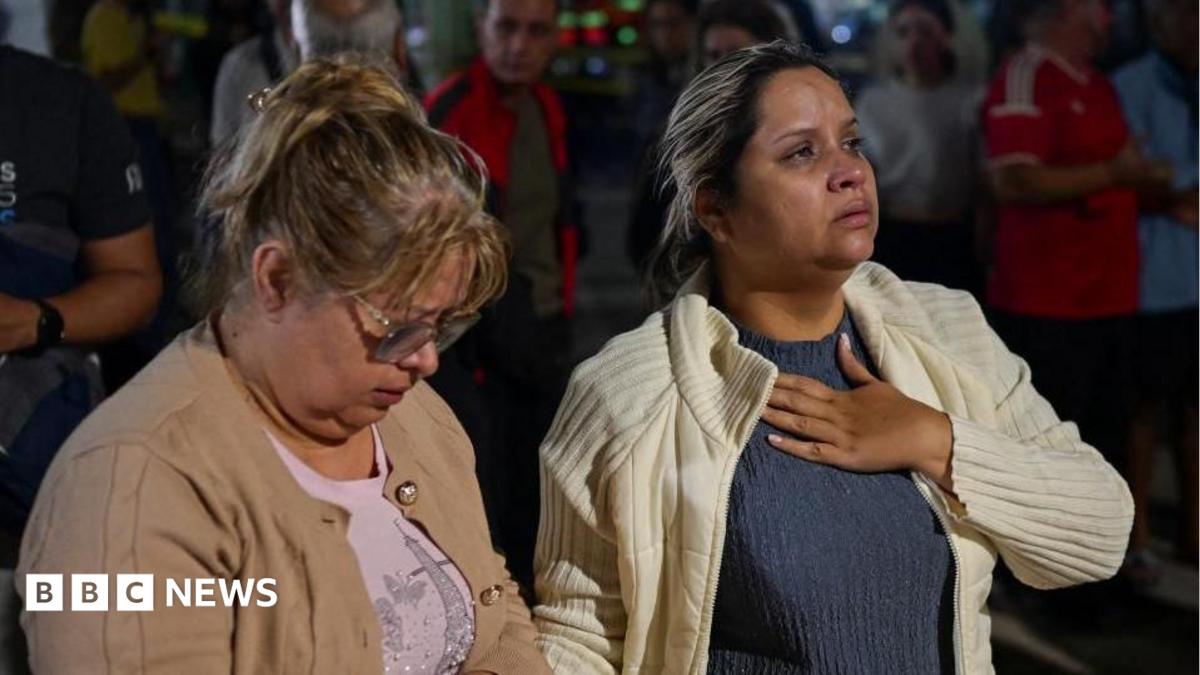
With the number of people killed in the powerful twin quakes which struck Venezuela on Wednesday still rising, there is no doubt that this natural disaster is a devastating blow to a country already mired in uncertainty.
It has been less than six months since Nicolás Maduro, the left-wing leader who had ruled the country since 2013, was seized by US forces in a dawn raid on his presidential compound in the capital, Caracas, and taken to New York to stand trial on drug-trafficking charges.
Venezuela has since been governed by Maduro's ally and former vice-president, Delcy Rodríguez, much to the chagrin of opposition supporters who had hoped the Trump administration would put opposition leader María Corina Machado in charge.
Rodríguez's response to the quake has revealed some of the things which have - and have not - changed since the January raid, as well as the many challenges facing the country's battered infrastructure.
Rodríguez addressed the nation on state television channel VTV more than two hours after the quakes.
Follow live updates
Prior to that, official information had been very scant, no doubt due to the fact that communication channels to some of the worst affected areas were down. But it is also a result of restrictions placed on independent media under the Maduro government, which have led to the closure of hundreds of mainly local radio stations and news sites, which in the past would have been key to providing localised updates.
Rodríguez was flanked by her brother Jorge, who in his role as president of the National Assembly swore her into office as interim president just days after Maduro was seized, and by Interior Minister Diosdado Cabello, another staunch Maduro ally.
Unlike he so often did in the months leading up to the US military intervention, Cabello was not wearing military fatigues. He stood silently next to Rodríguez, as did her brother.
Rodríguez was visibly shaken as she delivered her speech, in which she called "first and foremost" for unity from the Venezuelan people, who for more than a decade have been deeply divided between those who supported Maduro, and his predecessor and mentor Hugo Chávez, and those who opposed him.
She also declared a state of emergency and tasked General Juan Ernesto Sulbarán, the commander of Venezuela's National Guard, with leading the emergency response.
During the more than a quarter century that Chávez and Maduro were in power, key positions in the government have been held by high-ranking military officers.
Many state ministries have for years been in the hands of generals, and analysts have said that part of the reason why Venezuela's infrastructure has become so run down is the lack of expertise of those in charge.
Under the watchful eyes of the Trump administration, Rodríguez has recently replaced the general running the ministry of housing with a civilian who has a degree in architecture and the general who headed the electricity ministry with an electrical engineer.
However, years of shortages - exacerbated by US sanctions - and mismanagement have meant that much of the public housing stock in particular has deteriorated.
A shortage of cement, for example, triggered by the collapse of the state-owned cement industry after its nationalisation under Chávez, has meant that badly needed repairs have often not been carried out on buildings and home, making them more prone to collapse.
The power and influence of the military over the past two decades also means that equipping it has often taken precedence over providing civil protection units with modern tools and vehicles.
Aware of these shortcomings, Rodríguez expressed her gratitude to foreign governments which have offered their help.
Among those she singled out was US President Donald Trump and his government, who, she said, had been "in constant contact with all our authorities offering support and solidarity".
She also said she had spoken to the presidents of the Dominican Republic and El Salvador, and thanked the president of Chile - all of whom lead right-wing governments.
While the offers of help are hardly surprising after such a devastating quake, the fact that Rodríguez is accepting them is a clear break from the policies of Maduro, who only accepted help from ideological allies.
"The solidarity between our people is a invaluable source of strength in moments like these," she said.
For all those Venezuelans waking up to scenes of devastation, and in particular for the relatives of those buried under the rubble, this openness to allowing in critical help will provide them with a ray of hope at a time of anguish and uncertainty.
Read the full story at BBC ↗
Venezuela has experienced powerful twin earthquakes with a rising death toll. The country is currently governed by interim President Delcy Rodríguez, who took office in January following the US military seizure of former president Nicolás Maduro. Rodríguez declared a state of emergency and tasked the National Guard commander with leading the response. Communication from affected areas has been limited due to damaged infrastructure and restricted independent media. Venezuela's building stock has deteriorated due to cement shortages following the collapse of the nationalized cement industry, and civil protection units lack modern equipment. Rodríguez announced acceptance of aid from multiple governments including the US, Dominican Republic, El Salvador, and Chile. This represents a shift from Maduro's previous practice of accepting assistance only from ideological allies.
Read the full story at BBC ↗
With the number of people killed in the powerful twin quakes which struck Venezuela on Wednesday still rising, there is no doubt that this natural disaster is a devastating blow to a country already mired in uncertainty.
It has been less than six months since Nicolás Maduro, the left-wing leader who had ruled the country since 2013, was seized by US forces in a dawn raid on his presidential compound in the capital, Caracas, and taken to New York to stand trial on drug-trafficking charges.
Venezuela has since been governed by Maduro's ally and former vice-president, Delcy Rodríguez, much to the chagrin of opposition supporters who had hoped the Trump administration would put opposition leader María Corina Machado in charge.
Rodríguez's response to the quake has revealed some of the things which have - and have not - changed since the January raid, as well as the many challenges facing the country's battered infrastructure.
Rodríguez addressed the nation on state television channel VTV more than two hours after the quakes.
Follow live updates
Prior to that, official information had been very scant, no doubt due to the fact that communication channels to some of the worst affected areas were down. But it is also a result of restrictions placed on independent media under the Maduro government, which have led to the closure of hundreds of mainly local radio stations and news sites, which in the past would have been key to providing localised updates.
Rodríguez was flanked by her brother Jorge, who in his role as president of the National Assembly swore her into office as interim president just days after Maduro was seized, and by Interior Minister Diosdado Cabello, another staunch Maduro ally.
Unlike he so often did in the months leading up to the US military intervention, Cabello was not wearing military fatigues. He stood silently next to Rodríguez, as did her brother.
Rodríguez was visibly shaken as she delivered her speech, in which she called "first and foremost" for unity from the Venezuelan people, who for more than a decade have been deeply divided between those who supported Maduro, and his predecessor and mentor Hugo Chávez, and those who opposed him.
She also declared a state of emergency and tasked General Juan Ernesto Sulbarán, the commander of Venezuela's National Guard, with leading the emergency response.
During the more than a quarter century that Chávez and Maduro were in power, key positions in the government have been held by high-ranking military officers.
Many state ministries have for years been in the hands of generals, and analysts have said that part of the reason why Venezuela's infrastructure has become so run down is the lack of expertise of those in charge.
Under the watchful eyes of the Trump administration, Rodríguez has recently replaced the general running the ministry of housing with a civilian who has a degree in architecture and the general who headed the electricity ministry with an electrical engineer.
However, years of shortages - exacerbated by US sanctions - and mismanagement have meant that much of the public housing stock in particular has deteriorated.
A shortage of cement, for example, triggered by the collapse of the state-owned cement industry after its nationalisation under Chávez, has meant that badly needed repairs have often not been carried out on buildings and home, making them more prone to collapse.
The power and influence of the military over the past two decades also means that equipping it has often taken precedence over providing civil protection units with modern tools and vehicles.
Aware of these shortcomings, Rodríguez expressed her gratitude to foreign governments which have offered their help.
Among those she singled out was US President Donald Trump and his government, who, she said, had been "in constant contact with all our authorities offering support and solidarity".
She also said she had spoken to the presidents of the Dominican Republic and El Salvador, and thanked the president of Chile - all of whom lead right-wing governments.
While the offers of help are hardly surprising after such a devastating quake, the fact that Rodríguez is accepting them is a clear break from the policies of Maduro, who only accepted help from ideological allies.
"The solidarity between our people is a invaluable source of strength in moments like these," she said.
For all those Venezuelans waking up to scenes of devastation, and in particular for the relatives of those buried under the rubble, this openness to allowing in critical help will provide them with a ray of hope at a time of anguish and uncertainty.
Read the full story at BBC ↗
Twin powerful earthquakes struck Venezuela on Wednesday with a rising death toll Nicolás Maduro was seized by US forces in a dawn raid less than six months ago and taken to New York to stand trial on drug-trafficking charges Delcy Rodríguez, Maduro's former vice-president and ally, now serves as interim president Rodríguez addressed the nation more than two hours after the quakes on state television Communication channels to affected areas were down, limiting official information Independent media restrictions under Maduro led to closure of hundreds of local radio stations and news sites The earthquake is a devastating blow to a country already mired in uncertainty Venezuela's infrastructure deterioration results partly from lack of expertise among military officers holding civilian positions Years of shortages and mismanagement have made public housing prone to collapse Rodríguez recently replaced military generals with civilians having relevant expertise in housing and electricity Rodríguez is accepting aid from right-wing governments, a clear break from Maduro's ideological alignment approach
Read the full story at BBC ↗
- Powerful twin earthquakes struck Venezuela on Wednesday, causing deaths and widespread devastation
- Interim President Delcy Rodríguez, who took office after Nicolás Maduro's arrest by US forces in January, declared a state of emergency and called for national unity
- Venezuela's infrastructure vulnerability stems from years of mismanagement, shortages, and military officials leading civilian ministries without technical expertise
- Rodríguez is accepting aid from the US, Dominican Republic, El Salvador, and Chile—a departure from Maduro's policy of only accepting help from ideological allies