Elizabeth Warren says ‘tsunami of anger’ could prompt reversal of Trump-era mega mergers
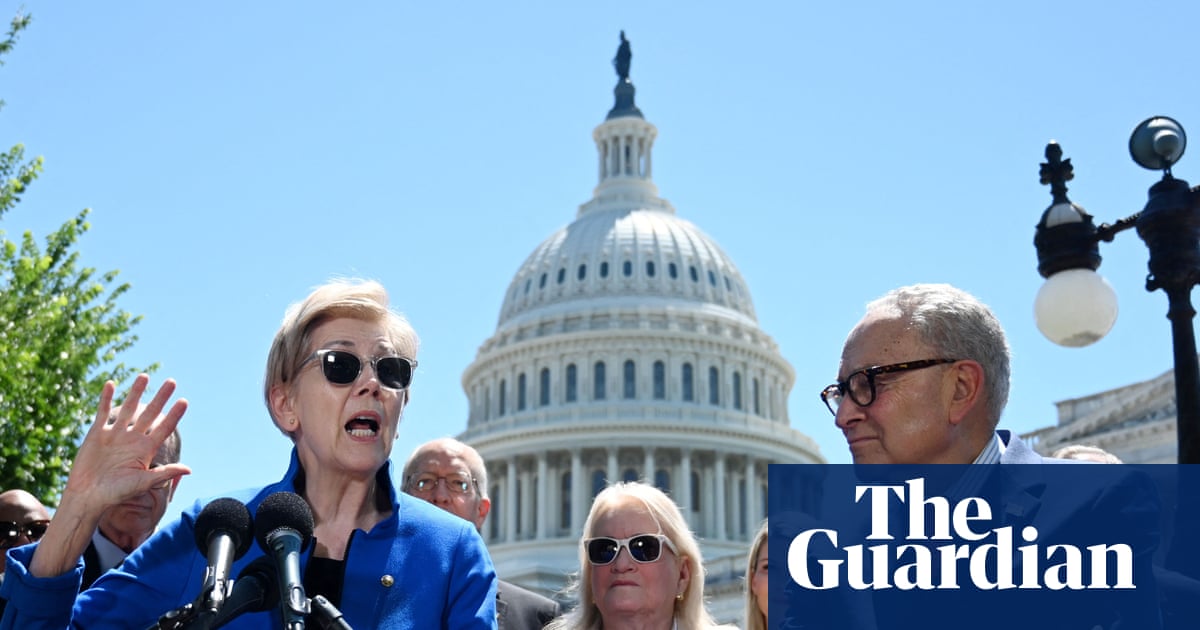
Democratic senator Elizabeth Warren has warned that corporate mergers approved by the Trump administration – including a pending deal that would put two of America’s largest news outlets under the control of a family sympathetic to the president – could be undone by a future administration.
“After 2028, we’ll have new players in Washington, and everyone who’s engaged in this merger frenzy right now is aware of that,” Warren said in an interview.
“The deals that are being cut today are occurring in the shadow of a coming political tsunami of anger against these giant corporations that think they can mow through one industry after another and run up prices and suck out profits and never be held accountable.”
“By 2028” – the year of the next presidential election – “they may find out they have badly miscalculated,” Warren said.
The Massachusetts senator’s comments come after the justice department earlier this month approved the $111bn merger of Warner Bros Discovery, the parent company of CNN and HBO, and Paramount Skydance, which includes CBS News and is controlled by the Ellison family.
The deal has prompted concerns that Larry Ellison, a longtime associate of Donald Trump, and his son, David, could reorient CNN’s coverage to be favorable to the president. After gaining control of CBS News in the merger last year that created Paramount Skydance, David Ellison appointed as editor-in-chief Bari Weiss, a conservative commentator who had no experience in television.
The news network has since been plagued by allegations of political bias, including at 60 Minutes, the most watched show in television news. At CNN, the looming prospect of the Ellisons gaining control of that network and potentially installing Weiss in a leadership role has sparked concerns inside the network.
Warren warned that if the networks are indeed combined under the Ellisons, it would mean “there’s one ultimate decision-maker who decides what’s important and what’s not” at two of the country’s biggest news outlets.
“A bigger problem is that Ellison himself wants to inject a tilt into the news, and that means, where Americans turn for news, they can depend less and less on hearing independent, unbiased reports, and increasingly hearing a predigested version of the world that is comfortable for the new management of these news outfits,” she said.
State attorneys general have reportedly planned a lawsuit over the deal, but have yet to announce it. Warren said she “wouldn’t draw a lot of inferences” from the delay, because bringing such a case requires significant resources and coordination among states as they decide “how they’re going to to pool their efforts to go up against a giant like Ellison”.
Beyond media, the Trump administration has also approved Nippon Steel’s $14.9bn acquisition of US Steel; Omnicom’s $13.5bn acquisition of Interpublic to create the world’s largest advertising agency; and a $35bn deal between Capital One and Discover Financial.
In a speech to the Open Market Institute in Washington, the senator accused the Trump administration of turning a blind eye to the merger wave’s harmful effects on consumers in exchange for political donations.
“As soon as Trump took office, corporations came knocking at the White House door to get their pro-monopoly deals approved,” Warren said. “Have you wondered why companies keep donating millions of dollars to Trump’s gold-encrusted ballroom, his arch, or his library? It looks a lot like a pay-to-play scheme.”
Warren is not alone among Senate Democrats in threatening to undo mergers approved under the Republican administration. In February, Senator Chris Murphy warned in a post on social media that Paramount, which had then become the prime bidder for Warner Bros Discovery after Netflix dropped out, “should enjoy its growing news monopoly while they have it because when Democrats win back power we are going to break up these anti-democratic information conglomerates. All of them.”
In November, voters will cast ballots in midterm elections that could put Democrats back in control of the Senate and House of Representatives. Warren, who represents Massachusetts and is currently the top Democrat on the Senate banking committee, said returning to the majority could offer her party some limited opportunity to strike back at the Trump administration’s merger policy.
“What we’ll be able to change in the law will be tough, with Donald Trump still sitting in the White House and able to veto anything he doesn’t like,” Warren said. However, she noted that antitrust law permits retroactive breakups of mergers “if they are later determined to violate those laws”.
Read the full story at The Guardian ↗
Elizabeth Warren has stated that corporate mergers approved during the Trump administration could face legal reversal under different political leadership. She specifically referenced the $111 billion combination of Warner Bros Discovery and Paramount Skydance, noting concerns that Ellison family ownership could influence editorial decisions at CNN and CBS News. Warren pointed to additional approved mergers including Nippon Steel's acquisition of US Steel, Omnicom's purchase of Interpublic, and a Capital One-Discover deal. She suggested that companies may be seeking regulatory approval in exchange for political donations, and indicated that antitrust law permits retroactive breakup of mergers found to violate those laws. Other Democratic senators including Chris Murphy have made similar statements about reversing mergers if their party gains control of Congress.
Read the full story at The Guardian ↗
Democratic senator Elizabeth Warren has warned that corporate mergers approved by the Trump administration – including a pending deal that would put two of America’s largest news outlets under the control of a family sympathetic to the president – could be undone by a future administration.
“After 2028, we’ll have new players in Washington, and everyone who’s engaged in this merger frenzy right now is aware of that,” Warren said in an interview.
“The deals that are being cut today are occurring in the shadow of a coming political tsunami of anger against these giant corporations that think they can mow through one industry after another and run up prices and suck out profits and never be held accountable.”
“By 2028” – the year of the next presidential election – “they may find out they have badly miscalculated,” Warren said.
The Massachusetts senator’s comments come after the justice department earlier this month approved the $111bn merger of Warner Bros Discovery, the parent company of CNN and HBO, and Paramount Skydance, which includes CBS News and is controlled by the Ellison family.
The deal has prompted concerns that Larry Ellison, a longtime associate of Donald Trump, and his son, David, could reorient CNN’s coverage to be favorable to the president. After gaining control of CBS News in the merger last year that created Paramount Skydance, David Ellison appointed as editor-in-chief Bari Weiss, a conservative commentator who had no experience in television.
The news network has since been plagued by allegations of political bias, including at 60 Minutes, the most watched show in television news. At CNN, the looming prospect of the Ellisons gaining control of that network and potentially installing Weiss in a leadership role has sparked concerns inside the network.
Warren warned that if the networks are indeed combined under the Ellisons, it would mean “there’s one ultimate decision-maker who decides what’s important and what’s not” at two of the country’s biggest news outlets.
“A bigger problem is that Ellison himself wants to inject a tilt into the news, and that means, where Americans turn for news, they can depend less and less on hearing independent, unbiased reports, and increasingly hearing a predigested version of the world that is comfortable for the new management of these news outfits,” she said.
State attorneys general have reportedly planned a lawsuit over the deal, but have yet to announce it. Warren said she “wouldn’t draw a lot of inferences” from the delay, because bringing such a case requires significant resources and coordination among states as they decide “how they’re going to to pool their efforts to go up against a giant like Ellison”.
Beyond media, the Trump administration has also approved Nippon Steel’s $14.9bn acquisition of US Steel; Omnicom’s $13.5bn acquisition of Interpublic to create the world’s largest advertising agency; and a $35bn deal between Capital One and Discover Financial.
In a speech to the Open Market Institute in Washington, the senator accused the Trump administration of turning a blind eye to the merger wave’s harmful effects on consumers in exchange for political donations.
“As soon as Trump took office, corporations came knocking at the White House door to get their pro-monopoly deals approved,” Warren said. “Have you wondered why companies keep donating millions of dollars to Trump’s gold-encrusted ballroom, his arch, or his library? It looks a lot like a pay-to-play scheme.”
Warren is not alone among Senate Democrats in threatening to undo mergers approved under the Republican administration. In February, Senator Chris Murphy warned in a post on social media that Paramount, which had then become the prime bidder for Warner Bros Discovery after Netflix dropped out, “should enjoy its growing news monopoly while they have it because when Democrats win back power we are going to break up these anti-democratic information conglomerates. All of them.”
In November, voters will cast ballots in midterm elections that could put Democrats back in control of the Senate and House of Representatives. Warren, who represents Massachusetts and is currently the top Democrat on the Senate banking committee, said returning to the majority could offer her party some limited opportunity to strike back at the Trump administration’s merger policy.
“What we’ll be able to change in the law will be tough, with Donald Trump still sitting in the White House and able to veto anything he doesn’t like,” Warren said. However, she noted that antitrust law permits retroactive breakups of mergers “if they are later determined to violate those laws”.
Read the full story at The Guardian ↗
The Justice Department approved the $111 billion merger of Warner Bros Discovery and Paramount Skydance The Ellison family, which controls the merged entity, has ties to Donald Trump Bari Weiss was appointed editor-in-chief of CBS News after the Ellison family gained control through a prior merger Trump administration approved mergers include Nippon Steel-US Steel ($14.9 billion), Omnicom-Interpublic ($13.5 billion), and Capital One-Discover ($35 billion) State attorneys general have reportedly planned a lawsuit over the Warner Bros-Paramount deal but have not announced it Consolidated Ellison ownership would mean one decision-maker controls editorial choices at two major news outlets Ellison wants to inject a tilt into news coverage that would compromise independent reporting The merger approval pattern resembles a pay-to-play scheme exchanging regulatory approval for political donations Antitrust law permits retroactive breakups of mergers determined to violate those laws
Read the full story at The Guardian ↗
- Elizabeth Warren warns that corporate mega-mergers approved under Trump could be reversed by a future Democratic administration
- The Justice Department approved a $111 billion merger of Warner Bros Discovery and Paramount Skydance, controlled by Ellison family associates of Trump
- Warren cited concerns that consolidated ownership could compromise editorial independence at major news outlets including CNN and CBS News
- Multiple major mergers have been approved under Trump administration including Nippon Steel-US Steel and Capital One-Discover deals
- Democratic senators have suggested using antitrust law to unwind approved mergers if they return to power