'Every person saved is a miracle': Families call to trapped loved ones in region devastated by Venezuela quakes
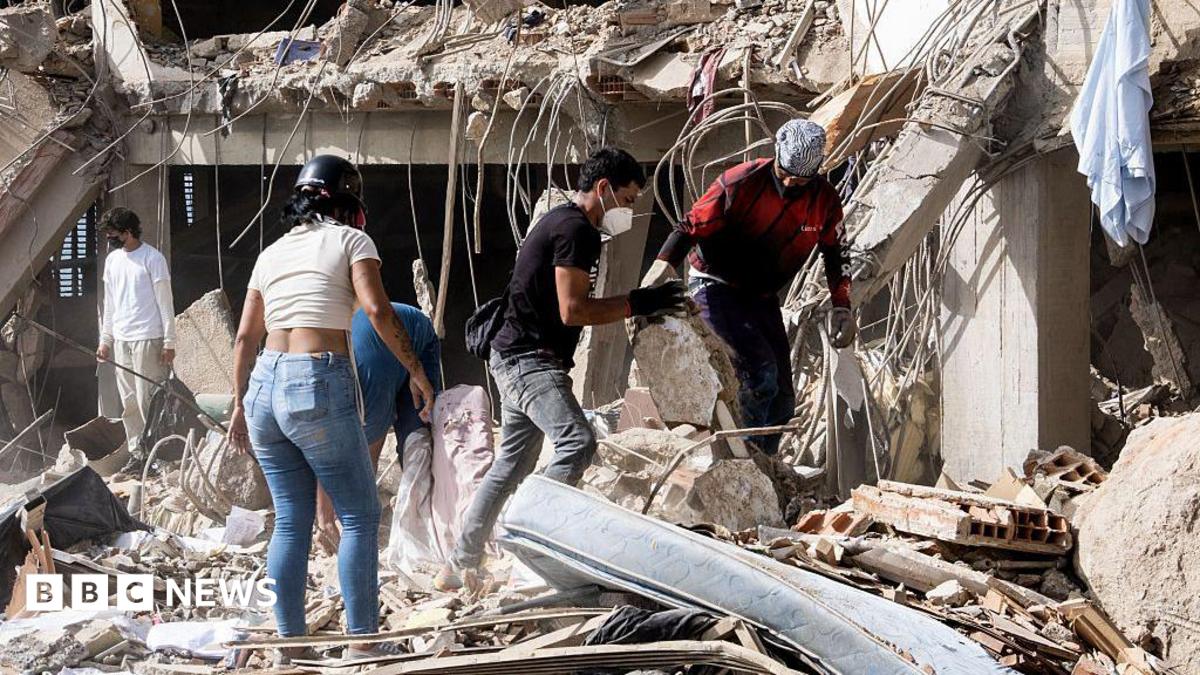
Bare hands and shovels shift through the rubble, while a drone scans overhead. Every moment, every action matters. It is a race against time to find survivors.
Here in the coastal state of La Guaira, which borders the capital district containing nearby Caracas, catastrophic damage is seen almost everywhere you look. The state has been one of the hardest-hit areas after back-to-back earthquakes struck Venezuela on Wednesday.
Residents and families are desperately searching the rubble for their loved ones and belongings. They are listening carefully for any sound that might indicate someone is alive trapped under the concrete and metal wire debris.
So far, officials have confirmed at least 1430 deaths from the magnitudes 7.2 and 7.5 earthquakes - the latter being one of the strongest quakes recorded in the country in the last century.
Hundreds of buildings collapsed and beneath the rubble, thousands of Venezuelans remain. The number of dead and injured rises by the hour. The UN estimates around 50,000 people are missing.
National rescue teams are scarce, although international rescuers from Mexico, Spain, the US and the UK have arrived to join the rescue effort.
But, it is still not enough.
Traffic and crowds can sometimes hinder the search operations. Soldiers and Mexican volunteers have repeatedly called for silence, so they can listen for signs of life under the debris.
People are helping however they can. Those who have drones are using them to search for survivors or the deceased in hard-to-reach places.
Families huddle around drone video feeds searching for anything familiar. A piece of clothing, a strand of hair, a belonging. Anything that might bring news of a loved one.
As time passes, the unofficial death toll rises - and so do the consequences.
"There's a smell… the dead are already being felt. That's going to make us and the children sick," says Glendys Delgado.
Two buildings near where Delgado lives are collapsed, but there has been no official help, she says. "No one from the government has come here, but I thank God that people from Caracas have come to support us with food."
Deiyer Gabril, 27, says every area has been affected, "Macuto, Caribe… everything over there is bad. And we can all feel the odour."
Authorities reported on Friday that 861 volunteers from Mexico, the US, El Salvador, Switzerland, Colombia, and other countries were in Venezuela, with more arriving.
Interim President Rodríguez said she spoke with US President Donald Trump and US Secretary of State Marco Rubio on Friday, and that they reaffirmed their commitment to send rescue teams and aid supplies.
The four of them are now sleeping in their vehicle in a car park at the Simón Bolívar International Airport in Maiquetía. The airport is closed due to damage, but offers a flat, open place away from buildings where the family can take shelter.
She waits outside their damaged building. Her husband is attempting to make it to their fifteenth‑floor flat. The building is unstable, but he is trying to retrieve some belongings and documents. "The essentials," she says, since it's dangerous and they cannot risk trying to recover too much.
"It's painful to be left with nothing. My mother lost her home, we lost our home, we have nothing. You try to stay strong for your children," she says.
And she adds something many feel: "Everyone says what matters is that you're alive - and yes, but everything you're going through hurts: seeing people suffer, hearing people scream, seeing children trapped, and the helplessness of not being able to do anything because you have to stay and look after your own children.
"You try to be strong, but it hurts."
Read the full story at BBC ↗
Two earthquakes struck Venezuela on Wednesday, with magnitudes of 7.2 and 7.5. The coastal region of La Guaira, near Caracas, experienced severe damage. Confirmed deaths stand at 1,430, with the UN estimating 50,000 people missing. Hundreds of buildings collapsed. Rescue operations are underway using manual labour, shovels, and drones to locate survivors. International teams from Mexico, Spain, the US, UK, El Salvador, Switzerland, and Colombia are participating. Authorities report 861 international volunteers were in Venezuela as of Friday, with more arriving. Venezuelan President Rodríguez stated she received commitments from US officials for rescue teams and aid supplies. Survivors describe challenges including lack of government assistance in some areas, sanitation concerns from decomposition, homelessness, and the difficulty of balancing family safety with search and recovery efforts.
Read the full story at BBC ↗
Bare hands and shovels shift through the rubble, while a drone scans overhead. Every moment, every action matters. It is a race against time to find survivors.
Here in the coastal state of La Guaira, which borders the capital district containing nearby Caracas, catastrophic damage is seen almost everywhere you look. The state has been one of the hardest-hit areas after back-to-back earthquakes struck Venezuela on Wednesday.
Residents and families are desperately searching the rubble for their loved ones and belongings. They are listening carefully for any sound that might indicate someone is alive trapped under the concrete and metal wire debris.
So far, officials have confirmed at least 1430 deaths from the magnitudes 7.2 and 7.5 earthquakes - the latter being one of the strongest quakes recorded in the country in the last century.
Hundreds of buildings collapsed and beneath the rubble, thousands of Venezuelans remain. The number of dead and injured rises by the hour. The UN estimates around 50,000 people are missing.
National rescue teams are scarce, although international rescuers from Mexico, Spain, the US and the UK have arrived to join the rescue effort.
But, it is still not enough.
Traffic and crowds can sometimes hinder the search operations. Soldiers and Mexican volunteers have repeatedly called for silence, so they can listen for signs of life under the debris.
People are helping however they can. Those who have drones are using them to search for survivors or the deceased in hard-to-reach places.
Families huddle around drone video feeds searching for anything familiar. A piece of clothing, a strand of hair, a belonging. Anything that might bring news of a loved one.
As time passes, the unofficial death toll rises - and so do the consequences.
"There's a smell… the dead are already being felt. That's going to make us and the children sick," says Glendys Delgado.
Two buildings near where Delgado lives are collapsed, but there has been no official help, she says. "No one from the government has come here, but I thank God that people from Caracas have come to support us with food."
Deiyer Gabril, 27, says every area has been affected, "Macuto, Caribe… everything over there is bad. And we can all feel the odour."
Authorities reported on Friday that 861 volunteers from Mexico, the US, El Salvador, Switzerland, Colombia, and other countries were in Venezuela, with more arriving.
Interim President Rodríguez said she spoke with US President Donald Trump and US Secretary of State Marco Rubio on Friday, and that they reaffirmed their commitment to send rescue teams and aid supplies.
The four of them are now sleeping in their vehicle in a car park at the Simón Bolívar International Airport in Maiquetía. The airport is closed due to damage, but offers a flat, open place away from buildings where the family can take shelter.
She waits outside their damaged building. Her husband is attempting to make it to their fifteenth‑floor flat. The building is unstable, but he is trying to retrieve some belongings and documents. "The essentials," she says, since it's dangerous and they cannot risk trying to recover too much.
"It's painful to be left with nothing. My mother lost her home, we lost our home, we have nothing. You try to stay strong for your children," she says.
And she adds something many feel: "Everyone says what matters is that you're alive - and yes, but everything you're going through hurts: seeing people suffer, hearing people scream, seeing children trapped, and the helplessness of not being able to do anything because you have to stay and look after your own children.
"You try to be strong, but it hurts."
Read the full story at BBC ↗
Back-to-back earthquakes of magnitude 7.2 and 7.5 struck Venezuela on Wednesday La Guaira, a coastal state bordering the capital district containing Caracas, was one of the hardest-hit areas At least 1,430 deaths have been confirmed from the earthquakes The 7.5 magnitude earthquake was one of the strongest recorded in Venezuela in the last century Hundreds of buildings collapsed The UN estimates around 50,000 people are missing International rescue teams from Mexico, Spain, the US, UK, El Salvador, Switzerland, and Colombia have arrived As of Friday, 861 international volunteers were in Venezuela President Rodríguez stated she spoke with US President Trump and Secretary of State Rubio, who reaffirmed commitments to send rescue teams and aid supplies Rescue operations involve bare hands, shovels, and drones to search for survivors Traffic and crowds sometimes hinder search operations, with rescuers requesting silence to listen for signs of life Some survivors report no government assistance reaching their areas Decomposition is creating sanitation and health concerns in affected areas It is a race against time to find survivors Every moment and action matters in rescue efforts Available international rescue resources are still not enough
Read the full story at BBC ↗
- Back-to-back earthquakes of magnitude 7.2 and 7.5 struck Venezuela on Wednesday, with the coastal state of La Guaira near Caracas among the hardest hit
- At least 1,430 deaths confirmed; UN estimates around 50,000 people missing with hundreds of buildings collapsed
- Rescue teams from Mexico, Spain, US, UK, and other nations are assisting, but resources remain insufficient for the scale of need
- Survivors face immediate challenges including sanitation concerns, lack of government aid in some areas, and the psychological toll of loss and displacement