Ex-Barclays traders jailed for rigging interest rates have convictions quashed
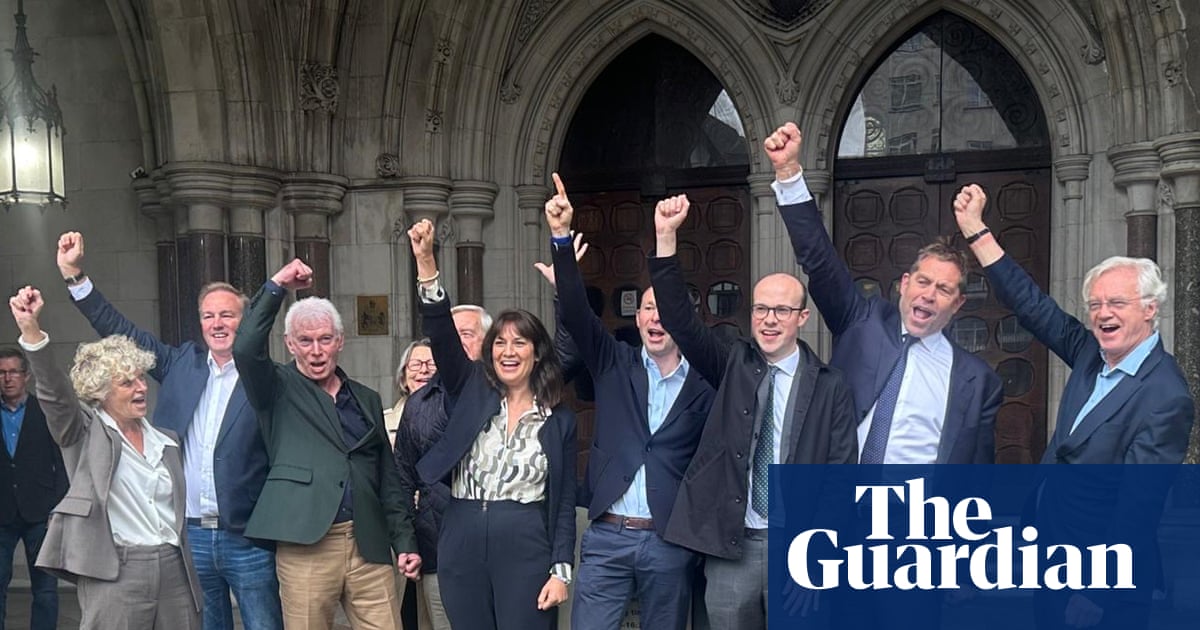 ✓
✓Five more former traders who were jailed for rigging interest rates have had their convictions quashed by the court of appeal in London, after a long battle to clear their names.
The court overturned the convictions of Jay Vijay Merchant, Jonathan Mathew, Philippe Moryoussef, Alex Pabon and Colin Bermingham – all of whom worked at Barclays.
Their acquittals on Wednesday came just over a year after the UK supreme court overturned a decade-old ruling against the former UBS and Citigroup trader Tom Hayes.
The five former Barclays traders were jailed between 2016 and 2019 on charges of manipulating the euro interbank offered rate (Euribor) or the now-defunct London interbank offered rate (Libor).
The Euribor and Libor rates affected the value of ordinary people’s pensions, mortgages and savings, as well as hundreds of trillions of pounds and euros worth of financial products around the world. Nine bankers accused of rigging the rates were given fraud convictions.
The five former Barclays traders applied to clear their names after Hayes, the first banker jailed for Libor-rigging in 2015, had his name cleared. Carlo Palombo, a former Barclays trader sentenced to four years in prison in 2019 for rigging Euribor, also had his conviction quashed on the same day in July 2025.
The supreme court overturned the convictions of Hayes and Palombo after finding faults in the original trials, ruling that had ultimately “deprived” them of a fair trial. They found trial judges had given “inaccurate and unfair” instructions to the juries that found the former traders guilty.
The cases of the American Pabon; Calcutta-born Merchant; Britons Bermingham and Mathew; and French national Moryoussef were referred back to the court of appeal by the Criminal Cases Review Commission in January.
The move came after the Serious Fraud Office (SFO), which brought the original charges against the men, found their convictions “may be considered unsafe” after the supreme court ruling in the cases of Hayes and Palombo. The SFO did not contest the appeals.
Mathew said: “For the last 10 years, the stain of a criminal conviction has been a burden I have carried every minute of every day.”
He added: “Having this conviction quashed is not simply about correcting the record, it’s about finally having validation that this is an injustice that never should have happened.”
after newsletter promotion
In a statement, Pabon, thanked Hayes, who he said “refused to let it go and pushed this through for all of us”.
Tom Bushnell, a partner at the law firm Hickman & Rose, which represented Merchant, Mathew and Moryoussef, said: “In Jay Merchant and Jon Mathew’s case, it took over a decade for this wrong to be righted. In Philippe Moryoussef’s case, over eight years.
“Their lives have been turned upside down as a result. All involved in the criminal justice system should now ask themselves not only how this error came to be made and repeated, but also why it took so long to correct.”
Wednesday’s ruling marks a further blow for the SFO, with the unravelling of more of its high-profile prosecutions. It said: “After carefully considering this judgment and the full circumstances, we do not oppose the appeals of five individuals convicted by juries in relation to Libor and Euribor.”
The agency reiterated in a statement that the supreme court had “found that there was ample evidence on which a properly directed jury could have convicted Tom Hayes and Carlo Palombo”.
Jason Williams, the head of division at the SFO, added that it was not deemed in the public interest to seek retrials of Hayes and Palombo.
A further attempted appeal by Christian Bittar, a former Deutsche Bank trader who pleaded guilty in 2018, is expected to be heard on Friday. His case is the only one being contested by the SFO, which argues his conviction was safe.
Read the full story at BBC ↗ · The Guardian ↗
Acquittals of five former bankers come year after supreme court overturned ruling against City trader Tom Hayes. Five more former traders who were jailed for rigging interest…
This lens runs the verified story through Cinnamon's AI — wired in the next step.
Five more former traders who were jailed for rigging interest rates have had their convictions quashed by the court of appeal in London, after a long battle to clear their names.
The court overturned the convictions of Jay Vijay Merchant, Jonathan Mathew, Philippe Moryoussef, Alex Pabon and Colin Bermingham – all of whom worked at Barclays.
Their acquittals on Wednesday came just over a year after the UK supreme court overturned a decade-old ruling against the former UBS and Citigroup trader Tom Hayes.
The five former Barclays traders were jailed between 2016 and 2019 on charges of manipulating the euro interbank offered rate (Euribor) or the now-defunct London interbank offered rate (Libor).
The Euribor and Libor rates affected the value of ordinary people’s pensions, mortgages and savings, as well as hundreds of trillions of pounds and euros worth of financial products around the world. Nine bankers accused of rigging the rates were given fraud convictions.
The five former Barclays traders applied to clear their names after Hayes, the first banker jailed for Libor-rigging in 2015, had his name cleared. Carlo Palombo, a former Barclays trader sentenced to four years in prison in 2019 for rigging Euribor, also had his conviction quashed on the same day in July 2025.
The supreme court overturned the convictions of Hayes and Palombo after finding faults in the original trials, ruling that had ultimately “deprived” them of a fair trial. They found trial judges had given “inaccurate and unfair” instructions to the juries that found the former traders guilty.
The cases of the American Pabon; Calcutta-born Merchant; Britons Bermingham and Mathew; and French national Moryoussef were referred back to the court of appeal by the Criminal Cases Review Commission in January.
The move came after the Serious Fraud Office (SFO), which brought the original charges against the men, found their convictions “may be considered unsafe” after the supreme court ruling in the cases of Hayes and Palombo. The SFO did not contest the appeals.
Mathew said: “For the last 10 years, the stain of a criminal conviction has been a burden I have carried every minute of every day.”
He added: “Having this conviction quashed is not simply about correcting the record, it’s about finally having validation that this is an injustice that never should have happened.”
after newsletter promotion
In a statement, Pabon, thanked Hayes, who he said “refused to let it go and pushed this through for all of us”.
Tom Bushnell, a partner at the law firm Hickman & Rose, which represented Merchant, Mathew and Moryoussef, said: “In Jay Merchant and Jon Mathew’s case, it took over a decade for this wrong to be righted. In Philippe Moryoussef’s case, over eight years.
“Their lives have been turned upside down as a result. All involved in the criminal justice system should now ask themselves not only how this error came to be made and repeated, but also why it took so long to correct.”
Wednesday’s ruling marks a further blow for the SFO, with the unravelling of more of its high-profile prosecutions. It said: “After carefully considering this judgment and the full circumstances, we do not oppose the appeals of five individuals convicted by juries in relation to Libor and Euribor.”
The agency reiterated in a statement that the supreme court had “found that there was ample evidence on which a properly directed jury could have convicted Tom Hayes and Carlo Palombo”.
Jason Williams, the head of division at the SFO, added that it was not deemed in the public interest to seek retrials of Hayes and Palombo.
A further attempted appeal by Christian Bittar, a former Deutsche Bank trader who pleaded guilty in 2018, is expected to be heard on Friday. His case is the only one being contested by the SFO, which argues his conviction was safe.
Read the full story at BBC ↗ · The Guardian ↗
Five more former traders who were jailed for rigging interest rates have had their convictions quashed by the court of appeal in London, after a long battle to clear their names.
The court overturned the convictions of Jay Vijay Merchant, Jonathan Mathew, Philippe Moryoussef, Alex Pabon and Colin Bermingham – all of whom worked at Barclays.
Their acquittals on Wednesday came just over a year after the UK supreme court overturned a decade-old ruling against the former UBS and Citigroup trader Tom Hayes.
The five former Barclays traders were jailed between 2016 and 2019 on charges of manipulating the euro interbank offered rate (Euribor) or the now-defunct London interbank offered rate (Libor).
The Euribor and Libor rates affected the value of ordinary people’s pensions, mortgages and savings, as well as hundreds of trillions of pounds and euros worth of financial products around the world. Nine bankers accused of rigging the rates were given fraud convictions.
The five former Barclays traders applied to clear their names after Hayes, the first banker jailed for Libor-rigging in 2015, had his name cleared. Carlo Palombo, a former Barclays trader sentenced to four years in prison in 2019 for rigging Euribor, also had his conviction quashed on the same day in July 2025.
The supreme court overturned the convictions of Hayes and Palombo after finding faults in the original trials, ruling that had ultimately “deprived” them of a fair trial. They found trial judges had given “inaccurate and unfair” instructions to the juries that found the former traders guilty.
The cases of the American Pabon; Calcutta-born Merchant; Britons Bermingham and Mathew; and French national Moryoussef were referred back to the court of appeal by the Criminal Cases Review Commission in January.
The move came after the Serious Fraud Office (SFO), which brought the original charges against the men, found their convictions “may be considered unsafe” after the supreme court ruling in the cases of Hayes and Palombo. The SFO did not contest the appeals.
Mathew said: “For the last 10 years, the stain of a criminal conviction has been a burden I have carried every minute of every day.”
He added: “Having this conviction quashed is not simply about correcting the record, it’s about finally having validation that this is an injustice that never should have happened.”
after newsletter promotion
In a statement, Pabon, thanked Hayes, who he said “refused to let it go and pushed this through for all of us”.
Tom Bushnell, a partner at the law firm Hickman & Rose, which represented Merchant, Mathew and Moryoussef, said: “In Jay Merchant and Jon Mathew’s case, it took over a decade for this wrong to be righted. In Philippe Moryoussef’s case, over eight years.
“Their lives have been turned upside down as a result. All involved in the criminal justice system should now ask themselves not only how this error came to be made and repeated, but also why it took so long to correct.”
Wednesday’s ruling marks a further blow for the SFO, with the unravelling of more of its high-profile prosecutions. It said: “After carefully considering this judgment and the full circumstances, we do not oppose the appeals of five individuals convicted by juries in relation to Libor and Euribor.”
The agency reiterated in a statement that the supreme court had “found that there was ample evidence on which a properly directed jury could have convicted Tom Hayes and Carlo Palombo”.
Jason Williams, the head of division at the SFO, added that it was not deemed in the public interest to seek retrials of Hayes and Palombo.
A further attempted appeal by Christian Bittar, a former Deutsche Bank trader who pleaded guilty in 2018, is expected to be heard on Friday. His case is the only one being contested by the SFO, which argues his conviction was safe.
Read the full story at BBC ↗ · The Guardian ↗
This lens runs the verified story through Cinnamon's AI — wired in the next step.
- Acquittals of five former bankers come year after supreme court overturned ruling against City trader Tom Hayes.
- Five more former traders who were jailed for rigging interest…