Fed expected to raise interest rates. And, board votes to close Kennedy Center
 ✓
✓Good morning. You're reading the Up First newsletter. Subscribe here to get it delivered to your inbox, and listen to the Up First podcast for all the news you need to start your day.
The Federal Reserve is expected to raise interest rates today for the first time in more than three years. Investors anticipate that the central bank will raise its benchmark interest rate by a quarter percentage point to a range of 3.75% to 4%. The move would result in higher borrowing costs for consumers looking to buy cars, expand businesses or carry credit card balances.
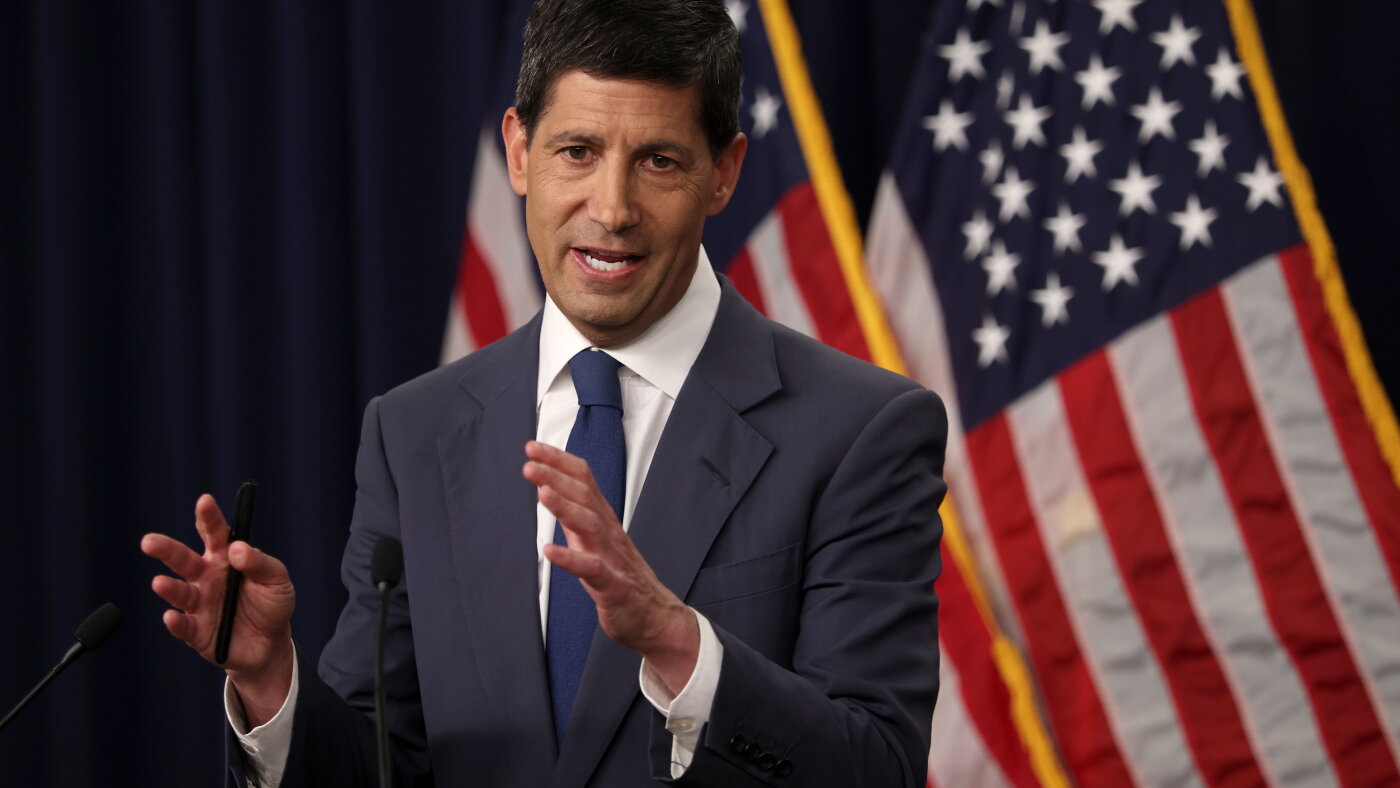
Federal Reserve Chair Kevin Warsh and his colleagues are widely expected to raise their benchmark interest rate Wedneday, in an effort to tamp down demand and bring prices under control. Win McNamee/Getty Images North America hide caption
toggle caption
Win McNamee/Getty Images North America
There are 21.4 million women in the U.S. who need subsidized birth control living in counties with limited access, according to a new analysis shared exclusively with NPR from Power to Decide and the Guttmacher Institute. The two reproductive policy organizations' analysis produced two interactive, county-level maps that serve as updated versions of a map of contraception deserts first published by Power to Decide in 2017. Because the methodology behind these maps is new, there's no way to compare them with past models to see whether access has improved or worsened over the years. But Megan Kavanaugh, principal data researcher at Guttmacher, says there's reason to believe the current picture is already worse than what these maps show, as the data that informed them came from 2020-2023. Many clinics have since closed, and changes in federal Title X grant distributions, partly related to opposition to abortion, may lead to more clinic closures.
The Iran war has caused extensive damage to U.S. bases and created shortages in American weapons, according to reports from the Congressional Budget Office (CBO) and the Pentagon Inspector General. Both of these reports come from independent, nonpartisan agencies. The reports reveal significant destruction at locations like the U.S. Naval Base in Bahrain, which the Pentagon has not addressed. They also show that around 60 U.S. aircraft, including around 30 Reaper drones costing at least $30 million each, have been destroyed. Both reports estimate the war has cost more than $30 billion, but these estimates don't include the cost of rebuilding damaged U.S. bases.
The Kennedy Center's board of directors voted yesterday to close the arts complex. The decision came shortly after a federal judge blocked a plan to place President Trump's name on the building or its grounds. The president vowed to cancel the center's planned renovation unless a higher court reverses the ruling to add his name.
Kelly MacDonald holds her dog in front of her five bedroom home in a Cincinnati suburb on September, 11 2026. Patrick Apfelbeck hide caption
toggle caption
Patrick Apfelbeck
Buying a home is an expensive endeavor, and many homebuyers face an unexpected cost: junk fees. These fees have been around for decades and can go by different names, such as document fees and storage fees. Even though they're only a fraction of the total cost of buying a home, they can still strain buyers' finances because they are due at closing rather than being spread out over the years like a mortgage. These fees are increasingly being charged to both home buyers and sellers, who have collectively paid nearly $2 billion in junk fees each year, according to conservative estimates from the Consumer Policy Center. Here's why real estate agents are calling the fees greedy:
by Majd Al-Waheidi, Morning Edition and Up First digital editor
John Simpson, a former crime reporter who quit journalism to train as a clown, spoke with Morning Edition about his career change. Matilda Hill-Jenkins for The Observer Magazine hide caption
toggle caption
Matilda Hill-Jenkins for The Observer Magazine
A British crime reporter quit journalism to become a clown. My colleagues turned that premise into a radio interview. As I was writing the story for NPR.org, I fell down a rabbit hole researching adult clowning and its vocabulary: failure, laughter, performance, the flop.
What struck me was journalist John Simpson questioning whether he wanted to add to the "intellectual diet" of covering murder, crime and policing.
While I was working on the story, I went to a farewell party for a colleague. There, our Middle East editor offered another way of thinking about it, one I kept returning to long after the radio segment aired: Maybe this story was also about the afterlife of a journalist. And I kept wondering: Who are we when journalism is no longer the thing organizing our lives?
I know. News about the news business can get self-important. But this isn't another story about how hard journalism is these days.
Most days, the stories we cover arrive with their importance already apparent: war, AI doom, identity, somebody acting or failing to act. Maybe what feels weirder now is how easily seriousness becomes a measure of what deserves our attention. Then there was Simpson: a man learning how to fail onstage and make people laugh.
And somehow that felt revealing, too.
A story does not have to begin with a death or end with a politician reacting to it to show us something true.
Simpson did not stop paying attention when he stopped reporting on crime, I thought. He changed what he was paying attention to.
That thought made me think of a friend who has been telling me for a while to read The Artist's Way, a book about recovering the creative self. Maybe it is finally time. The world will keep giving us reasons to be serious. The least we can do is remember that laughter, art and other forms of expression beyond journalism can be forms of attention, too.
Jewelry displays gold at the Grand Bazaar in Istanbul, Turkey, on Aug. 26, 2026. Finance Minister Mehmet Şimşek has said that about $640 billion in gold and foreign currency is held outside the financial system. For many Turkish savers, physical gold is still a safe way to protect their money from inflation and economic uncertainty. This practice is known as "yastık altı altın," or "gold under the mattress," referring to the tradition of keeping wealth in physical assets rather than in banks. Emre Çaylak for NPR hide caption
toggle caption
Emre Çaylak for NPR
This newsletter was edited by Suzanne Nuyen.
Read the full story at NPR ↗ · Axios ↗ · The Hill ↗
The Fed is expected to raise interest rates today for the first time in three years. And, the Kennedy Center board voted yesterday to close the historic center
This lens runs the verified story through Cinnamon's AI — wired in the next step.
Good morning. You're reading the Up First newsletter. Subscribe here to get it delivered to your inbox, and listen to the Up First podcast for all the news you need to start your day.
The Federal Reserve is expected to raise interest rates today for the first time in more than three years. Investors anticipate that the central bank will raise its benchmark interest rate by a quarter percentage point to a range of 3.75% to 4%. The move would result in higher borrowing costs for consumers looking to buy cars, expand businesses or carry credit card balances.
Federal Reserve Chair Kevin Warsh and his colleagues are widely expected to raise their benchmark interest rate Wedneday, in an effort to tamp down demand and bring prices under control. Win McNamee/Getty Images North America hide caption
toggle caption
Win McNamee/Getty Images North America
There are 21.4 million women in the U.S. who need subsidized birth control living in counties with limited access, according to a new analysis shared exclusively with NPR from Power to Decide and the Guttmacher Institute. The two reproductive policy organizations' analysis produced two interactive, county-level maps that serve as updated versions of a map of contraception deserts first published by Power to Decide in 2017. Because the methodology behind these maps is new, there's no way to compare them with past models to see whether access has improved or worsened over the years. But Megan Kavanaugh, principal data researcher at Guttmacher, says there's reason to believe the current picture is already worse than what these maps show, as the data that informed them came from 2020-2023. Many clinics have since closed, and changes in federal Title X grant distributions, partly related to opposition to abortion, may lead to more clinic closures.
The Iran war has caused extensive damage to U.S. bases and created shortages in American weapons, according to reports from the Congressional Budget Office (CBO) and the Pentagon Inspector General. Both of these reports come from independent, nonpartisan agencies. The reports reveal significant destruction at locations like the U.S. Naval Base in Bahrain, which the Pentagon has not addressed. They also show that around 60 U.S. aircraft, including around 30 Reaper drones costing at least $30 million each, have been destroyed. Both reports estimate the war has cost more than $30 billion, but these estimates don't include the cost of rebuilding damaged U.S. bases.
The Kennedy Center's board of directors voted yesterday to close the arts complex. The decision came shortly after a federal judge blocked a plan to place President Trump's name on the building or its grounds. The president vowed to cancel the center's planned renovation unless a higher court reverses the ruling to add his name.
Kelly MacDonald holds her dog in front of her five bedroom home in a Cincinnati suburb on September, 11 2026. Patrick Apfelbeck hide caption
toggle caption
Patrick Apfelbeck
Buying a home is an expensive endeavor, and many homebuyers face an unexpected cost: junk fees. These fees have been around for decades and can go by different names, such as document fees and storage fees. Even though they're only a fraction of the total cost of buying a home, they can still strain buyers' finances because they are due at closing rather than being spread out over the years like a mortgage. These fees are increasingly being charged to both home buyers and sellers, who have collectively paid nearly $2 billion in junk fees each year, according to conservative estimates from the Consumer Policy Center. Here's why real estate agents are calling the fees greedy:
by Majd Al-Waheidi, Morning Edition and Up First digital editor
John Simpson, a former crime reporter who quit journalism to train as a clown, spoke with Morning Edition about his career change. Matilda Hill-Jenkins for The Observer Magazine hide caption
toggle caption
Matilda Hill-Jenkins for The Observer Magazine
A British crime reporter quit journalism to become a clown. My colleagues turned that premise into a radio interview. As I was writing the story for NPR.org, I fell down a rabbit hole researching adult clowning and its vocabulary: failure, laughter, performance, the flop.
What struck me was journalist John Simpson questioning whether he wanted to add to the "intellectual diet" of covering murder, crime and policing.
While I was working on the story, I went to a farewell party for a colleague. There, our Middle East editor offered another way of thinking about it, one I kept returning to long after the radio segment aired: Maybe this story was also about the afterlife of a journalist. And I kept wondering: Who are we when journalism is no longer the thing organizing our lives?
I know. News about the news business can get self-important. But this isn't another story about how hard journalism is these days.
Most days, the stories we cover arrive with their importance already apparent: war, AI doom, identity, somebody acting or failing to act. Maybe what feels weirder now is how easily seriousness becomes a measure of what deserves our attention. Then there was Simpson: a man learning how to fail onstage and make people laugh.
And somehow that felt revealing, too.
A story does not have to begin with a death or end with a politician reacting to it to show us something true.
Simpson did not stop paying attention when he stopped reporting on crime, I thought. He changed what he was paying attention to.
That thought made me think of a friend who has been telling me for a while to read The Artist's Way, a book about recovering the creative self. Maybe it is finally time. The world will keep giving us reasons to be serious. The least we can do is remember that laughter, art and other forms of expression beyond journalism can be forms of attention, too.
Jewelry displays gold at the Grand Bazaar in Istanbul, Turkey, on Aug. 26, 2026. Finance Minister Mehmet Şimşek has said that about $640 billion in gold and foreign currency is held outside the financial system. For many Turkish savers, physical gold is still a safe way to protect their money from inflation and economic uncertainty. This practice is known as "yastık altı altın," or "gold under the mattress," referring to the tradition of keeping wealth in physical assets rather than in banks. Emre Çaylak for NPR hide caption
toggle caption
Emre Çaylak for NPR
This newsletter was edited by Suzanne Nuyen.
Read the full story at NPR ↗ · Axios ↗ · The Hill ↗
Good morning. You're reading the Up First newsletter. Subscribe here to get it delivered to your inbox, and listen to the Up First podcast for all the news you need to start your day.
The Federal Reserve is expected to raise interest rates today for the first time in more than three years. Investors anticipate that the central bank will raise its benchmark interest rate by a quarter percentage point to a range of 3.75% to 4%. The move would result in higher borrowing costs for consumers looking to buy cars, expand businesses or carry credit card balances.
Federal Reserve Chair Kevin Warsh and his colleagues are widely expected to raise their benchmark interest rate Wedneday, in an effort to tamp down demand and bring prices under control. Win McNamee/Getty Images North America hide caption
toggle caption
Win McNamee/Getty Images North America
There are 21.4 million women in the U.S. who need subsidized birth control living in counties with limited access, according to a new analysis shared exclusively with NPR from Power to Decide and the Guttmacher Institute. The two reproductive policy organizations' analysis produced two interactive, county-level maps that serve as updated versions of a map of contraception deserts first published by Power to Decide in 2017. Because the methodology behind these maps is new, there's no way to compare them with past models to see whether access has improved or worsened over the years. But Megan Kavanaugh, principal data researcher at Guttmacher, says there's reason to believe the current picture is already worse than what these maps show, as the data that informed them came from 2020-2023. Many clinics have since closed, and changes in federal Title X grant distributions, partly related to opposition to abortion, may lead to more clinic closures.
The Iran war has caused extensive damage to U.S. bases and created shortages in American weapons, according to reports from the Congressional Budget Office (CBO) and the Pentagon Inspector General. Both of these reports come from independent, nonpartisan agencies. The reports reveal significant destruction at locations like the U.S. Naval Base in Bahrain, which the Pentagon has not addressed. They also show that around 60 U.S. aircraft, including around 30 Reaper drones costing at least $30 million each, have been destroyed. Both reports estimate the war has cost more than $30 billion, but these estimates don't include the cost of rebuilding damaged U.S. bases.
The Kennedy Center's board of directors voted yesterday to close the arts complex. The decision came shortly after a federal judge blocked a plan to place President Trump's name on the building or its grounds. The president vowed to cancel the center's planned renovation unless a higher court reverses the ruling to add his name.
Kelly MacDonald holds her dog in front of her five bedroom home in a Cincinnati suburb on September, 11 2026. Patrick Apfelbeck hide caption
toggle caption
Patrick Apfelbeck
Buying a home is an expensive endeavor, and many homebuyers face an unexpected cost: junk fees. These fees have been around for decades and can go by different names, such as document fees and storage fees. Even though they're only a fraction of the total cost of buying a home, they can still strain buyers' finances because they are due at closing rather than being spread out over the years like a mortgage. These fees are increasingly being charged to both home buyers and sellers, who have collectively paid nearly $2 billion in junk fees each year, according to conservative estimates from the Consumer Policy Center. Here's why real estate agents are calling the fees greedy:
by Majd Al-Waheidi, Morning Edition and Up First digital editor
John Simpson, a former crime reporter who quit journalism to train as a clown, spoke with Morning Edition about his career change. Matilda Hill-Jenkins for The Observer Magazine hide caption
toggle caption
Matilda Hill-Jenkins for The Observer Magazine
A British crime reporter quit journalism to become a clown. My colleagues turned that premise into a radio interview. As I was writing the story for NPR.org, I fell down a rabbit hole researching adult clowning and its vocabulary: failure, laughter, performance, the flop.
What struck me was journalist John Simpson questioning whether he wanted to add to the "intellectual diet" of covering murder, crime and policing.
While I was working on the story, I went to a farewell party for a colleague. There, our Middle East editor offered another way of thinking about it, one I kept returning to long after the radio segment aired: Maybe this story was also about the afterlife of a journalist. And I kept wondering: Who are we when journalism is no longer the thing organizing our lives?
I know. News about the news business can get self-important. But this isn't another story about how hard journalism is these days.
Most days, the stories we cover arrive with their importance already apparent: war, AI doom, identity, somebody acting or failing to act. Maybe what feels weirder now is how easily seriousness becomes a measure of what deserves our attention. Then there was Simpson: a man learning how to fail onstage and make people laugh.
And somehow that felt revealing, too.
A story does not have to begin with a death or end with a politician reacting to it to show us something true.
Simpson did not stop paying attention when he stopped reporting on crime, I thought. He changed what he was paying attention to.
That thought made me think of a friend who has been telling me for a while to read The Artist's Way, a book about recovering the creative self. Maybe it is finally time. The world will keep giving us reasons to be serious. The least we can do is remember that laughter, art and other forms of expression beyond journalism can be forms of attention, too.
Jewelry displays gold at the Grand Bazaar in Istanbul, Turkey, on Aug. 26, 2026. Finance Minister Mehmet Şimşek has said that about $640 billion in gold and foreign currency is held outside the financial system. For many Turkish savers, physical gold is still a safe way to protect their money from inflation and economic uncertainty. This practice is known as "yastık altı altın," or "gold under the mattress," referring to the tradition of keeping wealth in physical assets rather than in banks. Emre Çaylak for NPR hide caption
toggle caption
Emre Çaylak for NPR
This newsletter was edited by Suzanne Nuyen.
Read the full story at NPR ↗ · Axios ↗ · The Hill ↗
This lens runs the verified story through Cinnamon's AI — wired in the next step.
- The Fed is expected to raise interest rates today for the first time in three years.
- And, the Kennedy Center board voted yesterday to close the historic center