Fresh evidence of C of E’s role in enslavement uncovered as church wrestles with reparations debate
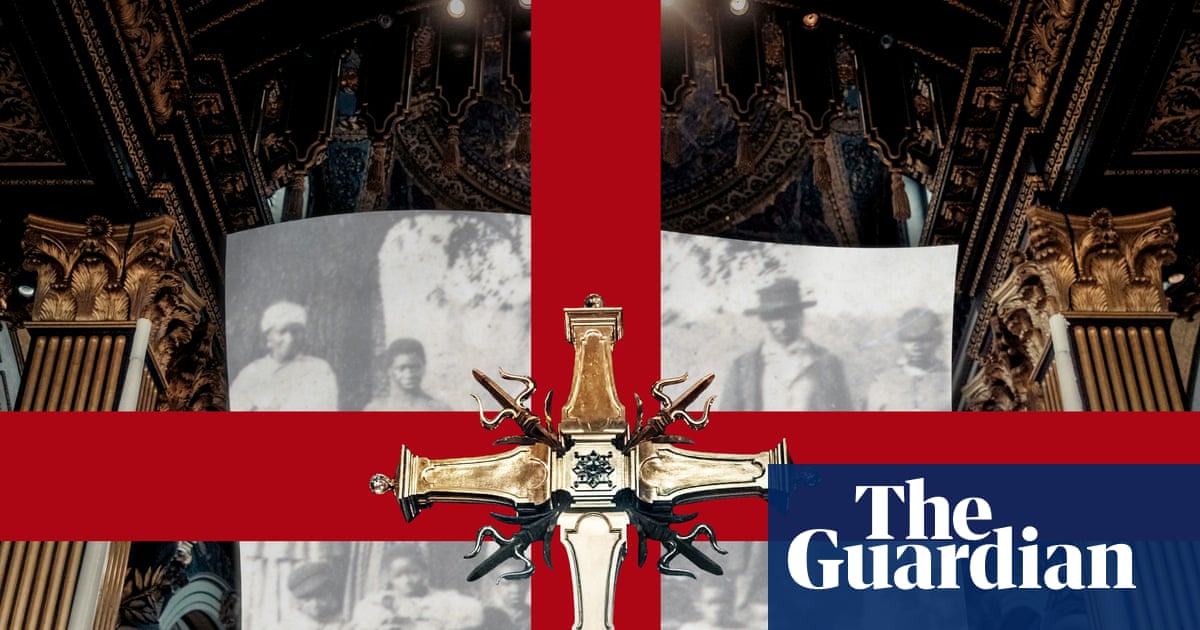
Nearly 250 years after the abolitionist Ottobah Cugoano made the Christian case for reparative justice, the archbishop of Canterbury, Sarah Mullally, visited the Ghanaian shore where he was enslaved as a boy.
After witnessing the dungeons beneath the chapel at Cape Coast Castle, once run by the Royal African Company (RAC), Mullally recommitted the Church of England to its “journey of repentance” for its role in slavery.
Back in Britain, historians working on the newly digitised Register of British Slave Traders were uncovering evidence that C of E clergy financed the RAC, which trafficked more African men, women and children than any other single organisation in the history of the slave trade.
The register, which documents investors in Britain’s nearly 250-year transatlantic slave trade, includes 45 C of E clergymen, whose investments helped fund hundreds of slaving voyages and a 1720 relaunch of the RAC. Among them was Henry Brydges, later a canon at St Paul’s Cathedral, who bought half of his £10,000 shareholding on the day he became the Archdeacon of Rochester.
Prof William Pettigrew, who led the project, said the register showed a “truly national picture”. Profits from enslavement filtered down to communities “from Cumbria to the Cotswolds” through bequests to parishes – evidence of a history of the C of E “giving slavery its blessing” and raising fresh questions about whether the church is doing enough to atone.
In 2023, church commissioners – the C of E’s asset managers – launched Project Spire, a £100m impact investment fund for communities affected by slavery’s legacies, which has caused division within the church. It is not a reparations fund, but is central to the church’s determination to be a force for justice and healing in the world. It was launched nearly 20 years after Rowan Williams, the former archbishop of Canterbury, rejected the idea that today’s church bears no responsibility for the past.
However, Spire mainly responds to historic investments in the South Sea Company, which trafficked close to 45,000 enslaved Africans. That represents a “sliver of church complicity”, said Prof Alan Lester, a historical geographer at the University of Sussex.
That complicity helped shape modern Britain, Lester said. Plantation profits helped fuel the Industrial Revolution, railways, public health, welfare, universities, schools, church building and the public finances. “Look at Anglican parishes in Jamaica, their ability to withstand climate change, and compare that with the wealth generated in Britain by the plantation complex,” he said.
For the Rev Natasha Beckles, the dean of racial justice for Willesden, reckoning with this past goes to the heart of Christian faith.
“What was the purpose of the cross if we’re not able to talk about this?” she said. “Slavery made the image of God transactional. There has to be an understanding of the impact on the world.”
Dr Leona Vaughn of the University of Liverpool, a co-organiser of a 2025 Anglican “truth-telling” event, said: “The public and people within the church don’t even know the extent of the church’s involvement.
“We’ve not even started to come to terms with the ‘Slave Bible’,” she said, a C of E-sanctioned, heavily edited Bible, stripped of liberation narratives, that planters used as a tool of social control from 1807.
The history of the United Society Partners in the Gospel (USPG), the C of E’s 325-year-old missionary partner, shows how powerful Anglicans practised and perpetuated transatlantic chattel slavery – a uniquely racialised, violent system of human commodification and forced mass migration. Today, members of USPG – of which Mullally is president – have committed to “the gospel’s call to break every chain of injustice”.
USPG’s forerunner, the Society for the Propagation of the Gospel in Foreign Parts (SPG), supplied chaplains to the RAC at Cape Coast Castle. For more than 120 years, with the involvement of C of E leaders, SPG enslaved people on the Codrington estate in Barbados, which generated the equivalent of £5m a year in today’s money.
At Codrington, enslaved Africans were branded with the word “Society”, tortured with the lash, straitjacket and iron collar, and worked to death. In seven months in 1746, 19 enslaved people died – including Daniel, who was “shot by accident” – with three deaths in a single day.
Pettigrew said the “clear signal” sent by the C of E’s relationship with Codrington was “if the church is doing it, why shouldn’t I?”
After abolition, SPG and at least 96 clergy who enslaved people received millions in compensation for “loss of property”. In 2023, USPG launched its own £7m reparative justice programme.
Christian collusion can be traced back to a 1452 papal bull authorising the enslavement of non-Christians, the author Malik Al Nasir said. He wants the C of E to digitise its records in the UK and the Caribbean.
after newsletter promotion
In the 17th century, John Cotton, a former Lincolnshire vicar, co-drafted a charter legalising slavery in New England. By the 1750s, high churchmen were codifying pro-slavery ideology: Thomas Newton, later the dean of St Paul’s Cathedral, argued Africans were destined to be “servants of servants”, while Thomas Francklin, later the chaplain to George III, said: “We use [African] bodies for our support and happiness.”
Some Anglican voices did oppose slavery. Condemning it in 1685, the preacher Morgan Godwyn said: “We have … conspired with Satan.”
Project Spire’s critics have instead focused on the legacy of Anglican abolitionist MPs, such as William Wilberforce. Wilberforce’s 1823 anti-slavery petition was followed by his colleague Sir Thomas Fowell Buxton acknowledging that “we owe a large and liberal atonement”.
In his 1787 book, Cugoano – who won his freedom in England – wrote that the injustice done to Africans “cries aloud for universal reformation and national repentance”. He drew on biblical scriptures such as Numbers, Leviticus, Exodus and Deuteronomy that included reparative principles.
Class shaped church complicity, Beckles said. “The oldest child got the land, the second child they put in the church, the third was sent to the Caribbean.” That meant, Al Nasir said, that “one sibling could profit from slavery while another absolved it – the right hand washing the left”.
Enslaved African Christian leaders helped force the issue of abolition – including Samuel Sharpe, the deacon executed for leading Jamaica’s 1831-32 Baptist war.
The posthumously published Demerara diaries of the English Methodist the Rev John Smith also educated the British public about the relentless beatings, toil and meagre diet – raw yellow plantains – endured by enslaved Africans. Smith’s preaching was blamed by Anglican planters for Guyana’s 1823 Demerara rebellion. He died awaiting execution.
The moral conviction of English non-conformists – such as Smith and Quaker abolitionists – contrasts with the 45 C of E clergymen in the register.
The C of E already has an impact investment fund, so insiders have expressed surprise at the backlash against Spire, which is facing a legal challenge. In the House of Commons in September, the MP Marsha de Cordova, the second church estates commissioner, rebutted claims from rightwing critics that Spire diverts money from English churches.
She said the church regarded historic links to slavery with profound regret, that Spire is funded from the commissioners’ own income rather than parish collections, and that the English ministry would receive £1.6bn over three years.
A 2023 report estimated Britain’s slavery debt at £18.6tn. For Beckles, no sum could be enough. “What do you say to a mother who has had her child taken from her? To talk about a figure is grotesque,” she said. “For that level of human suffering, you’d be writing a blank cheque.”
In 2023, the Scott Trust, the Guardian’s sole owner, published research showing that the founder of the Manchester Guardian and his backers profited from the enslavement of African people in Jamaica and the US. In response, the Scott Trust launched the Cotton Capital series and the Legacies of Enslavement programme, a 10-year restorative justice initiative.
Read the full story at The Guardian ↗
Register of British Slave Traders shows clergymen financed company that trafficked enslaved Africans on hundreds of voyages. Nearly 250 years after the abolitionist Ottobah…
This lens runs the verified story through Cinnamon's AI — wired in the next step.
Nearly 250 years after the abolitionist Ottobah Cugoano made the Christian case for reparative justice, the archbishop of Canterbury, Sarah Mullally, visited the Ghanaian shore where he was enslaved as a boy.
After witnessing the dungeons beneath the chapel at Cape Coast Castle, once run by the Royal African Company (RAC), Mullally recommitted the Church of England to its “journey of repentance” for its role in slavery.
Back in Britain, historians working on the newly digitised Register of British Slave Traders were uncovering evidence that C of E clergy financed the RAC, which trafficked more African men, women and children than any other single organisation in the history of the slave trade.
The register, which documents investors in Britain’s nearly 250-year transatlantic slave trade, includes 45 C of E clergymen, whose investments helped fund hundreds of slaving voyages and a 1720 relaunch of the RAC. Among them was Henry Brydges, later a canon at St Paul’s Cathedral, who bought half of his £10,000 shareholding on the day he became the Archdeacon of Rochester.
Prof William Pettigrew, who led the project, said the register showed a “truly national picture”. Profits from enslavement filtered down to communities “from Cumbria to the Cotswolds” through bequests to parishes – evidence of a history of the C of E “giving slavery its blessing” and raising fresh questions about whether the church is doing enough to atone.
In 2023, church commissioners – the C of E’s asset managers – launched Project Spire, a £100m impact investment fund for communities affected by slavery’s legacies, which has caused division within the church. It is not a reparations fund, but is central to the church’s determination to be a force for justice and healing in the world. It was launched nearly 20 years after Rowan Williams, the former archbishop of Canterbury, rejected the idea that today’s church bears no responsibility for the past.
However, Spire mainly responds to historic investments in the South Sea Company, which trafficked close to 45,000 enslaved Africans. That represents a “sliver of church complicity”, said Prof Alan Lester, a historical geographer at the University of Sussex.
That complicity helped shape modern Britain, Lester said. Plantation profits helped fuel the Industrial Revolution, railways, public health, welfare, universities, schools, church building and the public finances. “Look at Anglican parishes in Jamaica, their ability to withstand climate change, and compare that with the wealth generated in Britain by the plantation complex,” he said.
For the Rev Natasha Beckles, the dean of racial justice for Willesden, reckoning with this past goes to the heart of Christian faith.
“What was the purpose of the cross if we’re not able to talk about this?” she said. “Slavery made the image of God transactional. There has to be an understanding of the impact on the world.”
Dr Leona Vaughn of the University of Liverpool, a co-organiser of a 2025 Anglican “truth-telling” event, said: “The public and people within the church don’t even know the extent of the church’s involvement.
“We’ve not even started to come to terms with the ‘Slave Bible’,” she said, a C of E-sanctioned, heavily edited Bible, stripped of liberation narratives, that planters used as a tool of social control from 1807.
The history of the United Society Partners in the Gospel (USPG), the C of E’s 325-year-old missionary partner, shows how powerful Anglicans practised and perpetuated transatlantic chattel slavery – a uniquely racialised, violent system of human commodification and forced mass migration. Today, members of USPG – of which Mullally is president – have committed to “the gospel’s call to break every chain of injustice”.
USPG’s forerunner, the Society for the Propagation of the Gospel in Foreign Parts (SPG), supplied chaplains to the RAC at Cape Coast Castle. For more than 120 years, with the involvement of C of E leaders, SPG enslaved people on the Codrington estate in Barbados, which generated the equivalent of £5m a year in today’s money.
At Codrington, enslaved Africans were branded with the word “Society”, tortured with the lash, straitjacket and iron collar, and worked to death. In seven months in 1746, 19 enslaved people died – including Daniel, who was “shot by accident” – with three deaths in a single day.
Pettigrew said the “clear signal” sent by the C of E’s relationship with Codrington was “if the church is doing it, why shouldn’t I?”
After abolition, SPG and at least 96 clergy who enslaved people received millions in compensation for “loss of property”. In 2023, USPG launched its own £7m reparative justice programme.
Christian collusion can be traced back to a 1452 papal bull authorising the enslavement of non-Christians, the author Malik Al Nasir said. He wants the C of E to digitise its records in the UK and the Caribbean.
after newsletter promotion
In the 17th century, John Cotton, a former Lincolnshire vicar, co-drafted a charter legalising slavery in New England. By the 1750s, high churchmen were codifying pro-slavery ideology: Thomas Newton, later the dean of St Paul’s Cathedral, argued Africans were destined to be “servants of servants”, while Thomas Francklin, later the chaplain to George III, said: “We use [African] bodies for our support and happiness.”
Some Anglican voices did oppose slavery. Condemning it in 1685, the preacher Morgan Godwyn said: “We have … conspired with Satan.”
Project Spire’s critics have instead focused on the legacy of Anglican abolitionist MPs, such as William Wilberforce. Wilberforce’s 1823 anti-slavery petition was followed by his colleague Sir Thomas Fowell Buxton acknowledging that “we owe a large and liberal atonement”.
In his 1787 book, Cugoano – who won his freedom in England – wrote that the injustice done to Africans “cries aloud for universal reformation and national repentance”. He drew on biblical scriptures such as Numbers, Leviticus, Exodus and Deuteronomy that included reparative principles.
Class shaped church complicity, Beckles said. “The oldest child got the land, the second child they put in the church, the third was sent to the Caribbean.” That meant, Al Nasir said, that “one sibling could profit from slavery while another absolved it – the right hand washing the left”.
Enslaved African Christian leaders helped force the issue of abolition – including Samuel Sharpe, the deacon executed for leading Jamaica’s 1831-32 Baptist war.
The posthumously published Demerara diaries of the English Methodist the Rev John Smith also educated the British public about the relentless beatings, toil and meagre diet – raw yellow plantains – endured by enslaved Africans. Smith’s preaching was blamed by Anglican planters for Guyana’s 1823 Demerara rebellion. He died awaiting execution.
The moral conviction of English non-conformists – such as Smith and Quaker abolitionists – contrasts with the 45 C of E clergymen in the register.
The C of E already has an impact investment fund, so insiders have expressed surprise at the backlash against Spire, which is facing a legal challenge. In the House of Commons in September, the MP Marsha de Cordova, the second church estates commissioner, rebutted claims from rightwing critics that Spire diverts money from English churches.
She said the church regarded historic links to slavery with profound regret, that Spire is funded from the commissioners’ own income rather than parish collections, and that the English ministry would receive £1.6bn over three years.
A 2023 report estimated Britain’s slavery debt at £18.6tn. For Beckles, no sum could be enough. “What do you say to a mother who has had her child taken from her? To talk about a figure is grotesque,” she said. “For that level of human suffering, you’d be writing a blank cheque.”
In 2023, the Scott Trust, the Guardian’s sole owner, published research showing that the founder of the Manchester Guardian and his backers profited from the enslavement of African people in Jamaica and the US. In response, the Scott Trust launched the Cotton Capital series and the Legacies of Enslavement programme, a 10-year restorative justice initiative.
Read the full story at The Guardian ↗
Nearly 250 years after the abolitionist Ottobah Cugoano made the Christian case for reparative justice, the archbishop of Canterbury, Sarah Mullally, visited the Ghanaian shore where he was enslaved as a boy.
After witnessing the dungeons beneath the chapel at Cape Coast Castle, once run by the Royal African Company (RAC), Mullally recommitted the Church of England to its “journey of repentance” for its role in slavery.
Back in Britain, historians working on the newly digitised Register of British Slave Traders were uncovering evidence that C of E clergy financed the RAC, which trafficked more African men, women and children than any other single organisation in the history of the slave trade.
The register, which documents investors in Britain’s nearly 250-year transatlantic slave trade, includes 45 C of E clergymen, whose investments helped fund hundreds of slaving voyages and a 1720 relaunch of the RAC. Among them was Henry Brydges, later a canon at St Paul’s Cathedral, who bought half of his £10,000 shareholding on the day he became the Archdeacon of Rochester.
Prof William Pettigrew, who led the project, said the register showed a “truly national picture”. Profits from enslavement filtered down to communities “from Cumbria to the Cotswolds” through bequests to parishes – evidence of a history of the C of E “giving slavery its blessing” and raising fresh questions about whether the church is doing enough to atone.
In 2023, church commissioners – the C of E’s asset managers – launched Project Spire, a £100m impact investment fund for communities affected by slavery’s legacies, which has caused division within the church. It is not a reparations fund, but is central to the church’s determination to be a force for justice and healing in the world. It was launched nearly 20 years after Rowan Williams, the former archbishop of Canterbury, rejected the idea that today’s church bears no responsibility for the past.
However, Spire mainly responds to historic investments in the South Sea Company, which trafficked close to 45,000 enslaved Africans. That represents a “sliver of church complicity”, said Prof Alan Lester, a historical geographer at the University of Sussex.
That complicity helped shape modern Britain, Lester said. Plantation profits helped fuel the Industrial Revolution, railways, public health, welfare, universities, schools, church building and the public finances. “Look at Anglican parishes in Jamaica, their ability to withstand climate change, and compare that with the wealth generated in Britain by the plantation complex,” he said.
For the Rev Natasha Beckles, the dean of racial justice for Willesden, reckoning with this past goes to the heart of Christian faith.
“What was the purpose of the cross if we’re not able to talk about this?” she said. “Slavery made the image of God transactional. There has to be an understanding of the impact on the world.”
Dr Leona Vaughn of the University of Liverpool, a co-organiser of a 2025 Anglican “truth-telling” event, said: “The public and people within the church don’t even know the extent of the church’s involvement.
“We’ve not even started to come to terms with the ‘Slave Bible’,” she said, a C of E-sanctioned, heavily edited Bible, stripped of liberation narratives, that planters used as a tool of social control from 1807.
The history of the United Society Partners in the Gospel (USPG), the C of E’s 325-year-old missionary partner, shows how powerful Anglicans practised and perpetuated transatlantic chattel slavery – a uniquely racialised, violent system of human commodification and forced mass migration. Today, members of USPG – of which Mullally is president – have committed to “the gospel’s call to break every chain of injustice”.
USPG’s forerunner, the Society for the Propagation of the Gospel in Foreign Parts (SPG), supplied chaplains to the RAC at Cape Coast Castle. For more than 120 years, with the involvement of C of E leaders, SPG enslaved people on the Codrington estate in Barbados, which generated the equivalent of £5m a year in today’s money.
At Codrington, enslaved Africans were branded with the word “Society”, tortured with the lash, straitjacket and iron collar, and worked to death. In seven months in 1746, 19 enslaved people died – including Daniel, who was “shot by accident” – with three deaths in a single day.
Pettigrew said the “clear signal” sent by the C of E’s relationship with Codrington was “if the church is doing it, why shouldn’t I?”
After abolition, SPG and at least 96 clergy who enslaved people received millions in compensation for “loss of property”. In 2023, USPG launched its own £7m reparative justice programme.
Christian collusion can be traced back to a 1452 papal bull authorising the enslavement of non-Christians, the author Malik Al Nasir said. He wants the C of E to digitise its records in the UK and the Caribbean.
after newsletter promotion
In the 17th century, John Cotton, a former Lincolnshire vicar, co-drafted a charter legalising slavery in New England. By the 1750s, high churchmen were codifying pro-slavery ideology: Thomas Newton, later the dean of St Paul’s Cathedral, argued Africans were destined to be “servants of servants”, while Thomas Francklin, later the chaplain to George III, said: “We use [African] bodies for our support and happiness.”
Some Anglican voices did oppose slavery. Condemning it in 1685, the preacher Morgan Godwyn said: “We have … conspired with Satan.”
Project Spire’s critics have instead focused on the legacy of Anglican abolitionist MPs, such as William Wilberforce. Wilberforce’s 1823 anti-slavery petition was followed by his colleague Sir Thomas Fowell Buxton acknowledging that “we owe a large and liberal atonement”.
In his 1787 book, Cugoano – who won his freedom in England – wrote that the injustice done to Africans “cries aloud for universal reformation and national repentance”. He drew on biblical scriptures such as Numbers, Leviticus, Exodus and Deuteronomy that included reparative principles.
Class shaped church complicity, Beckles said. “The oldest child got the land, the second child they put in the church, the third was sent to the Caribbean.” That meant, Al Nasir said, that “one sibling could profit from slavery while another absolved it – the right hand washing the left”.
Enslaved African Christian leaders helped force the issue of abolition – including Samuel Sharpe, the deacon executed for leading Jamaica’s 1831-32 Baptist war.
The posthumously published Demerara diaries of the English Methodist the Rev John Smith also educated the British public about the relentless beatings, toil and meagre diet – raw yellow plantains – endured by enslaved Africans. Smith’s preaching was blamed by Anglican planters for Guyana’s 1823 Demerara rebellion. He died awaiting execution.
The moral conviction of English non-conformists – such as Smith and Quaker abolitionists – contrasts with the 45 C of E clergymen in the register.
The C of E already has an impact investment fund, so insiders have expressed surprise at the backlash against Spire, which is facing a legal challenge. In the House of Commons in September, the MP Marsha de Cordova, the second church estates commissioner, rebutted claims from rightwing critics that Spire diverts money from English churches.
She said the church regarded historic links to slavery with profound regret, that Spire is funded from the commissioners’ own income rather than parish collections, and that the English ministry would receive £1.6bn over three years.
A 2023 report estimated Britain’s slavery debt at £18.6tn. For Beckles, no sum could be enough. “What do you say to a mother who has had her child taken from her? To talk about a figure is grotesque,” she said. “For that level of human suffering, you’d be writing a blank cheque.”
In 2023, the Scott Trust, the Guardian’s sole owner, published research showing that the founder of the Manchester Guardian and his backers profited from the enslavement of African people in Jamaica and the US. In response, the Scott Trust launched the Cotton Capital series and the Legacies of Enslavement programme, a 10-year restorative justice initiative.
Read the full story at The Guardian ↗
This lens runs the verified story through Cinnamon's AI — wired in the next step.
- Register of British Slave Traders shows clergymen financed company that trafficked enslaved Africans on hundreds of voyages.
- Nearly 250 years after the abolitionist Ottobah…