Germany investigates 105-year-old suspected former Nazi prison camp guard
 ✓
✓A 105-year-old man is under investigation on suspicion of being an accessory to multiple murders at a Nazi prisoner of war camp, German prosecutors have said.
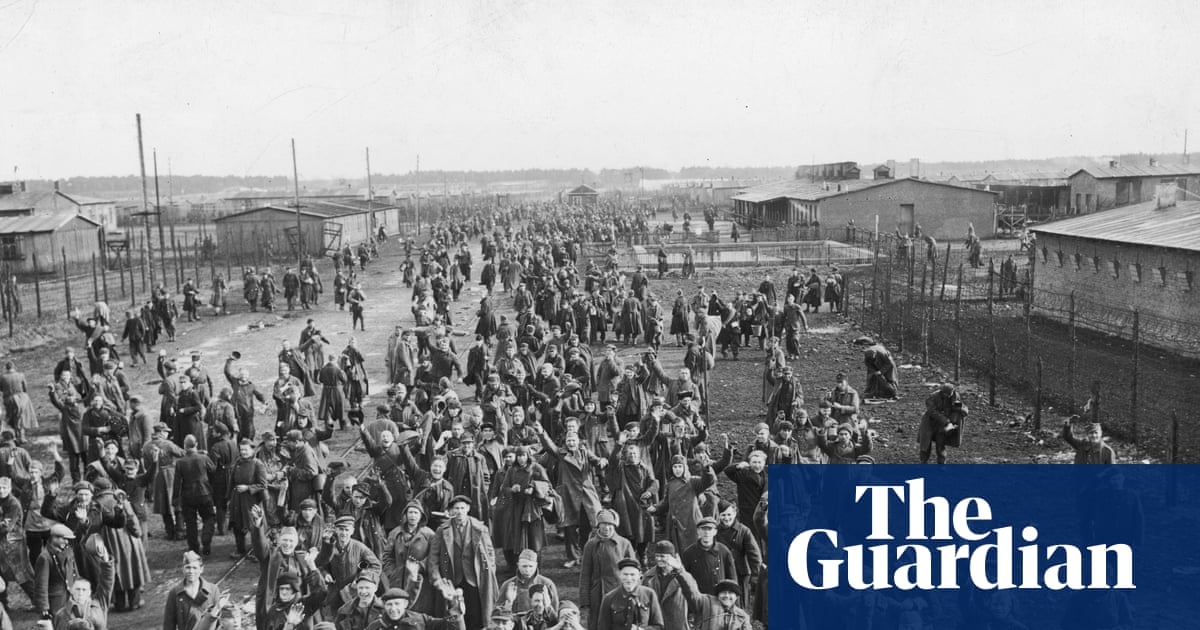
The case, which is being handled by the public prosecutor’s office in Dortmund, centres on the Stalag 326 VI K camp in western Germany, in what is now the state of North Rhine-Westphalia.
“The 105-year-old suspect is thought to have been a guard at the prisoner of war camp Stalag 326 VI K in the Senne region of western Germany,” prosecutors said in a statement. The man is “accused of being an accessory to multiple murders owing to his activities there”, they said.
The Senne camp housed between 180,000 and 200,000 Soviet prisoners of war between 1941 and April 1945, when it was liberated by American troops.
The investigation is the result of an urgent last-minute scramble by the judiciary to prosecute alleged participants in the Nazi killing machine before they die. The judicial efforts stem in part from a recognition that many of the suspects who have escaped prosecution in the eight decades since the end of the second world war on the grounds that they were considered to have played an insignificant role were in fact integral to the implementation of the Hitler regime’s murderous aims.
A judicial precedent was set by the court case of John Demjanjuk, a former guard at the Nazi Sobibór death camp in occupied Poland, who was convicted in 2011 of being an accomplice to the murders of more than 28,000 Jews that took place in the time he worked there.
Prosecutors had sought Ukraine-born Demjanjuk’s extradition from his Ohio home to Germany for years, arguing that he was complicit in the crimes committed at Sobibór despite a lack of evidence that he had directly killed anyone.
Demjanjuk died aged 91 in March 2012 awaiting an appeal due to his age and frailty, which meant he did not go to prison.
The Demjanjuk case lowered the bar for proof of complicity, paving the way for other nonagenarians and more recently centenarians to stand trial.
The most prominent trial of recent years, and representative of what Hannah Arendt, a political theorist, described as a Schreibtischtäter (desk perpetrator, or bureaucratic mediator), was that of Irmgard Furchner, who worked at the Stutthof concentration camp between 1943 and 1945 as a secretary to the camp commandant. She was given a two-year suspended sentence for her role as an accessory to murder.
Her trial was, contrary to normal rules, filmed for historical purposes. Furchner made headlines after running away from her retirement home on the scheduled opening day of her trial.
Josef Schütz, a former guard at the Sachsenhausen concentration camp north of Berlin, was sentenced for being an accomplice to murder to five years in prison in June 2022. He died the following year, aged 102.
In April last year an alleged former guard at Sachsenhausen died before he was able to face trial over charges of complicity in the murder of more than 3,300 people.
A separate investigation was opened last year by Dortmund prosecutors into a 100-year-old former guard at a PoW camp in Hemer, North Rhine-Westphalia, which also held mainly Soviet prisoners. He is suspected of participating in executions of prisoners between December 1943 and September 1944.
The new investigation was initiated by the Central Office for the Investigation of National Socialist Crimes in Ludwigsburg, in the southern state of Baden-Württemberg, which passed its preliminary investigation into the man to public prosecutors along with that of another former guard. The other suspect has since died, according to German media.
If the trial goes ahead, like other recent cases it is expected to throw light on the Stalag system in general and on Senne in particular, drawing survivors and historians to give evidence. Up to 5.7 million Soviet prisoners were held captivity in Germany. More than half did not survive.
Read the full story at BBC ↗ · The Guardian ↗
Man accused of being accessory to murders at Stalag 326 VI K amid race to prosecute suspects before they die. A 105-year-old man is under investigation on suspicion of being an…
This lens runs the verified story through Cinnamon's AI — wired in the next step.
A 105-year-old man is under investigation on suspicion of being an accessory to multiple murders at a Nazi prisoner of war camp, German prosecutors have said.
The case, which is being handled by the public prosecutor’s office in Dortmund, centres on the Stalag 326 VI K camp in western Germany, in what is now the state of North Rhine-Westphalia.
“The 105-year-old suspect is thought to have been a guard at the prisoner of war camp Stalag 326 VI K in the Senne region of western Germany,” prosecutors said in a statement. The man is “accused of being an accessory to multiple murders owing to his activities there”, they said.
The Senne camp housed between 180,000 and 200,000 Soviet prisoners of war between 1941 and April 1945, when it was liberated by American troops.
The investigation is the result of an urgent last-minute scramble by the judiciary to prosecute alleged participants in the Nazi killing machine before they die. The judicial efforts stem in part from a recognition that many of the suspects who have escaped prosecution in the eight decades since the end of the second world war on the grounds that they were considered to have played an insignificant role were in fact integral to the implementation of the Hitler regime’s murderous aims.
A judicial precedent was set by the court case of John Demjanjuk, a former guard at the Nazi Sobibór death camp in occupied Poland, who was convicted in 2011 of being an accomplice to the murders of more than 28,000 Jews that took place in the time he worked there.
Prosecutors had sought Ukraine-born Demjanjuk’s extradition from his Ohio home to Germany for years, arguing that he was complicit in the crimes committed at Sobibór despite a lack of evidence that he had directly killed anyone.
Demjanjuk died aged 91 in March 2012 awaiting an appeal due to his age and frailty, which meant he did not go to prison.
The Demjanjuk case lowered the bar for proof of complicity, paving the way for other nonagenarians and more recently centenarians to stand trial.
The most prominent trial of recent years, and representative of what Hannah Arendt, a political theorist, described as a Schreibtischtäter (desk perpetrator, or bureaucratic mediator), was that of Irmgard Furchner, who worked at the Stutthof concentration camp between 1943 and 1945 as a secretary to the camp commandant. She was given a two-year suspended sentence for her role as an accessory to murder.
Her trial was, contrary to normal rules, filmed for historical purposes. Furchner made headlines after running away from her retirement home on the scheduled opening day of her trial.
Josef Schütz, a former guard at the Sachsenhausen concentration camp north of Berlin, was sentenced for being an accomplice to murder to five years in prison in June 2022. He died the following year, aged 102.
In April last year an alleged former guard at Sachsenhausen died before he was able to face trial over charges of complicity in the murder of more than 3,300 people.
A separate investigation was opened last year by Dortmund prosecutors into a 100-year-old former guard at a PoW camp in Hemer, North Rhine-Westphalia, which also held mainly Soviet prisoners. He is suspected of participating in executions of prisoners between December 1943 and September 1944.
The new investigation was initiated by the Central Office for the Investigation of National Socialist Crimes in Ludwigsburg, in the southern state of Baden-Württemberg, which passed its preliminary investigation into the man to public prosecutors along with that of another former guard. The other suspect has since died, according to German media.
If the trial goes ahead, like other recent cases it is expected to throw light on the Stalag system in general and on Senne in particular, drawing survivors and historians to give evidence. Up to 5.7 million Soviet prisoners were held captivity in Germany. More than half did not survive.
Read the full story at BBC ↗ · The Guardian ↗
A 105-year-old man is under investigation on suspicion of being an accessory to multiple murders at a Nazi prisoner of war camp, German prosecutors have said.
The case, which is being handled by the public prosecutor’s office in Dortmund, centres on the Stalag 326 VI K camp in western Germany, in what is now the state of North Rhine-Westphalia.
“The 105-year-old suspect is thought to have been a guard at the prisoner of war camp Stalag 326 VI K in the Senne region of western Germany,” prosecutors said in a statement. The man is “accused of being an accessory to multiple murders owing to his activities there”, they said.
The Senne camp housed between 180,000 and 200,000 Soviet prisoners of war between 1941 and April 1945, when it was liberated by American troops.
The investigation is the result of an urgent last-minute scramble by the judiciary to prosecute alleged participants in the Nazi killing machine before they die. The judicial efforts stem in part from a recognition that many of the suspects who have escaped prosecution in the eight decades since the end of the second world war on the grounds that they were considered to have played an insignificant role were in fact integral to the implementation of the Hitler regime’s murderous aims.
A judicial precedent was set by the court case of John Demjanjuk, a former guard at the Nazi Sobibór death camp in occupied Poland, who was convicted in 2011 of being an accomplice to the murders of more than 28,000 Jews that took place in the time he worked there.
Prosecutors had sought Ukraine-born Demjanjuk’s extradition from his Ohio home to Germany for years, arguing that he was complicit in the crimes committed at Sobibór despite a lack of evidence that he had directly killed anyone.
Demjanjuk died aged 91 in March 2012 awaiting an appeal due to his age and frailty, which meant he did not go to prison.
The Demjanjuk case lowered the bar for proof of complicity, paving the way for other nonagenarians and more recently centenarians to stand trial.
The most prominent trial of recent years, and representative of what Hannah Arendt, a political theorist, described as a Schreibtischtäter (desk perpetrator, or bureaucratic mediator), was that of Irmgard Furchner, who worked at the Stutthof concentration camp between 1943 and 1945 as a secretary to the camp commandant. She was given a two-year suspended sentence for her role as an accessory to murder.
Her trial was, contrary to normal rules, filmed for historical purposes. Furchner made headlines after running away from her retirement home on the scheduled opening day of her trial.
Josef Schütz, a former guard at the Sachsenhausen concentration camp north of Berlin, was sentenced for being an accomplice to murder to five years in prison in June 2022. He died the following year, aged 102.
In April last year an alleged former guard at Sachsenhausen died before he was able to face trial over charges of complicity in the murder of more than 3,300 people.
A separate investigation was opened last year by Dortmund prosecutors into a 100-year-old former guard at a PoW camp in Hemer, North Rhine-Westphalia, which also held mainly Soviet prisoners. He is suspected of participating in executions of prisoners between December 1943 and September 1944.
The new investigation was initiated by the Central Office for the Investigation of National Socialist Crimes in Ludwigsburg, in the southern state of Baden-Württemberg, which passed its preliminary investigation into the man to public prosecutors along with that of another former guard. The other suspect has since died, according to German media.
If the trial goes ahead, like other recent cases it is expected to throw light on the Stalag system in general and on Senne in particular, drawing survivors and historians to give evidence. Up to 5.7 million Soviet prisoners were held captivity in Germany. More than half did not survive.
Read the full story at BBC ↗ · The Guardian ↗
This lens runs the verified story through Cinnamon's AI — wired in the next step.
- Man accused of being accessory to murders at Stalag 326 VI K amid race to prosecute suspects before they die.
- A 105-year-old man is under investigation on suspicion of being an…