Governor general warns of ‘growing catastrophe’ that threatens to undermine democracy in Australia
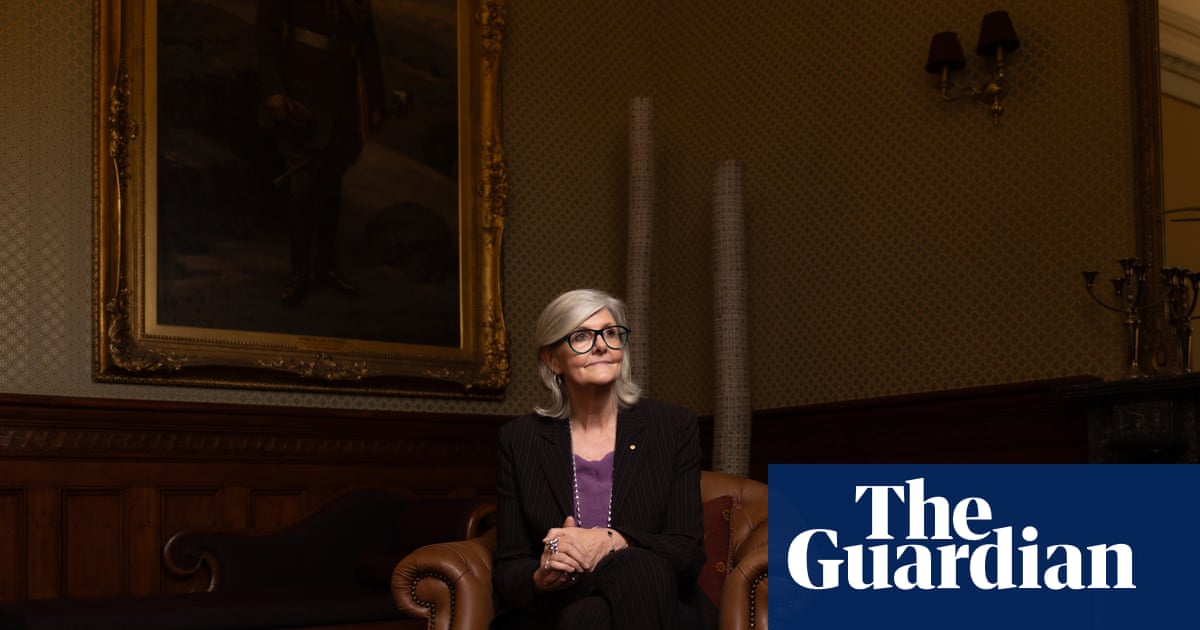
Australia faces a “growing catastrophe” from poor understanding of the country’s constitutional foundation, the governor general, Sam Mostyn, has warned as attacks on institutions and threats against elected officials undermine democratic participation.
Two years after her appointment as King Charles’s representative in Canberra, and as she brings a modern touch to the role of vice regal, Mostyn said that knowledge of how the country’s system of government operates was in steady decline and better civics education was needed.
“Where I see the most woeful lack of understanding … the basic understanding of the tenets of our democracy, is in the adult population,” Mostyn said.
“It’s mostly people who attack our system, who say we shouldn’t have a governor general, or who ask the governor general to do things that are not within my powers, or criticise me for signing the bills that I must sign, because they think I should have a view that clearly I do not have as governor general. Certain things I must do under my constitutional requirements.
“We’ve got a growing catastrophe, I think, in a failure to understand and engage with and feel proud of the very civic underpinnings of our democracy.”
In an interview for Guardian’s Australian Politics podcast, released on Friday , Mostyn said schoolchildren and newly sworn Australian citizens had the best understanding of how government and institutions worked.
The comments come as parliaments, the courts, the Australian Electoral Commission, and officeholders around the country face mounting criticism and abuse. Since the Covid pandemic, social media and online commentary has been identified as hotbed of corrosive sentiment, coinciding with rising threats against officials.
“It starts with understanding why we have a constitution, how it came to be,” Mostyn said of a potential solution.
“It’s 125 years old this year. It was built in a particular way, to bring the states and territories together, in order to build a sense of unity around the country, and it sets up everything that then builds the strength of our democracy.”
Mostyn said part of the problem was an absence of “a shared set of facts”, including in online discourse.
“I think this is a moment where it’s important for everyone, particularly people like me, in these offices, to keep up the project of why it matters that we show respect for each other, we learn to understand each other.
“There is a big risk that if we don’t, this is the beginning of the unraveling of social cohesion.”
The former businesswoman, AFL commissioner, political adviser and community leader has prioritised civics engagement and education in the role, bringing a less formal and more down-to-earth approach to the office of governor general. When she was appointed to the role – traditionally filled by former politicians, judges and military leaders – Mostyn promised an unstinting focus on kindness, on care and on respect.
Earlier this month, she hosted a roundtable on social cohesion and civics education with the Constitution Education Fund at her official residence in Canberra, Government House, attended by educators, public service leaders and thinktanks. Former high court chief justice Robert French is the fund’s chair.
Mostyn warned the types of people considering seeking political office in Australia is changing, because of sustained abuse and threats against elected representatives at all levels.
She said local councillors and mayors had told her public life was becoming difficult and increasingly unappealing.
“They [have] shared with me that lack of civility in their own communities, as directed to them as elected representatives, has become very very challenging, making it very difficult to seek office.
“If you know that you’re putting yourself into very dangerous traffic with people who now don’t feel the need to be respectful, who make direct threats … we’ve seen this all around the world with elected representatives at all levels.
“This desire to be hateful, to attack, to not enter into good, peaceful, robust but respectful discussions on things where we might not agree, and so that’s happening certainly in local government.”
Mostyn is the Crown’s representative in Australia, presides over the executive council, gives royal assent to legislation from parliament, appoints ministers and officials, dissolves parliament for elections and is the commander-in-chief of the Australian Defence Force.
She holds the reserve powers of the constitution, and attends and hosts hundreds of events every year, including for the Order of Australia.
In the past two years, Mostyn has used a growing social media presence to educate the public about the function of the governor general, and has conducted dozens of interviews, including with local media outlets when visiting far-flung communities.
after newsletter promotion
In the wake of the Bondi beach terror attack in December last year, Mostyn immediately flew to Sydney to comfort victims and members of Australia’s Jewish community. At the height of the Socceroos World Cup campaign last month, she attended a Canberra pub to watch Australia play Paraguay in the middle of the day.
Speaking at Admiralty House, the governor general’s residence on Sydney Harbour, Mostyn revealed she had followed precedent from recent governors general and asked the Electoral Commissioner for an exemption from compulsory voting, preferring to be as removed as possible from political matters.
Her appointment to the role was not without controversy.
The Greens voted against legislation put to parliament to ensure Mostyn was paid the same amount as her predecessor. Gen David Hurley took a lower base salary due to his military pension.
Commentators criticised Mostyn’s qualifications, and said her high-profile positions on several issues including the voice to parliament referendum should have disqualified her from being appointed. One newspaper column called her “a governor-general from the Chairman’s Lounge.”
But Mostyn has confounded some critics in her first two years on the job.
In May, Chris Kenny, a columnist with the Australian newspaper lamented that too few commentators were ever prepared to admit when they were wrong about matters in public debate, acknowledging he had been mistaken in editorialising against Mostyn’s appointment on Sky News.
Kenny had argued her record could be “too political for Yarralumla”. But instead, Mostyn, he said, “has been diligent, dignified, hard-working and apolitical”.
The chief executive of the Constitution Education Fund, Kerry Jones, said Mostyn’s involvement could not be under stated.
“Probably the most important issue facing our country, our constitutional arrangements, our democracy, is that the people of Australia, the voters of Australia, seem to have lost a sense of trust in the institutions of government and the people in those institutions,” she said.
“If we survive – and when we look back on this period, which is being called a lack of social cohesion, or polarisation, or the rise of populism in politics and that is resulting in racism increasing again, and resulting in antisemitism and Islamophobia – the fact that the governor general is saying it is a crisis and we need to do something about it, could be seen as one of the most significant acts ever taken, I believe, by an Australian governor general for the good of Australia.”
Jones praised Mostyn’s energy and wisdom.
“She cares for every single Australian citizen in every community across Australia, and that radiates from everything she says.”
Mostyn said one of her guiding principles comes from the memoir of one of her predecessors, the academic and writer Sir Zelman Cowen.
Cowen served as governor general from 1977 until 1982, having replaced the controversial Sir John Kerr.
“He says that the governor general can’t just be a functionary, ribbon-cutting, artefact of something. It’s a living job,” Mostyn said.
“He says at a time when the country needs healing, the governor general needs to be present and needs to be able to play a really important role on behalf of all Australians to reflect the light and shade of the nation back to the nation, and help the nation interpret itself, in order to know where we’re going and what we could all do as citizens.”
Read the full story at The Guardian ↗
Sam Mostyn says there is a widespread ‘failure to understand and engage with and feel proud of the very civic underpinnings of our democracy’. Get our breaking news email , free…
This lens runs the verified story through Cinnamon's AI — wired in the next step.
Australia faces a “growing catastrophe” from poor understanding of the country’s constitutional foundation, the governor general, Sam Mostyn, has warned as attacks on institutions and threats against elected officials undermine democratic participation.
Two years after her appointment as King Charles’s representative in Canberra, and as she brings a modern touch to the role of vice regal, Mostyn said that knowledge of how the country’s system of government operates was in steady decline and better civics education was needed.
“Where I see the most woeful lack of understanding … the basic understanding of the tenets of our democracy, is in the adult population,” Mostyn said.
“It’s mostly people who attack our system, who say we shouldn’t have a governor general, or who ask the governor general to do things that are not within my powers, or criticise me for signing the bills that I must sign, because they think I should have a view that clearly I do not have as governor general. Certain things I must do under my constitutional requirements.
“We’ve got a growing catastrophe, I think, in a failure to understand and engage with and feel proud of the very civic underpinnings of our democracy.”
In an interview for Guardian’s Australian Politics podcast, released on Friday , Mostyn said schoolchildren and newly sworn Australian citizens had the best understanding of how government and institutions worked.
The comments come as parliaments, the courts, the Australian Electoral Commission, and officeholders around the country face mounting criticism and abuse. Since the Covid pandemic, social media and online commentary has been identified as hotbed of corrosive sentiment, coinciding with rising threats against officials.
“It starts with understanding why we have a constitution, how it came to be,” Mostyn said of a potential solution.
“It’s 125 years old this year. It was built in a particular way, to bring the states and territories together, in order to build a sense of unity around the country, and it sets up everything that then builds the strength of our democracy.”
Mostyn said part of the problem was an absence of “a shared set of facts”, including in online discourse.
“I think this is a moment where it’s important for everyone, particularly people like me, in these offices, to keep up the project of why it matters that we show respect for each other, we learn to understand each other.
“There is a big risk that if we don’t, this is the beginning of the unraveling of social cohesion.”
The former businesswoman, AFL commissioner, political adviser and community leader has prioritised civics engagement and education in the role, bringing a less formal and more down-to-earth approach to the office of governor general. When she was appointed to the role – traditionally filled by former politicians, judges and military leaders – Mostyn promised an unstinting focus on kindness, on care and on respect.
Earlier this month, she hosted a roundtable on social cohesion and civics education with the Constitution Education Fund at her official residence in Canberra, Government House, attended by educators, public service leaders and thinktanks. Former high court chief justice Robert French is the fund’s chair.
Mostyn warned the types of people considering seeking political office in Australia is changing, because of sustained abuse and threats against elected representatives at all levels.
She said local councillors and mayors had told her public life was becoming difficult and increasingly unappealing.
“They [have] shared with me that lack of civility in their own communities, as directed to them as elected representatives, has become very very challenging, making it very difficult to seek office.
“If you know that you’re putting yourself into very dangerous traffic with people who now don’t feel the need to be respectful, who make direct threats … we’ve seen this all around the world with elected representatives at all levels.
“This desire to be hateful, to attack, to not enter into good, peaceful, robust but respectful discussions on things where we might not agree, and so that’s happening certainly in local government.”
Mostyn is the Crown’s representative in Australia, presides over the executive council, gives royal assent to legislation from parliament, appoints ministers and officials, dissolves parliament for elections and is the commander-in-chief of the Australian Defence Force.
She holds the reserve powers of the constitution, and attends and hosts hundreds of events every year, including for the Order of Australia.
In the past two years, Mostyn has used a growing social media presence to educate the public about the function of the governor general, and has conducted dozens of interviews, including with local media outlets when visiting far-flung communities.
after newsletter promotion
In the wake of the Bondi beach terror attack in December last year, Mostyn immediately flew to Sydney to comfort victims and members of Australia’s Jewish community. At the height of the Socceroos World Cup campaign last month, she attended a Canberra pub to watch Australia play Paraguay in the middle of the day.
Speaking at Admiralty House, the governor general’s residence on Sydney Harbour, Mostyn revealed she had followed precedent from recent governors general and asked the Electoral Commissioner for an exemption from compulsory voting, preferring to be as removed as possible from political matters.
Her appointment to the role was not without controversy.
The Greens voted against legislation put to parliament to ensure Mostyn was paid the same amount as her predecessor. Gen David Hurley took a lower base salary due to his military pension.
Commentators criticised Mostyn’s qualifications, and said her high-profile positions on several issues including the voice to parliament referendum should have disqualified her from being appointed. One newspaper column called her “a governor-general from the Chairman’s Lounge.”
But Mostyn has confounded some critics in her first two years on the job.
In May, Chris Kenny, a columnist with the Australian newspaper lamented that too few commentators were ever prepared to admit when they were wrong about matters in public debate, acknowledging he had been mistaken in editorialising against Mostyn’s appointment on Sky News.
Kenny had argued her record could be “too political for Yarralumla”. But instead, Mostyn, he said, “has been diligent, dignified, hard-working and apolitical”.
The chief executive of the Constitution Education Fund, Kerry Jones, said Mostyn’s involvement could not be under stated.
“Probably the most important issue facing our country, our constitutional arrangements, our democracy, is that the people of Australia, the voters of Australia, seem to have lost a sense of trust in the institutions of government and the people in those institutions,” she said.
“If we survive – and when we look back on this period, which is being called a lack of social cohesion, or polarisation, or the rise of populism in politics and that is resulting in racism increasing again, and resulting in antisemitism and Islamophobia – the fact that the governor general is saying it is a crisis and we need to do something about it, could be seen as one of the most significant acts ever taken, I believe, by an Australian governor general for the good of Australia.”
Jones praised Mostyn’s energy and wisdom.
“She cares for every single Australian citizen in every community across Australia, and that radiates from everything she says.”
Mostyn said one of her guiding principles comes from the memoir of one of her predecessors, the academic and writer Sir Zelman Cowen.
Cowen served as governor general from 1977 until 1982, having replaced the controversial Sir John Kerr.
“He says that the governor general can’t just be a functionary, ribbon-cutting, artefact of something. It’s a living job,” Mostyn said.
“He says at a time when the country needs healing, the governor general needs to be present and needs to be able to play a really important role on behalf of all Australians to reflect the light and shade of the nation back to the nation, and help the nation interpret itself, in order to know where we’re going and what we could all do as citizens.”
Read the full story at The Guardian ↗
Australia faces a “growing catastrophe” from poor understanding of the country’s constitutional foundation, the governor general, Sam Mostyn, has warned as attacks on institutions and threats against elected officials undermine democratic participation.
Two years after her appointment as King Charles’s representative in Canberra, and as she brings a modern touch to the role of vice regal, Mostyn said that knowledge of how the country’s system of government operates was in steady decline and better civics education was needed.
“Where I see the most woeful lack of understanding … the basic understanding of the tenets of our democracy, is in the adult population,” Mostyn said.
“It’s mostly people who attack our system, who say we shouldn’t have a governor general, or who ask the governor general to do things that are not within my powers, or criticise me for signing the bills that I must sign, because they think I should have a view that clearly I do not have as governor general. Certain things I must do under my constitutional requirements.
“We’ve got a growing catastrophe, I think, in a failure to understand and engage with and feel proud of the very civic underpinnings of our democracy.”
In an interview for Guardian’s Australian Politics podcast, released on Friday , Mostyn said schoolchildren and newly sworn Australian citizens had the best understanding of how government and institutions worked.
The comments come as parliaments, the courts, the Australian Electoral Commission, and officeholders around the country face mounting criticism and abuse. Since the Covid pandemic, social media and online commentary has been identified as hotbed of corrosive sentiment, coinciding with rising threats against officials.
“It starts with understanding why we have a constitution, how it came to be,” Mostyn said of a potential solution.
“It’s 125 years old this year. It was built in a particular way, to bring the states and territories together, in order to build a sense of unity around the country, and it sets up everything that then builds the strength of our democracy.”
Mostyn said part of the problem was an absence of “a shared set of facts”, including in online discourse.
“I think this is a moment where it’s important for everyone, particularly people like me, in these offices, to keep up the project of why it matters that we show respect for each other, we learn to understand each other.
“There is a big risk that if we don’t, this is the beginning of the unraveling of social cohesion.”
The former businesswoman, AFL commissioner, political adviser and community leader has prioritised civics engagement and education in the role, bringing a less formal and more down-to-earth approach to the office of governor general. When she was appointed to the role – traditionally filled by former politicians, judges and military leaders – Mostyn promised an unstinting focus on kindness, on care and on respect.
Earlier this month, she hosted a roundtable on social cohesion and civics education with the Constitution Education Fund at her official residence in Canberra, Government House, attended by educators, public service leaders and thinktanks. Former high court chief justice Robert French is the fund’s chair.
Mostyn warned the types of people considering seeking political office in Australia is changing, because of sustained abuse and threats against elected representatives at all levels.
She said local councillors and mayors had told her public life was becoming difficult and increasingly unappealing.
“They [have] shared with me that lack of civility in their own communities, as directed to them as elected representatives, has become very very challenging, making it very difficult to seek office.
“If you know that you’re putting yourself into very dangerous traffic with people who now don’t feel the need to be respectful, who make direct threats … we’ve seen this all around the world with elected representatives at all levels.
“This desire to be hateful, to attack, to not enter into good, peaceful, robust but respectful discussions on things where we might not agree, and so that’s happening certainly in local government.”
Mostyn is the Crown’s representative in Australia, presides over the executive council, gives royal assent to legislation from parliament, appoints ministers and officials, dissolves parliament for elections and is the commander-in-chief of the Australian Defence Force.
She holds the reserve powers of the constitution, and attends and hosts hundreds of events every year, including for the Order of Australia.
In the past two years, Mostyn has used a growing social media presence to educate the public about the function of the governor general, and has conducted dozens of interviews, including with local media outlets when visiting far-flung communities.
after newsletter promotion
In the wake of the Bondi beach terror attack in December last year, Mostyn immediately flew to Sydney to comfort victims and members of Australia’s Jewish community. At the height of the Socceroos World Cup campaign last month, she attended a Canberra pub to watch Australia play Paraguay in the middle of the day.
Speaking at Admiralty House, the governor general’s residence on Sydney Harbour, Mostyn revealed she had followed precedent from recent governors general and asked the Electoral Commissioner for an exemption from compulsory voting, preferring to be as removed as possible from political matters.
Her appointment to the role was not without controversy.
The Greens voted against legislation put to parliament to ensure Mostyn was paid the same amount as her predecessor. Gen David Hurley took a lower base salary due to his military pension.
Commentators criticised Mostyn’s qualifications, and said her high-profile positions on several issues including the voice to parliament referendum should have disqualified her from being appointed. One newspaper column called her “a governor-general from the Chairman’s Lounge.”
But Mostyn has confounded some critics in her first two years on the job.
In May, Chris Kenny, a columnist with the Australian newspaper lamented that too few commentators were ever prepared to admit when they were wrong about matters in public debate, acknowledging he had been mistaken in editorialising against Mostyn’s appointment on Sky News.
Kenny had argued her record could be “too political for Yarralumla”. But instead, Mostyn, he said, “has been diligent, dignified, hard-working and apolitical”.
The chief executive of the Constitution Education Fund, Kerry Jones, said Mostyn’s involvement could not be under stated.
“Probably the most important issue facing our country, our constitutional arrangements, our democracy, is that the people of Australia, the voters of Australia, seem to have lost a sense of trust in the institutions of government and the people in those institutions,” she said.
“If we survive – and when we look back on this period, which is being called a lack of social cohesion, or polarisation, or the rise of populism in politics and that is resulting in racism increasing again, and resulting in antisemitism and Islamophobia – the fact that the governor general is saying it is a crisis and we need to do something about it, could be seen as one of the most significant acts ever taken, I believe, by an Australian governor general for the good of Australia.”
Jones praised Mostyn’s energy and wisdom.
“She cares for every single Australian citizen in every community across Australia, and that radiates from everything she says.”
Mostyn said one of her guiding principles comes from the memoir of one of her predecessors, the academic and writer Sir Zelman Cowen.
Cowen served as governor general from 1977 until 1982, having replaced the controversial Sir John Kerr.
“He says that the governor general can’t just be a functionary, ribbon-cutting, artefact of something. It’s a living job,” Mostyn said.
“He says at a time when the country needs healing, the governor general needs to be present and needs to be able to play a really important role on behalf of all Australians to reflect the light and shade of the nation back to the nation, and help the nation interpret itself, in order to know where we’re going and what we could all do as citizens.”
Read the full story at The Guardian ↗
This lens runs the verified story through Cinnamon's AI — wired in the next step.
- Sam Mostyn says there is a widespread ‘failure to understand and engage with and feel proud of the very civic underpinnings of our democracy’.
- Get our breaking news email , free…