Heat pump growth stalls as government support cut, warns climate watchdog
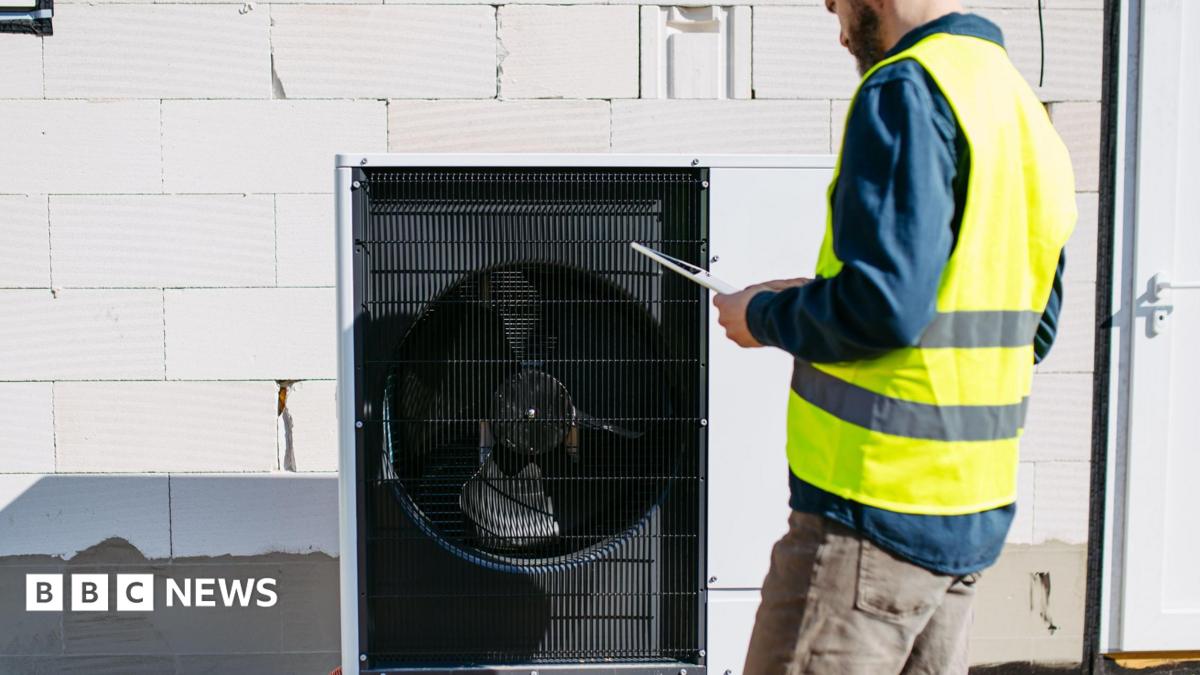
Almost a fifth of the country's emissions come from the way that we heat our homes.
The vast majority of households currently use gas boilers, but the government's ambition is to move most properties over to heat pumps. These run on electricity rather than gas which can be generated from green energy sources like solar and wind.
However for most, heat pumps are prohibitively expensive to install. The government does have the Boiler Upgrade Scheme which offers a £7,500 grant upfront towards the cost of the technology but that can still leave households more than £2,500 to pay.
And the government removed the ECO scheme, that provided heat pumps fully funded to lower-income homes in Great Britain, after reports of botched installations.
30,000 homes fitted with botched insulation
The Committee and the industry have said a new grant system needs to be provided but also efforts need to be made to bring down running costs.
"This transition in our homes is no different to the ones we've had before. Fresh running water in homes, indoor sanitation, central heating, heat pumps. It's just another transition. We have to find a way to make it affordable. And that's the government job," said Bean Beanland, former director of the Heat Pump Association.
The UK has some of the highest electricity bills in Europe because of upgrades to the network, charges on energy bills and spikes in gas prices which can affect the price of all electricity.
Electricity bills targeted in planned shakeup to energy pricing
A Department for Energy Security and Net Zero spokesperson acknowledged the ECO scheme "faced serious challenges".
But added: "We are taking action on energy bills, as well as going further and faster in our clean energy mission, to end our dependency on fossil fuels, give us energy security and get bills down for good."
In contrast to heat pumps, continuing record sales of electric cars indicate they are all but set to replace their petrol and diesel counterparts in the coming years on UK roads.
Emma Pinchbeck, CEO of the Climate Change Committee, praised the improvement in greener transport.
"We've made big progress on things like electric vehicles, where one in four cars being bought in the UK today is now an EV."
She said the growth had been accelerated by the Iran fuel crisis, which has seen significant increases in petrol and diesel prices at the pump pushing people to seek out other options.
"We can see in the numbers what people want - cheap cars and cars that will save them money, particularly as fossil fuels are volatile," she said.
But the industry body, Society of Motor Manufacturers (SMMT), said most of this demand had been brought about by huge discounts offered by car manufacturers.
"This has cost the industry more than £10 billion since 2024 – an unsustainable amount when that money should be going into R&D, manufacturing and the workforce," said Mike Hawes, CEO of SMMT.
It supported the government's plan to weaken its Zero Emission Vehicles (ZEV) mandate - which sets a target for the number of EVs that manufacturers sell in the UK and potential penalties for failing to meet that target.
The UKCCC disagreed and urged the government to keep the policy.
Read the full story at BBC ↗
The UK is attempting to decarbonise residential heating by replacing gas boilers with heat pumps, which account for nearly a fifth of national emissions. The government offers £7,500 grants through the Boiler Upgrade Scheme, but installation typically costs more than £10,000, leaving most households unable to proceed. A previous scheme (ECO) that fully funded heat pumps for lower-income homes was discontinued after quality issues. Expert consensus suggests affordability remains the central obstacle. By contrast, electric vehicle adoption is progressing faster, with one in four new cars sold in the UK now being EVs. The government plans to weaken EV sales mandates on manufacturers, a decision opposed by the Climate Change Committee but supported by the motor industry, which argues deep discounts totalling over £10 billion since 2024 are unsustainable. High UK electricity costs—among Europe's highest—further complicate the heat pump transition.
Read the full story at BBC ↗
Almost a fifth of the country's emissions come from the way that we heat our homes.
The vast majority of households currently use gas boilers, but the government's ambition is to move most properties over to heat pumps. These run on electricity rather than gas which can be generated from green energy sources like solar and wind.
However for most, heat pumps are prohibitively expensive to install. The government does have the Boiler Upgrade Scheme which offers a £7,500 grant upfront towards the cost of the technology but that can still leave households more than £2,500 to pay.
And the government removed the ECO scheme, that provided heat pumps fully funded to lower-income homes in Great Britain, after reports of botched installations.
30,000 homes fitted with botched insulation
The Committee and the industry have said a new grant system needs to be provided but also efforts need to be made to bring down running costs.
"This transition in our homes is no different to the ones we've had before. Fresh running water in homes, indoor sanitation, central heating, heat pumps. It's just another transition. We have to find a way to make it affordable. And that's the government job," said Bean Beanland, former director of the Heat Pump Association.
The UK has some of the highest electricity bills in Europe because of upgrades to the network, charges on energy bills and spikes in gas prices which can affect the price of all electricity.
Electricity bills targeted in planned shakeup to energy pricing
A Department for Energy Security and Net Zero spokesperson acknowledged the ECO scheme "faced serious challenges".
But added: "We are taking action on energy bills, as well as going further and faster in our clean energy mission, to end our dependency on fossil fuels, give us energy security and get bills down for good."
In contrast to heat pumps, continuing record sales of electric cars indicate they are all but set to replace their petrol and diesel counterparts in the coming years on UK roads.
Emma Pinchbeck, CEO of the Climate Change Committee, praised the improvement in greener transport.
"We've made big progress on things like electric vehicles, where one in four cars being bought in the UK today is now an EV."
She said the growth had been accelerated by the Iran fuel crisis, which has seen significant increases in petrol and diesel prices at the pump pushing people to seek out other options.
"We can see in the numbers what people want - cheap cars and cars that will save them money, particularly as fossil fuels are volatile," she said.
But the industry body, Society of Motor Manufacturers (SMMT), said most of this demand had been brought about by huge discounts offered by car manufacturers.
"This has cost the industry more than £10 billion since 2024 – an unsustainable amount when that money should be going into R&D, manufacturing and the workforce," said Mike Hawes, CEO of SMMT.
It supported the government's plan to weaken its Zero Emission Vehicles (ZEV) mandate - which sets a target for the number of EVs that manufacturers sell in the UK and potential penalties for failing to meet that target.
The UKCCC disagreed and urged the government to keep the policy.
Read the full story at BBC ↗
Residential heating accounts for almost a fifth of UK emissions The government's Boiler Upgrade Scheme offers £7,500 grants toward heat pump installation The government removed the ECO scheme that provided fully funded heat pumps to lower-income homes after reports of installation failures The UK has some of the highest electricity bills in Europe due to network upgrades, billing charges, and gas price volatility One in four cars being purchased in the UK is now an electric vehicle Heat pump affordability represents the primary barrier to the government's decarbonisation goals EV sales growth demonstrates successful market transition compared to stalled heat pump adoption Manufacturer discounts totalling over £10 billion since 2024 are unsustainable for industry reinvestment The government should maintain EV sales mandates to drive decarbonisation
Read the full story at BBC ↗
- Heat pump adoption in the UK is slowing after government removed the ECO funding scheme and capped support through the Boiler Upgrade Scheme at £7,500, leaving most households unable to afford installation
- Residential heating accounts for nearly a fifth of UK emissions; the government aims to transition most homes from gas boilers to electric heat pumps powered by renewable energy
- Electric vehicle sales growth in the UK has accelerated, with one in four new cars now being EVs, though industry disputes whether this reflects genuine demand or manufacturer discounts
- The UK has among Europe's highest electricity bills due to network upgrades and energy price volatility, making heat pump running costs a barrier alongside installation expenses