‘I ain’t goin nowhere’: Gullah Geechee people fight off developers with a historic referendum
Ire Gene Grovner stood behind his house on a recent morning, between chicken pens on one side and rows of winter collard greens on the other, holding a knife and skinning a raccoon splayed across a wood post.
“The meat is good roasted,” Grovner said. He pointed to the collards, a burst of green in the winter cold, and the chickens, with their eggs. “If you ain’t lazy, you can live good here,” he said, referring to Sapelo Island off the coast of southern Georgia.
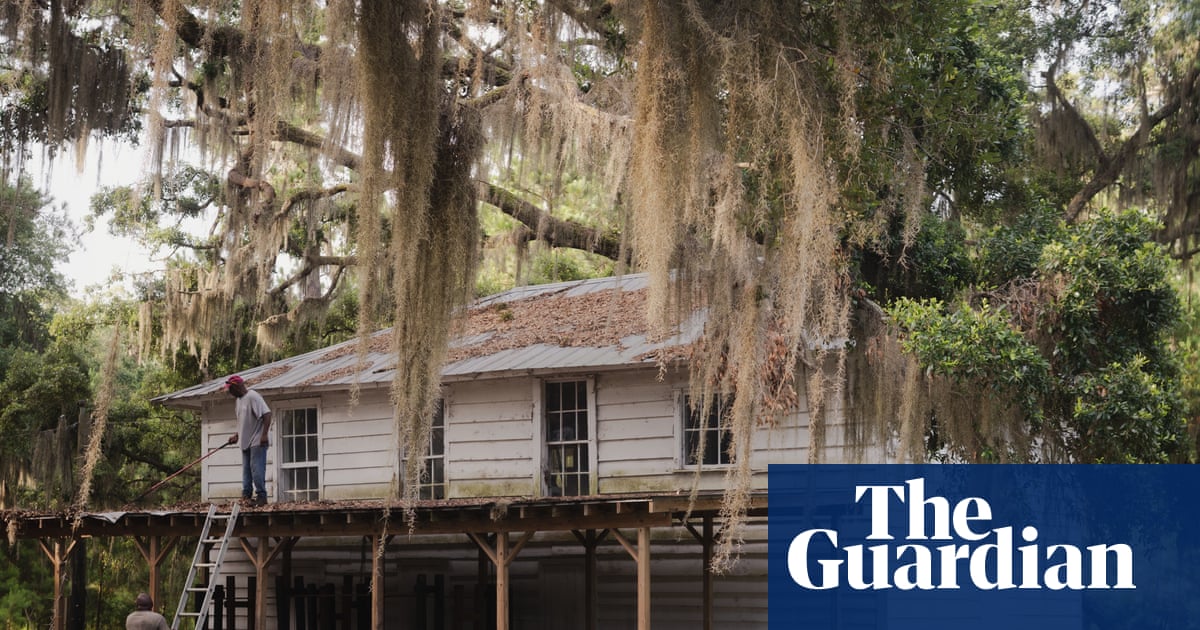
Then he waved in a broad circle, pointing out the nearby modest homes of family members, all bearing the same last name as him, which Grovner, who is 70, says stretches nine generations back on Hogg Hummock.
The community is home to the Gullah Geechee people, descendants of enslaved west Africans who worked on cotton, indigo and rice plantations from North Carolina to Florida. In places like South Carolina’s Hilton Head Island, the Gullah Geechee population was nearly wiped out by development starting in the 1960s.
On Sapelo Island, post-enslavement, freed Black folks were granted land in Hogg Hummock in part because it was seen as marshy and less desirable than the rest of the island. It is the only remaining sea island community of Gullah Geechee people in Georgia.
“All that’s family,” Grovner summed up. “All those people who want to build houses here ain’t gonna close me in.”
Outsiders building large vacation houses was what was at stake in Tuesday’s election in McIntosh county, where Sapelo is located – only the second citizen referendum on a county plan or policy in Georgia history. (Nearby Camden county voters defeated a county plan to build a rocket-launching pad through a referendum in 2022.)
The referendum, brought about after more than 2,000 registered voters in the county signed petitions, allowed residents to vote on whether they were for or against a zoning amendment increasing the amount of residential square footage permitted in Hogg Hummock from 1,400 to 3,000.
Unofficial results released on Tuesday evening showed that nearly 85% of 1,869 county voters opposed the zoning increase.
Allowing larger houses to be built on the island would have opened the door to developers – “all those people” Grovner named – which then would raise taxes, making it harder for Gullah Geechee people to continue living on Sapelo, and potentially changing the island’s cultural and environmental landscape forever.
The number of Gullah Geechee people living on Sapelo has dwindled to between 30 and 40 residents, down from about 500 in the early 20th century. Dozens of the residents’ children and other family members have moved to the mainland over time. Nonetheless, many of these family members maintain ties to the island; some still own property and plan on retiring there.
“Every county in the state of Georgia is looking at” Tuesday’s results, said Kathleen Russell, editor of the Darien News – because any county’s residents can now mount a referendum and challenge zoning rules, she said.
The referendum made history in the region as well, as referendums “are incredibly rare in the majority of the south”, said Chris Melody Fields Figueredo, executive director of the Ballot Initiative Strategy Center. The reason: “States where formerly enslaved people lived, the state governments did not want those people to exercise their power,” Fields Figueredo said.
The ability to stage a referendum in Georgia comes from provisions in the state’s constitution. First, a certain percentage of a county’s registered voters signs a petition indicating they want to vote on a policy from the county’s elected representatives. The percentage varies based on the county’s population.
Once the threshold of confirmed signatures is reached and a referendum is authorized, it is “a form of holding power accountable, where systems of governance are challenged”, said Fields Figueredo.
The Gullah Geechee people who were leading the effort to hold the referendum first had to defeat the county’s legal challenges, based on assertions that zoning rules weren’t covered by language in the state’s constitution. It took a September state supreme court decision to give the green light to Tuesday’s election.
The Guardian spoke to a handful of the nearly 1,000 county residents who cast ballots during a two-week early voting period ending Friday. All had ties to Sapelo Island and Hogg Hummock, and felt strongly about the need to protect the community from unchecked development.
The unspoiled qualities that allow Gullah Geechee people to live close to nature also make the island a prime location for natural science; in the 1950s, Sapelo was the site of foundational research in the nascent field of ecology.
After casting his ballot on Thursday, Nick Macías described Sapelo as “an ecologically important island you don’t find anywhere in the world”. Macías, who works as assistant operations director at the island’s University of Georgia Marine Institute, pointed out that Sapelo was the only Georgia sea island with healthy communities of marsh grass – a keystone species, or one that other animals and plants in an ecosystem depend on for survival.
after newsletter promotion
Allowing larger houses and increased development in Hogg Hummock “would put stress on the carbon footprint” of the island and displace Gullah Geechee people, he said: “When it comes to preserving the [Gullah Geechee] culture, it comes down to the next generation being able to live there.”
Also voting last week, Samuel – who didn’t want his last name used – had gotten off his job early as a trucker to cast a ballot. He has ties to Hogg Hummock through his wife, who has family there. “It’s a unique place,” he said. “You go there … and they treat you like family. They take you in.”
The trucker remembers first visiting as a teenager. “They showed me medicine for toothaches, using plants,” he said. As for the community’s ongoing struggles, he said, “I’ll fight for it till the end. They deserve it. It’s their place.”
One of Ire Gene Grovner’s relatives in Hogg Hummock is his brother, Bobby Gene Grovner. He’s renovating his home on the island, with plans of leaving it to his two daughters. “These ones who come with a pocketful of money, it ain’t gonna work,” he said, referring to developers with interest in the community’s land.
Still, Bobby Gene, who turns 67 later this month, said “it’s tiring” to have to fight in courtrooms and government halls for his community.
“I ain’t got but 40 years left!” he said, laughing.
His brother Ire Gene is involved in another unresolved legal battle, laying claim to several dozen acres of land that a 2024 lawsuit asserts was taken from his family by the state of Georgia in nearby Raccoon Bluff, a 698-acre plot of land on the island formerly inhabited by Gullah Geechee people. The lawsuit includes land deed records in Grovner’s family dating to 1875.
An ongoing case involving the subject of Tuesday’s referendum, filed by the Southern Poverty Law Center, asserts that the proposed zoning amendment was discriminatory. “The people in [Hogg Hummock] feel like they’ve been shut out,” said the SPLC attorney Miriam Gutman. “[They] want to pass their land onto their children and grandchildren. They want to be part of the conversation” about the community’s future, she said.
But even the immediate future after Tuesday’s result is unclear, as the McIntosh county attorney, Adam Poppell, recently stated that voters rejecting the county’s attempt to increase the maximum square footage allowed on the island doesn’t mean conditions will revert to what they were before: a limit of 1,400 sq ft. Instead, Poppell said, the election’s result leaves Hogg Hummock with “no zoning” – meaning anything could be built.
The county attorney did not answer a request for comment.
Dana Braun, attorney for the Hogg Hummock residents who mounted the referendum effort, said another lawsuit would be likely if the county insists on Poppell’s interpretation of where things stand. “The county apparently loves paying lawyers for losing battles,” he said.
After cleaning off his knife and preparing the raccoon on Friday, Ire Gene turned to face the chicken pens and the morning’s eggs. His position on the future of Hogg Hummock: “I ain’t planning on goin’ nowhere.”
This article was amended on 11 February 2026. A previous version misidentified a building in an image caption.
Read the full story at The Guardian ↗
Residents of Hogg Hummock, a Gullah Geechee community on Sapelo Island off Georgia's coast, voted on whether to allow larger residential buildings in their area. The proposed zoning change would have increased the maximum square footage for homes from 1,400 to 3,000. Nearly 85% of county voters rejected the increase. Community members said larger homes would attract developers, raise property taxes, and make it difficult for families—many with nine or more generations of ties to the island—to remain. The Gullah Geechee are descendants of enslaved West Africans who were granted this marshy land after emancipation because it was considered less desirable. The area's population has declined from roughly 500 in the early 1900s to between 30 and 40 today. The referendum required over 2,000 petition signatures and survived a legal challenge before reaching a vote. County officials now dispute whether the referendum's rejection returns zoning to its previous limits or leaves the area with no zoning rules, setting up potential further litigation.
Read the full story at The Guardian ↗
Ire Gene Grovner stood behind his house on a recent morning, between chicken pens on one side and rows of winter collard greens on the other, holding a knife and skinning a raccoon splayed across a wood post.
“The meat is good roasted,” Grovner said. He pointed to the collards, a burst of green in the winter cold, and the chickens, with their eggs. “If you ain’t lazy, you can live good here,” he said, referring to Sapelo Island off the coast of southern Georgia.
Then he waved in a broad circle, pointing out the nearby modest homes of family members, all bearing the same last name as him, which Grovner, who is 70, says stretches nine generations back on Hogg Hummock.
The community is home to the Gullah Geechee people, descendants of enslaved west Africans who worked on cotton, indigo and rice plantations from North Carolina to Florida. In places like South Carolina’s Hilton Head Island, the Gullah Geechee population was nearly wiped out by development starting in the 1960s.
On Sapelo Island, post-enslavement, freed Black folks were granted land in Hogg Hummock in part because it was seen as marshy and less desirable than the rest of the island. It is the only remaining sea island community of Gullah Geechee people in Georgia.
“All that’s family,” Grovner summed up. “All those people who want to build houses here ain’t gonna close me in.”
Outsiders building large vacation houses was what was at stake in Tuesday’s election in McIntosh county, where Sapelo is located – only the second citizen referendum on a county plan or policy in Georgia history. (Nearby Camden county voters defeated a county plan to build a rocket-launching pad through a referendum in 2022.)
The referendum, brought about after more than 2,000 registered voters in the county signed petitions, allowed residents to vote on whether they were for or against a zoning amendment increasing the amount of residential square footage permitted in Hogg Hummock from 1,400 to 3,000.
Unofficial results released on Tuesday evening showed that nearly 85% of 1,869 county voters opposed the zoning increase.
Allowing larger houses to be built on the island would have opened the door to developers – “all those people” Grovner named – which then would raise taxes, making it harder for Gullah Geechee people to continue living on Sapelo, and potentially changing the island’s cultural and environmental landscape forever.
The number of Gullah Geechee people living on Sapelo has dwindled to between 30 and 40 residents, down from about 500 in the early 20th century. Dozens of the residents’ children and other family members have moved to the mainland over time. Nonetheless, many of these family members maintain ties to the island; some still own property and plan on retiring there.
“Every county in the state of Georgia is looking at” Tuesday’s results, said Kathleen Russell, editor of the Darien News – because any county’s residents can now mount a referendum and challenge zoning rules, she said.
The referendum made history in the region as well, as referendums “are incredibly rare in the majority of the south”, said Chris Melody Fields Figueredo, executive director of the Ballot Initiative Strategy Center. The reason: “States where formerly enslaved people lived, the state governments did not want those people to exercise their power,” Fields Figueredo said.
The ability to stage a referendum in Georgia comes from provisions in the state’s constitution. First, a certain percentage of a county’s registered voters signs a petition indicating they want to vote on a policy from the county’s elected representatives. The percentage varies based on the county’s population.
Once the threshold of confirmed signatures is reached and a referendum is authorized, it is “a form of holding power accountable, where systems of governance are challenged”, said Fields Figueredo.
The Gullah Geechee people who were leading the effort to hold the referendum first had to defeat the county’s legal challenges, based on assertions that zoning rules weren’t covered by language in the state’s constitution. It took a September state supreme court decision to give the green light to Tuesday’s election.
The Guardian spoke to a handful of the nearly 1,000 county residents who cast ballots during a two-week early voting period ending Friday. All had ties to Sapelo Island and Hogg Hummock, and felt strongly about the need to protect the community from unchecked development.
The unspoiled qualities that allow Gullah Geechee people to live close to nature also make the island a prime location for natural science; in the 1950s, Sapelo was the site of foundational research in the nascent field of ecology.
After casting his ballot on Thursday, Nick Macías described Sapelo as “an ecologically important island you don’t find anywhere in the world”. Macías, who works as assistant operations director at the island’s University of Georgia Marine Institute, pointed out that Sapelo was the only Georgia sea island with healthy communities of marsh grass – a keystone species, or one that other animals and plants in an ecosystem depend on for survival.
after newsletter promotion
Allowing larger houses and increased development in Hogg Hummock “would put stress on the carbon footprint” of the island and displace Gullah Geechee people, he said: “When it comes to preserving the [Gullah Geechee] culture, it comes down to the next generation being able to live there.”
Also voting last week, Samuel – who didn’t want his last name used – had gotten off his job early as a trucker to cast a ballot. He has ties to Hogg Hummock through his wife, who has family there. “It’s a unique place,” he said. “You go there … and they treat you like family. They take you in.”
The trucker remembers first visiting as a teenager. “They showed me medicine for toothaches, using plants,” he said. As for the community’s ongoing struggles, he said, “I’ll fight for it till the end. They deserve it. It’s their place.”
One of Ire Gene Grovner’s relatives in Hogg Hummock is his brother, Bobby Gene Grovner. He’s renovating his home on the island, with plans of leaving it to his two daughters. “These ones who come with a pocketful of money, it ain’t gonna work,” he said, referring to developers with interest in the community’s land.
Still, Bobby Gene, who turns 67 later this month, said “it’s tiring” to have to fight in courtrooms and government halls for his community.
“I ain’t got but 40 years left!” he said, laughing.
His brother Ire Gene is involved in another unresolved legal battle, laying claim to several dozen acres of land that a 2024 lawsuit asserts was taken from his family by the state of Georgia in nearby Raccoon Bluff, a 698-acre plot of land on the island formerly inhabited by Gullah Geechee people. The lawsuit includes land deed records in Grovner’s family dating to 1875.
An ongoing case involving the subject of Tuesday’s referendum, filed by the Southern Poverty Law Center, asserts that the proposed zoning amendment was discriminatory. “The people in [Hogg Hummock] feel like they’ve been shut out,” said the SPLC attorney Miriam Gutman. “[They] want to pass their land onto their children and grandchildren. They want to be part of the conversation” about the community’s future, she said.
But even the immediate future after Tuesday’s result is unclear, as the McIntosh county attorney, Adam Poppell, recently stated that voters rejecting the county’s attempt to increase the maximum square footage allowed on the island doesn’t mean conditions will revert to what they were before: a limit of 1,400 sq ft. Instead, Poppell said, the election’s result leaves Hogg Hummock with “no zoning” – meaning anything could be built.
The county attorney did not answer a request for comment.
Dana Braun, attorney for the Hogg Hummock residents who mounted the referendum effort, said another lawsuit would be likely if the county insists on Poppell’s interpretation of where things stand. “The county apparently loves paying lawyers for losing battles,” he said.
After cleaning off his knife and preparing the raccoon on Friday, Ire Gene turned to face the chicken pens and the morning’s eggs. His position on the future of Hogg Hummock: “I ain’t planning on goin’ nowhere.”
This article was amended on 11 February 2026. A previous version misidentified a building in an image caption.
Read the full story at The Guardian ↗
Hogg Hummock is home to 30-40 Gullah Geechee residents, descendants of enslaved West Africans who worked on plantations from North Carolina to Florida The proposed zoning amendment would have increased maximum residential square footage from 1,400 to 3,000 Unofficial results showed nearly 85% of 1,869 county voters opposed the zoning increase The referendum required signatures from over 2,000 registered voters in McIntosh County and survived a state supreme court challenge before the vote This was only the second citizen referendum on a county plan or policy in Georgia history Sapelo Island's University of Georgia Marine Institute operates there, and the island contains healthy communities of marsh grass, a keystone species Ire Gene Grovner's family is pursuing a 2024 lawsuit asserting land was taken from them by the state of Georgia, with family deed records dating to 1875 Allowing larger houses would open the door to developers and raise taxes, making it harder for Gullah Geechee people to continue living on Sapelo Referendums are rare in the South because states where formerly enslaved people lived did not want those people to exercise political power Larger development would put stress on the island's carbon footprint and displace Gullah Geechee people The county attorney's interpretation that the referendum result leaves Hogg Hummock with no zoning could invite further legal challenges
Read the full story at The Guardian ↗
- Gullah Geechee residents of Sapelo Island, Georgia defeated a zoning amendment in a referendum that would have increased residential building sizes, with nearly 85% voting against it
- The community of 30-40 people in Hogg Hummock sought to prevent developer-driven gentrification that could raise property taxes and displace families with centuries-long ties to the island
- The referendum was only the second citizen-initiated vote on county policy in Georgia history, and experts note such mechanisms are rare in former slave states due to historical restrictions on Black political power
- Uncertainty remains about zoning rules post-referendum, as the county attorney suggested the failed amendment leaves the area with no zoning restrictions, potentially inviting new legal challenges