‘I have an understanding housemate’: the student who makes videos of fungus on faeces
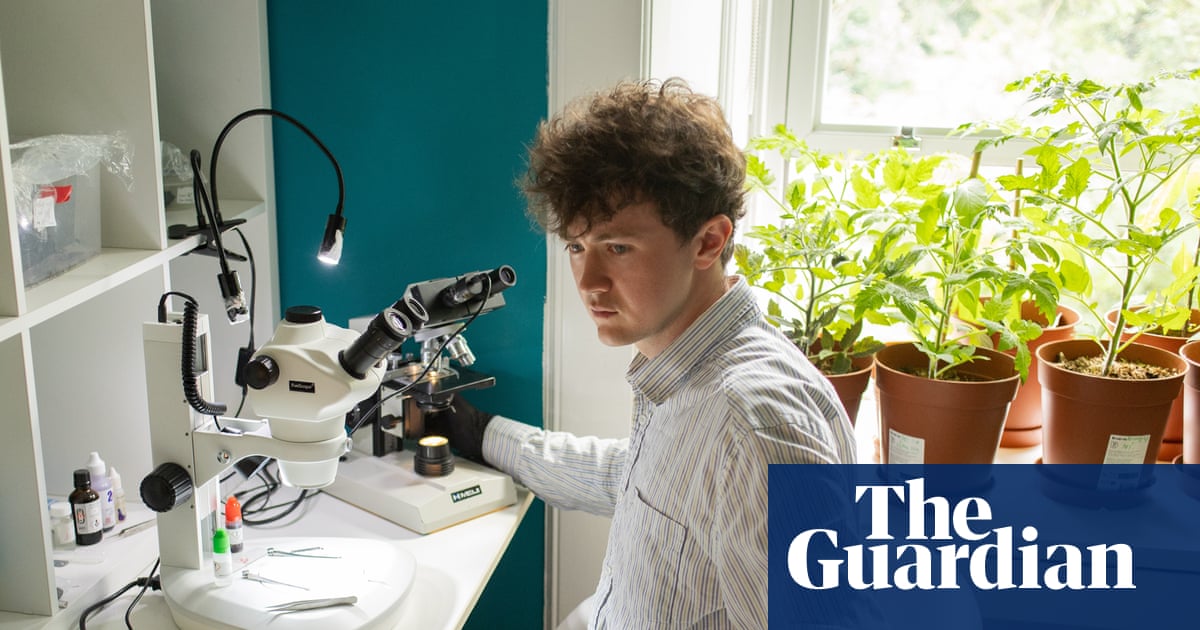
Alfred Drummond-Herdman is possibly the only person in the UK who is sent animal faeces in the post out of goodwill. His bedroom in Edinburgh is full of the stuff: clothes have been removed from his wardrobe and cupboards, replaced with terrariums and plastic containers housing sections of cowpats, grouse droppings and rabbit pellets.
“I have a very understanding housemate,” he says.
But what emerges from the containers has made the 27-year-old trainee lawyer a natural history sensation on social media: brightly coloured contortions of fungi, photographed every 30 seconds as they develop, to create timelapses that are viewed by millions of people around the world.
Inkcaps, fieldcaps and ascobolus, which look a bit like barnacles, all emerge from the dung he collects, including two new species that he has formally identified – with more on the way. The extraordinary images are a rare insight into the world that surrounds us all, but few ever get to see.
Drummond-Herdman is a self-taught amateur taxonomist who became fascinated with fungi that grows on dung, known as coprophilous fungi, when walking in the Ochil Hills on the edge of Stirling during the pandemic.
Cowpats from highland cattle, like many other herbivores, are home to thousands of fungi spores, which race to fruit and produce mushrooms from the moment they have been deposited.
“In Scotland one summer, I came across cowpats that had all sorts of mushrooms growing from them. It was like a forest. It was so bizarre, you could not miss it. I went online to identify them, and that was really the beginning of the rabbit hole that I have been going down ever since,” he says.
According to estimates by Kew, at least 2 million fungi species are waiting to be discovered around the world. From his bedroom in Edinburgh, Drummond-Herdman is doing his bit, working with other enthusiasts and experts on forums to study and identify British specimens.
He has attracted more than 60,000 followers on Instagram, and some of his posts get millions of views. Among the most recent is a video of a slime mould, known as dog’s vomit slime mould, appearing to consume a living ant. Another is a conecap mushroom growing on deer droppings.
“I am enthralled by the bizarreness and the contrast between something like a cowpat – the last things anyone wants to spend time around – and the incredible beauty and complexity of the fungi. Usually when you see these things in the wild, you’re just getting a snapshot of their lifecycle. The timelapses show it all,” he says.
Via webcam, Drummond-Herdman shows me his microscope station and the containers positioned around his bedroom, explaining that the boxes of dung do not smell because they were produced by herbivores and are mostly undigested plants. He says he hopes that his videos inspire a greater appreciation of nature conservation in the UK, particularly fungi.
“I am trying to shout about them in the right way. The whole point of this is not to name a random species that 10 people read about in a journal. I want to show that taxonomy is the frontline of biodiversity research. Researching habitat loss and native species is nothing without it,” he says.
Read the full story at The Guardian ↗
Alfred Drummond-Herdman studies fungi that grow on animal faeces, documenting their lifecycles through timelapse photography from his bedroom in Edinburgh. His work began during pandemic walks in the Ochil Hills when he observed diverse fungal growth on cowpats. He has formally identified at least two new species and collaborates with other enthusiasts and experts to classify British specimens. His Instagram account has accumulated over 60,000 followers, with some videos reaching millions of views. Drummond-Herdman argues that his work demonstrates the importance of taxonomy as foundational to understanding biodiversity and habitat loss, noting that approximately 2 million fungi species remain undocumented worldwide.
Read the full story at The Guardian ↗
Alfred Drummond-Herdman is possibly the only person in the UK who is sent animal faeces in the post out of goodwill. His bedroom in Edinburgh is full of the stuff: clothes have been removed from his wardrobe and cupboards, replaced with terrariums and plastic containers housing sections of cowpats, grouse droppings and rabbit pellets.
“I have a very understanding housemate,” he says.
But what emerges from the containers has made the 27-year-old trainee lawyer a natural history sensation on social media: brightly coloured contortions of fungi, photographed every 30 seconds as they develop, to create timelapses that are viewed by millions of people around the world.
Inkcaps, fieldcaps and ascobolus, which look a bit like barnacles, all emerge from the dung he collects, including two new species that he has formally identified – with more on the way. The extraordinary images are a rare insight into the world that surrounds us all, but few ever get to see.
Drummond-Herdman is a self-taught amateur taxonomist who became fascinated with fungi that grows on dung, known as coprophilous fungi, when walking in the Ochil Hills on the edge of Stirling during the pandemic.
Cowpats from highland cattle, like many other herbivores, are home to thousands of fungi spores, which race to fruit and produce mushrooms from the moment they have been deposited.
“In Scotland one summer, I came across cowpats that had all sorts of mushrooms growing from them. It was like a forest. It was so bizarre, you could not miss it. I went online to identify them, and that was really the beginning of the rabbit hole that I have been going down ever since,” he says.
According to estimates by Kew, at least 2 million fungi species are waiting to be discovered around the world. From his bedroom in Edinburgh, Drummond-Herdman is doing his bit, working with other enthusiasts and experts on forums to study and identify British specimens.
He has attracted more than 60,000 followers on Instagram, and some of his posts get millions of views. Among the most recent is a video of a slime mould, known as dog’s vomit slime mould, appearing to consume a living ant. Another is a conecap mushroom growing on deer droppings.
“I am enthralled by the bizarreness and the contrast between something like a cowpat – the last things anyone wants to spend time around – and the incredible beauty and complexity of the fungi. Usually when you see these things in the wild, you’re just getting a snapshot of their lifecycle. The timelapses show it all,” he says.
Via webcam, Drummond-Herdman shows me his microscope station and the containers positioned around his bedroom, explaining that the boxes of dung do not smell because they were produced by herbivores and are mostly undigested plants. He says he hopes that his videos inspire a greater appreciation of nature conservation in the UK, particularly fungi.
“I am trying to shout about them in the right way. The whole point of this is not to name a random species that 10 people read about in a journal. I want to show that taxonomy is the frontline of biodiversity research. Researching habitat loss and native species is nothing without it,” he says.
Read the full story at The Guardian ↗
Alfred Drummond-Herdman is a 27-year-old trainee lawyer in Edinburgh who studies fungi growing on animal dung He has identified at least two new fungi species through his work His Instagram account has over 60,000 followers and some posts receive millions of views Approximately 2 million fungi species remain undiscovered according to Kew estimates His fascination began during pandemic walks in the Ochil Hills He describes the contrast between cowpats and the beauty of fungi as enthralling He believes taxonomy is the frontline of biodiversity research and essential to understanding habitat loss His goal is to inspire greater appreciation for nature conservation in the UK through his videos
Read the full story at The Guardian ↗
- Alfred Drummond-Herdman, a 27-year-old trainee lawyer in Edinburgh, studies fungi that grow on animal dung (coprophilous fungi) and shares timelapse videos on social media
- He has identified at least two new fungi species and attracts millions of views across 60,000+ Instagram followers by documenting fungal lifecycles
- His work highlights that an estimated 2 million fungi species remain undiscovered globally, and he argues taxonomy is essential to biodiversity research and habitat conservation