‘I love rats but we can’t live with them’: the headache of rising rodent populations around the world
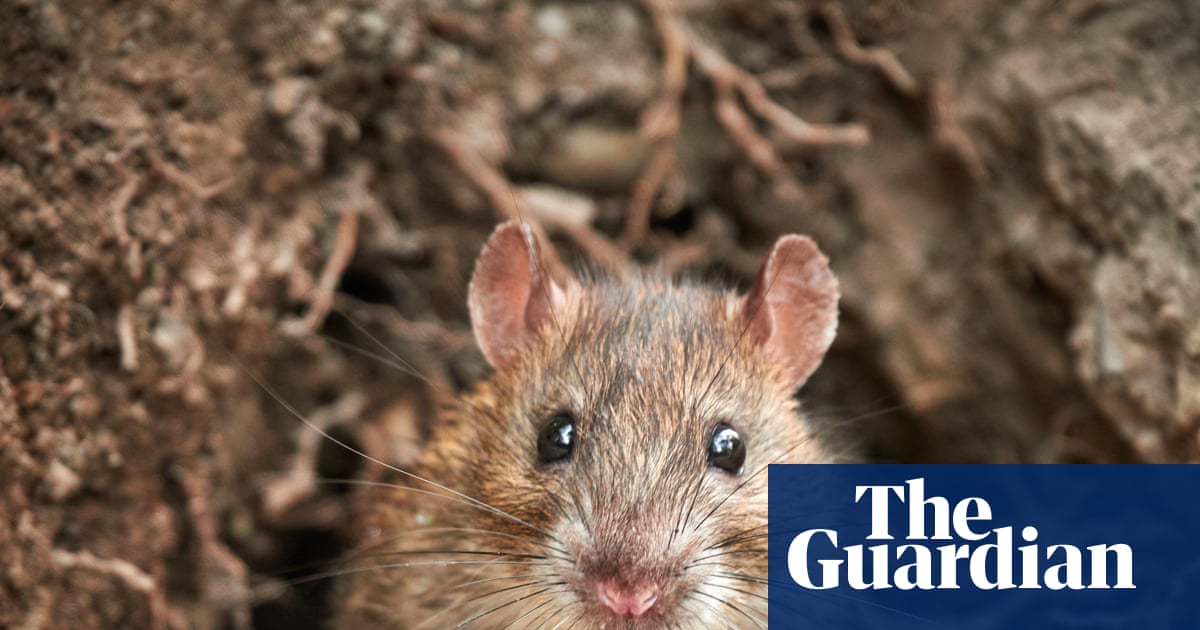
“The rodents have paid for every single bill I’ve ever had – every mortgage, every car payment, every pint of Guinness,” says Dr Robert Corrigan. “It’s been a great ride and I’m still at it.”
New York-based Corrigan is one of the most respected voices in the world of rodentology. Now in his 70s, he has devoted his entire adult life to studying rats and our relationship with them.
Last year, he and 10 other scientists published a paper describing the effect of global heating on rat populations. In 16 cities they found that rat numbers had increased dramatically, and there was a correlation between their numbers and rising temperatures.
The two most common types of rat – the black and the brown – do not hibernate, which means in places with regular winters their reproduction slows down or even stops during cold periods. Here lies the problem, says Corrigan.
“When you have repeating warm winters, one after the other, the rats benefit,” he says. For many families of rats, the warmer temperatures may only offer a marginal advantage, but the problem escalates “when you start multiplying that little bit of extra rat production by hundreds of millions of rats”.
Humans have been trying to control rats for centuries. Often an invasive species, they are vectors for disease, decimate crop yields and destabilise ecosystems as they hunt other species to extinction. At the other end of the spectrum, domesticated rats, descended from wild Norway rats, are often kept as affectionate pets.
Now, more and more scientists and public servants around the world are trying to manage rats without filling their cities with harmful poisons. Methods for doing so range from contraceptives to robust public health regulations.
The biggest issue with our current approach to rats – dumping poison on them and laying traps – is that we treat them like “any old vermin”, says Corrigan. They are in fact “smart mammals with mammal brains”.
He should know. Corrigan first got to know rats while working as an exterminator in the sewers of New York City. He worked in the sewers to save up for graduate school, where he studied rodent pest management. There he then spent weekend after weekend camping out in barns to observe rats.
“I saw things back then,” says Corrigan. “I saw kindness: that rat just brought food to another because it looked sick. I saw aggression: a bully would come around and attack other rats for no reason.”
He describes his feelings towards rats as paradoxical: “Do I love that species and do I respect it as a scientist? Heck, yes. On the other hand I know that they cannot cohabitate with us because they can kill us.”
Rats can carry pathogens that spill over into human populations. These include Weil’s disease, hantavirus or new variants of coronavirus.
And yet, of all the methods used to control rat populations, poison is not one Corrigan would recommend. “It’s a band aid,” he says.
There are compelling reasons to not throw everything at rodenticides, even though most experts – including Corrigan – do acknowledge their usefulness as a temporary corrective measure.
Firstly, as with many public health issues, prevention is better than cure. Enforcing stricter public health regulations is often more effective than letting rat populations spiral and then dumping poison on them to regain control.
Aside from the cruel, slow death they result in for rats, rodenticides are known to harm other wildlife and can end up being consumed by humans – in the US there are already thousands of accidental human rodenticide poisonings each year.
One hope for better managing rat populations are fertility controls, which are increasingly popular in the US following public concern about wildlife poisoning from rodenticides. Europe is slowly catching up as more experts champion the technology, which uses contraceptives to slow down rat population growth.
“Developing new forms of birth control is the key to managing the soaring number of poison-resistant rats compassionately,” said Richard Parr, director of UK charity the Center for Wild Animal Welfare. At the same time, he says outdated biocidal product regulation in the EU is “stifling innovation”. While the EU’s regulation is under review, it is not yet equipped to deal with new fertility control technology, creating uncertainty that deters investment.
But Steven Belmain, professor of ecology at the University of Greenwich, maintains a scepticism about the idea that fertility controls are advanced enough to help.
“People are sometimes quite naive thinking we can use fertility control. If you’ve got a rat in your house, you’re not going to feed it contraceptives and just let it live there with you,” he says.
“Our restaurants, our hotels, our hospitals, our food warehouses will all just collapse without having any sort of poison management.”
Back in New York, Corrigan is trying to find more evidence that fertility controls are a viable alternative to poisons, but ultimately believes infestations come from a failure of municipal politics. If one person has poor sanitation habits, it will cause an infestation that affects all.
“Cities are not strict enough on punishing people that ruin the block or the area or the province for everybody,” he says.
But one significantly populated area stands out globally as one of the only places that has managed to almost entirely eradicate rats.
Canada’s oil-rich western province of Alberta is the only place on Earth with a significant number of people, but a negligible rat population. At the centre of their success is collective effort, not fruitless chemical warfare.
Karen Wickerson is the Alberta government’s rat and pest specialist. She runs a programme that has been operational since 1950 and is one of the most successful examples of invasive species management of the last century.
After the second world war, Alberta was the breadbasket of Canada, which in turn was providing the allied forces with much-needed grain. So when rats were discovered on their eastern border with Saskatchewan, the provincial government took decisive action.
“There was a rat patrol that went out and started eradicating all the infestations along the border. At that time there were probably six or seven hundred infestations a year,” says Wickerson. In 2025, Alberta had just five infestations across the province. While the local government does use anti-coagulants and traps to kill rats, the scale of the issue is almost non-existent thanks to a proactive population.
From the very beginning, the Albertan government mobilised every citizen against rats: legislation was passed requiring them to control or report rodents on their property. At the same time a public education programme was launched: pamphlets were handed out, posters put up, and taxidermied specimens were placed in all the agriculture offices on the border.
Wickerson has one of the posters from 1990 behind her on the wall. It shows a rat with glowing red pupils in the shape of the province, staring down menacingly at its onlooker.
But even Albertans are nervous about the future of rat control. In 2026, people are taking more holidays outside of the province, bringing back rodent hitchhikers on their return. Even more significant is the development of urban areas, which creates more sanitation issues that can lead to infestation. Finally, Wickerson points out that last autumn was extremely warm, which undermines the natural protections they have as a cold province with tough winters.
Hundreds of people around the world are trying to figure out a way to address increasing rat populations, and few are in doubt about the impact the climate crisis is having. Corrigan puts it simply: “Planet Earth is changing and the rats are benefiting.”
Read the full story at The Guardian ↗
Robert Corrigan has been dealing with the ‘smart’ rodents all his life – and believes there are better solutions to deal with the growing infestation in the world’s cities. “The…
This lens runs the verified story through Cinnamon's AI — wired in the next step.
“The rodents have paid for every single bill I’ve ever had – every mortgage, every car payment, every pint of Guinness,” says Dr Robert Corrigan. “It’s been a great ride and I’m still at it.”
New York-based Corrigan is one of the most respected voices in the world of rodentology. Now in his 70s, he has devoted his entire adult life to studying rats and our relationship with them.
Last year, he and 10 other scientists published a paper describing the effect of global heating on rat populations. In 16 cities they found that rat numbers had increased dramatically, and there was a correlation between their numbers and rising temperatures.
The two most common types of rat – the black and the brown – do not hibernate, which means in places with regular winters their reproduction slows down or even stops during cold periods. Here lies the problem, says Corrigan.
“When you have repeating warm winters, one after the other, the rats benefit,” he says. For many families of rats, the warmer temperatures may only offer a marginal advantage, but the problem escalates “when you start multiplying that little bit of extra rat production by hundreds of millions of rats”.
Humans have been trying to control rats for centuries. Often an invasive species, they are vectors for disease, decimate crop yields and destabilise ecosystems as they hunt other species to extinction. At the other end of the spectrum, domesticated rats, descended from wild Norway rats, are often kept as affectionate pets.
Now, more and more scientists and public servants around the world are trying to manage rats without filling their cities with harmful poisons. Methods for doing so range from contraceptives to robust public health regulations.
The biggest issue with our current approach to rats – dumping poison on them and laying traps – is that we treat them like “any old vermin”, says Corrigan. They are in fact “smart mammals with mammal brains”.
He should know. Corrigan first got to know rats while working as an exterminator in the sewers of New York City. He worked in the sewers to save up for graduate school, where he studied rodent pest management. There he then spent weekend after weekend camping out in barns to observe rats.
“I saw things back then,” says Corrigan. “I saw kindness: that rat just brought food to another because it looked sick. I saw aggression: a bully would come around and attack other rats for no reason.”
He describes his feelings towards rats as paradoxical: “Do I love that species and do I respect it as a scientist? Heck, yes. On the other hand I know that they cannot cohabitate with us because they can kill us.”
Rats can carry pathogens that spill over into human populations. These include Weil’s disease, hantavirus or new variants of coronavirus.
And yet, of all the methods used to control rat populations, poison is not one Corrigan would recommend. “It’s a band aid,” he says.
There are compelling reasons to not throw everything at rodenticides, even though most experts – including Corrigan – do acknowledge their usefulness as a temporary corrective measure.
Firstly, as with many public health issues, prevention is better than cure. Enforcing stricter public health regulations is often more effective than letting rat populations spiral and then dumping poison on them to regain control.
Aside from the cruel, slow death they result in for rats, rodenticides are known to harm other wildlife and can end up being consumed by humans – in the US there are already thousands of accidental human rodenticide poisonings each year.
One hope for better managing rat populations are fertility controls, which are increasingly popular in the US following public concern about wildlife poisoning from rodenticides. Europe is slowly catching up as more experts champion the technology, which uses contraceptives to slow down rat population growth.
“Developing new forms of birth control is the key to managing the soaring number of poison-resistant rats compassionately,” said Richard Parr, director of UK charity the Center for Wild Animal Welfare. At the same time, he says outdated biocidal product regulation in the EU is “stifling innovation”. While the EU’s regulation is under review, it is not yet equipped to deal with new fertility control technology, creating uncertainty that deters investment.
But Steven Belmain, professor of ecology at the University of Greenwich, maintains a scepticism about the idea that fertility controls are advanced enough to help.
“People are sometimes quite naive thinking we can use fertility control. If you’ve got a rat in your house, you’re not going to feed it contraceptives and just let it live there with you,” he says.
“Our restaurants, our hotels, our hospitals, our food warehouses will all just collapse without having any sort of poison management.”
Back in New York, Corrigan is trying to find more evidence that fertility controls are a viable alternative to poisons, but ultimately believes infestations come from a failure of municipal politics. If one person has poor sanitation habits, it will cause an infestation that affects all.
“Cities are not strict enough on punishing people that ruin the block or the area or the province for everybody,” he says.
But one significantly populated area stands out globally as one of the only places that has managed to almost entirely eradicate rats.
Canada’s oil-rich western province of Alberta is the only place on Earth with a significant number of people, but a negligible rat population. At the centre of their success is collective effort, not fruitless chemical warfare.
Karen Wickerson is the Alberta government’s rat and pest specialist. She runs a programme that has been operational since 1950 and is one of the most successful examples of invasive species management of the last century.
After the second world war, Alberta was the breadbasket of Canada, which in turn was providing the allied forces with much-needed grain. So when rats were discovered on their eastern border with Saskatchewan, the provincial government took decisive action.
“There was a rat patrol that went out and started eradicating all the infestations along the border. At that time there were probably six or seven hundred infestations a year,” says Wickerson. In 2025, Alberta had just five infestations across the province. While the local government does use anti-coagulants and traps to kill rats, the scale of the issue is almost non-existent thanks to a proactive population.
From the very beginning, the Albertan government mobilised every citizen against rats: legislation was passed requiring them to control or report rodents on their property. At the same time a public education programme was launched: pamphlets were handed out, posters put up, and taxidermied specimens were placed in all the agriculture offices on the border.
Wickerson has one of the posters from 1990 behind her on the wall. It shows a rat with glowing red pupils in the shape of the province, staring down menacingly at its onlooker.
But even Albertans are nervous about the future of rat control. In 2026, people are taking more holidays outside of the province, bringing back rodent hitchhikers on their return. Even more significant is the development of urban areas, which creates more sanitation issues that can lead to infestation. Finally, Wickerson points out that last autumn was extremely warm, which undermines the natural protections they have as a cold province with tough winters.
Hundreds of people around the world are trying to figure out a way to address increasing rat populations, and few are in doubt about the impact the climate crisis is having. Corrigan puts it simply: “Planet Earth is changing and the rats are benefiting.”
Read the full story at The Guardian ↗
“The rodents have paid for every single bill I’ve ever had – every mortgage, every car payment, every pint of Guinness,” says Dr Robert Corrigan. “It’s been a great ride and I’m still at it.”
New York-based Corrigan is one of the most respected voices in the world of rodentology. Now in his 70s, he has devoted his entire adult life to studying rats and our relationship with them.
Last year, he and 10 other scientists published a paper describing the effect of global heating on rat populations. In 16 cities they found that rat numbers had increased dramatically, and there was a correlation between their numbers and rising temperatures.
The two most common types of rat – the black and the brown – do not hibernate, which means in places with regular winters their reproduction slows down or even stops during cold periods. Here lies the problem, says Corrigan.
“When you have repeating warm winters, one after the other, the rats benefit,” he says. For many families of rats, the warmer temperatures may only offer a marginal advantage, but the problem escalates “when you start multiplying that little bit of extra rat production by hundreds of millions of rats”.
Humans have been trying to control rats for centuries. Often an invasive species, they are vectors for disease, decimate crop yields and destabilise ecosystems as they hunt other species to extinction. At the other end of the spectrum, domesticated rats, descended from wild Norway rats, are often kept as affectionate pets.
Now, more and more scientists and public servants around the world are trying to manage rats without filling their cities with harmful poisons. Methods for doing so range from contraceptives to robust public health regulations.
The biggest issue with our current approach to rats – dumping poison on them and laying traps – is that we treat them like “any old vermin”, says Corrigan. They are in fact “smart mammals with mammal brains”.
He should know. Corrigan first got to know rats while working as an exterminator in the sewers of New York City. He worked in the sewers to save up for graduate school, where he studied rodent pest management. There he then spent weekend after weekend camping out in barns to observe rats.
“I saw things back then,” says Corrigan. “I saw kindness: that rat just brought food to another because it looked sick. I saw aggression: a bully would come around and attack other rats for no reason.”
He describes his feelings towards rats as paradoxical: “Do I love that species and do I respect it as a scientist? Heck, yes. On the other hand I know that they cannot cohabitate with us because they can kill us.”
Rats can carry pathogens that spill over into human populations. These include Weil’s disease, hantavirus or new variants of coronavirus.
And yet, of all the methods used to control rat populations, poison is not one Corrigan would recommend. “It’s a band aid,” he says.
There are compelling reasons to not throw everything at rodenticides, even though most experts – including Corrigan – do acknowledge their usefulness as a temporary corrective measure.
Firstly, as with many public health issues, prevention is better than cure. Enforcing stricter public health regulations is often more effective than letting rat populations spiral and then dumping poison on them to regain control.
Aside from the cruel, slow death they result in for rats, rodenticides are known to harm other wildlife and can end up being consumed by humans – in the US there are already thousands of accidental human rodenticide poisonings each year.
One hope for better managing rat populations are fertility controls, which are increasingly popular in the US following public concern about wildlife poisoning from rodenticides. Europe is slowly catching up as more experts champion the technology, which uses contraceptives to slow down rat population growth.
“Developing new forms of birth control is the key to managing the soaring number of poison-resistant rats compassionately,” said Richard Parr, director of UK charity the Center for Wild Animal Welfare. At the same time, he says outdated biocidal product regulation in the EU is “stifling innovation”. While the EU’s regulation is under review, it is not yet equipped to deal with new fertility control technology, creating uncertainty that deters investment.
But Steven Belmain, professor of ecology at the University of Greenwich, maintains a scepticism about the idea that fertility controls are advanced enough to help.
“People are sometimes quite naive thinking we can use fertility control. If you’ve got a rat in your house, you’re not going to feed it contraceptives and just let it live there with you,” he says.
“Our restaurants, our hotels, our hospitals, our food warehouses will all just collapse without having any sort of poison management.”
Back in New York, Corrigan is trying to find more evidence that fertility controls are a viable alternative to poisons, but ultimately believes infestations come from a failure of municipal politics. If one person has poor sanitation habits, it will cause an infestation that affects all.
“Cities are not strict enough on punishing people that ruin the block or the area or the province for everybody,” he says.
But one significantly populated area stands out globally as one of the only places that has managed to almost entirely eradicate rats.
Canada’s oil-rich western province of Alberta is the only place on Earth with a significant number of people, but a negligible rat population. At the centre of their success is collective effort, not fruitless chemical warfare.
Karen Wickerson is the Alberta government’s rat and pest specialist. She runs a programme that has been operational since 1950 and is one of the most successful examples of invasive species management of the last century.
After the second world war, Alberta was the breadbasket of Canada, which in turn was providing the allied forces with much-needed grain. So when rats were discovered on their eastern border with Saskatchewan, the provincial government took decisive action.
“There was a rat patrol that went out and started eradicating all the infestations along the border. At that time there were probably six or seven hundred infestations a year,” says Wickerson. In 2025, Alberta had just five infestations across the province. While the local government does use anti-coagulants and traps to kill rats, the scale of the issue is almost non-existent thanks to a proactive population.
From the very beginning, the Albertan government mobilised every citizen against rats: legislation was passed requiring them to control or report rodents on their property. At the same time a public education programme was launched: pamphlets were handed out, posters put up, and taxidermied specimens were placed in all the agriculture offices on the border.
Wickerson has one of the posters from 1990 behind her on the wall. It shows a rat with glowing red pupils in the shape of the province, staring down menacingly at its onlooker.
But even Albertans are nervous about the future of rat control. In 2026, people are taking more holidays outside of the province, bringing back rodent hitchhikers on their return. Even more significant is the development of urban areas, which creates more sanitation issues that can lead to infestation. Finally, Wickerson points out that last autumn was extremely warm, which undermines the natural protections they have as a cold province with tough winters.
Hundreds of people around the world are trying to figure out a way to address increasing rat populations, and few are in doubt about the impact the climate crisis is having. Corrigan puts it simply: “Planet Earth is changing and the rats are benefiting.”
Read the full story at The Guardian ↗
This lens runs the verified story through Cinnamon's AI — wired in the next step.
- Robert Corrigan has been dealing with the ‘smart’ rodents all his life – and believes there are better solutions to deal with the growing infestation in the world’s cities.