I struggled to come to terms with my mum’s death. Then I swam in the sea and suddenly felt connected to her
It was early morning in late September, off the coast of Kaş in Turkey. Watching the slightly choppy sea from a boat, the last thing I felt like doing was embarking on another 5km (3-mile) swim. Mind fog had sapped my energy, and my mood was decidedly Eeyore-like. But as I pulled on my cap and flippers, adjusted my goggles and took the plunge, something shifted.
Head in the water, the knotted feeling in my throat began to loosen. Breathing came properly. There was respite.
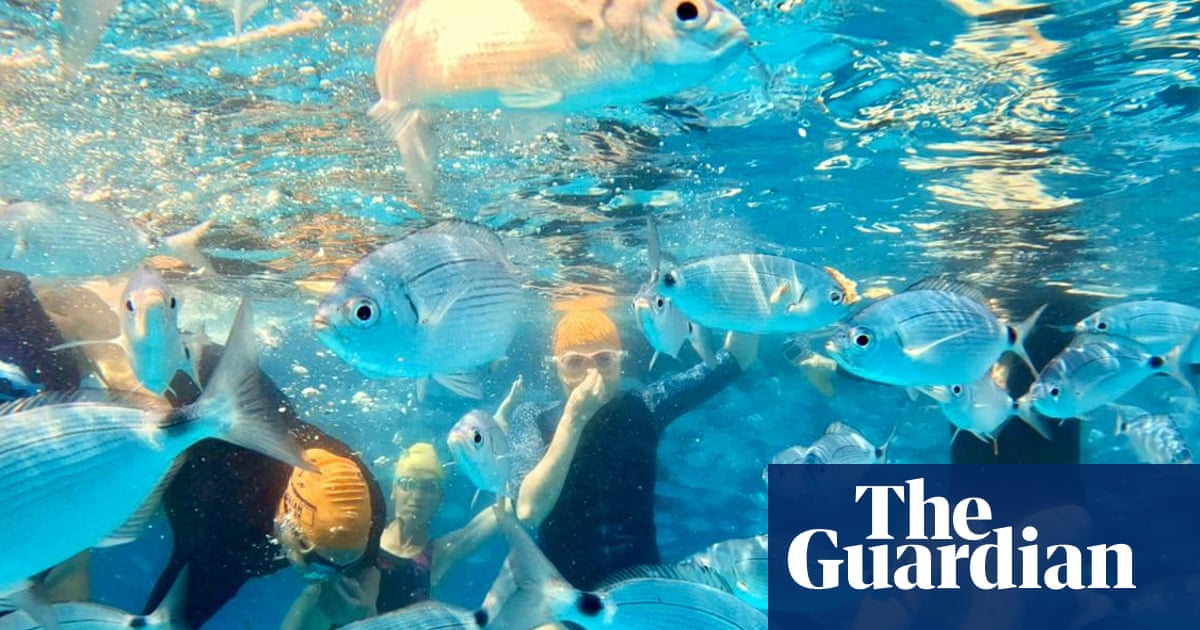
My swimming is far from sophisticated – my strokes are messy and I am mostly kicking from the knees. Still, I manage to move forward, albeit slowly, hugging the coastline of Turkey’s Lycian Way, turning a corner and entering an area of calm. The water is blue-green. Fish glide purposefully beneath, and I’m uplifted when I see a turtle navigating around a rock on the seabed.
I came to Turkey with SwimTrek, a Brighton-based company offering guided open-water swim tours. The plan is to complete 25km over five days. On the one hand, it is a holiday; but for me, the combination of swimming and the sea has become something more than that.
It began in Croatia in June 2024, eight months after my mother died unexpectedly, when a friend persuaded me to sign up to swim 3km a day for a week.
I had been feeling lost as I tried to come to terms with my mum not being here any more, and generally anxious, made worse by sleepless nights. Even on calm days, at times it felt difficult to breathe, the tightness in the throat unrelenting.
The only thing that seemed to help was swimming, especially with the focus on the Croatia challenge. My preparation was mostly in the pool, pretty much all of it breaststroke.
I had a rude awakening on the first day of the trip when I tried to swim either breast or backstroke – the latter steering me wildly off course. On day two I was kitted out with flippers and one of the SwimTrek guides taught me the basic front crawl technique. From that point, my confidence in the sea grew.
The sensation of being immersed in the open water is difficult to describe, but it brings me instant relief. I feel weightless yet anchored by the buoyancy. The rhythmic movement while watching the sea life helps to clear my mind of clutter.
This is a far cry from my early experience of swimming. Growing up in the south London town of Croydon, the closest I got to the water was a municipal pool. I was taken there by my mum. I would bob around in the freezing water of the children’s pool while she would swim laps in the adult one.
Going swimming in those days – the 1980s – was synonymous with verrucas and posters featuring cartoon images warning against “bombing” and “heavy petting”. The latter made me and other children giggle although none of us really knew what it meant.
The changing rooms were grim and you would travel home with wet hair, laden down by a damp towel and stink of chlorine for days. The highlight was a post-pool Curly Wurly from the snack machine.
On a hot summer’s day, my mum would take us on the train to Brighton. I would go reluctantly, more enthused by amusement arcades than the sea.
But I was lucky. There were glimmers of the sea winning me over. With an Italian father, every two years we would go on holiday to Italy, travelling by train from the UK to see relatives in Turin and then along the Mediterranean coast to see those in Sicily, where my dad was born.
When we were at the beach, my mum would swim up and down, seemingly for hours. I would look out for her now and then from the shore.
It is only now, since I have started swimming myself, that I wonder what those swims meant to her.
My mum lived with depression and anxiety, and I believe the sea might have given her the same kind of respite it has given me.
I don’t know because we never spoke about it. The only time we really talked about her swimming was when she called needing help to buy a cap, which had to be of a particular variety, or goggles, online.
My mum, who was 73 when she died, did other things to keep active, too – going to the gym every morning, at least until Covid, and she loved playing tennis and walking.
After years of talking about it, my parents moved to Bexhill-on-Sea in East Sussex a few years before she died. So now, whenever I return to the UK from Italy, Bexhill is where I go. I appreciate the UK coastline much more and find that walking by the sea when there, or even just listening to it for a few minutes, helps to centre me. Now and then, I brave a cold-water dip.
But it is the swim tours that have become a powerful source of all-round wellbeing, helped also by a welcoming swimming community and new friendships made. A year after Croatia, I did a 4km-a-day trip in Greece, where I celebrated my 50th birthday.
I managed to complete the Turkey one, too, feeling a huge sense of achievement and absolutely no shame about being the slowest in the group.
I’m already planning next year’s swim. And even though I’m sad that I can’t tell my mum about it, the sea makes me feel connected to her.
Read the full story at The Guardian ↗
My mother was a keen swimmer, and she lived with depression. I wonder if she found the same respite in the water that has helped heal me since she passed away. It was early…
This lens runs the verified story through Cinnamon's AI — wired in the next step.
It was early morning in late September, off the coast of Kaş in Turkey. Watching the slightly choppy sea from a boat, the last thing I felt like doing was embarking on another 5km (3-mile) swim. Mind fog had sapped my energy, and my mood was decidedly Eeyore-like. But as I pulled on my cap and flippers, adjusted my goggles and took the plunge, something shifted.
Head in the water, the knotted feeling in my throat began to loosen. Breathing came properly. There was respite.
My swimming is far from sophisticated – my strokes are messy and I am mostly kicking from the knees. Still, I manage to move forward, albeit slowly, hugging the coastline of Turkey’s Lycian Way, turning a corner and entering an area of calm. The water is blue-green. Fish glide purposefully beneath, and I’m uplifted when I see a turtle navigating around a rock on the seabed.
I came to Turkey with SwimTrek, a Brighton-based company offering guided open-water swim tours. The plan is to complete 25km over five days. On the one hand, it is a holiday; but for me, the combination of swimming and the sea has become something more than that.
It began in Croatia in June 2024, eight months after my mother died unexpectedly, when a friend persuaded me to sign up to swim 3km a day for a week.
I had been feeling lost as I tried to come to terms with my mum not being here any more, and generally anxious, made worse by sleepless nights. Even on calm days, at times it felt difficult to breathe, the tightness in the throat unrelenting.
The only thing that seemed to help was swimming, especially with the focus on the Croatia challenge. My preparation was mostly in the pool, pretty much all of it breaststroke.
I had a rude awakening on the first day of the trip when I tried to swim either breast or backstroke – the latter steering me wildly off course. On day two I was kitted out with flippers and one of the SwimTrek guides taught me the basic front crawl technique. From that point, my confidence in the sea grew.
The sensation of being immersed in the open water is difficult to describe, but it brings me instant relief. I feel weightless yet anchored by the buoyancy. The rhythmic movement while watching the sea life helps to clear my mind of clutter.
This is a far cry from my early experience of swimming. Growing up in the south London town of Croydon, the closest I got to the water was a municipal pool. I was taken there by my mum. I would bob around in the freezing water of the children’s pool while she would swim laps in the adult one.
Going swimming in those days – the 1980s – was synonymous with verrucas and posters featuring cartoon images warning against “bombing” and “heavy petting”. The latter made me and other children giggle although none of us really knew what it meant.
The changing rooms were grim and you would travel home with wet hair, laden down by a damp towel and stink of chlorine for days. The highlight was a post-pool Curly Wurly from the snack machine.
On a hot summer’s day, my mum would take us on the train to Brighton. I would go reluctantly, more enthused by amusement arcades than the sea.
But I was lucky. There were glimmers of the sea winning me over. With an Italian father, every two years we would go on holiday to Italy, travelling by train from the UK to see relatives in Turin and then along the Mediterranean coast to see those in Sicily, where my dad was born.
When we were at the beach, my mum would swim up and down, seemingly for hours. I would look out for her now and then from the shore.
It is only now, since I have started swimming myself, that I wonder what those swims meant to her.
My mum lived with depression and anxiety, and I believe the sea might have given her the same kind of respite it has given me.
I don’t know because we never spoke about it. The only time we really talked about her swimming was when she called needing help to buy a cap, which had to be of a particular variety, or goggles, online.
My mum, who was 73 when she died, did other things to keep active, too – going to the gym every morning, at least until Covid, and she loved playing tennis and walking.
After years of talking about it, my parents moved to Bexhill-on-Sea in East Sussex a few years before she died. So now, whenever I return to the UK from Italy, Bexhill is where I go. I appreciate the UK coastline much more and find that walking by the sea when there, or even just listening to it for a few minutes, helps to centre me. Now and then, I brave a cold-water dip.
But it is the swim tours that have become a powerful source of all-round wellbeing, helped also by a welcoming swimming community and new friendships made. A year after Croatia, I did a 4km-a-day trip in Greece, where I celebrated my 50th birthday.
I managed to complete the Turkey one, too, feeling a huge sense of achievement and absolutely no shame about being the slowest in the group.
I’m already planning next year’s swim. And even though I’m sad that I can’t tell my mum about it, the sea makes me feel connected to her.
Read the full story at The Guardian ↗
This lens runs the verified story through Cinnamon's AI — wired in the next step.
- My mother was a keen swimmer, and she lived with depression.
- I wonder if she found the same respite in the water that has helped heal me since she passed away.
- It was early…