IDF accused of ‘field execution’ of Palestinian driver bringing aid into Gaza
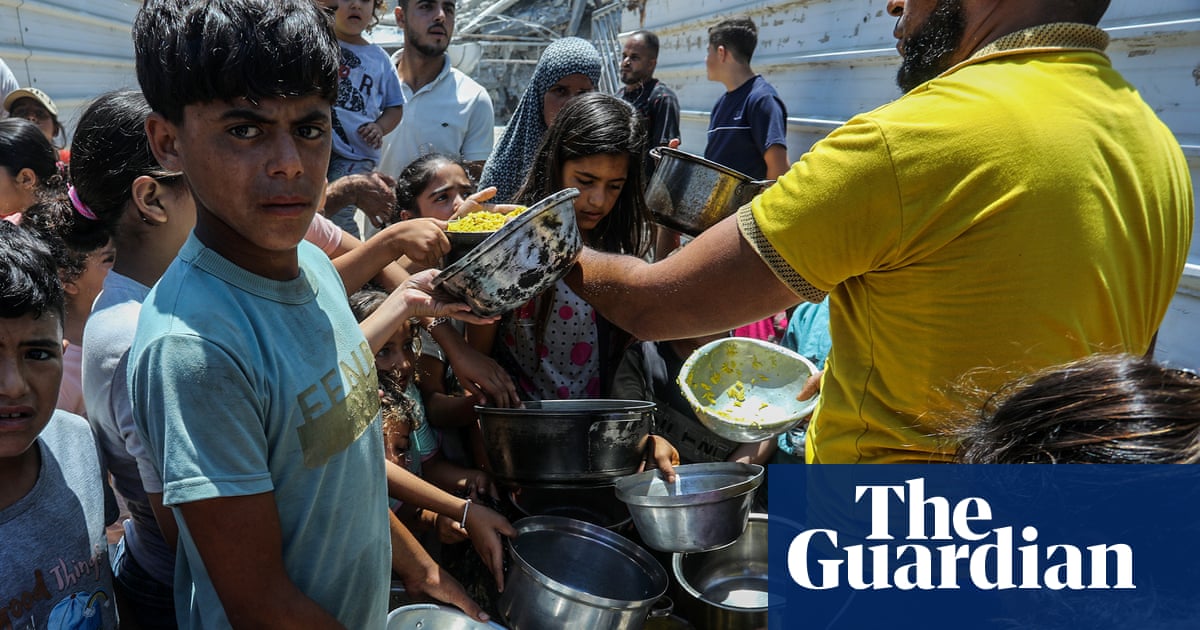
A Palestinian driver bringing food aid from the World Central Kitchen (WCK) into Gaza has been killed by an Israeli soldier “in a field execution”, according to witnesses and the local truckers association, which said it may suspend operations in protest.
Ahmad Esleem was shot in the head on Wednesday when an aid convoy stopped because of a breakdown to one truck soon after entering Gaza, according to three accounts. Israeli soldiers ordered the drivers to dismount and one of them shot Esleem in the head when his hands were raised.
Another driver in the four-truck convoy, Diaa Mansour, said the shooting happened on the Philadelphi corridor, a military road on the southern edge of the Gaza strip.
“After the truck broke down, we waited for authorisation to get out and inspect it, because every movement we make has to be coordinated in advance,” he said. “While we were waiting, an Israeli military vehicle arrived. The soldiers ordered Ahmad and me to get out of our trucks, and then they ordered another driver, Alaa Shaat, to get out as well. The driver at the front of the convoy, Fares Muheisen, remained inside his truck and didn’t get out.
“They made us stand by the side of the road. They ordered me to take off my clothes and forced me to sit under the sun,” Mansour said. “Then they brought Ahmad out of his truck. One of the soldiers began talking to Ahmad while he stood with his hands raised. Ahmad did not speak Hebrew, and it seemed the soldiers did not understand his Arabic. Suddenly, they shot him. He was hit in the head and died at the scene. It appeared they were trying to find out why we had stopped, but they did not understand the situation and opened fire immediately, without any discussion or attempt to communicate.”
Jihad Esleem, the deputy head of the Association of Transport Companies in Gaza and a distant relative of the victim, said that Wednesday’s convoy had been “100%” coordinated through the UN World Food Programme and the WCK food charity, and had just entered Gaza through the only crossing point still functioning for aid shipments.
“An Israeli officer and several soldiers approached the drivers, asked why they were there, then ordered all of them out of their trucks. They assaulted the drivers, beat them, and forced them to strip,” Esleem said. “The moment Ahmad raised his hands in surrender, one of the soldiers drew his M16 rifle and shot him directly in the head,” he said. “It was a field execution and a deliberate killing of a civilian driver who had complied with all instructions. He was wearing his orange safety vest and carried all the required permits, security clearances, and coordination that had been approved by the IDF [Israel Defense Forces].”
Esleem’s employers, Iyad Qamri Trading and Public Transport Company, also said that he had been killed at close range by a soldier after the convoy he was in had come to a halt, and two drivers were ordered to dismount by an army patrol.
A photograph of Ahmad Esleem’s body on arrival in hospital showed his head heavily bandaged around what appeared to be a serious wound. Ahmad Esleem, a 30-year-old from Deir al-Balah, was married, with two children under the age of two.
Eyad Esleem, the owner of Iyad Qamri and Jihad’s brother, said: “Drivers leave their homes at 3 am, leaving behind their wives and children, and one of them may return to his family as a lifeless body. Ahmed left behind a one-month-old baby and a young daughter. Since the incident happened, five drivers from my company have told me that they will not return to work at the crossing under any circumstances. They have resigned. Those who remain are not continuing because they want to, but because they are forced to provide for their families.”
The IDF confirmed the shooting incident but gave a different version of the sequence of events. “On Wednesday, IDF troops identified three aid truck drivers who had stopped along the Philadelphi Corridor and exited their trucks contrary to established procedures,” a military spokesperson said. IDF troops operating in the area detained the drivers for questioning. Simultaneously, the driver of another truck that had stopped at a nearby roadblock ran toward the troops. The troops initiated the suspect apprehension protocol and, after perceiving an immediate threat, opened fire toward him.
“As a result of the fire, the driver was injured. The troops provided him with initial medical treatment at the scene. He was later transferred, in coordination with the Red Cross, for further medical treatment,” the military spokesperson said, adding that the incident was under review.
Truckers from private companies are routinely hired by the UN and other humanitarian agencies to transport food and other essential goods into Gaza and around the strip. The flow of aid into the territory has increased markedly since a partially observed ceasefire in October, but with the Israeli army still occupying more than 60% of the territory and continuing to carry out strikes aimed at targets deemed to be linked to Hamas, working as a lorry driver is an extremely dangerous job.
On 21 May, two Palestinian drivers were alleged to have been shot in similar circumstances to Ahmad Esleem. According to local accounts, Muhammad al-Heela and Mahmoud Awad were detained by Israeli soldiers for some days and then released near a roundabout in Rafah, and were then shot by their captors after they had walked a few metres away.
The IDF told the association that the drivers’ route had not been coordinated with the military, but Esleem denied the claim, insisting it had been registered and approved.
The previous month, Israeli soldiers shot dead two drivers working for the UN child protection agency Unicef, as they were filling their water trucks at an established distribution point at Mansoura in northern Gaza. Questioned on the incident, the IDF said its soldiers had “perceived a threat”, without providing further details.
In April 2024, seven WCK employees were killed by an Israeli air strike on a convoy in southern Gaza. The victims were from the UK, Australia, Poland and Palestine, as well as a US-Canada dual citizen.
“Drivers are subjected to daily violations, including beatings, abuse, humiliation, and being forced to stand for long hours under the sun,” Esleem said. “Even more disturbing, the soldier who shot Ahmad talked to the three surviving drivers afterward and threatened them, saying they would meet the same fate as Ahmad. This clearly indicates that the attack was deliberate.”
The Transport Companies’ Association is due to hold an emergency board meeting on Friday to discuss the suspension of operations at Keren Shalom crossing.
“It is important that everyone understand that the Palestinian truck driver is the vital link and the first point of contact between the Israeli side and Gaza. They should not be prevented from carrying out this role,” Esleem said.
On top of the risks from armed forces, he said that the association’s drivers were being put further at risk by being asked to smuggle contraband, mostly cigarettes, by both soldiers and traders.
“I hold the IDF responsible for the continuation of these dangerous acts, because truck drivers have no role in smuggling,” Esleem said. He added that there had been an incident on Wednesdays of traders attempting to smuggle cigarettes hidden inside hollowed-out pineapples.
Read the full story at The Guardian ↗
Ahmad Esleem, a 30-year-old driver for a private transport company, was killed by Israeli soldiers on Wednesday at the Philadelphi Corridor in southern Gaza while accompanying a four-truck aid convoy. The convoy, coordinated through the UN World Food Programme and World Central Kitchen, had stopped because one truck broke down. According to three eyewitness accounts from other drivers, soldiers ordered the drivers to dismount, then shot Esleem in the head while his hands were raised. The IDF confirmed the shooting but provided a different sequence: it stated that drivers had exited their trucks contrary to established procedures, and that one driver ran toward troops, triggering a threat response. The shooting has prompted the Gaza Transport Companies Association to consider suspending operations at the crossing, with at least five drivers from one company resigning. This incident follows other reported shootings of Palestinian drivers in May and earlier strikes that killed humanitarian workers.
Read the full story at The Guardian ↗
A Palestinian driver bringing food aid from the World Central Kitchen (WCK) into Gaza has been killed by an Israeli soldier “in a field execution”, according to witnesses and the local truckers association, which said it may suspend operations in protest.
Ahmad Esleem was shot in the head on Wednesday when an aid convoy stopped because of a breakdown to one truck soon after entering Gaza, according to three accounts. Israeli soldiers ordered the drivers to dismount and one of them shot Esleem in the head when his hands were raised.
Another driver in the four-truck convoy, Diaa Mansour, said the shooting happened on the Philadelphi corridor, a military road on the southern edge of the Gaza strip.
“After the truck broke down, we waited for authorisation to get out and inspect it, because every movement we make has to be coordinated in advance,” he said. “While we were waiting, an Israeli military vehicle arrived. The soldiers ordered Ahmad and me to get out of our trucks, and then they ordered another driver, Alaa Shaat, to get out as well. The driver at the front of the convoy, Fares Muheisen, remained inside his truck and didn’t get out.
“They made us stand by the side of the road. They ordered me to take off my clothes and forced me to sit under the sun,” Mansour said. “Then they brought Ahmad out of his truck. One of the soldiers began talking to Ahmad while he stood with his hands raised. Ahmad did not speak Hebrew, and it seemed the soldiers did not understand his Arabic. Suddenly, they shot him. He was hit in the head and died at the scene. It appeared they were trying to find out why we had stopped, but they did not understand the situation and opened fire immediately, without any discussion or attempt to communicate.”
Jihad Esleem, the deputy head of the Association of Transport Companies in Gaza and a distant relative of the victim, said that Wednesday’s convoy had been “100%” coordinated through the UN World Food Programme and the WCK food charity, and had just entered Gaza through the only crossing point still functioning for aid shipments.
“An Israeli officer and several soldiers approached the drivers, asked why they were there, then ordered all of them out of their trucks. They assaulted the drivers, beat them, and forced them to strip,” Esleem said. “The moment Ahmad raised his hands in surrender, one of the soldiers drew his M16 rifle and shot him directly in the head,” he said. “It was a field execution and a deliberate killing of a civilian driver who had complied with all instructions. He was wearing his orange safety vest and carried all the required permits, security clearances, and coordination that had been approved by the IDF [Israel Defense Forces].”
Esleem’s employers, Iyad Qamri Trading and Public Transport Company, also said that he had been killed at close range by a soldier after the convoy he was in had come to a halt, and two drivers were ordered to dismount by an army patrol.
A photograph of Ahmad Esleem’s body on arrival in hospital showed his head heavily bandaged around what appeared to be a serious wound. Ahmad Esleem, a 30-year-old from Deir al-Balah, was married, with two children under the age of two.
Eyad Esleem, the owner of Iyad Qamri and Jihad’s brother, said: “Drivers leave their homes at 3 am, leaving behind their wives and children, and one of them may return to his family as a lifeless body. Ahmed left behind a one-month-old baby and a young daughter. Since the incident happened, five drivers from my company have told me that they will not return to work at the crossing under any circumstances. They have resigned. Those who remain are not continuing because they want to, but because they are forced to provide for their families.”
The IDF confirmed the shooting incident but gave a different version of the sequence of events. “On Wednesday, IDF troops identified three aid truck drivers who had stopped along the Philadelphi Corridor and exited their trucks contrary to established procedures,” a military spokesperson said. IDF troops operating in the area detained the drivers for questioning. Simultaneously, the driver of another truck that had stopped at a nearby roadblock ran toward the troops. The troops initiated the suspect apprehension protocol and, after perceiving an immediate threat, opened fire toward him.
“As a result of the fire, the driver was injured. The troops provided him with initial medical treatment at the scene. He was later transferred, in coordination with the Red Cross, for further medical treatment,” the military spokesperson said, adding that the incident was under review.
Truckers from private companies are routinely hired by the UN and other humanitarian agencies to transport food and other essential goods into Gaza and around the strip. The flow of aid into the territory has increased markedly since a partially observed ceasefire in October, but with the Israeli army still occupying more than 60% of the territory and continuing to carry out strikes aimed at targets deemed to be linked to Hamas, working as a lorry driver is an extremely dangerous job.
On 21 May, two Palestinian drivers were alleged to have been shot in similar circumstances to Ahmad Esleem. According to local accounts, Muhammad al-Heela and Mahmoud Awad were detained by Israeli soldiers for some days and then released near a roundabout in Rafah, and were then shot by their captors after they had walked a few metres away.
The IDF told the association that the drivers’ route had not been coordinated with the military, but Esleem denied the claim, insisting it had been registered and approved.
The previous month, Israeli soldiers shot dead two drivers working for the UN child protection agency Unicef, as they were filling their water trucks at an established distribution point at Mansoura in northern Gaza. Questioned on the incident, the IDF said its soldiers had “perceived a threat”, without providing further details.
In April 2024, seven WCK employees were killed by an Israeli air strike on a convoy in southern Gaza. The victims were from the UK, Australia, Poland and Palestine, as well as a US-Canada dual citizen.
“Drivers are subjected to daily violations, including beatings, abuse, humiliation, and being forced to stand for long hours under the sun,” Esleem said. “Even more disturbing, the soldier who shot Ahmad talked to the three surviving drivers afterward and threatened them, saying they would meet the same fate as Ahmad. This clearly indicates that the attack was deliberate.”
The Transport Companies’ Association is due to hold an emergency board meeting on Friday to discuss the suspension of operations at Keren Shalom crossing.
“It is important that everyone understand that the Palestinian truck driver is the vital link and the first point of contact between the Israeli side and Gaza. They should not be prevented from carrying out this role,” Esleem said.
On top of the risks from armed forces, he said that the association’s drivers were being put further at risk by being asked to smuggle contraband, mostly cigarettes, by both soldiers and traders.
“I hold the IDF responsible for the continuation of these dangerous acts, because truck drivers have no role in smuggling,” Esleem said. He added that there had been an incident on Wednesdays of traders attempting to smuggle cigarettes hidden inside hollowed-out pineapples.
Read the full story at The Guardian ↗
Ahmad Esleem, a 30-year-old married father of two, was shot in the head and killed on Wednesday at the Philadelphi Corridor, a military road on the southern edge of Gaza. Esleem was part of a four-truck aid convoy that had stopped due to a truck breakdown and was waiting for authorization to inspect the vehicle. The convoy had been coordinated through the UN World Food Programme and World Central Kitchen, according to the Gaza Transport Companies Association. Eyewitnesses say Israeli soldiers ordered drivers to dismount, then shot Esleem in the head while his hands were raised. Esleem was wearing an orange safety vest and carried security clearances and permits approved by the IDF. The IDF stated that soldiers identified drivers who had exited their trucks contrary to established procedures, and that another driver ran toward troops, prompting soldiers to perceive an immediate threat and open fire. The incident was a 'field execution' and 'deliberate killing of a civilian driver who had complied with all instructions.' The shooting was an act of negligence due to communication failure, with soldiers failing to understand Arabic and opening fire without discussion. The Transport Companies Association is considering suspending operations at Keren Shalom crossing in protest. At least five drivers from Esleem's company have resigned; others remain working only out of financial necessity. Drivers are routinely subjected to beatings, abuse, humiliation, and threats by armed forces. The incident represents a pattern: two other Palestinian drivers were allegedly shot in May under similar circumstances, and UN workers were killed in previous incidents.
Read the full story at The Guardian ↗
- A Palestinian driver, Ahmad Esleem, was shot and killed by Israeli soldiers on Wednesday at the Philadelphi Corridor while with a UN World Food Programme-coordinated aid convoy that had stopped due to a truck breakdown.
- Eyewitnesses and the Gaza Transport Companies Association characterize the shooting as a 'field execution', stating Esleem had his hands raised and was wearing a safety vest with proper clearances; the IDF says troops perceived an immediate threat after he ran toward them.
- The incident has prompted the transport association to consider suspending operations at the Keren Shalom crossing and has caused multiple drivers to resign, citing safety concerns and alleged threats from Israeli soldiers.