Iran-aligned Houthis claim they attacked oil refinery in Saudi Arabia
Yemen’s Tehran-aligned Houthis have claimed responsibility for an attack on a refinery in Saudi Arabia, two days after the kingdom signed a defence pact with Turkey and Pakistan in response to growing regional instability caused by the US-Israel war on Iran.
The attack early on Sunday came after Iran said tough new demands would have to be met before it would reopen the strait of Hormuz, and after the United Arab Emirates said one of its ships had been targeted by an Iranian missile, as a deal to open the waterway remained out of reach.
Iran’s supreme national security council said the strait would not open until the US corrected its “behaviour”.
The US must never threaten Iran again and permanently end the war with Tehran and its armed allies in the region, said the statement from the council’s secretary, Mohammad Bagher Zolghadr, a former commander in the Islamic Revolutionary Guard Corps (IRGC).
He added that the US must also end the naval blockade of Iranian ports and withdraw its military from the area, “completely compensate” Iran for war damage, lift sanctions and “unconditionally” release frozen assets.
There was no immediate comment from the US. According to the memorandum of understanding (MoU) signed by the US and Iran in June, a timetable to end sanctions and a plan for compensation would be part of a final peace deal, and negotiations would address frozen assets.
The Iranian foreign minister, Abbas Araghchi, said on Saturday that Iran and Oman were close to reaching an agreement on navigation through the strait, “specifically the determination of a transit route”.
But the waterway’s reopening was contingent on other conditions, Araghchi said, in remarks shared on social media. He blamed the situation on what he called the US violation of the June MoU.
Oman, which is mediating and has made relatively few comments on the Hormuz talks, said on Saturday that the discussions were continuing “in a positive and constructive atmosphere”. It condemned attacks on ships in the strait.
When it comes to decision-making in Tehran, the final say rests with the supreme leader, Mojtaba Khamenei, who has not been seen in public since an airstrike killed his father and predecessor on the first day of the war.
State media said on Sunday that the Iranian president, Masoud Pezeshkian, met Khamenei in late July.
Pezeshkian has given differing accounts in recent weeks about his access to the supreme leader, saying in July that interactions with Khamenei were “increasing day by day”, only to note weeks later that communicating with him was “very difficult”.
With Iran and the US still arguing over the parameters for peace, the Houthis last month declared a naval blockade against Saudi Arabia in the Red Sea, citing what they said was a Saudi siege on them, an allegation Riyadh denies.
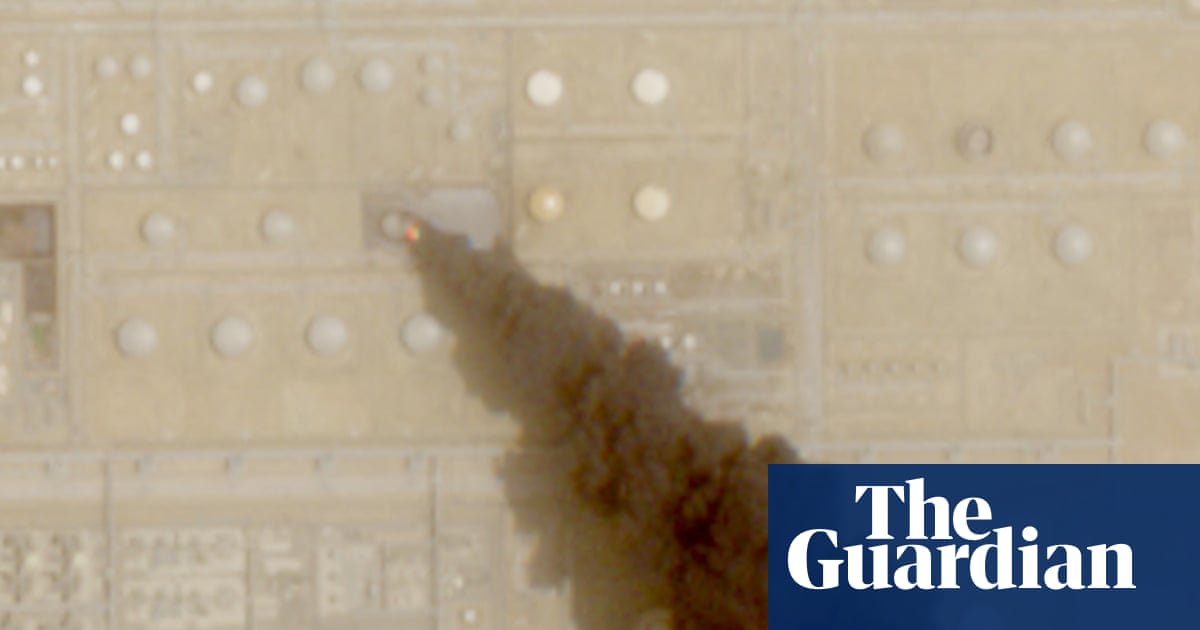
The Saudi energy ministry said a fire had broken out at Aramco’s Jazan refinery early on Sunday but was later extinguished with no injuries and authorities were dealing with the incident, without giving a cause.
The Houthis used a drone to target the refinery in south-west Saudi Arabia, Yahya Saree, a military spokesperson for the rebel group, said in a post on X. They had struck Aramco sites before in Jazan, which processes 400,000 barrels of crude oil a day. They had also hit Yanbu, an oil export hub on the Red Sea.
In a separate statement, Saree said the Houthis had carried out missile and drone strikes on the Yemeni Red Sea port city of Mocha, which is controlled by the country’s internationally recognised, Saudi-backed governing body in Aden.
The UAE said on Saturday that a ship affiliated with its state oil company had been targeted by an Iranian missile. There was no immediate comment from Iran, whose IRGC has previously attacked ships, saying they had not coordinated their passage through the strait with Tehran.
Tehran and its allied Shia armed groups have been striking Saudi Arabia and other Gulf states and blockading their energy shipments since the US and Israel launched attacks on Iran on 28 February.
The escalation of the conflict, which has disrupted global energy supplies and rattled the world’s economy, prompted Saudi Arabia on Friday to form an alliance with US allies Turkey and Pakistan.
The accord is intended to strengthen collective deterrence against any act of aggression and stipulates that an armed attack against any of the three would be regarded as an attack on all.
The Turkish foreign minister, Hakan Fidan, said the alliance was not directed against Iran or any other country, but rather served as a general pledge to support the security of Turkey, Saudi Arabia and Pakistan.
It was not clear whether or how either Pakistan or Turkey would join in any Saudi response to the latest attacks.
Read the full story at The Guardian ↗
Drone strike comes after Riyadh signs defence pact and Tehran issues tough demands to reopen strait of Hormuz. Middle East crisis live – latest updates. Yemen’s Tehran-aligned…
This lens runs the verified story through Cinnamon's AI — wired in the next step.
Yemen’s Tehran-aligned Houthis have claimed responsibility for an attack on a refinery in Saudi Arabia, two days after the kingdom signed a defence pact with Turkey and Pakistan in response to growing regional instability caused by the US-Israel war on Iran.
The attack early on Sunday came after Iran said tough new demands would have to be met before it would reopen the strait of Hormuz, and after the United Arab Emirates said one of its ships had been targeted by an Iranian missile, as a deal to open the waterway remained out of reach.
Iran’s supreme national security council said the strait would not open until the US corrected its “behaviour”.
The US must never threaten Iran again and permanently end the war with Tehran and its armed allies in the region, said the statement from the council’s secretary, Mohammad Bagher Zolghadr, a former commander in the Islamic Revolutionary Guard Corps (IRGC).
He added that the US must also end the naval blockade of Iranian ports and withdraw its military from the area, “completely compensate” Iran for war damage, lift sanctions and “unconditionally” release frozen assets.
There was no immediate comment from the US. According to the memorandum of understanding (MoU) signed by the US and Iran in June, a timetable to end sanctions and a plan for compensation would be part of a final peace deal, and negotiations would address frozen assets.
The Iranian foreign minister, Abbas Araghchi, said on Saturday that Iran and Oman were close to reaching an agreement on navigation through the strait, “specifically the determination of a transit route”.
But the waterway’s reopening was contingent on other conditions, Araghchi said, in remarks shared on social media. He blamed the situation on what he called the US violation of the June MoU.
Oman, which is mediating and has made relatively few comments on the Hormuz talks, said on Saturday that the discussions were continuing “in a positive and constructive atmosphere”. It condemned attacks on ships in the strait.
When it comes to decision-making in Tehran, the final say rests with the supreme leader, Mojtaba Khamenei, who has not been seen in public since an airstrike killed his father and predecessor on the first day of the war.
State media said on Sunday that the Iranian president, Masoud Pezeshkian, met Khamenei in late July.
Pezeshkian has given differing accounts in recent weeks about his access to the supreme leader, saying in July that interactions with Khamenei were “increasing day by day”, only to note weeks later that communicating with him was “very difficult”.
With Iran and the US still arguing over the parameters for peace, the Houthis last month declared a naval blockade against Saudi Arabia in the Red Sea, citing what they said was a Saudi siege on them, an allegation Riyadh denies.
The Saudi energy ministry said a fire had broken out at Aramco’s Jazan refinery early on Sunday but was later extinguished with no injuries and authorities were dealing with the incident, without giving a cause.
The Houthis used a drone to target the refinery in south-west Saudi Arabia, Yahya Saree, a military spokesperson for the rebel group, said in a post on X. They had struck Aramco sites before in Jazan, which processes 400,000 barrels of crude oil a day. They had also hit Yanbu, an oil export hub on the Red Sea.
In a separate statement, Saree said the Houthis had carried out missile and drone strikes on the Yemeni Red Sea port city of Mocha, which is controlled by the country’s internationally recognised, Saudi-backed governing body in Aden.
The UAE said on Saturday that a ship affiliated with its state oil company had been targeted by an Iranian missile. There was no immediate comment from Iran, whose IRGC has previously attacked ships, saying they had not coordinated their passage through the strait with Tehran.
Tehran and its allied Shia armed groups have been striking Saudi Arabia and other Gulf states and blockading their energy shipments since the US and Israel launched attacks on Iran on 28 February.
The escalation of the conflict, which has disrupted global energy supplies and rattled the world’s economy, prompted Saudi Arabia on Friday to form an alliance with US allies Turkey and Pakistan.
The accord is intended to strengthen collective deterrence against any act of aggression and stipulates that an armed attack against any of the three would be regarded as an attack on all.
The Turkish foreign minister, Hakan Fidan, said the alliance was not directed against Iran or any other country, but rather served as a general pledge to support the security of Turkey, Saudi Arabia and Pakistan.
It was not clear whether or how either Pakistan or Turkey would join in any Saudi response to the latest attacks.
Read the full story at The Guardian ↗
Yemen’s Tehran-aligned Houthis have claimed responsibility for an attack on a refinery in Saudi Arabia, two days after the kingdom signed a defence pact with Turkey and Pakistan in response to growing regional instability caused by the US-Israel war on Iran.
The attack early on Sunday came after Iran said tough new demands would have to be met before it would reopen the strait of Hormuz, and after the United Arab Emirates said one of its ships had been targeted by an Iranian missile, as a deal to open the waterway remained out of reach.
Iran’s supreme national security council said the strait would not open until the US corrected its “behaviour”.
The US must never threaten Iran again and permanently end the war with Tehran and its armed allies in the region, said the statement from the council’s secretary, Mohammad Bagher Zolghadr, a former commander in the Islamic Revolutionary Guard Corps (IRGC).
He added that the US must also end the naval blockade of Iranian ports and withdraw its military from the area, “completely compensate” Iran for war damage, lift sanctions and “unconditionally” release frozen assets.
There was no immediate comment from the US. According to the memorandum of understanding (MoU) signed by the US and Iran in June, a timetable to end sanctions and a plan for compensation would be part of a final peace deal, and negotiations would address frozen assets.
The Iranian foreign minister, Abbas Araghchi, said on Saturday that Iran and Oman were close to reaching an agreement on navigation through the strait, “specifically the determination of a transit route”.
But the waterway’s reopening was contingent on other conditions, Araghchi said, in remarks shared on social media. He blamed the situation on what he called the US violation of the June MoU.
Oman, which is mediating and has made relatively few comments on the Hormuz talks, said on Saturday that the discussions were continuing “in a positive and constructive atmosphere”. It condemned attacks on ships in the strait.
When it comes to decision-making in Tehran, the final say rests with the supreme leader, Mojtaba Khamenei, who has not been seen in public since an airstrike killed his father and predecessor on the first day of the war.
State media said on Sunday that the Iranian president, Masoud Pezeshkian, met Khamenei in late July.
Pezeshkian has given differing accounts in recent weeks about his access to the supreme leader, saying in July that interactions with Khamenei were “increasing day by day”, only to note weeks later that communicating with him was “very difficult”.
With Iran and the US still arguing over the parameters for peace, the Houthis last month declared a naval blockade against Saudi Arabia in the Red Sea, citing what they said was a Saudi siege on them, an allegation Riyadh denies.
The Saudi energy ministry said a fire had broken out at Aramco’s Jazan refinery early on Sunday but was later extinguished with no injuries and authorities were dealing with the incident, without giving a cause.
The Houthis used a drone to target the refinery in south-west Saudi Arabia, Yahya Saree, a military spokesperson for the rebel group, said in a post on X. They had struck Aramco sites before in Jazan, which processes 400,000 barrels of crude oil a day. They had also hit Yanbu, an oil export hub on the Red Sea.
In a separate statement, Saree said the Houthis had carried out missile and drone strikes on the Yemeni Red Sea port city of Mocha, which is controlled by the country’s internationally recognised, Saudi-backed governing body in Aden.
The UAE said on Saturday that a ship affiliated with its state oil company had been targeted by an Iranian missile. There was no immediate comment from Iran, whose IRGC has previously attacked ships, saying they had not coordinated their passage through the strait with Tehran.
Tehran and its allied Shia armed groups have been striking Saudi Arabia and other Gulf states and blockading their energy shipments since the US and Israel launched attacks on Iran on 28 February.
The escalation of the conflict, which has disrupted global energy supplies and rattled the world’s economy, prompted Saudi Arabia on Friday to form an alliance with US allies Turkey and Pakistan.
The accord is intended to strengthen collective deterrence against any act of aggression and stipulates that an armed attack against any of the three would be regarded as an attack on all.
The Turkish foreign minister, Hakan Fidan, said the alliance was not directed against Iran or any other country, but rather served as a general pledge to support the security of Turkey, Saudi Arabia and Pakistan.
It was not clear whether or how either Pakistan or Turkey would join in any Saudi response to the latest attacks.
Read the full story at The Guardian ↗
This lens runs the verified story through Cinnamon's AI — wired in the next step.
- Drone strike comes after Riyadh signs defence pact and Tehran issues tough demands to reopen strait of Hormuz.
- Middle East crisis live – latest updates.
- Yemen’s Tehran-aligned…