Jamaican delegation to travel to UK to lodge formal slavery reparations petition with King Charles
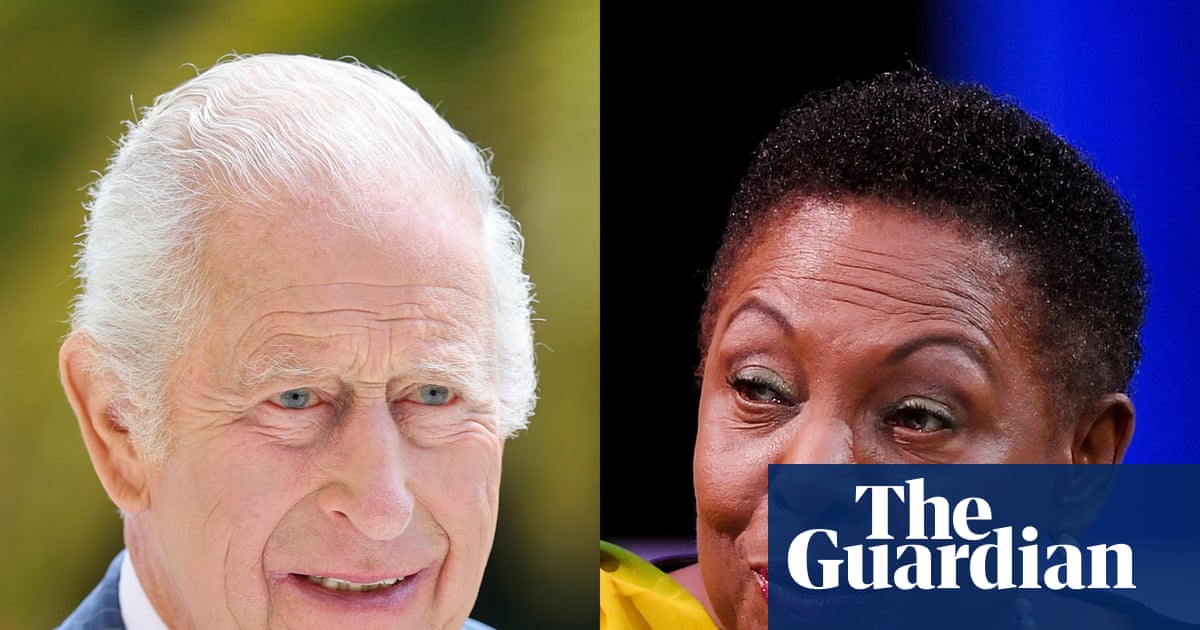
Jamaican officials will travel to the UK in September to formally lodge an unprecedented petition with King Charles to seek legal guidance on their slavery reparations claim from Britain, the country’s government announced on Tuesday.
Speaking in the parliament of the Caribbean nation, Olivia Grange, the culture minister, confirmed that the trip was planned for 6 September, and was intended to take Jamaica’s mission for reparatory justice to the next level.
The petition, first announced in June last year, asks King Charles to use his authority to request legal advice from the judicial committee of the London-based privy council, the final court of appeal for UK overseas territories and some Commonwealth countries, on whether the forced transport of Africans to Jamaica was lawful, if it constituted a crime against humanity, and whether Britain was under obligation to provide restitution to Jamaica for slavery and its enduring consequences.
The request is being made to King Charles “in his capacity as head of state of Jamaica and from whom we expect protection”, Grange said, adding that the country had full support of the Caribbean Community (Caricom).
“We intend to petition King Charles on 6 September – an historic day,” she said. “On this date in 1781, the Zong slave ship departed West Africa for Jamaica with 442 enslaved Africans.
“Throughout the journey the ship ran into trouble and the captain kept throwing enslaved Africans overboard in order to claim insurance for loss of cargo. One hundred and forty enslaved Africans were killed. The ship finally arrived in Black River on 21 December, 1781.”
The minister added that during Hurricane Melissa last year, which devastated Black River, a monument erected in the town to remember the murdered Africans was “the only monument standing as if to remind us of our duty to seek reparatory justice”.
Grange pointed to the fact that, at emancipation in 1834, the planters were compensated for loss of their “so-called ‘property’”, with England offering £20m in compensation “through a loan that was finally settled in 2015”. She added that “newly emancipated Africans were forced to provide years of additional free labour to the planters, thereby literally paying their enslavers for their freedom.”
The minister said that the government of Jamaica has set an example with internal reparations to the country’s Rastafarian community through an apology and land transfer.
The announcement follows the unveiling of a new manifesto, from the Caribbean Community Reparations Commission outlining the “moral, ethical and legal case for reparations” for the enslavement of African people.
Laleta Davis Mattis, chair of Jamaica’s National Council on Reparations (NCR) described the filing of the petition as a “significant milestone in our long pursuit of reparatory justice”.
“This petition reflects the collaborative work of the NCR operating through its legal sub-committee, chaired by Bert Samuels, attorney-at-law, working alongside a team of UK lawyers. On behalf of the council, I extend particular thanks to Frank Phipps KC, whose legal acuity in proposing this route – turning the very vestiges of our colonial legal past to the service of reparatory justice – gave shape to the strategy we have now brought to fruition,” she told the Guardian.
Deputy chair of the country’s National Reparations Council, Bert Samuels said that Jamaica’s case is now backed by the UN’s 25 March landmark resolution declaring the trafficking of enslaved Africans as the gravest crime against humanity.
Samuels said he will be part of a team of lawyers, headed by Jamaica’s attorney general, Derrick McKoy, who will go to the privy council to argue on behalf of the formerly enslaved people and their descendants.
He added that the country was resolute in its fight for justice, even after the UK insisted it will not pay slavery reparations and abstained from the UN vote, which Samuels described as a shameful act.
“We have learned from the 300-year struggle for freedom itself, which seemed unattainable when we were enslaved. People who have been tied down for three centuries into slavery must have felt hopeless at times. So we are used to a struggle that seems hopeless at times,” he said.
He added that if there was push-back from the privy council there would be an international outcry. “The international avalanche of support for freedom and justice of oppressed people, of Jews who were oppressed, of the Japanese who were oppressed, of other persons in minorities in Canada and New Zealand, all those minorities have come together and have sought justice for themselves. Let us hear (the privy council) say no, and then we will take to the streets.”
Read the full story at The Guardian ↗
Jamaica's government announced plans to formally petition King Charles on 6 September, requesting he use his authority as Jamaica's head of state to seek legal guidance from the UK's Privy Council on slavery reparations. The petition will ask the court to determine whether the forced transport of Africans constituted a lawful act, a crime against humanity, and whether Britain bears legal obligation to provide restitution. The date coincides with the 1781 departure of the slave ship Zong, which killed 142 enslaved Africans during transport. Jamaica's attorney general and legal team will argue the case, supported by Caricom members. The UK has previously stated it will not pay reparations and abstained from a March UN vote declaring the transatlantic slave trade a crime against humanity.
Read the full story at The Guardian ↗
Jamaican officials will travel to the UK in September to formally lodge an unprecedented petition with King Charles to seek legal guidance on their slavery reparations claim from Britain, the country’s government announced on Tuesday.
Speaking in the parliament of the Caribbean nation, Olivia Grange, the culture minister, confirmed that the trip was planned for 6 September, and was intended to take Jamaica’s mission for reparatory justice to the next level.
The petition, first announced in June last year, asks King Charles to use his authority to request legal advice from the judicial committee of the London-based privy council, the final court of appeal for UK overseas territories and some Commonwealth countries, on whether the forced transport of Africans to Jamaica was lawful, if it constituted a crime against humanity, and whether Britain was under obligation to provide restitution to Jamaica for slavery and its enduring consequences.
The request is being made to King Charles “in his capacity as head of state of Jamaica and from whom we expect protection”, Grange said, adding that the country had full support of the Caribbean Community (Caricom).
“We intend to petition King Charles on 6 September – an historic day,” she said. “On this date in 1781, the Zong slave ship departed West Africa for Jamaica with 442 enslaved Africans.
“Throughout the journey the ship ran into trouble and the captain kept throwing enslaved Africans overboard in order to claim insurance for loss of cargo. One hundred and forty enslaved Africans were killed. The ship finally arrived in Black River on 21 December, 1781.”
The minister added that during Hurricane Melissa last year, which devastated Black River, a monument erected in the town to remember the murdered Africans was “the only monument standing as if to remind us of our duty to seek reparatory justice”.
Grange pointed to the fact that, at emancipation in 1834, the planters were compensated for loss of their “so-called ‘property’”, with England offering £20m in compensation “through a loan that was finally settled in 2015”. She added that “newly emancipated Africans were forced to provide years of additional free labour to the planters, thereby literally paying their enslavers for their freedom.”
The minister said that the government of Jamaica has set an example with internal reparations to the country’s Rastafarian community through an apology and land transfer.
The announcement follows the unveiling of a new manifesto, from the Caribbean Community Reparations Commission outlining the “moral, ethical and legal case for reparations” for the enslavement of African people.
Laleta Davis Mattis, chair of Jamaica’s National Council on Reparations (NCR) described the filing of the petition as a “significant milestone in our long pursuit of reparatory justice”.
“This petition reflects the collaborative work of the NCR operating through its legal sub-committee, chaired by Bert Samuels, attorney-at-law, working alongside a team of UK lawyers. On behalf of the council, I extend particular thanks to Frank Phipps KC, whose legal acuity in proposing this route – turning the very vestiges of our colonial legal past to the service of reparatory justice – gave shape to the strategy we have now brought to fruition,” she told the Guardian.
Deputy chair of the country’s National Reparations Council, Bert Samuels said that Jamaica’s case is now backed by the UN’s 25 March landmark resolution declaring the trafficking of enslaved Africans as the gravest crime against humanity.
Samuels said he will be part of a team of lawyers, headed by Jamaica’s attorney general, Derrick McKoy, who will go to the privy council to argue on behalf of the formerly enslaved people and their descendants.
He added that the country was resolute in its fight for justice, even after the UK insisted it will not pay slavery reparations and abstained from the UN vote, which Samuels described as a shameful act.
“We have learned from the 300-year struggle for freedom itself, which seemed unattainable when we were enslaved. People who have been tied down for three centuries into slavery must have felt hopeless at times. So we are used to a struggle that seems hopeless at times,” he said.
He added that if there was push-back from the privy council there would be an international outcry. “The international avalanche of support for freedom and justice of oppressed people, of Jews who were oppressed, of the Japanese who were oppressed, of other persons in minorities in Canada and New Zealand, all those minorities have come together and have sought justice for themselves. Let us hear (the privy council) say no, and then we will take to the streets.”
Read the full story at The Guardian ↗
Jamaican government officials plan to travel to the UK on 6 September to lodge a formal petition with King Charles requesting legal guidance on slavery reparations. The petition asks the Privy Council to determine if the forced transport of Africans to Jamaica was lawful, if it constituted a crime against humanity, and if Britain is obligated to provide restitution. The petition is made to King Charles 'in his capacity as head of state of Jamaica and from whom we expect protection'. 6 September 1781 was the date the slave ship Zong departed West Africa with 442 enslaved Africans bound for Jamaica. During the Zong's voyage, the captain threw 142 enslaved Africans overboard to claim insurance for lost cargo. A monument to those killed was the only structure standing in Black River after Hurricane Melissa, which the culture minister cited as a reminder of Jamaica's 'duty to seek reparatory justice'. England provided £20 million in compensation to planters at emancipation in 1834, finally repaid as a loan in 2015. Emancipated Africans were forced to provide additional unpaid labour, thereby 'literally paying their enslavers for their freedom'. Jamaica's National Council on Reparations described the petition as a 'significant milestone in our long pursuit of reparatory justice'. A UN resolution on 25 March declared the trafficking of enslaved Africans the gravest crime against humanity. The UK abstained from the UN vote and has stated it will not pay slavery reparations.
Read the full story at The Guardian ↗
- Jamaica's government will present a formal petition to King Charles on 6 September seeking his intervention as head of state to request legal guidance on slavery reparations from Britain.
- The petition asks the UK's Privy Council to determine whether the forced transport of Africans to Jamaica was lawful, constituted a crime against humanity, and if Britain owes restitution.
- Jamaica has selected the date deliberately—6 September 1781 marked the departure of the slave ship Zong, which murdered 142 enslaved Africans during its voyage; the petition has backing from Caricom and aligns with a UN resolution on slavery as a crime against humanity.