Kumanjayi Little Baby’s mother was not supported to protect her children while escaping domestic violence, review finds
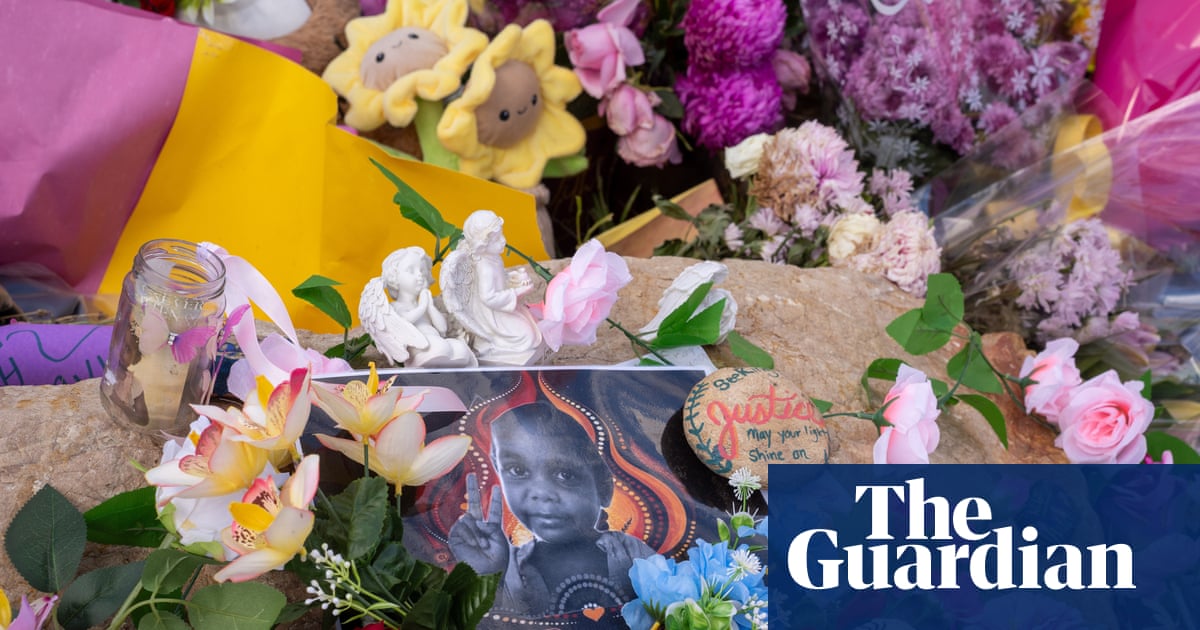
Kumanjayi Little Baby’s mother was “effectively” left alone to protect her children while also experiencing domestic violence, because child protection authorities failed to adequately assess multiple threats to her safety, a draft review has found.
But the interim report, tabled in parliament on Tuesday, found that despite those conclusions, the review was unable to draw a link between the child protection referrals and the five-year-old Warlpiri girl’s death.
“On the evidence provided, the review team have not been able to draw a nexus between the matters referred to DCF [the Department of Children and Families] and the circumstances leading to KLB’s [Kumanjayi Little Baby’s] abduction,” the report said.
The young girl, known after her death as Kumanjayi Little Baby for cultural reasons, was allegedly abducted and murdered in April by Jefferson Lewis, a man unknown to her or her family. Her disappearance sparked an intensive five-day search before her body was found, leading to an outpouring of grief and hundreds of vigils around the country. Lewis, 47, was charged with murder and is due to face court again this month.
One week after her death, the Northern Territory government announced it would commission an independent review into the family’s contact with child protection services before the girl’s death and introduce sweeping reforms to the child protection system.
The interim report was released on Tuesday, the same day that changes to the Care and Protection of Children Act, over which the NT’s children’s commissioner resigned this month, passed parliament.
The review found “the key issue in the KLB matter was not a lack of statutory authority or available protective mechanisms, but the timeliness and effectiveness with which risk was identified, assessed and responded to”.
“Despite repeated indicators of domestic and family violence, the cumulative impact of the violence and its implications for the child’s safety were not adequately recognised, and protective responses were not pursued in a timely manner,” the interim report said.
The report confirmed that Kumanjayi Little Baby and her family had been the subject of multiple child safety notifications as a result of domestic and family violence allegedly perpetrated by her father against her mother, including while her mother was pregnant. But it found that a domestic and family violence-informed risk assessment was not performed as part of the child protection risk assessment process.
The review, led by the former New South Wales police commissioner Karen Webb and the former acting NT anti-corruption commissioner Greg Shanahan found that the safety of a child under the NT system relied on social workers’ subjective judgment and risk assessment.
after newsletter promotion
“The review has shown inconsistent application of scaling,” they said. “DCF staff have told the reviewers that it is possible different workers could attribute different ratings on the scale. The scaling score and assessment are then used to develop a safety goal.”
Webb and Shanahan found that the child safety framework relied too heavily on subjective judgment which varied between workers and was “likely to lead to understatement of risk and overstatement of safety”.
They wrote that an examination of documents relating to Kumanjayi Little Baby “identified the presence of [domestic and family violence] across each referral” but that “based on the available evidence, a DFV-informed risk assessment was not undertaken as part of the child protection assessment process”.
The report authors found that because the department did not take into account domestic and family violence risks, it had failed to adequately identify and assess the “cumulative impacts of multiple reports – including the frequency, severity and escalation of DFV incidents over time”.
“The pattern of harm and the ongoing impact of the violence on the children and family environment was not fully recognised,” the review said. “KLB’s mother was effectively left with the responsibility of protecting her children while experiencing DFV herself, without DCF adequately identifying the risks posed by the perpetrator’s behaviour and the impact of the violence on the children.”
The interim report made seven recommendations including improving training, recruiting to boost workforce capacity, better risk assessments and safety planning.
Children and family advocates continue to argue against the changes to the NT child protection laws, which could weaken the Aboriginal child placement principle, a protection introduced in response to the Stolen Generations years to keep Indigenous children connected to their family and community.
The children’s ministers of every state and territory except the NT and Queensland, as well as the federal families minister, Tanya Plibersek, released a joint statement on Monday in support of the Aboriginal child placement principle.
“A statement from every other Child and Family minister from across the country reinforcing the very principle you’re trying to destroy should be setting off alarm bells throughout the NT Ministry that they have got things horribly wrong,” Catherine Liddle, the chief executive of SNAICC, said on Tuesday.
Read the full story at The Guardian ↗ · The Guardian ↗ · The Guardian ↗ · The Guardian ↗ · The Guardian ↗ · The Guardian ↗ · The Guardian ↗
Interim report not able to draw ‘nexus’ between matters referred to child protection and circumstances leading to five-year-old’s alleged murder. •Warning: This story contains…
This lens runs the verified story through Cinnamon's AI — wired in the next step.
Kumanjayi Little Baby’s mother was “effectively” left alone to protect her children while also experiencing domestic violence, because child protection authorities failed to adequately assess multiple threats to her safety, a draft review has found.
But the interim report, tabled in parliament on Tuesday, found that despite those conclusions, the review was unable to draw a link between the child protection referrals and the five-year-old Warlpiri girl’s death.
“On the evidence provided, the review team have not been able to draw a nexus between the matters referred to DCF [the Department of Children and Families] and the circumstances leading to KLB’s [Kumanjayi Little Baby’s] abduction,” the report said.
The young girl, known after her death as Kumanjayi Little Baby for cultural reasons, was allegedly abducted and murdered in April by Jefferson Lewis, a man unknown to her or her family. Her disappearance sparked an intensive five-day search before her body was found, leading to an outpouring of grief and hundreds of vigils around the country. Lewis, 47, was charged with murder and is due to face court again this month.
One week after her death, the Northern Territory government announced it would commission an independent review into the family’s contact with child protection services before the girl’s death and introduce sweeping reforms to the child protection system.
The interim report was released on Tuesday, the same day that changes to the Care and Protection of Children Act, over which the NT’s children’s commissioner resigned this month, passed parliament.
The review found “the key issue in the KLB matter was not a lack of statutory authority or available protective mechanisms, but the timeliness and effectiveness with which risk was identified, assessed and responded to”.
“Despite repeated indicators of domestic and family violence, the cumulative impact of the violence and its implications for the child’s safety were not adequately recognised, and protective responses were not pursued in a timely manner,” the interim report said.
The report confirmed that Kumanjayi Little Baby and her family had been the subject of multiple child safety notifications as a result of domestic and family violence allegedly perpetrated by her father against her mother, including while her mother was pregnant. But it found that a domestic and family violence-informed risk assessment was not performed as part of the child protection risk assessment process.
The review, led by the former New South Wales police commissioner Karen Webb and the former acting NT anti-corruption commissioner Greg Shanahan found that the safety of a child under the NT system relied on social workers’ subjective judgment and risk assessment.
after newsletter promotion
“The review has shown inconsistent application of scaling,” they said. “DCF staff have told the reviewers that it is possible different workers could attribute different ratings on the scale. The scaling score and assessment are then used to develop a safety goal.”
Webb and Shanahan found that the child safety framework relied too heavily on subjective judgment which varied between workers and was “likely to lead to understatement of risk and overstatement of safety”.
They wrote that an examination of documents relating to Kumanjayi Little Baby “identified the presence of [domestic and family violence] across each referral” but that “based on the available evidence, a DFV-informed risk assessment was not undertaken as part of the child protection assessment process”.
The report authors found that because the department did not take into account domestic and family violence risks, it had failed to adequately identify and assess the “cumulative impacts of multiple reports – including the frequency, severity and escalation of DFV incidents over time”.
“The pattern of harm and the ongoing impact of the violence on the children and family environment was not fully recognised,” the review said. “KLB’s mother was effectively left with the responsibility of protecting her children while experiencing DFV herself, without DCF adequately identifying the risks posed by the perpetrator’s behaviour and the impact of the violence on the children.”
The interim report made seven recommendations including improving training, recruiting to boost workforce capacity, better risk assessments and safety planning.
Children and family advocates continue to argue against the changes to the NT child protection laws, which could weaken the Aboriginal child placement principle, a protection introduced in response to the Stolen Generations years to keep Indigenous children connected to their family and community.
The children’s ministers of every state and territory except the NT and Queensland, as well as the federal families minister, Tanya Plibersek, released a joint statement on Monday in support of the Aboriginal child placement principle.
“A statement from every other Child and Family minister from across the country reinforcing the very principle you’re trying to destroy should be setting off alarm bells throughout the NT Ministry that they have got things horribly wrong,” Catherine Liddle, the chief executive of SNAICC, said on Tuesday.
Read the full story at The Guardian ↗ · The Guardian ↗ · The Guardian ↗ · The Guardian ↗ · The Guardian ↗ · The Guardian ↗ · The Guardian ↗
Kumanjayi Little Baby’s mother was “effectively” left alone to protect her children while also experiencing domestic violence, because child protection authorities failed to adequately assess multiple threats to her safety, a draft review has found.
But the interim report, tabled in parliament on Tuesday, found that despite those conclusions, the review was unable to draw a link between the child protection referrals and the five-year-old Warlpiri girl’s death.
“On the evidence provided, the review team have not been able to draw a nexus between the matters referred to DCF [the Department of Children and Families] and the circumstances leading to KLB’s [Kumanjayi Little Baby’s] abduction,” the report said.
The young girl, known after her death as Kumanjayi Little Baby for cultural reasons, was allegedly abducted and murdered in April by Jefferson Lewis, a man unknown to her or her family. Her disappearance sparked an intensive five-day search before her body was found, leading to an outpouring of grief and hundreds of vigils around the country. Lewis, 47, was charged with murder and is due to face court again this month.
One week after her death, the Northern Territory government announced it would commission an independent review into the family’s contact with child protection services before the girl’s death and introduce sweeping reforms to the child protection system.
The interim report was released on Tuesday, the same day that changes to the Care and Protection of Children Act, over which the NT’s children’s commissioner resigned this month, passed parliament.
The review found “the key issue in the KLB matter was not a lack of statutory authority or available protective mechanisms, but the timeliness and effectiveness with which risk was identified, assessed and responded to”.
“Despite repeated indicators of domestic and family violence, the cumulative impact of the violence and its implications for the child’s safety were not adequately recognised, and protective responses were not pursued in a timely manner,” the interim report said.
The report confirmed that Kumanjayi Little Baby and her family had been the subject of multiple child safety notifications as a result of domestic and family violence allegedly perpetrated by her father against her mother, including while her mother was pregnant. But it found that a domestic and family violence-informed risk assessment was not performed as part of the child protection risk assessment process.
The review, led by the former New South Wales police commissioner Karen Webb and the former acting NT anti-corruption commissioner Greg Shanahan found that the safety of a child under the NT system relied on social workers’ subjective judgment and risk assessment.
after newsletter promotion
“The review has shown inconsistent application of scaling,” they said. “DCF staff have told the reviewers that it is possible different workers could attribute different ratings on the scale. The scaling score and assessment are then used to develop a safety goal.”
Webb and Shanahan found that the child safety framework relied too heavily on subjective judgment which varied between workers and was “likely to lead to understatement of risk and overstatement of safety”.
They wrote that an examination of documents relating to Kumanjayi Little Baby “identified the presence of [domestic and family violence] across each referral” but that “based on the available evidence, a DFV-informed risk assessment was not undertaken as part of the child protection assessment process”.
The report authors found that because the department did not take into account domestic and family violence risks, it had failed to adequately identify and assess the “cumulative impacts of multiple reports – including the frequency, severity and escalation of DFV incidents over time”.
“The pattern of harm and the ongoing impact of the violence on the children and family environment was not fully recognised,” the review said. “KLB’s mother was effectively left with the responsibility of protecting her children while experiencing DFV herself, without DCF adequately identifying the risks posed by the perpetrator’s behaviour and the impact of the violence on the children.”
The interim report made seven recommendations including improving training, recruiting to boost workforce capacity, better risk assessments and safety planning.
Children and family advocates continue to argue against the changes to the NT child protection laws, which could weaken the Aboriginal child placement principle, a protection introduced in response to the Stolen Generations years to keep Indigenous children connected to their family and community.
The children’s ministers of every state and territory except the NT and Queensland, as well as the federal families minister, Tanya Plibersek, released a joint statement on Monday in support of the Aboriginal child placement principle.
“A statement from every other Child and Family minister from across the country reinforcing the very principle you’re trying to destroy should be setting off alarm bells throughout the NT Ministry that they have got things horribly wrong,” Catherine Liddle, the chief executive of SNAICC, said on Tuesday.
Read the full story at The Guardian ↗ · The Guardian ↗ · The Guardian ↗ · The Guardian ↗ · The Guardian ↗ · The Guardian ↗ · The Guardian ↗
This lens runs the verified story through Cinnamon's AI — wired in the next step.
- Interim report not able to draw ‘nexus’ between matters referred to child protection and circumstances leading to five-year-old’s alleged murder.
- •Warning: This story contains…