Lake Powell, a vital reservoir, plunges toward unprecedented low levels as water crisis deepens in US west
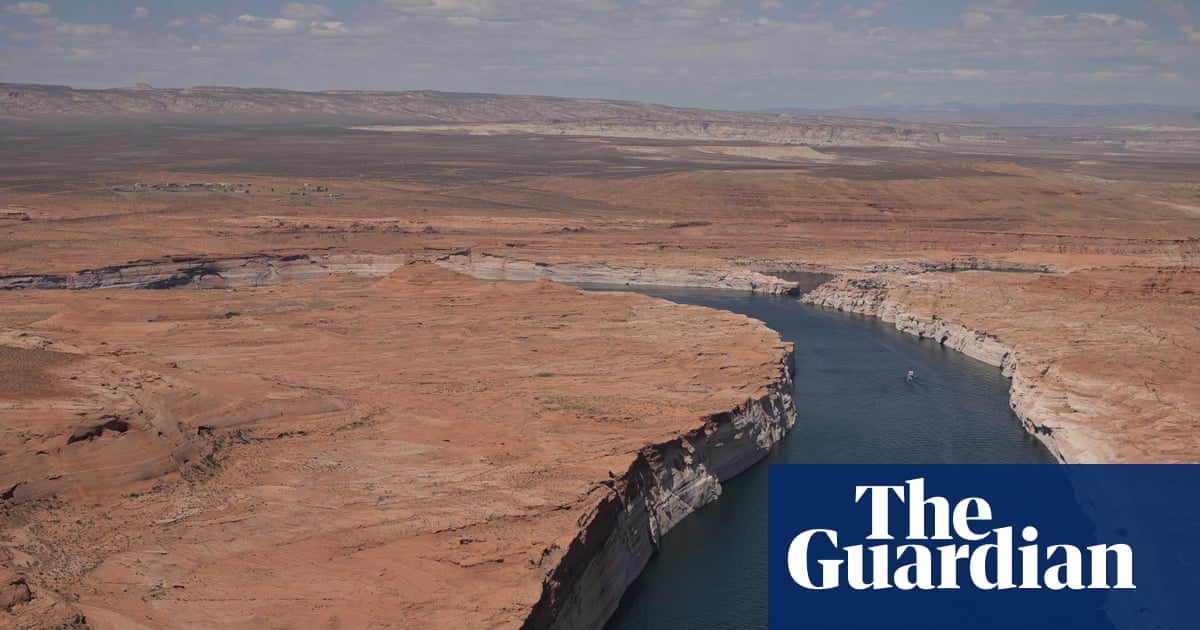
Lake Powell, US’s second-largest reservoir, threatens to plunge to unprecedentedly low levels this year after a historically bleak snowpack failed to raise its water level, scientists and water experts have said, adding renewed urgency to stalled talks over how to conserve a water source depended on by tens of millions of people in the US south-west.
The 185-mile Colorado River reservoir currently stands at about 23% of its capacity, or roughly 5.6m acre-feet. Lake Powell fell below that level for a few months three years ago. But those 2023 levels were recorded in the winter, when the reservoir straddling the Utah-Arizona border hits its lowest ebb. Spring runoff carried the level back up to 9.6m acre-feet by June, according to data from the US Bureau of Reclamation.
Not this year. After a winter of historically low snowpack in the mountains and a heatwave that broke records across the south-west in March, water levels at Lake Powell barely rose this spring at all. Even after supplemental releases from Flaming Gorge Reservoir upstream, it ended the month of June below the annual low it hit the month before, and could keep dropping. Except for those few months in 2023, Lake Powell’s water level hasn’t been this low since June of 1965 – two years after US authorities first started filling it.
“What’s unique this year is that there was no recovery at all,” said Jack Schmidt, the director of Utah State University’s Center for Colorado River Studies. “What we expect to happen is that Lake Powell will go to unprecedented low conditions some time this fall.”
“Water management in the Colorado River system is starting to get terribly complicated,” he added.
With the spring runoff season passed, the lake’s water level is projected to keep dropping for the next eight months. The consequences could be wide-ranging – imperiling hydroelectric power and throwing more uncertainty into an already contentious negotiation over how to divvy up an increasingly unreliable water supply used by 40 million people across seven states, dozens of tribal nations and two countries.
Lake Powell stands at just 37ft above the level at which electricity-generating turbines start to fail, according to Inc. Nearly 6m households and businesses rely on the power generated by Lake Powell’s Glen Canyon power plant.
For more than two decades, Lake Powell and its downriver sister, Lake Mead, have dwindled in capacity, even as the tens of millions of people who rely on them for fresh water have cut back their use. Negotiators from the seven US states with legal rights to water from the Colorado River – California, Nevada, Arizona, New Mexico, Colorado, Utah and Wyoming – have so far failed to make an agreement over how to conserve the region’s most important source of surface water. The US Bureau of Reclamation could resolve the impasse by imposing its own plan for cuts as soon as next month.
Now, experts say, the system is careening toward a long-feared breaking point as the US west’s climate warms and dries.
“In the 21st century, the ultimate cause of the problem is declining runoff,” said Schmidt. “There’s less water in the system. It’s caused by a warming climate, period.”
Facing increasingly dire challenges, many south-western cities are taking increasingly bold action to guarantee alternate water supplies for the future, said Sarah Porter, the director of the Kyl Center for Water Policy at Arizona State University.
“Cities have a whole lot of tools that they’re going to deploy,” Porter said. “Because cities are going to be differentially impacted by the Colorado River shortage, they’ve developed a voluntary framework for helping each other out.”
Phoenix is one of the most prominent cities whose users can no longer count on the Colorado River to provision its inhabitants or to recharge its depleting groundwater. Like other cities built on the faltering notion that the Colorado River could provide a sustainable water source, Phoenix is now turning to more creative solutions – most notably investing in recycling effluent from sewage back into drinking water.
In a similarly out-of-the-box solution, the city of San Diego announced a plan last month to use water surplus from its desalination plant to strike a water deal with Arizona and Nevada. The deal, which has yet to be finalized, would allow those arid states to buy some of San Diego’s unused water rights to the Colorado River.
Brad Udall, a water and climate research scientist at Colorado State University, said paying users to get out of the system is exactly what the reservoirs need if authorities ever hope to recharge them.
“There are too many straws in the glass,” Udall said. “Rather than having an annual fight over who gets what, let’s remove some straws … One way to do that is the American way – let’s buy ‘em out.”
The Colorado River crisis is perhaps the first time that climate change is “forcing a rethink of 100 years of law and policy and rules and interstate compacts and international treaties around a water source”, Udall said.
“You see climate change impacts across the globe, like big floods, hurricanes – but people pick up the pieces and kind of go back to the way they were living before,” Udall said. “But here, because the flows are so low, we’re going to have to start buying out or cutting off water users, and the rules we have are completely inadequate to the task.”
The gloomiest of predictions have raised fears that the current falling levels could condemn Lake Powell to “deadpool”, a state in which the reservoir drops so low that gravity can no longer carry water releases downstream.
But Schmidt, the Utah State University professor, said such a catastrophe was unlikely. Authorities would intercede to keep that from happening, through a combination of forced cuts and releases from Flaming Gorge.
Still, experts expect Lakes Powell and Mead to remain largely depleted for the foreseeable future, even as they provide less water for the region’s inhabitants.
“We have control over how bad it gets,” said Porter, the Arizona water law expert. “But the only thing we can do to keep it from getting bad is to take less water out.”
Read the full story at The Guardian ↗
Lake Powell, the second-largest US reservoir, stands at 23% capacity after a winter of historically low mountain snowpack and record spring heat prevented the typical seasonal recovery. The lake's water level is now at its lowest point since 1965, barring a brief dip in winter 2023. Scientists attribute the decline to climate-driven reductions in Colorado River runoff rather than demand changes. The reservoir provides water to 40 million people across seven western states and generates power for nearly 6 million homes and businesses. Its continued decline threatens both supplies and electricity generation while seven states remain deadlocked on water-sharing terms. The Bureau of Reclamation may impose its own allocation plan within weeks. Cities including Phoenix and San Diego are developing alternative supplies—recycling, desalination, and inter-state water-rights transfers—to offset Colorado River dependency. Water experts say existing interstate compacts and treaties are inadequate for managing permanent depletion, though catastrophic failure scenarios remain unlikely if authorities enforce demand reductions.
Read the full story at The Guardian ↗
Lake Powell, US’s second-largest reservoir, threatens to plunge to unprecedentedly low levels this year after a historically bleak snowpack failed to raise its water level, scientists and water experts have said, adding renewed urgency to stalled talks over how to conserve a water source depended on by tens of millions of people in the US south-west.
The 185-mile Colorado River reservoir currently stands at about 23% of its capacity, or roughly 5.6m acre-feet. Lake Powell fell below that level for a few months three years ago. But those 2023 levels were recorded in the winter, when the reservoir straddling the Utah-Arizona border hits its lowest ebb. Spring runoff carried the level back up to 9.6m acre-feet by June, according to data from the US Bureau of Reclamation.
Not this year. After a winter of historically low snowpack in the mountains and a heatwave that broke records across the south-west in March, water levels at Lake Powell barely rose this spring at all. Even after supplemental releases from Flaming Gorge Reservoir upstream, it ended the month of June below the annual low it hit the month before, and could keep dropping. Except for those few months in 2023, Lake Powell’s water level hasn’t been this low since June of 1965 – two years after US authorities first started filling it.
“What’s unique this year is that there was no recovery at all,” said Jack Schmidt, the director of Utah State University’s Center for Colorado River Studies. “What we expect to happen is that Lake Powell will go to unprecedented low conditions some time this fall.”
“Water management in the Colorado River system is starting to get terribly complicated,” he added.
With the spring runoff season passed, the lake’s water level is projected to keep dropping for the next eight months. The consequences could be wide-ranging – imperiling hydroelectric power and throwing more uncertainty into an already contentious negotiation over how to divvy up an increasingly unreliable water supply used by 40 million people across seven states, dozens of tribal nations and two countries.
Lake Powell stands at just 37ft above the level at which electricity-generating turbines start to fail, according to Inc. Nearly 6m households and businesses rely on the power generated by Lake Powell’s Glen Canyon power plant.
For more than two decades, Lake Powell and its downriver sister, Lake Mead, have dwindled in capacity, even as the tens of millions of people who rely on them for fresh water have cut back their use. Negotiators from the seven US states with legal rights to water from the Colorado River – California, Nevada, Arizona, New Mexico, Colorado, Utah and Wyoming – have so far failed to make an agreement over how to conserve the region’s most important source of surface water. The US Bureau of Reclamation could resolve the impasse by imposing its own plan for cuts as soon as next month.
Now, experts say, the system is careening toward a long-feared breaking point as the US west’s climate warms and dries.
“In the 21st century, the ultimate cause of the problem is declining runoff,” said Schmidt. “There’s less water in the system. It’s caused by a warming climate, period.”
Facing increasingly dire challenges, many south-western cities are taking increasingly bold action to guarantee alternate water supplies for the future, said Sarah Porter, the director of the Kyl Center for Water Policy at Arizona State University.
“Cities have a whole lot of tools that they’re going to deploy,” Porter said. “Because cities are going to be differentially impacted by the Colorado River shortage, they’ve developed a voluntary framework for helping each other out.”
Phoenix is one of the most prominent cities whose users can no longer count on the Colorado River to provision its inhabitants or to recharge its depleting groundwater. Like other cities built on the faltering notion that the Colorado River could provide a sustainable water source, Phoenix is now turning to more creative solutions – most notably investing in recycling effluent from sewage back into drinking water.
In a similarly out-of-the-box solution, the city of San Diego announced a plan last month to use water surplus from its desalination plant to strike a water deal with Arizona and Nevada. The deal, which has yet to be finalized, would allow those arid states to buy some of San Diego’s unused water rights to the Colorado River.
Brad Udall, a water and climate research scientist at Colorado State University, said paying users to get out of the system is exactly what the reservoirs need if authorities ever hope to recharge them.
“There are too many straws in the glass,” Udall said. “Rather than having an annual fight over who gets what, let’s remove some straws … One way to do that is the American way – let’s buy ‘em out.”
The Colorado River crisis is perhaps the first time that climate change is “forcing a rethink of 100 years of law and policy and rules and interstate compacts and international treaties around a water source”, Udall said.
“You see climate change impacts across the globe, like big floods, hurricanes – but people pick up the pieces and kind of go back to the way they were living before,” Udall said. “But here, because the flows are so low, we’re going to have to start buying out or cutting off water users, and the rules we have are completely inadequate to the task.”
The gloomiest of predictions have raised fears that the current falling levels could condemn Lake Powell to “deadpool”, a state in which the reservoir drops so low that gravity can no longer carry water releases downstream.
But Schmidt, the Utah State University professor, said such a catastrophe was unlikely. Authorities would intercede to keep that from happening, through a combination of forced cuts and releases from Flaming Gorge.
Still, experts expect Lakes Powell and Mead to remain largely depleted for the foreseeable future, even as they provide less water for the region’s inhabitants.
“We have control over how bad it gets,” said Porter, the Arizona water law expert. “But the only thing we can do to keep it from getting bad is to take less water out.”
Read the full story at The Guardian ↗
Lake Powell currently stands at approximately 23% of its 5.6 million acre-feet capacity. Lake Powell's water level is now at its lowest point since June 1965, except for a few months in winter 2023. The spring of 2024 produced historically low snowpack in upstream mountains combined with record-breaking March heat across the southwest. Supplemental releases from Flaming Gorge Reservoir upstream were insufficient to produce typical spring recovery. Lake Powell stands approximately 37 feet above the level at which hydroelectric turbines begin to fail. Nearly 6 million households and businesses depend on power from Lake Powell's Glen Canyon power plant. The Colorado River provides water to 40 million people across seven states, dozens of tribal nations, and two countries. Negotiators from the seven US states with Colorado River water rights have failed to reach agreement on conservation measures. The US Bureau of Reclamation could impose its own water allocation plan as soon as next month. Phoenix has begun investing in recycling sewage effluent for drinking water due to declining Colorado River reliance. San Diego announced a plan to allow Arizona and Nevada to purchase unused water rights associated with its desalination plant surplus. What is unique this year compared to the 2023 dip is that Lake Powell experienced no meaningful spring recovery at all. The ultimate cause of the Colorado River system's declining runoff is warming climate rather than demand increases. The current legal and policy frameworks governing Colorado River allocation are inadequate for managing permanent depletion. Authorities would likely intercede to prevent Lake Powell from reaching "deadpool" status through forced cuts and upstream releases.
Read the full story at The Guardian ↗
- Lake Powell, the US's second-largest reservoir, has fallen to approximately 23% capacity with minimal spring recovery this year, reaching its lowest level since 1965 except for a brief period in winter 2023.
- The decline stems from historically low snowpack and record heat across the southwest; water experts attribute the systemic decline to climate-driven reductions in Colorado River runoff.
- The crisis threatens hydroelectric power generation, affects water supply for 40 million people across seven states, and has stalled negotiations among states on water allocation; authorities may impose cuts unilaterally next month.
- Western cities including Phoenix, San Diego, and others are pursuing alternative water sources including recycling, desalination, and water-rights transfers to offset Colorado River shortages.
- Experts warn the current legal and policy frameworks are insufficient for managing the long-term depletion, though catastrophic
- deadpool
- scenarios remain unlikely if authorities intervene with forced reductions.