Massive wins and the promise of change – but that’s where the Starmer-Albanese similarities end
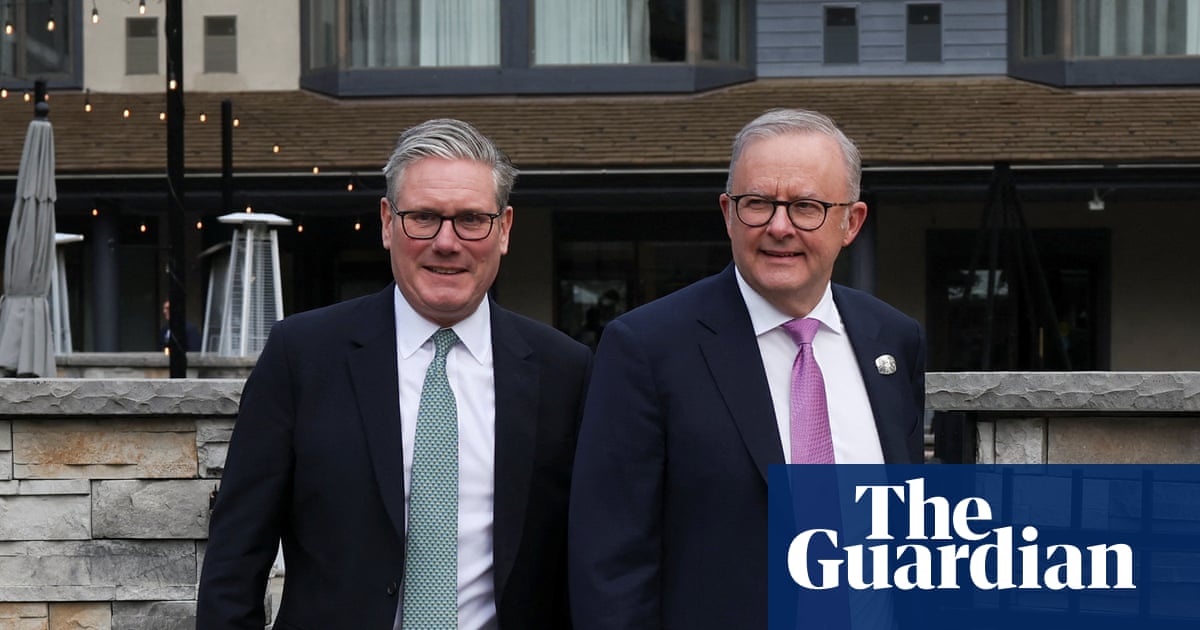
Anthony Albanese channelled Paul Keating as he spoke to government MPs in Canberra this week, reflecting on the tough work of reform.
Keating, Albanese said, considered Labor to be a bit like a bicycle. “It only stands up when you pedal,” the party grandee once warned, suggesting that without ideas, direction or momentum, the whole show falls over.
Less than 24 hours earlier, Albanese had lamented the fate of his friend Keir Starmer, for whom things had truly fallen over.
On Monday night, Australian time, the British prime minister confirmed he would resign, less than two years on from a landslide election victory.
Starmer – the foreign leader with whom Albanese has most closely aligned himself – was the victim of the “harsh business” of politics, Albanese said, with former Manchester mayor Andy Burnham expected to be living at 10 Downing Street within weeks.
Albanese and Starmer had cooperated and collaborated, sharing policy ideas and messaging, even offering themselves up as the vanguard of progressive middle powers prepared to stand up to Donald Trump.
Visiting Liverpool last September, Albanese addressed the Labour conference, defending Starmer’s struggling leadership. He reminded nervous party members that leaders needed time to see their ambitions become reality.
But Albanese’s position is fundamentally different to Starmer’s, and his political fortunes are likely to be very different too.
Albanese is first and foremost a parliamentarian. He has decades of experience in politics and became prime minister after more than 25 years in Canberra.
Starmer, by contrast, entered Westminster a decade ago, after a career as a barrister and director of public prosecutions. Some colleagues accused him of showing contempt for politics and compromising too much on Labour’s values.
Since becoming opposition leader in 2019, Albanese’s backers say he has proved himself a skilled manager, maintaining strong relationships across the caucus. Like Starmer, Albanese has a big backbench to grapple with, but has done a better job at consultation and maintaining discipline. In short: he’s better at politics than Starmer.
A rough count of the internal rebellions against Starmer reaches double digits, where resistance or internal opposition to Albanese is somewhere between rare and nonexistent.
There are stark differences in personnel, too. Albanese’s chief of staff, Tim Gartrell, is a careful and thoughtful operator who worked for the future PM in his first run for parliament in 1996. The ALP national secretary, Paul Erickson, credited with masterminding the last thumping Labor victory, is viewed as a generational talent.
By contrast, Starmer’s onetime chief adviser Morgan McSweeney became a liability, including after pushing for his mentor, Peter Mandelson, to be appointed the UK ambassador to Washington DC, despite ties to notorious sex offender Jeffrey Epstein.
One observer said this week Starmer had compromised too much, usually from a position of weakness, trying to be “all things to all people and ending up standing for nothing”. Albanese, by contrast, is as clear about what he won’t do as what he will, having learned the lessons of the Rudd-Gillard era.
Some similarities exist, however. Neither leader is particularly flashy and both can be clumsy communicators. Both are centrist leaders who frustrate members of their own party through a slow and methodical approach to governing.
In what might have been the last major policy plan of his short premiership, Starmer said earlier this month the UK would follow Australia and ban under-16s from social media sites. Albanese has highlighted countries overseas following Australia as a sign of success for the plan, even if expert assessments of its efficacy are mixed. In parliament on Thursday, Albanese signalled the government planned more steps to rein in social media.
Starmer struggled with the rising threat of Reform UK and Nigel Farage, as well as the lingering damage of Brexit. For Albanese, the threat is a surge in support for Pauline Hanson’s One Nation. Albanese’s main response is relentless promotion of Labor policies he says will make people’s lives better. This week he offered a more pointed critique of One Nation, lumping them in with the Coalition as a trio of rightwing blockers, under the opposition leader, Angus Taylor.
Pollster and commentator Tony Barry said both Starmer and former Conservative PM Boris Johnson won record majorities after promising major change. But neither could provide it and paid a price for perceived broken promises and the protracted economic insecurity felt by many voters.
Barry said the lesson for Albanese from Starmer’s downfall is to give voters real change, not just claim it.
“With the One Nation monster now coming after Labor, Albanese knows that in an attention economy the cash register never lies and that will have the most influence on his political fortunes,” he said.
Burnham and Albanese might have more in common. Both joined their party at age 15, worked as staffers and became career politicians. Both men made previous unsuccessful runs at the leadership, before taking on the top job in tough times.
In Liverpool last year, Albanese said his “mate” Starmer needed time, calling it “the asset every progressive leader in every positive and ambitious government wishes they had more of”.
Two years out from his attempt at another election victory, Albanese will hope the Labor bicycle stays upright and time stays on his side.
Read the full story at The Guardian ↗
Australian Prime Minister Anthony Albanese and British Prime Minister Keir Starmer had positioned themselves as aligned progressive leaders, collaborating on policy and messaging. Starmer's resignation less than two years into his premiership followed internal party rebellions and perceived failures to deliver promised change despite his landslide victory. Albanese's political position differs substantially: he brings 25 years of parliamentary experience, stronger caucus management, and more disciplined party ranks. Both leaders share centrist, methodical governing styles and face threats from right-wing political movements. Albanese now confronts the challenge of demonstrating tangible change delivery to voters, particularly as One Nation gains support. Political observers suggest Starmer's downfall illustrates the electoral cost of promising transformation without delivering it.
Read the full story at The Guardian ↗
Anthony Albanese channelled Paul Keating as he spoke to government MPs in Canberra this week, reflecting on the tough work of reform.
Keating, Albanese said, considered Labor to be a bit like a bicycle. “It only stands up when you pedal,” the party grandee once warned, suggesting that without ideas, direction or momentum, the whole show falls over.
Less than 24 hours earlier, Albanese had lamented the fate of his friend Keir Starmer, for whom things had truly fallen over.
On Monday night, Australian time, the British prime minister confirmed he would resign, less than two years on from a landslide election victory.
Starmer – the foreign leader with whom Albanese has most closely aligned himself – was the victim of the “harsh business” of politics, Albanese said, with former Manchester mayor Andy Burnham expected to be living at 10 Downing Street within weeks.
Albanese and Starmer had cooperated and collaborated, sharing policy ideas and messaging, even offering themselves up as the vanguard of progressive middle powers prepared to stand up to Donald Trump.
Visiting Liverpool last September, Albanese addressed the Labour conference, defending Starmer’s struggling leadership. He reminded nervous party members that leaders needed time to see their ambitions become reality.
But Albanese’s position is fundamentally different to Starmer’s, and his political fortunes are likely to be very different too.
Albanese is first and foremost a parliamentarian. He has decades of experience in politics and became prime minister after more than 25 years in Canberra.
Starmer, by contrast, entered Westminster a decade ago, after a career as a barrister and director of public prosecutions. Some colleagues accused him of showing contempt for politics and compromising too much on Labour’s values.
Since becoming opposition leader in 2019, Albanese’s backers say he has proved himself a skilled manager, maintaining strong relationships across the caucus. Like Starmer, Albanese has a big backbench to grapple with, but has done a better job at consultation and maintaining discipline. In short: he’s better at politics than Starmer.
A rough count of the internal rebellions against Starmer reaches double digits, where resistance or internal opposition to Albanese is somewhere between rare and nonexistent.
There are stark differences in personnel, too. Albanese’s chief of staff, Tim Gartrell, is a careful and thoughtful operator who worked for the future PM in his first run for parliament in 1996. The ALP national secretary, Paul Erickson, credited with masterminding the last thumping Labor victory, is viewed as a generational talent.
By contrast, Starmer’s onetime chief adviser Morgan McSweeney became a liability, including after pushing for his mentor, Peter Mandelson, to be appointed the UK ambassador to Washington DC, despite ties to notorious sex offender Jeffrey Epstein.
One observer said this week Starmer had compromised too much, usually from a position of weakness, trying to be “all things to all people and ending up standing for nothing”. Albanese, by contrast, is as clear about what he won’t do as what he will, having learned the lessons of the Rudd-Gillard era.
Some similarities exist, however. Neither leader is particularly flashy and both can be clumsy communicators. Both are centrist leaders who frustrate members of their own party through a slow and methodical approach to governing.
In what might have been the last major policy plan of his short premiership, Starmer said earlier this month the UK would follow Australia and ban under-16s from social media sites. Albanese has highlighted countries overseas following Australia as a sign of success for the plan, even if expert assessments of its efficacy are mixed. In parliament on Thursday, Albanese signalled the government planned more steps to rein in social media.
Starmer struggled with the rising threat of Reform UK and Nigel Farage, as well as the lingering damage of Brexit. For Albanese, the threat is a surge in support for Pauline Hanson’s One Nation. Albanese’s main response is relentless promotion of Labor policies he says will make people’s lives better. This week he offered a more pointed critique of One Nation, lumping them in with the Coalition as a trio of rightwing blockers, under the opposition leader, Angus Taylor.
Pollster and commentator Tony Barry said both Starmer and former Conservative PM Boris Johnson won record majorities after promising major change. But neither could provide it and paid a price for perceived broken promises and the protracted economic insecurity felt by many voters.
Barry said the lesson for Albanese from Starmer’s downfall is to give voters real change, not just claim it.
“With the One Nation monster now coming after Labor, Albanese knows that in an attention economy the cash register never lies and that will have the most influence on his political fortunes,” he said.
Burnham and Albanese might have more in common. Both joined their party at age 15, worked as staffers and became career politicians. Both men made previous unsuccessful runs at the leadership, before taking on the top job in tough times.
In Liverpool last year, Albanese said his “mate” Starmer needed time, calling it “the asset every progressive leader in every positive and ambitious government wishes they had more of”.
Two years out from his attempt at another election victory, Albanese will hope the Labor bicycle stays upright and time stays on his side.
Read the full story at The Guardian ↗
Anthony Albanese referenced Paul Keating's observation that Labor 'only stands up when you pedal,' comparing the party to a bicycle requiring constant momentum Keir Starmer resigned as British Prime Minister less than two years after winning a landslide election Albanese and Starmer cooperated on policy ideas, messaging, and positioned themselves as progressive middle powers willing to confront Donald Trump Albanese has been a parliamentarian for over 25 years; Starmer entered Westminster a decade ago after careers as a barrister and director of public prosecutions Starmer faced double-digit internal rebellions; internal opposition to Albanese is 'somewhere between rare and nonexistent' Starmer is better at politics than Albanese because of superior parliamentary experience and caucus management Starmer's chief adviser Morgan McSweeney became a liability, including through his role in proposing Peter Mandelson for the Washington ambassadorship An unnamed observer characterised Starmer as having 'compromised too much, usually from a position of weakness, trying to be all things to all people' Both Starmer and Albanese are not particularly flashy and can be clumsy communicators Both are centrist leaders whose methodical approach frustrates party members Starmer announced the UK would follow Australia in banning under-16s from social media; Albanese has cited overseas adoption of Australia's policy as a success indicator Albanese faces threats from One Nation's rising support; Starmer faced threats from Reform UK and Nigel Farage Both Starmer and Boris Johnson won record majorities after promising major change but failed to deliver, paying an electoral price The lesson for Albanese from Starmer's downfall is to give voters real change, not just claim it Andy Burnham was expected to become UK Prime Minister following Starmer's resignation Burnham and Albanese share similar career paths: joining their party at 15, working as staffers, becoming career politicians, and making unsuccessful earlier leadership bids
Read the full story at The Guardian ↗
- Keir Starmer resigned as UK Prime Minister less than two years after a landslide election victory; Anthony Albanese, Australia's PM, had closely aligned himself with Starmer on policy and messaging
- Albanese and Starmer differ significantly in political experience and parliamentary management: Albanese has 25+ years in parliament and maintains stronger caucus discipline, while Starmer entered Westminster a decade ago after a legal career
- Both leaders are centrist, methodical communicators who have struggled with economic insecurity messaging and rising opposition threats (One Nation in Australia, Reform UK in the UK)
- Starmer and former PM Boris Johnson both won record majorities promising major change but failed to deliver, paying a political price; Albanese faces the challenge of proving Labor can deliver real change to voters