Met gets extension to Palantir AI project after Sadiq Khan blocked deal
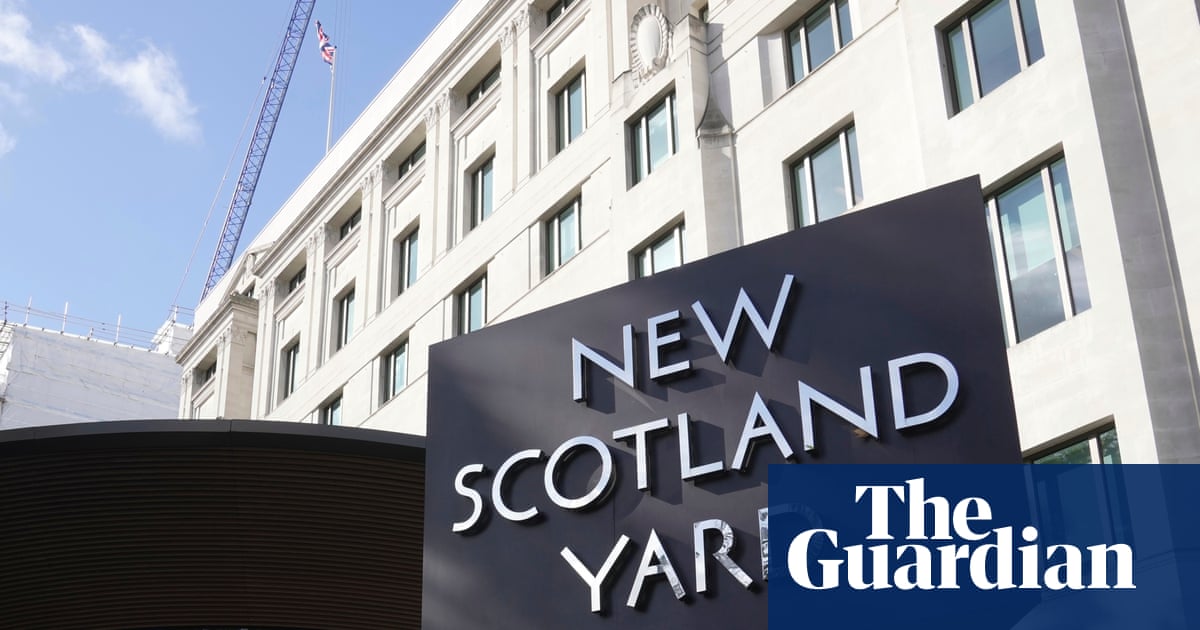
The Metropolitan police have been granted a 12-month extension to a pilot project with the spy-tech firm Palantir while the force carries out a procurement process.
The development comes weeks after the mayor of London, Sadiq Khan, blocked a £50m deal between the Met and the US company to automate intelligence analysis in criminal investigations.
Last month the mayor’s office said there had been a “clear and serious breach” of procurement rules and said police had seriously considered only one supplier.
Palantir’s lawyers subsequently wrote to the Mayor’s Office for Policing and Crime (Mopac) saying they intended to challenge the decision in court, the Times reported.
The Met will now run a procurement process for the further 12 months to appoint a supplier.
Regarding the force’s use of the AI system Customer Service Engine, the Met assistant commissioner Rachel Williams said on Wednesday: “We are pleased Mopac has approved the Met to continue to use this capability for a further 12 months to strengthen professional standards, root out misconduct and increase public confidence.
“As part of our a New Met for London plan, we set out a series of commitments to improve standards and tackle poor culture.
“The vast majority of Met officers and staff serve London with dedication and integrity, and they – and the wider public – rightly expect robust action against the small minority who abuse their position or undermine public trust.
“This work has allowed the Met for the first time to bring together data it already lawfully holds in one place to identify potential standards, welfare or cultural concerns.”
Williams added: “A pilot project earlier this year focused on identifying potential conduct issues and a significant number of matters are now being progressed by our professional standards team.
“We will continue to work with Mopac over procurement of technology at pace for the longer term. This is to support both our work on raising standards and our ambitions to use the technology to streamline administrative processes, close budget gaps and free up officers to police the streets of London.”
A spokesperson for the mayor of London said: “The deputy mayor has required the Met to run a new procurement process, open to a wide range of potential suppliers, to choose the long-term provider of this capability.
“Recognising the Met’s current needs, the Met may extend the current pilot to retain existing capability while this procurement takes place.”
Scotland Yard appointed Palantir initially on a deal to use artificial intelligence to detect rogue officers by scanning to see how they might be abusing rosters and other systems.
after newsletter promotion
In a speech on Wednesday about the Met’s use of technology, its commissioner, Mark Rowley, spoke about the collaboration with Palantir.
He said: “Today, our ability to act is constrained by a lack of tech to provide such insight.
“To prove this concept, we created a pilot with Palantir, first focused on integrity problems within the Met, bringing data together, surfacing patterns that would previously have gone unnoticed, identifying potential misconduct or risk earlier, and enabling us to act more consistently.
“Through that pilot, we have been able to bring together data on around 45,000 people across the organisation, moving to a discovery-based model.
“We are no longer reliant solely on concerns being raised by colleagues or victims coming forward. We can now proactively identify problem individuals or patterns, spot risks earlier and intervene before harm occurs. It is already proving to be a step change.”
A Palantir spokesperson said: “We’re proud that our software has been used so effectively by the Met police to identify officer misconduct. This decision will enable that important work to continue.
“We know that Londoners value a police force that ensures its officers adhere to the highest standards – and we are determined to help the Met deliver that.”
Read the full story at The Guardian ↗
The Metropolitan Police have secured a 12-month extension to use Palantir's artificial intelligence system while conducting a competitive procurement process. This follows the Mayor of London's block of a £50m direct contract with Palantir weeks earlier, citing procurement rule breaches and insufficient consideration of alternative suppliers. The pilot, which aggregates existing police data to identify potential officer misconduct, has analysed records on approximately 45,000 personnel and surfaced patterns previously undetected. Palantir indicated plans to legally challenge the Mayor's decision. During the extension period, the Met will run an open procurement to select a longer-term supplier. Police leadership described the technology as enabling proactive identification of misconduct rather than reliance on complaints alone.
Read the full story at The Guardian ↗
The Metropolitan police have been granted a 12-month extension to a pilot project with the spy-tech firm Palantir while the force carries out a procurement process.
The development comes weeks after the mayor of London, Sadiq Khan, blocked a £50m deal between the Met and the US company to automate intelligence analysis in criminal investigations.
Last month the mayor’s office said there had been a “clear and serious breach” of procurement rules and said police had seriously considered only one supplier.
Palantir’s lawyers subsequently wrote to the Mayor’s Office for Policing and Crime (Mopac) saying they intended to challenge the decision in court, the Times reported.
The Met will now run a procurement process for the further 12 months to appoint a supplier.
Regarding the force’s use of the AI system Customer Service Engine, the Met assistant commissioner Rachel Williams said on Wednesday: “We are pleased Mopac has approved the Met to continue to use this capability for a further 12 months to strengthen professional standards, root out misconduct and increase public confidence.
“As part of our a New Met for London plan, we set out a series of commitments to improve standards and tackle poor culture.
“The vast majority of Met officers and staff serve London with dedication and integrity, and they – and the wider public – rightly expect robust action against the small minority who abuse their position or undermine public trust.
“This work has allowed the Met for the first time to bring together data it already lawfully holds in one place to identify potential standards, welfare or cultural concerns.”
Williams added: “A pilot project earlier this year focused on identifying potential conduct issues and a significant number of matters are now being progressed by our professional standards team.
“We will continue to work with Mopac over procurement of technology at pace for the longer term. This is to support both our work on raising standards and our ambitions to use the technology to streamline administrative processes, close budget gaps and free up officers to police the streets of London.”
A spokesperson for the mayor of London said: “The deputy mayor has required the Met to run a new procurement process, open to a wide range of potential suppliers, to choose the long-term provider of this capability.
“Recognising the Met’s current needs, the Met may extend the current pilot to retain existing capability while this procurement takes place.”
Scotland Yard appointed Palantir initially on a deal to use artificial intelligence to detect rogue officers by scanning to see how they might be abusing rosters and other systems.
after newsletter promotion
In a speech on Wednesday about the Met’s use of technology, its commissioner, Mark Rowley, spoke about the collaboration with Palantir.
He said: “Today, our ability to act is constrained by a lack of tech to provide such insight.
“To prove this concept, we created a pilot with Palantir, first focused on integrity problems within the Met, bringing data together, surfacing patterns that would previously have gone unnoticed, identifying potential misconduct or risk earlier, and enabling us to act more consistently.
“Through that pilot, we have been able to bring together data on around 45,000 people across the organisation, moving to a discovery-based model.
“We are no longer reliant solely on concerns being raised by colleagues or victims coming forward. We can now proactively identify problem individuals or patterns, spot risks earlier and intervene before harm occurs. It is already proving to be a step change.”
A Palantir spokesperson said: “We’re proud that our software has been used so effectively by the Met police to identify officer misconduct. This decision will enable that important work to continue.
“We know that Londoners value a police force that ensures its officers adhere to the highest standards – and we are determined to help the Met deliver that.”
Read the full story at The Guardian ↗
The Metropolitan Police have been granted a 12-month extension to a pilot project with Palantir The Mayor blocked a £50m deal between the Met and Palantir The Mayor's office said there had been a 'clear and serious breach' of procurement rules Police had seriously considered only one supplier Palantir's lawyers indicated intention to challenge the decision in court The Met will run a procurement process over 12 months to appoint a supplier The system has analysed data on around 45,000 people across the organisation The technology represents a 'step change' in capability The system enables the Met to 'no longer rely solely on concerns being raised by colleagues or victims coming forward' Londoners 'value a police force that ensures its officers adhere to the highest standards'
Read the full story at The Guardian ↗
- Metropolitan Police granted 12-month extension to Palantir AI pilot after Mayor Sadiq Khan blocked a £50m contract
- Khan's office cited breach of procurement rules and insufficient supplier consideration; Palantir indicated intention to challenge in court
- Met will conduct open procurement process during extension; system has analysed data on 45,000 officers to identify potential misconduct