Mexico moves to combat pollution following Guardian investigations
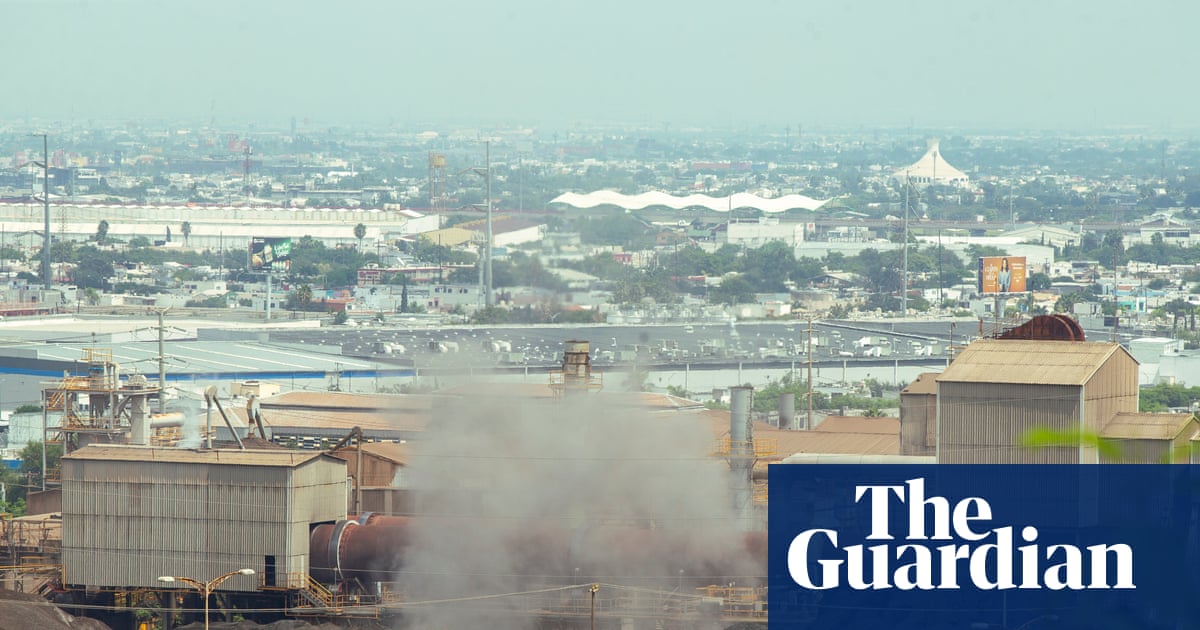
The Mexican government has announced it will pursue a sweeping array of tactics to combat industrial pollution, from $4.8m in fines against a plant processing US hazardous waste to the rollout of a new industrial air-monitoring system, following investigations by the Guardian and Quinto Elemento Lab, a Mexican investigative unit.
Those stories revealed high levels of heavy-metal contamination in the neighborhood around the factory, Zinc Nacional, in the Monterrey metropolitan area, and showed the broader extent of industrial pollution in the region, linked to Monterrey’s role in manufacturing and recycling goods for the US market.
The investigations found that facilities were releasing more toxic heavy metals into the city’s air than the totals reported in many US states, and more carbon dioxide than nearly half the world’s nations.
In an announcement last week, the government said it would establish a new atmospheric monitoring network for industry, “the first of its kind in Latin America”. It said the system would measure emissions from industry, including heavy metals.
Mariana Boy Tamborrell, Mexico’s federal attorney for environmental protection, said the latest moves represent a new wave of enforcement against industrial pollution in Mexico. They originated when the first stories were published in early 2025 and include Zinc Nacional agreeing to address environmental damage, according to her agency.
“The work we have done over the past year with Zinc Nacional is a watershed moment in how we monitor and inspect regulatory compliance by industries,” she said in a statement.
Boy Tamborrell’s agency, known as Profepa, said in response to questions from journalists that the air monitoring system would be rolled out over the next three years, and that the first part of it would operate in the industrial area of Monterrey.
It said Zinc Nacional was helping to pay for the installation.
Additionally, the nation’s main environmental regulator has announced it is updating air and soil contamination standards, some of which have not been revised for decades.
Martín Soto Jiménez, a prominent toxicology researcher at the Universidad Nacional Autónoma de México (Unam), who conducted soil sampling around Zinc Nacional in collaboration with the Guardian and Quinto Elemento Lab, said the new efforts to hold the company responsible for cleanup were precedent-setting.
“This agreement is a historic step forward for environmental justice in Mexico,” he said in a written response to questions from reporters.
“The creation of an atmospheric monitoring network is one of the most valuable parts of the agreement. To be useful, it must make real-time data public [and] allow citizens and scientists to access and analyze the information.”
Zinc Nacional, a Mexican company that imports highly toxic dust left over after the US steel industry recycles old cars and appliances, must undertake 24 corrective measures in addition to the fine.
The company is required to relocate some of its operations to a new plant outside residential areas of densely populated Monterrey and to build new containment and water treatment facilities. It must remediate contaminated land, reforest 12 acres (5 hectares) and monitor future emissions.
In a statement to the Guardian and Quinto Elemento Lab, Zinc Nacional acknowledged that there was some contamination on its land, which it said was associated with a company that previously operated on the site. It said that its “emissions were identified as being well below regulatory parameters, confirming the effectiveness of our dust control and collection systems”.
No contamination is being dispersed into the air or carried towards nearby water bodies by rain, it said.
“Through all these actions, we will reduce the environmental footprint of our operations, continue strengthening local employment, [and] expand green areas,” it said in a press release.
In the past, Zinc Nacional has disputed the findings of the soil sampling in the community around its plant, raising doubts about the way the study was performed and saying it did not prove the heavy metals originated in the company’s factory.
In its response to reporters, Profepa also said contamination with heavy metals had been found at the Zinc Nacional site, and that it reached “significant depths” of the soil. According to the agency, there were historical contaminants on the site, which it said were associated both with Zinc Nacional and a foundry that was there previously. It said that a study performed by the company did not find contamination beyond the plant’s boundaries.
Some neighbors expressed disappointment with the government’s announcement, saying it focused on contamination inside the plant boundaries, but did not address the concerns about health effects and heavy metals in the surrounding neighborhood.
Soil samples taken around the plant for the stories showed heavy metals, such as lead, cadmium and arsenic inside and outside schools and homes. One primary school had 1,760 times the levels of lead that would be considered a human health risk in the US.
“I think [the government] has failed to properly assess the needs of the vulnerable communities adjacent to the company,” said Ricardo González, one of six neighbors who spoke with reporters and have become involved with efforts to demand change from Zinc Nacional in the past year.
Neighbor Cristóbal Palacios called for regulators to publicly share the details of the remediation, including soil sample results, and any air emissions information collected in the future.
“All of us who live near the company should be able to see, with our own eyes, the numbers [the government] says they’re going to obtain – how much lead, cadmium, arsenic is in the air – and they should really make that transparent,” said Palacios. He and other locals said it was crucial to have enforceable deadlines for the measures.
The actions by the federal government are the latest measures aiming to address industrial pollution to be announced following the journalistic series.
The environmental regulator, known by its acronym Semarnat, said in December that it was working to update three of Mexico’s industrial air-pollution standards, some of which have not been revised in decades. This includes lowering the amount of particulate matter that plants are allowed to emit to the air by 50%. The head of Semarnat also told Mexico’s congress that her department is working to update Mexico’s standards for soil contamination.
Federal senator Waldo Fernández, who heads the senate committee overseeing Mexico’s negotiations with the US over North American free trade, said he was drafting legislation to amend Mexico’s environmental law to limit the import of toxic waste and to require monitoring of heavy metal emissions by plants processing materials with heavy metals.
He said the measure, which he plans to introduce in February, would seek to stop the importation of certain types of toxic waste materials that are not “environmentally beneficial” for Mexico, including waste that generates heavy pollution with arsenic, lead, cadmium and other toxic elements.
And, when imports occur, “we’re calling for stricter regulation to ensure these imports don’t cause so much pollution”, the senator said in an interview.
Additionally, two citizen groups took steps, following the latest article, to demand improved air quality in Monterrey and better protection of the public’s health.
One group is gathering signatures for a citizens’ referendum to make air standards similar to international guidelines. Another, a prominent group of Monterrey activists known as the Group of 6, filed a lawsuit in December demanding a federal investigation of air emissions by industry in the region.
“These are environmental crimes that threaten health and life,” said Liliana Flores, one of the founders of the Group of 6.
“These are ultra-billion-dollar companies that have the resources to have clean technology. And they haven’t done it,” said Flores, who noted that thousands of people in Monterrey are estimated to die from air pollution each year and many others are sick, with chronic illnesses like asthma.
“It doesn’t matter if you are rich or poor … Here, 100% of all of us who live in the metropolitan area are affected.”
Read the full story at The Guardian ↗
Following investigations by the Guardian and Quinto Elemento Lab into industrial pollution in Monterrey, Mexico's government has announced several regulatory actions. Zinc Nacional, a facility processing US hazardous waste, faces a $4.8m fine and must implement 24 corrective measures including relocating operations, building containment facilities, and remediating contaminated land. The government will establish a new atmospheric monitoring network for industry over three years, with initial deployment in Monterrey's industrial area. Environmental standards for air and soil contamination are being updated for the first time in decades. A federal senator is drafting legislation to restrict toxic waste imports and require stricter monitoring of heavy-metal emissions. The investigations documented elevated heavy-metal levels in soil around the facility, including at schools and homes. Zinc Nacional disputes the origin of contamination and maintains its emissions comply with regulatory parameters. Some residents have expressed concerns that announced measures do not adequately address neighborhood-level contamination, and have filed lawsuits and initiated referendums seeking stronger air quality protections.
Read the full story at The Guardian ↗
The Mexican government has announced it will pursue a sweeping array of tactics to combat industrial pollution, from $4.8m in fines against a plant processing US hazardous waste to the rollout of a new industrial air-monitoring system, following investigations by the Guardian and Quinto Elemento Lab, a Mexican investigative unit.
Those stories revealed high levels of heavy-metal contamination in the neighborhood around the factory, Zinc Nacional, in the Monterrey metropolitan area, and showed the broader extent of industrial pollution in the region, linked to Monterrey’s role in manufacturing and recycling goods for the US market.
The investigations found that facilities were releasing more toxic heavy metals into the city’s air than the totals reported in many US states, and more carbon dioxide than nearly half the world’s nations.
In an announcement last week, the government said it would establish a new atmospheric monitoring network for industry, “the first of its kind in Latin America”. It said the system would measure emissions from industry, including heavy metals.
Mariana Boy Tamborrell, Mexico’s federal attorney for environmental protection, said the latest moves represent a new wave of enforcement against industrial pollution in Mexico. They originated when the first stories were published in early 2025 and include Zinc Nacional agreeing to address environmental damage, according to her agency.
“The work we have done over the past year with Zinc Nacional is a watershed moment in how we monitor and inspect regulatory compliance by industries,” she said in a statement.
Boy Tamborrell’s agency, known as Profepa, said in response to questions from journalists that the air monitoring system would be rolled out over the next three years, and that the first part of it would operate in the industrial area of Monterrey.
It said Zinc Nacional was helping to pay for the installation.
Additionally, the nation’s main environmental regulator has announced it is updating air and soil contamination standards, some of which have not been revised for decades.
Martín Soto Jiménez, a prominent toxicology researcher at the Universidad Nacional Autónoma de México (Unam), who conducted soil sampling around Zinc Nacional in collaboration with the Guardian and Quinto Elemento Lab, said the new efforts to hold the company responsible for cleanup were precedent-setting.
“This agreement is a historic step forward for environmental justice in Mexico,” he said in a written response to questions from reporters.
“The creation of an atmospheric monitoring network is one of the most valuable parts of the agreement. To be useful, it must make real-time data public [and] allow citizens and scientists to access and analyze the information.”
Zinc Nacional, a Mexican company that imports highly toxic dust left over after the US steel industry recycles old cars and appliances, must undertake 24 corrective measures in addition to the fine.
The company is required to relocate some of its operations to a new plant outside residential areas of densely populated Monterrey and to build new containment and water treatment facilities. It must remediate contaminated land, reforest 12 acres (5 hectares) and monitor future emissions.
In a statement to the Guardian and Quinto Elemento Lab, Zinc Nacional acknowledged that there was some contamination on its land, which it said was associated with a company that previously operated on the site. It said that its “emissions were identified as being well below regulatory parameters, confirming the effectiveness of our dust control and collection systems”.
No contamination is being dispersed into the air or carried towards nearby water bodies by rain, it said.
“Through all these actions, we will reduce the environmental footprint of our operations, continue strengthening local employment, [and] expand green areas,” it said in a press release.
In the past, Zinc Nacional has disputed the findings of the soil sampling in the community around its plant, raising doubts about the way the study was performed and saying it did not prove the heavy metals originated in the company’s factory.
In its response to reporters, Profepa also said contamination with heavy metals had been found at the Zinc Nacional site, and that it reached “significant depths” of the soil. According to the agency, there were historical contaminants on the site, which it said were associated both with Zinc Nacional and a foundry that was there previously. It said that a study performed by the company did not find contamination beyond the plant’s boundaries.
Some neighbors expressed disappointment with the government’s announcement, saying it focused on contamination inside the plant boundaries, but did not address the concerns about health effects and heavy metals in the surrounding neighborhood.
Soil samples taken around the plant for the stories showed heavy metals, such as lead, cadmium and arsenic inside and outside schools and homes. One primary school had 1,760 times the levels of lead that would be considered a human health risk in the US.
“I think [the government] has failed to properly assess the needs of the vulnerable communities adjacent to the company,” said Ricardo González, one of six neighbors who spoke with reporters and have become involved with efforts to demand change from Zinc Nacional in the past year.
Neighbor Cristóbal Palacios called for regulators to publicly share the details of the remediation, including soil sample results, and any air emissions information collected in the future.
“All of us who live near the company should be able to see, with our own eyes, the numbers [the government] says they’re going to obtain – how much lead, cadmium, arsenic is in the air – and they should really make that transparent,” said Palacios. He and other locals said it was crucial to have enforceable deadlines for the measures.
The actions by the federal government are the latest measures aiming to address industrial pollution to be announced following the journalistic series.
The environmental regulator, known by its acronym Semarnat, said in December that it was working to update three of Mexico’s industrial air-pollution standards, some of which have not been revised in decades. This includes lowering the amount of particulate matter that plants are allowed to emit to the air by 50%. The head of Semarnat also told Mexico’s congress that her department is working to update Mexico’s standards for soil contamination.
Federal senator Waldo Fernández, who heads the senate committee overseeing Mexico’s negotiations with the US over North American free trade, said he was drafting legislation to amend Mexico’s environmental law to limit the import of toxic waste and to require monitoring of heavy metal emissions by plants processing materials with heavy metals.
He said the measure, which he plans to introduce in February, would seek to stop the importation of certain types of toxic waste materials that are not “environmentally beneficial” for Mexico, including waste that generates heavy pollution with arsenic, lead, cadmium and other toxic elements.
And, when imports occur, “we’re calling for stricter regulation to ensure these imports don’t cause so much pollution”, the senator said in an interview.
Additionally, two citizen groups took steps, following the latest article, to demand improved air quality in Monterrey and better protection of the public’s health.
One group is gathering signatures for a citizens’ referendum to make air standards similar to international guidelines. Another, a prominent group of Monterrey activists known as the Group of 6, filed a lawsuit in December demanding a federal investigation of air emissions by industry in the region.
“These are environmental crimes that threaten health and life,” said Liliana Flores, one of the founders of the Group of 6.
“These are ultra-billion-dollar companies that have the resources to have clean technology. And they haven’t done it,” said Flores, who noted that thousands of people in Monterrey are estimated to die from air pollution each year and many others are sick, with chronic illnesses like asthma.
“It doesn’t matter if you are rich or poor … Here, 100% of all of us who live in the metropolitan area are affected.”
Read the full story at The Guardian ↗
Mexican government announced it will pursue tactics to combat industrial pollution, including $4.8m in fines against Zinc Nacional and rollout of a new industrial air-monitoring system The Guardian and Quinto Elemento Lab investigations revealed high levels of heavy-metal contamination in the neighborhood around Zinc Nacional in the Monterrey metropolitan area Facilities in the region were releasing more toxic heavy metals into the city's air than the totals reported in many US states, and more carbon dioxide than nearly half the world's nations The government said it would establish a new atmospheric monitoring network for industry, 'the first of its kind in Latin America' Mexico's federal attorney for environmental protection described the moves as 'a watershed moment in how we monitor and inspect regulatory compliance by industries' The air monitoring system will be rolled out over the next three years, with the first part operating in the industrial area of Monterrey Zinc Nacional is helping to pay for the installation of the monitoring system The nation's main environmental regulator is updating air and soil contamination standards, some of which have not been revised for decades A toxicology researcher described the new efforts to hold Zinc Nacional responsible as 'a historic step forward for environmental justice in Mexico' Zinc Nacional must undertake 24 corrective measures including relocating operations, building containment and water treatment facilities, remediating contaminated land, reforesting 12 acres, and monitoring future emissions Zinc Nacional stated its emissions were 'well below regulatory parameters' and that contamination on its land was 'associated with a company that previously operated on the site' Profepa found heavy metals had been found at the Zinc Nacional site at 'significant depths' of soil, associated both with Zinc Nacional and a foundry previously located there Soil samples taken around the plant showed heavy metals such as lead, cadmium and arsenic inside and outside schools and homes One primary school had lead levels 1,760 times higher than US human health risk thresholds Some neighbors expressed disappointment that government measures focused on contamination inside plant boundaries rather than addressing community health concerns and neighborhood contamination Federal senator Waldo Fernández is drafting legislation to limit toxic waste imports and require monitoring of heavy metal emissions by plants processing materials with heavy metals The senator said the measure would seek to stop importation of toxic waste materials not 'environmentally beneficial' for Mexico Citizen groups filed lawsuits and are gathering signatures for referendums to demand improved air quality in Monterrey and better public health protection An activist characterized industrial pollution as 'environmental crimes that threaten health and life' and called out 'ultra-billion-dollar companies' for not implementing clean technology
Read the full story at The Guardian ↗
- Mexico's government announced new industrial pollution-control measures following Guardian and Quinto Elemento Lab investigations into heavy-metal contamination in Monterrey
- Actions include a $4.8m fine against Zinc Nacional, a new atmospheric monitoring network (first in Latin America), and updated air and soil contamination standards
- The investigations found industrial facilities in the region released toxic heavy metals exceeding totals reported in many US states and CO2 levels exceeding nearly half the world's nations
- Some local residents expressed concerns that remediation efforts focus on contamination within plant boundaries rather than addressing broader neighborhood exposure
- Federal legislative efforts are underway to restrict toxic waste imports and strengthen heavy-metal emission monitoring requirements