More than half of England in drought, Environment Agency declares
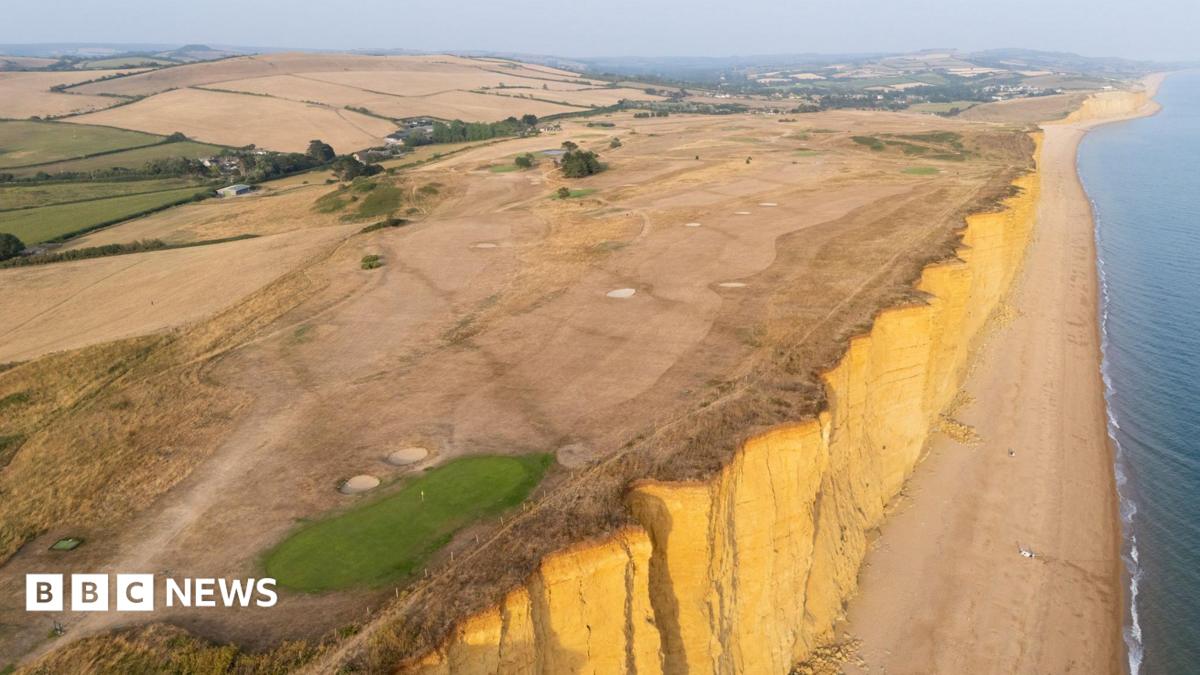
The combination of low rainfall and prolonged high temperatures - meaning greater evaporation of moisture - has quickly depleted water reserves in soils, vegetation and rivers.
These conditions have led to a "flash drought", the EA has said. This is where drought begins suddenly rather than over many months or years.
Today's announcement means there have been three droughts in the past five years – 2022, 2025 and now 2026.
While droughts happen naturally, scientists say that climate change is raising the risks, with higher summer temperatures drying out soils more quickly. This can lead to more severe and longer-lasting droughts.
Some researchers have also highlighted underinvestment in water infrastructure as an issue.
The EA has previously warned that England's public water supplies could face a shortfall of 5 billion litres per day by the middle of the century without urgent action.
"This drought isn't just about a lack of rain," said Prof Hayley Fowler of Newcastle University. "It's the result of hotter temperatures from a warming climate, rising water demand, ageing infrastructure and too much water being lost through leaks."
The government has committed to improving the water industry and water companies have announced plans for investment, but bills are rising as a result.
The dry conditions have consequences for nature, with Atlantic salmon unable to move upstream where river flows are low. Agriculture has also taken a hit.
Paul Tompkins, deputy president of the National Farmers' Union of England and Wales (NFU), said: "Farmers and growers have always had to contend with the weather, but what they are experiencing now is climate change in action. More extreme conditions [are] making it harder, riskier and more costly to produce the nation's food."
He added the issue of drought is something that "should matter to everyone" as it affects the country's food security.
Some areas of the country have now entered their fourth heatwave of the year.
Amber and yellow heat health alerts have come into force for parts of the UK, with temperatures potentially peaking at 35C in parts of south-east England on Wednesday.
The hot, dry weather has created ideal conditions for wildfires to spread. The National Fire Chiefs Council has warned that wildfire risk "remains elevated across the UK".
More than 200 wildfire incidents have been reported in England and Wales over the past two weeks, it said.
The Met Office has separately announced that the new June temperature record set last month was even higher than previously thought, following verification processes.
The previously-reported figure of 37.7C in Lingwood, Norfolk, on 26 June 2026 has been updated to 38.0C – smashing the UK's previous June high of 35.6C.
Additional reporting by Jess Carr
Read the full story at BBC ↗
The drought declarations follow an exceptionally hot and dry period, which has hit rivers, crops and nature
This lens runs the verified story through Cinnamon's AI — wired in the next step.
The combination of low rainfall and prolonged high temperatures - meaning greater evaporation of moisture - has quickly depleted water reserves in soils, vegetation and rivers.
These conditions have led to a "flash drought", the EA has said. This is where drought begins suddenly rather than over many months or years.
Today's announcement means there have been three droughts in the past five years – 2022, 2025 and now 2026.
While droughts happen naturally, scientists say that climate change is raising the risks, with higher summer temperatures drying out soils more quickly. This can lead to more severe and longer-lasting droughts.
Some researchers have also highlighted underinvestment in water infrastructure as an issue.
The EA has previously warned that England's public water supplies could face a shortfall of 5 billion litres per day by the middle of the century without urgent action.
"This drought isn't just about a lack of rain," said Prof Hayley Fowler of Newcastle University. "It's the result of hotter temperatures from a warming climate, rising water demand, ageing infrastructure and too much water being lost through leaks."
The government has committed to improving the water industry and water companies have announced plans for investment, but bills are rising as a result.
The dry conditions have consequences for nature, with Atlantic salmon unable to move upstream where river flows are low. Agriculture has also taken a hit.
Paul Tompkins, deputy president of the National Farmers' Union of England and Wales (NFU), said: "Farmers and growers have always had to contend with the weather, but what they are experiencing now is climate change in action. More extreme conditions [are] making it harder, riskier and more costly to produce the nation's food."
He added the issue of drought is something that "should matter to everyone" as it affects the country's food security.
Some areas of the country have now entered their fourth heatwave of the year.
Amber and yellow heat health alerts have come into force for parts of the UK, with temperatures potentially peaking at 35C in parts of south-east England on Wednesday.
The hot, dry weather has created ideal conditions for wildfires to spread. The National Fire Chiefs Council has warned that wildfire risk "remains elevated across the UK".
More than 200 wildfire incidents have been reported in England and Wales over the past two weeks, it said.
The Met Office has separately announced that the new June temperature record set last month was even higher than previously thought, following verification processes.
The previously-reported figure of 37.7C in Lingwood, Norfolk, on 26 June 2026 has been updated to 38.0C – smashing the UK's previous June high of 35.6C.
Additional reporting by Jess Carr
Read the full story at BBC ↗
The combination of low rainfall and prolonged high temperatures - meaning greater evaporation of moisture - has quickly depleted water reserves in soils, vegetation and rivers.
These conditions have led to a "flash drought", the EA has said. This is where drought begins suddenly rather than over many months or years.
Today's announcement means there have been three droughts in the past five years – 2022, 2025 and now 2026.
While droughts happen naturally, scientists say that climate change is raising the risks, with higher summer temperatures drying out soils more quickly. This can lead to more severe and longer-lasting droughts.
Some researchers have also highlighted underinvestment in water infrastructure as an issue.
The EA has previously warned that England's public water supplies could face a shortfall of 5 billion litres per day by the middle of the century without urgent action.
"This drought isn't just about a lack of rain," said Prof Hayley Fowler of Newcastle University. "It's the result of hotter temperatures from a warming climate, rising water demand, ageing infrastructure and too much water being lost through leaks."
The government has committed to improving the water industry and water companies have announced plans for investment, but bills are rising as a result.
The dry conditions have consequences for nature, with Atlantic salmon unable to move upstream where river flows are low. Agriculture has also taken a hit.
Paul Tompkins, deputy president of the National Farmers' Union of England and Wales (NFU), said: "Farmers and growers have always had to contend with the weather, but what they are experiencing now is climate change in action. More extreme conditions [are] making it harder, riskier and more costly to produce the nation's food."
He added the issue of drought is something that "should matter to everyone" as it affects the country's food security.
Some areas of the country have now entered their fourth heatwave of the year.
Amber and yellow heat health alerts have come into force for parts of the UK, with temperatures potentially peaking at 35C in parts of south-east England on Wednesday.
The hot, dry weather has created ideal conditions for wildfires to spread. The National Fire Chiefs Council has warned that wildfire risk "remains elevated across the UK".
More than 200 wildfire incidents have been reported in England and Wales over the past two weeks, it said.
The Met Office has separately announced that the new June temperature record set last month was even higher than previously thought, following verification processes.
The previously-reported figure of 37.7C in Lingwood, Norfolk, on 26 June 2026 has been updated to 38.0C – smashing the UK's previous June high of 35.6C.
Additional reporting by Jess Carr
Read the full story at BBC ↗
This lens runs the verified story through Cinnamon's AI — wired in the next step.
- The drought declarations follow an exceptionally hot and dry period, which has hit rivers, crops and nature