Nine Lives, the feral cat that terrorised New Zealand’s rare ducks, is caught after three years
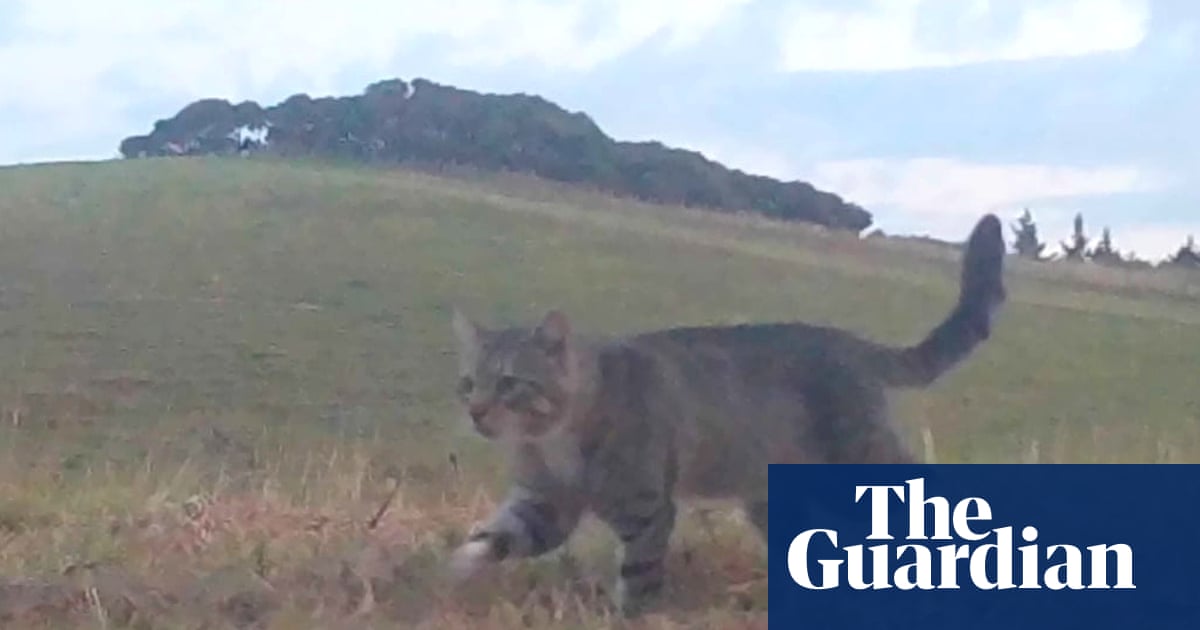
A notorious feral cat given the name “Nine Lives” because it eluded trappers for three years has been caught and killed in New Zealand, ending its devastating rampage against one of the country’s rare duck populations.
The cat, a large grey tabby, is estimated to have killed dozens of New Zealand’s rarest mainland duck – or 1% of its population – plus a host of kiwi chicks, native geckos and other native wildlife during the three years it was known to be roaming the Purerua peninsula, near the top of the North Island.
“We don’t take for granted that we’ve had this success because it had us baffled for so long,” said Andy Mentor, the project manager for Pest Free Purerua, a conservation project.
New Zealand has one of the highest rates of cat ownership in the world, and the impact of feral and domestic cats on biodiversity ignites fierce debate. Some on social media were horrified Nine Lives had been shot, believing it deserved to live, while others said its capture was “a fantastic result”.
Nine Lives will form part of that debate long after its death, with its body set to be taxidermied for use as a tool to educate the community about the devastating impact of feral cats on native species.
Nine Lives was first spotted on the Purerua peninsula in Northland in 2023. What ensued was a frustrating and twisted game of cat and mouse.
Pest Free Purerua had just introduced 20 pāteke, or brown teal – the country’s rarest mainland duck – to the peninsula, believing it had control over the feral cat population.
“But within a week we had our first death. We put up some cameras and we identified a particular cat with specific markings,” Mentor said. Another 15 pāteke were killed, with the same cat turning up.
“It was a really stressful time. So we brought in more traps, gear, night cameras to try and get to the root cause of the problem.”
The project managed to catch other feral cats over the next year, but Nine Lives remained elusive. They decided to release more pāteke in 2024 but the same cat appeared, killing another 15 of the 20 birds.
“This particular cat would be very erratic. It would show up in a particular place and then not show up for another two or three months. It would show up in the dusk, midnight, early morning, through the day, so it was never a predictable pattern, which made it very, very difficult to track,” Mentor said.
The team came close to catching it on a number of occasions, but each time it slipped their grasp, earning it the name Nine Lives.
At the end of July, Mentor and his team noticed the cat had turned up to a quarry three nights in a row, which was “quite unusual”. They laid out salmon, fried chicken and rabbit to attract the animal, and deployed cages and traps.
On 30 July, a notification on a cellphone camera showed a cat in one of the cages.
“We dispatched our trappers to check it out and there it was. So it was humanely shot,” Mentor said.
The animal will have its stomach contents examined to see what it was feeding on before being taxidermied. Mentor said it has likely also fed on kiwi chicks, native geckos and other native wildlife.
More than 2.5m feral cats roam New Zealand’s bush and on offshore islands, where they can grow up to a metre long, including their tail. They have destroyed native wildlife and hunted some bird species to the brink of extinction.
In November, the government announced feral cats would be added to the country’s world-leading Predator-Free 2050 strategy. Mentor said moving from the suppression of cats to an elimination strategy will be a “real step up” for the peninsula and the team may restart introducing pāteke once more.
But for now, conservationists will celebrate the capture of Nine Lives, as well as honour their most evasive adversary. “Nine Lives needs to be given a certain amount of dignity and respect,” said Mentor.
Read the full story at The Guardian ↗
A feral cat that lived on New Zealand's Purerua peninsula for three years has been caught and killed. The cat, a large grey tabby named Nine Lives by conservationists, killed approximately 1% of a population of pāteke (brown teal ducks) that were introduced to the peninsula as part of a conservation project, along with kiwi chicks and native geckos. Trappers pursued the cat for three years before successfully capturing it in late July. The cat's body will be examined and preserved for educational purposes. New Zealand has an estimated 2.5 million feral cats, which the government has identified as a priority in its Predator-Free 2050 biodiversity strategy, moving toward elimination rather than suppression of feral cat populations.
Read the full story at The Guardian ↗
A notorious feral cat given the name “Nine Lives” because it eluded trappers for three years has been caught and killed in New Zealand, ending its devastating rampage against one of the country’s rare duck populations.
The cat, a large grey tabby, is estimated to have killed dozens of New Zealand’s rarest mainland duck – or 1% of its population – plus a host of kiwi chicks, native geckos and other native wildlife during the three years it was known to be roaming the Purerua peninsula, near the top of the North Island.
“We don’t take for granted that we’ve had this success because it had us baffled for so long,” said Andy Mentor, the project manager for Pest Free Purerua, a conservation project.
New Zealand has one of the highest rates of cat ownership in the world, and the impact of feral and domestic cats on biodiversity ignites fierce debate. Some on social media were horrified Nine Lives had been shot, believing it deserved to live, while others said its capture was “a fantastic result”.
Nine Lives will form part of that debate long after its death, with its body set to be taxidermied for use as a tool to educate the community about the devastating impact of feral cats on native species.
Nine Lives was first spotted on the Purerua peninsula in Northland in 2023. What ensued was a frustrating and twisted game of cat and mouse.
Pest Free Purerua had just introduced 20 pāteke, or brown teal – the country’s rarest mainland duck – to the peninsula, believing it had control over the feral cat population.
“But within a week we had our first death. We put up some cameras and we identified a particular cat with specific markings,” Mentor said. Another 15 pāteke were killed, with the same cat turning up.
“It was a really stressful time. So we brought in more traps, gear, night cameras to try and get to the root cause of the problem.”
The project managed to catch other feral cats over the next year, but Nine Lives remained elusive. They decided to release more pāteke in 2024 but the same cat appeared, killing another 15 of the 20 birds.
“This particular cat would be very erratic. It would show up in a particular place and then not show up for another two or three months. It would show up in the dusk, midnight, early morning, through the day, so it was never a predictable pattern, which made it very, very difficult to track,” Mentor said.
The team came close to catching it on a number of occasions, but each time it slipped their grasp, earning it the name Nine Lives.
At the end of July, Mentor and his team noticed the cat had turned up to a quarry three nights in a row, which was “quite unusual”. They laid out salmon, fried chicken and rabbit to attract the animal, and deployed cages and traps.
On 30 July, a notification on a cellphone camera showed a cat in one of the cages.
“We dispatched our trappers to check it out and there it was. So it was humanely shot,” Mentor said.
The animal will have its stomach contents examined to see what it was feeding on before being taxidermied. Mentor said it has likely also fed on kiwi chicks, native geckos and other native wildlife.
More than 2.5m feral cats roam New Zealand’s bush and on offshore islands, where they can grow up to a metre long, including their tail. They have destroyed native wildlife and hunted some bird species to the brink of extinction.
In November, the government announced feral cats would be added to the country’s world-leading Predator-Free 2050 strategy. Mentor said moving from the suppression of cats to an elimination strategy will be a “real step up” for the peninsula and the team may restart introducing pāteke once more.
But for now, conservationists will celebrate the capture of Nine Lives, as well as honour their most evasive adversary. “Nine Lives needs to be given a certain amount of dignity and respect,” said Mentor.
Read the full story at The Guardian ↗
A feral cat named Nine Lives eluded trappers for three years on New Zealand's Purerua peninsula before being caught and killed in late July. The cat killed dozens of pāteke (brown teal ducks), estimated at approximately 1% of the country's rarest mainland duck population, plus kiwi chicks, native geckos and other native wildlife. The cat was first spotted in 2023 and displayed unpredictable behaviour, appearing at irregular times and locations, making it difficult to trap. Trappers identified the cat through camera footage and distinctive markings, and successfully captured it after it visited a quarry three nights in a row in late July. The cat's body will be examined for stomach contents and taxidermied for use as an educational tool about feral cat impacts on native species. New Zealand has an estimated 2.5 million feral cats roaming wild, some growing up to a metre in length. The government has added feral cats to its Predator-Free 2050 strategy, shifting from suppression to elimination efforts. The capture represents a success for the Pest Free Purerua conservation project after years of frustration. Conservationists celebrated the capture while expressing the view that Nine Lives deserves dignity and respect. Public response was divided, with some viewing the killing as necessary for conservation and others believing the cat deserved to live.
Read the full story at The Guardian ↗
- A feral cat named Nine Lives, which evaded capture for three years on New Zealand's Purerua peninsula, has been caught and humanely killed after killing dozens of the country's rarest mainland ducks (pāteke) and other native wildlife.
- The cat killed approximately 1% of the pāteke population introduced to the conservation project, plus kiwi chicks, geckos and other species during its three-year presence.
- New Zealand's estimated 2.5 million feral cats pose a significant threat to native biodiversity; the government has added feral cats to its Predator-Free 2050 strategy, shifting from suppression to elimination efforts.