Oil prices rise sharply after Iran launches attacks on tankers near strait of Hormuz
 ✓
✓Oil markets have recorded the sharpest price rise in nearly two months after a series of attacks on fossil fuel tankers near the strait of Hormuz led Donald Trump to declare that the ceasefire deal with Iran was “over”.
Brent, the global crude benchmark rose by 5% on Wednesday to more than $78 (£58) a barrel, the highest price since the US and Iran agreed the ceasefire while negotiating an end to the war last month.
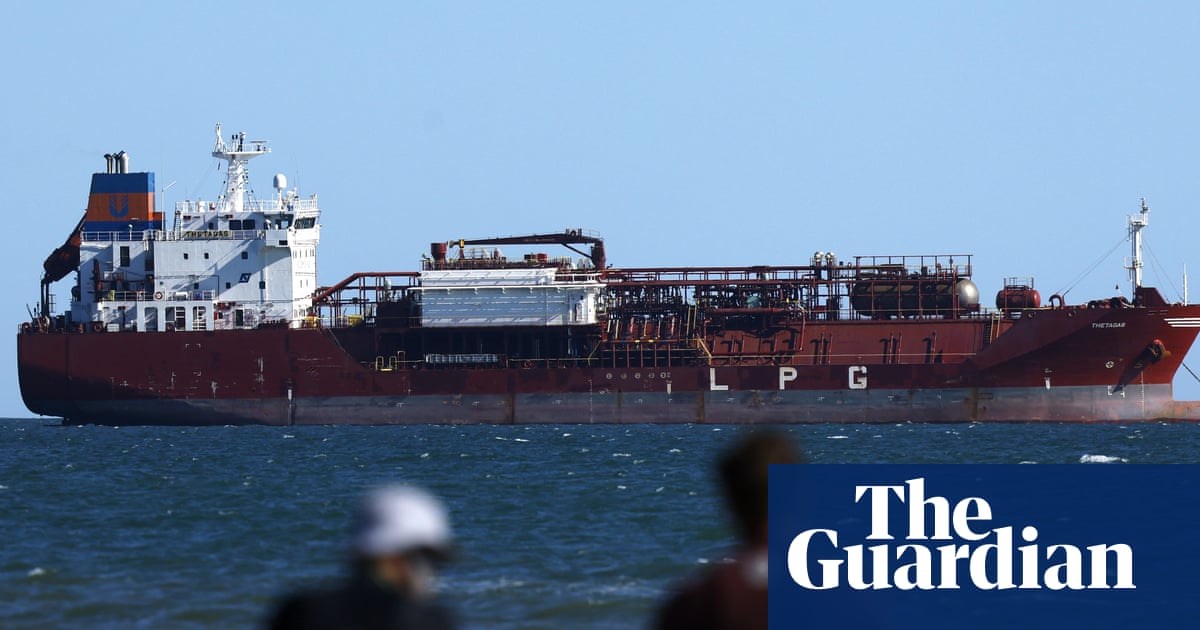
The fragile ceasefire appeared to disintegrate after Iran launched attacks on at least three tankers transiting the strait of Hormuz within 48 hours, including a vessel carrying about 8m cubic feet of liquified natural gas, which is considered the cargo most at risk of exploding.
At least four oil and gas tankers have turned back from trying to transit the strait, according to ship-tracking data, which has hampered efforts to normalise flows of oil and gas through the vital trade route after months of disruption.
Jorge León, the head of geopolitical analysis at Rystad Energy, said: “Tanker traffic through the strait of Hormuz has essentially stopped, which tells you more about risk perception right now than any statement from Washington or Tehran.”
The “real test” will come after the burial ceremony of Iran’s supreme leader Ayatollah Ali Khamenei later this week, said León, once the US and Iran “show whether there is still an appetite for a diplomatic off-ramp”.
Global oil prices have fallen from highs of more than $110 a barrel in late May as more tankers were able to transit the strait amid hopes the US-Iran talks would bring an end to the war which has disrupted flows of about 20m barrels of oil a day from Gulf producers.
In Europe, the collapse of the ceasefire reignited a 5% increase in gas market prices. The benchmark Dutch contract increased by more than €2.40 to €49 per megawatt hour (MWh), while the UK equivalent rose by 6p to 116.75p per therm.
The return of rising energy prices risks raising household costs which have faced the steepest rise in summer energy bills in four years. If sustained, the higher market costs could mean rising gas and electricity prices in the winter as well as higher prices at the pump.
Luke Bosdet, a spokesperson for the AA motoring group, said: “This is news UK drivers didn’t want to hear ahead of the summer getaway later in the month. The ending of the ceasefire is ominous for UK pump prices but not all is lost.
“For starters, a feature of the US-Iran war has been highly volatile oil prices that have fed through to the pump. However, the sharp fall in petrol and diesel prices has by and large tracked the more recent fall in wholesale costs and come through to the pump far more quickly than would have been expected previously,” he said.
Market analysts have stopped short of forecasting a return to oil prices of more than $100 a barrel after finding the global market was more resilient to disruption than initially feared.
“Nothing can be ruled out,” said Tamas Varga, an analyst at PVM Oil Associates. “But the market’s admirable adaptability in weathering the original crisis, and the $56 decline in the price of Brent during May and June, must be kept in mind when revising oil price forecasts.”
The market initially expected a 20m barrel a day loss to global crude supplies as a result of the effective blockade on the strait of Hormuz from March this year. But Gulf producers have been able to use alternative supply routes and clandestine vessel crossings to reduced the net loss to 12.2m barrels a day.
Meanwhile, higher production from unaffected producers, the release of emergency crude stocks, and US sanctions waivers covering Russian and Iranian oil in floating storage added a further 9.1m barrels of supply.
“The conclusion is that the effective loss from the original 20m barrels a day was only 3.1m,” Varga added.
Read the full story at The Guardian ↗ · Axios ↗ · Axios ↗ · Axios ↗
Following attacks on at least three tankers in the Strait of Hormuz over 48 hours, oil prices moved to their highest level since ceasefire negotiations began last month. Brent crude rose 5% to over $78 per barrel on Wednesday. One targeted vessel carried liquified natural gas. At least four tankers subsequently turned back from transit. Donald Trump stated the ceasefire was concluded. European gas prices increased 5-6%. Analysts note that while the original blockade was forecast to reduce global supplies by 20 million barrels daily, alternative routes and reserves limited actual net losses to 3.1 million barrels daily. The market's capacity to absorb disruption has exceeded initial expectations. Geopolitical analysts identify Iran's supreme leader's burial ceremony later this week as a potential juncture for renewed diplomatic engagement. Sustained energy price increases could raise UK household costs this summer and winter, though recent wholesale declines have reached consumers relatively quickly.
Read the full story at The Guardian ↗ · Axios ↗ · Axios ↗ · Axios ↗
Oil markets have recorded the sharpest price rise in nearly two months after a series of attacks on fossil fuel tankers near the strait of Hormuz led Donald Trump to declare that the ceasefire deal with Iran was “over”.
Brent, the global crude benchmark rose by 5% on Wednesday to more than $78 (£58) a barrel, the highest price since the US and Iran agreed the ceasefire while negotiating an end to the war last month.
The fragile ceasefire appeared to disintegrate after Iran launched attacks on at least three tankers transiting the strait of Hormuz within 48 hours, including a vessel carrying about 8m cubic feet of liquified natural gas, which is considered the cargo most at risk of exploding.
At least four oil and gas tankers have turned back from trying to transit the strait, according to ship-tracking data, which has hampered efforts to normalise flows of oil and gas through the vital trade route after months of disruption.
Jorge León, the head of geopolitical analysis at Rystad Energy, said: “Tanker traffic through the strait of Hormuz has essentially stopped, which tells you more about risk perception right now than any statement from Washington or Tehran.”
The “real test” will come after the burial ceremony of Iran’s supreme leader Ayatollah Ali Khamenei later this week, said León, once the US and Iran “show whether there is still an appetite for a diplomatic off-ramp”.
Global oil prices have fallen from highs of more than $110 a barrel in late May as more tankers were able to transit the strait amid hopes the US-Iran talks would bring an end to the war which has disrupted flows of about 20m barrels of oil a day from Gulf producers.
In Europe, the collapse of the ceasefire reignited a 5% increase in gas market prices. The benchmark Dutch contract increased by more than €2.40 to €49 per megawatt hour (MWh), while the UK equivalent rose by 6p to 116.75p per therm.
The return of rising energy prices risks raising household costs which have faced the steepest rise in summer energy bills in four years. If sustained, the higher market costs could mean rising gas and electricity prices in the winter as well as higher prices at the pump.
Luke Bosdet, a spokesperson for the AA motoring group, said: “This is news UK drivers didn’t want to hear ahead of the summer getaway later in the month. The ending of the ceasefire is ominous for UK pump prices but not all is lost.
“For starters, a feature of the US-Iran war has been highly volatile oil prices that have fed through to the pump. However, the sharp fall in petrol and diesel prices has by and large tracked the more recent fall in wholesale costs and come through to the pump far more quickly than would have been expected previously,” he said.
Market analysts have stopped short of forecasting a return to oil prices of more than $100 a barrel after finding the global market was more resilient to disruption than initially feared.
“Nothing can be ruled out,” said Tamas Varga, an analyst at PVM Oil Associates. “But the market’s admirable adaptability in weathering the original crisis, and the $56 decline in the price of Brent during May and June, must be kept in mind when revising oil price forecasts.”
The market initially expected a 20m barrel a day loss to global crude supplies as a result of the effective blockade on the strait of Hormuz from March this year. But Gulf producers have been able to use alternative supply routes and clandestine vessel crossings to reduced the net loss to 12.2m barrels a day.
Meanwhile, higher production from unaffected producers, the release of emergency crude stocks, and US sanctions waivers covering Russian and Iranian oil in floating storage added a further 9.1m barrels of supply.
“The conclusion is that the effective loss from the original 20m barrels a day was only 3.1m,” Varga added.
Read the full story at The Guardian ↗ · Axios ↗ · Axios ↗ · Axios ↗
Oil prices rose 5% to more than $78 per barrel on Wednesday, the highest price since US-Iran ceasefire negotiations began last month Iran launched attacks on at least three tankers near the Strait of Hormuz within 48 hours One attacked vessel carried approximately 8 million cubic feet of liquified natural gas At least four oil and gas tankers turned back from transiting the strait Donald Trump declared the ceasefire deal with Iran was 'over' European gas prices increased 5-6% in response Tanker traffic through the strait of Hormuz has 'essentially stopped', which reflects risk perception more than official statements The 'real test' of diplomatic prospects will come after Iran's supreme leader's burial ceremony later this week Global oil markets have demonstrated greater resilience to disruption than initially feared The original blockade forecast 20 million barrels per day supply loss, but alternative routes and reserves limited actual net loss to 3.1 million barrels per day Market analysts have stopped short of forecasting oil prices returning above $100 per barrel Sustained energy price increases risk raising UK household costs this summer and winter
Read the full story at The Guardian ↗ · Axios ↗ · Axios ↗ · Axios ↗
- Oil prices rose 5% to over $78/barrel after Iran attacked at least three tankers near the Strait of Hormuz within 48 hours
- Donald Trump declared the US-Iran ceasefire deal 'over' following the attacks, though analysts await Iran's supreme leader's burial ceremony later this week as a potential diplomatic turning point
- At least four tankers turned back from the strait; European gas prices also rose 5-6% in response to the disruption
- Global oil markets have shown greater resilience than feared—alternative supply routes and strategic reserves limited actual supply loss to 3.1m barrels per day despite initial 20m barrel blockade concerns
- Sustained price rises could increase UK household energy bills this summer and winter, though recent wholesale cost falls have reached consumers faster than historical patterns