One Nation is campaigning directly to Christians. But will party policies rub against worshippers’ conscience?
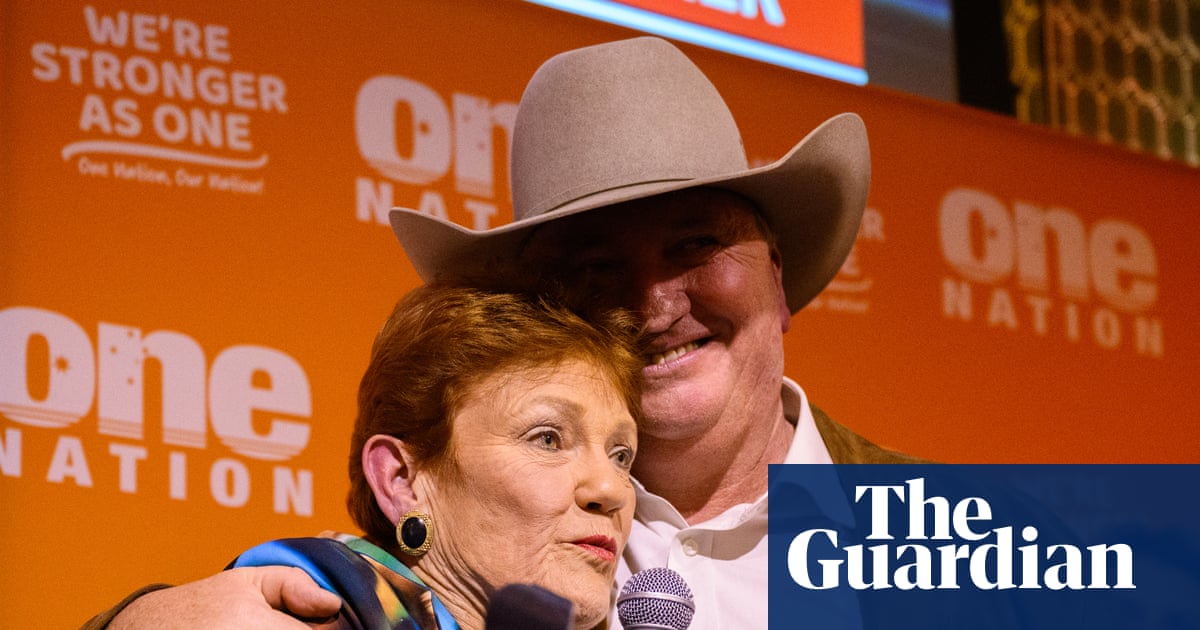
When One Nation recruit Barnaby Joyce addressed anti-abortion campaigners at a Sydney rally in early June, the former deputy prime minister told the audience he could see “about 1,500 people who can hand out how to vote cards”.
Christian leaders spoke at the rally. The Lord’s Prayer was recited. Many there were active churchgoers.
As Pauline Hanson’s popularity surges, her party has extended its hand to Australia’s Christian community, an elusive group of voters who can swing behind a party in the right conditions.
Will Australian Christians take up Joyce’s instruction and support One Nation?
Christianity is the largest religion in Australia, with about 44% of the population identifying as Christian. Anglicanism and Catholicism are the two largest affiliations.
About one in five Australians regularly attend church, according to the National Church Life Survey (NCLS).
While voting patterns of churchgoers historically favour the Coalition, Christians are known to abruptly shift their vote based on wide-ranging policy issues affecting everything from abortion, marriage and religious schools to social services, immigration, climate and refugees.
Kevin Rudd drew many conservative voters to Labor in 2007 by being a practising Christian who argued that a faithful ethos must care for the marginalised.
In 2019, Scott Morrison won many Christian votes for the conservative side, helping him claim the “miracle” election result in a year when religious freedom policies were hotly debated.
One Nation’s strong rhetoric against abortion may entice some Christians into the party fold, but believers may not like everything they hear given Hanson’s wider platform is constructed around her long-held, anti-immigration position.
“The anti-immigration, anti-refugee stance of One Nation will be a stumbling block to people whose faith calls them to welcome the stranger and to view all people as precious because they’re made in the image of God,” the executive director of the Centre for Public Christianity, Simon Smart, says.
“Those Christians who are drawn to the rhetoric of Pauline Hanson may have good reason to pause and reconsider.”
One of the problems for One Nation in winning the religious vote is that a sizeable number of Christian migrant families attend church services conducted in their mother tongue, which will rub against Hanson’s quest for a “monocultural” Australia.
She has warned against a “growing language problem which is a function of immigration”.
Smart says talk of monoculture may rub against the Christian conscience.
“The Christian vision is of communion and community between people of every tribe, nation and tongue; there’s a richness in the diversity of humanity that doesn’t seem to sit well with that monoculture idea,” he says.
In Australia, the proportion of church attenders born overseas has risen to more than one in three, according to the NCLS. About a quarter of churchgoers speak a language other than English at home.
Hanson is recording far higher net approval ratings than the prime minister, Anthony Albanese, or the opposition leader, Angus Taylor, with her party now drawing aspirational supporters away from the Coalition and Labor.
Among Christians, One Nation threatens to take the Coalition’s evangelicals and Labor’s traditional working-class Catholics.
Academics have mixed views on whether the Christian vote is influential enough to sway elections, given the diversity of views held by those in the pews.
John Black, a former Labor senator and founder of demographic profiling company Australian Development Strategies, says if Australia does have a Bible belt, it is located on the suburban peripheries of major cities, which are densely populated areas often in marginal seats.
He says while “mortgage belt” issues provide the foundation of political support in those seats, religious voters can influence a tight vote if Christians are convinced to vote as a bloc.
after newsletter promotion
Part of Rudd’s appeal to Christians in 2007 was that he could articulate his faith and even reference the teachings of German theologian and anti-Nazi dissident Dietrich Bonhoeffer.
Several prominent Coalition politicians have also expressed their Christian faith earnestly, which is a draw for churchgoers.
John Warhurst, emeritus professor of political science at the Australian National University, says One Nation doesn’t have an obvious Christian voice who can appeal to the broader churchgoing population.
“If One Nation is to have an impact among Christians, it would have to be through their policy program, and the general vibe that they’re representing believers.
“It’s not impossible – Donald Trump does well among certain Christian groups and it’s not because of his persona.”
Maybe that’s enough for One Nation too.
One Nation’s vision for Australia includes returning it to what Hanson describes as its “Judeo-Christian” values, amid broad warnings that the western way of life is under siege from “those coming into this country and bringing with them the troubles they have left behind”.
The party’s platform also includes a policy of refusing entry to migrants from nations known to foster ideas that are “incompatible with Australian values”. Hanson has questioned the existence of “good Muslims”; a remark she was censured for in the Senate.
In explicitly excluding other religions from its vision of Australia, One Nation appeals directly to that radical minority and could entice more moderate Christian voters to adopt her extreme views.
Mobilisation strategist at Christian humanitarian agency Act for Peace, Jarrod McKenna, says politicians rarely use the term “Judeo-Christian” to mean anything that Jesus actually taught.
“They are never using it to refer to love of neighbour and very rarely refer to welcoming the stranger,” says McKenna, who is also a pastor.
“If anything, the stranger is used as a scapegoat.”
It’s no coincidence that the rise of One Nation has come during a period of relentless housing and cost of living pressures, leaving many Australians searching for political answers outside mainstream parties.
Hanson concentrated her address at the National Press Club last month on attributing the housing crisis to demand caused by immigration, without noting the contribution of decades of chronic undersupply and investor-centric tax settings.
McKenna says the antidote to divisive rhetoric is to prioritise kindness and practical values like a “fair go” by addressing policy settings in the economy.
“The idea of a fair go, being kind and staying down to earth is a pretty good Aussie paraphrase of the biblical principle to act justly, love mercy and walk humbly with God,” he says.
“All that One Nation’s scapegoating does is cause us to bleed the best of who we are rather than actually address the problems.”
Read the full story at The Guardian ↗
One Nation is targeting Australia's Christian voters through direct engagement, including appearances at anti-abortion rallies where party figures have invited attendees to distribute how-to-vote cards. Christians comprise 44% of the Australian population, though regular church attendance is around 20%. Historically, churchgoers have favoured the Coalition, but they can shift support based on policies affecting abortion, marriage, social services, immigration and refugees. One Nation's anti-abortion stance may appeal to some Christians, but the party's strong anti-immigration and 'monocultural' positioning creates tension with Christian teachings about welcoming strangers and embracing diversity. More than one-third of Australian churchgoers were born overseas, and about a quarter speak languages other than English at home. Religious leaders have expressed concern that One Nation's vision of 'Judeo-Christian values' does not align with teachings about loving neighbours and welcoming the marginalised. One Nation does not have an obvious Christian spokesperson comparable to Kevin Rudd or Scott Morrison, who previously drew Christian votes through articulating faith commitments. Whether the party can mobilise Christian voters depends partly on whether its policy platform proves persuasive enough without such a visible Christian figure.
Read the full story at The Guardian ↗
When One Nation recruit Barnaby Joyce addressed anti-abortion campaigners at a Sydney rally in early June, the former deputy prime minister told the audience he could see “about 1,500 people who can hand out how to vote cards”.
Christian leaders spoke at the rally. The Lord’s Prayer was recited. Many there were active churchgoers.
As Pauline Hanson’s popularity surges, her party has extended its hand to Australia’s Christian community, an elusive group of voters who can swing behind a party in the right conditions.
Will Australian Christians take up Joyce’s instruction and support One Nation?
Christianity is the largest religion in Australia, with about 44% of the population identifying as Christian. Anglicanism and Catholicism are the two largest affiliations.
About one in five Australians regularly attend church, according to the National Church Life Survey (NCLS).
While voting patterns of churchgoers historically favour the Coalition, Christians are known to abruptly shift their vote based on wide-ranging policy issues affecting everything from abortion, marriage and religious schools to social services, immigration, climate and refugees.
Kevin Rudd drew many conservative voters to Labor in 2007 by being a practising Christian who argued that a faithful ethos must care for the marginalised.
In 2019, Scott Morrison won many Christian votes for the conservative side, helping him claim the “miracle” election result in a year when religious freedom policies were hotly debated.
One Nation’s strong rhetoric against abortion may entice some Christians into the party fold, but believers may not like everything they hear given Hanson’s wider platform is constructed around her long-held, anti-immigration position.
“The anti-immigration, anti-refugee stance of One Nation will be a stumbling block to people whose faith calls them to welcome the stranger and to view all people as precious because they’re made in the image of God,” the executive director of the Centre for Public Christianity, Simon Smart, says.
“Those Christians who are drawn to the rhetoric of Pauline Hanson may have good reason to pause and reconsider.”
One of the problems for One Nation in winning the religious vote is that a sizeable number of Christian migrant families attend church services conducted in their mother tongue, which will rub against Hanson’s quest for a “monocultural” Australia.
She has warned against a “growing language problem which is a function of immigration”.
Smart says talk of monoculture may rub against the Christian conscience.
“The Christian vision is of communion and community between people of every tribe, nation and tongue; there’s a richness in the diversity of humanity that doesn’t seem to sit well with that monoculture idea,” he says.
In Australia, the proportion of church attenders born overseas has risen to more than one in three, according to the NCLS. About a quarter of churchgoers speak a language other than English at home.
Hanson is recording far higher net approval ratings than the prime minister, Anthony Albanese, or the opposition leader, Angus Taylor, with her party now drawing aspirational supporters away from the Coalition and Labor.
Among Christians, One Nation threatens to take the Coalition’s evangelicals and Labor’s traditional working-class Catholics.
Academics have mixed views on whether the Christian vote is influential enough to sway elections, given the diversity of views held by those in the pews.
John Black, a former Labor senator and founder of demographic profiling company Australian Development Strategies, says if Australia does have a Bible belt, it is located on the suburban peripheries of major cities, which are densely populated areas often in marginal seats.
He says while “mortgage belt” issues provide the foundation of political support in those seats, religious voters can influence a tight vote if Christians are convinced to vote as a bloc.
after newsletter promotion
Part of Rudd’s appeal to Christians in 2007 was that he could articulate his faith and even reference the teachings of German theologian and anti-Nazi dissident Dietrich Bonhoeffer.
Several prominent Coalition politicians have also expressed their Christian faith earnestly, which is a draw for churchgoers.
John Warhurst, emeritus professor of political science at the Australian National University, says One Nation doesn’t have an obvious Christian voice who can appeal to the broader churchgoing population.
“If One Nation is to have an impact among Christians, it would have to be through their policy program, and the general vibe that they’re representing believers.
“It’s not impossible – Donald Trump does well among certain Christian groups and it’s not because of his persona.”
Maybe that’s enough for One Nation too.
One Nation’s vision for Australia includes returning it to what Hanson describes as its “Judeo-Christian” values, amid broad warnings that the western way of life is under siege from “those coming into this country and bringing with them the troubles they have left behind”.
The party’s platform also includes a policy of refusing entry to migrants from nations known to foster ideas that are “incompatible with Australian values”. Hanson has questioned the existence of “good Muslims”; a remark she was censured for in the Senate.
In explicitly excluding other religions from its vision of Australia, One Nation appeals directly to that radical minority and could entice more moderate Christian voters to adopt her extreme views.
Mobilisation strategist at Christian humanitarian agency Act for Peace, Jarrod McKenna, says politicians rarely use the term “Judeo-Christian” to mean anything that Jesus actually taught.
“They are never using it to refer to love of neighbour and very rarely refer to welcoming the stranger,” says McKenna, who is also a pastor.
“If anything, the stranger is used as a scapegoat.”
It’s no coincidence that the rise of One Nation has come during a period of relentless housing and cost of living pressures, leaving many Australians searching for political answers outside mainstream parties.
Hanson concentrated her address at the National Press Club last month on attributing the housing crisis to demand caused by immigration, without noting the contribution of decades of chronic undersupply and investor-centric tax settings.
McKenna says the antidote to divisive rhetoric is to prioritise kindness and practical values like a “fair go” by addressing policy settings in the economy.
“The idea of a fair go, being kind and staying down to earth is a pretty good Aussie paraphrase of the biblical principle to act justly, love mercy and walk humbly with God,” he says.
“All that One Nation’s scapegoating does is cause us to bleed the best of who we are rather than actually address the problems.”
Read the full story at The Guardian ↗
One Nation recruit Barnaby Joyce addressed anti-abortion campaigners at a Sydney rally in early June, telling the audience of approximately 1,500 people that they could distribute how-to-vote cards. Christianity is the largest religion in Australia, with about 44% of the population identifying as Christian. About one in five Australians regularly attend church according to the National Church Life Survey. Churchgoers historically favour the Coalition but can shift their vote based on wide-ranging policy issues including abortion, marriage, religious schools, social services, immigration, climate and refugees. Kevin Rudd drew many conservative voters to Labor in 2007 by being a practising Christian who argued that a faithful ethos must care for the marginalised. Scott Morrison won many Christian votes in 2019, partly due to religious freedom policies being hotly debated that year. One Nation's anti-immigration stance will be a stumbling block to Christians whose faith calls them to welcome the stranger and view all people as precious because they are made in the image of God. More than one in three churchgoers in Australia were born overseas, and about a quarter speak a language other than English at home, according to the National Church Life Survey. One Nation's talk of monoculture may rub against the Christian conscience because the Christian vision includes communion and community between people of every tribe, nation and tongue. Pauline Hanson has warned against a 'growing language problem which is a function of immigration' and described her vision as returning Australia to 'Judeo-Christian values'. One Nation's party platform includes refusing entry to migrants from nations known to foster ideas incompatible with Australian values, and Hanson has questioned the existence of 'good Muslims'. One Nation does not have an obvious Christian voice who can appeal to the broader churchgoing population in the way Kevin Rudd or Scott Morrison did. The rise of One Nation has coincided with relentless housing and cost of living pressures, leaving many Australians searching for political answers outside mainstream parties. Politicians who use the term 'Judeo-Christian' rarely refer to love of neighbour or welcoming the stranger, but instead use the stranger as a scapegoat.
Read the full story at The Guardian ↗
- One Nation is actively campaigning to Australia's Christian voters, with senior figures like Barnaby Joyce addressing rallies and appealing to anti-abortion sentiment.
- Christians make up 44% of Australia's population but only about 1 in 5 attend church regularly; they have historically favoured the Coalition but can shift votes based on specific policy issues.
- One Nation's anti-immigration and 'monocultural' vision conflicts with Christian teachings about welcoming strangers and valuing all people, according to religious leaders and commentators.
- Over one-third of Australian churchgoers are born overseas and about a quarter speak languages other than English at home, creating potential tension with One Nation's platform.
- One Nation lacks a prominent Christian spokesperson to appeal broadly to worshippers, though the party frames itself as defending 'Judeo-Christian values' against cultural change.