Oura Ring 5 review: a stunning generational leap for smart rings
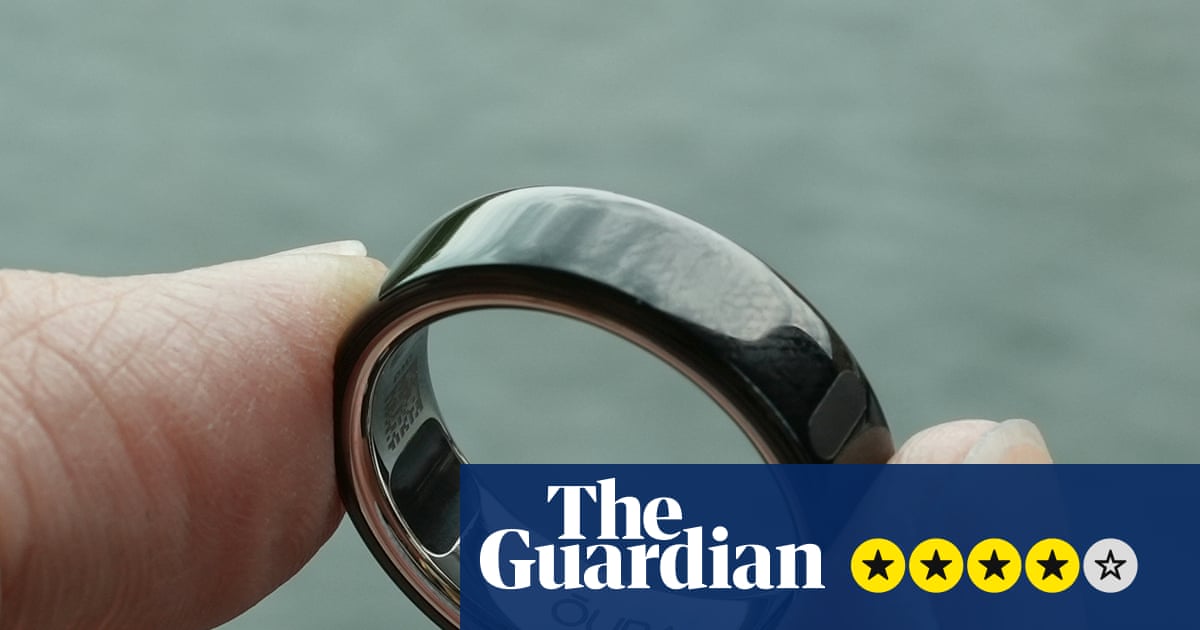
Oura’s new Ring 5 is a massive upgrade for smart rings, dramatically shrinking in size and weight to bring them right into line with standard wedding bands and other jewellery. It is finally a smart ring you can genuinely forget you’re wearing.
The Ring 5 is a straight replacement for the popular Ring 4 and costs from £399 (€399/$399/$A649), though it requires a £5.99 (€5.99/$5.99/A$9.99) a month subscription to access anything but basic daily metrics. An Oura is not a cheap proposition.
The new ring is 40% smaller in volume than its predecessor, which was already one of the most compact smart rings on the market. Oura has cut the width to just more than 6mm, thickness to 2.23mm and weight to a featherlight 2g for the Ring 5. But numbers and pictures don’t do it justice; the Ring 5 looks and feels far smaller in the flesh than predecessors or any competitors.
It is so much easier to live with: it won’t catch on pockets, dig in when you put your fingers together or hurt when you carry shopping bags or lift weights. And it looks even less like a piece of technology than the Ring 4, though that also makes it less of a conversation starter.
It still records your heart rate, blood oxygen, temperature and motion to track more than 50 different metrics involved in your sleep, activity, readiness, stress, resilience, heart and women’s health. That allows Oura to comprehensively log and analyse your general health as well as the best smartwatches, but without the bulk of other wearables.
The titanium Ring 5 comes in a choice of six colours and finishes, all with a harder, more scratch resistant coating than previous models to help it stay looking new for longer. In the weeks I’ve been wearing one, the black model still looks pristine even if it is not as hard as the ceramic Ring 4.
It comes in a choice of eight sizes, for which Oura provides a free sizing kit with plastic replicas that I recommend wearing for at least few days to find the best size. The ring has to be snug enough to stay put for the best data, but loose enough you can get it over your knuckle to charge it about once a week on the included dock or optional battery case (£99).
Despite the ring shrinking in size, the battery life has increased by a day or so depending on size. The smallest Ring 5 should get about six days between charges increasing to nine days for the largest. The size 8 as tested – the third smallest available – lasted just shy of eight days or about two days longer than the equivalent Ring 4, which is a remarkable achievement.
Width: 6.09mm
Thickness: 2.28mm
Weight: 2g (depending on size)
Size variations: eight (6 to 13)
Water resistance: 100m
Temperature range: -10C to 52C
Sensors: PPG (HR and Sp02), temperature, accelerometer
Rated battery life: 6 to 9 days
Connectivity: Bluetooth Low Energy
The ring collects your data, but the rest of Oura’s functions are served by the company’s app for Android and the iPhone, which syncs to your ring via Bluetooth.
The app is free, but the subscription is required for anything more than basic at-that-moment stats. Oura at least works hard for your money, offering some of the best data analysis available, including helpful explanations, actionable insights and advice. Oura continually adds to and refines the app experience in a way few competitors manage.
The main “Today” page highlights a key attribute of your health, such as your sleep when you wake up, changes to your heart rate or stress that help you decide a plan for the day. For instance, if it detects an elevated resting heart rate it will suggest you take it a bit easier as it shows signs of physiological stress, illness or limited recovery from exercise.
These highlights are useful with easy to understand explanations of what is going on and what to do about it. Scroll further down the page for widgets showing your sleep, daytime stress, heart rate and activity, as well as a full timeline of your day for logging when you woke up, any activity, meals or tags you’ve manually added, plus any exercise imported from other apps such as Strava.
The “Vitals” page shows seven key health categories: readiness, sleep, activity, stress, heart health, metabolic health and core metrics, with charts showing your normal range and today’s score for a quick overview. Tap into them for a comprehensive breakdown of your data.
The last “My Health” tab displays a long-term view across the key health pillars of sleep, cumulative stress and heart health ranking them between “needs care” and “thriving” so you can see how you’re doing at a glance. Again, there is plenty of data to interrogate, with explanations of what is happening available on tap.
My Health includes some interesting metrics such as cumulative stress, which is the build up of physiological stress when your recovery is not adequate to offset the daily stress of exercise and life over the past 31 days.
This page also lists your habits and routines that affect your health, such as activity, steps and sleep regularity, your chronotype and weekly, monthly, quarterly, annual and anniversary reports. The longer you use an Oura ring, the more useful the analysis becomes.
The Ring 5 automatically detects more than 40 different activities lasting more than 10 minutes or you can manually start an exercise with the Live activity feature, which gives you real-time heart rate and other metrics on your phone. But the ring relies on your phone for tracking distance, pace and your route, for instance, and is not as capable as a Garmin or similar running watch.
Oura’s proactive health monitoring features look out for changes in your baseline metrics to provide advice on what might be the cause. Symptom Radar looks for signs of illness such as a cold or flu, which works well if you’re otherwise not under strain, but struggles when you have outside stressors such as little kids. Health Radar, which launched in the US in June, adds overnight blood pressure and breathing disturbance monitoring, mirroring similar wellness features on rivals such as the Apple Watch.
In addition, the ring includes extensive women’s health tracking, including cycle, period and ovulation tracking, fertile window prediction, pregnancy tracking, hormonal birth control and menopause insights using body temperature changes combined with heart and respiration rate. The data can also be used with the Natural Cycles service for birth control and other services.
Oura’s AI Advisor chatbot can help analyse and discuss your various health stats, explain concepts and give advice on how to improve things. Unlike Gemini or ChatGPT, Advisor is not a general purpose AI and is built around your data. It can’t answer general questions, such as the weather or how to make a cocktail, but will offer surprisingly useful advice on sleep, recovery, activity and your general health while also being able to quickly pick out trends in your data over the long term.
Oura recently added a new model to give dedicated advice and analysis for the full spectrum of women’s reproductive health drawn from the user’s data combined with vetted research and knowledge sources.
The Oura Ring 5 is not repairable and the battery is not replaceable. The ring does not include any recycled materials, but Oura offers free recycling.
The Oura Ring 5 starts at £399 (€399/$399/$A649) in a range of colours and finishes. It comes with one month free membership subscription, which costs from £5.99 (€5.99/$5.99/A$9.99) a month and is essential.
For comparison, the Ring 4 costs £349, the Ring 4 Ceramic costs £399, the Ultrahuman Ring Air costs £329 and the Samsung Galaxy Ring costs £399.
The Oura Ring 5 is a generational leap for smart rings that sets a new, very high bar that will be tough for others to meet.
Shrinking down so dramatically has turned it from a chunky statement ring into something so similar in size and feel to standard bands you can forget you’re wearing it. If you didn’t know it was an Oura, you wouldn’t guess it was a piece of technology on your finger.
At the same time Oura’s managed to extend the battery life to about a week between charges, and made it more durable. It’s comfortable, lasts a long time and is tough enough to live with you.
The fantastic hardware is only part of the story. Oura’s strength lies in its excellent app, data analysis and advice, which is comprehensive and intelligible without a degree in data science. It betters most wearables, even health-focused smartwatches, while Oura’s comprehensive women’s health sets it apart.
The biggest issue is that, like almost all wearables of this nature, the Ring 5 cannot be repaired, ultimately making it disposable once the battery wears out, losing it a star.
You pay a pretty penny for it – for the ring and the required subscription – but the Oura Ring 5 is one of the very best health-tracking wearables available in any form.
Pros: slim, light, comfortable and looks like jewellery, comprehensive sleep and health tracking, market-leading woman’s health tracking, best-in-class analysis and helpful advice, long seven-day-plus battery life, 100-metre water resistance, effective alternative for health to a smartwatch.
Cons: expensive, monthly subscription, running and workout tracking is weak without phone, doesn’t do as much as a similarly priced smartwatch, cannot be repaired.
Read the full story at The Guardian ↗
Oura has released the Ring 5, a significant hardware refinement of its smart ring. The device is 40% smaller by volume than its predecessor, weighing just 2 grams with dimensions under 6.1mm width and 2.3mm thickness. Battery life has increased to 6–9 days depending on ring size, despite the reduction in physical dimensions. The titanium ring is available in six colour options and eight sizes, with improved scratch resistance compared to previous models. It tracks over 50 health metrics via PPG heart rate, blood oxygen, temperature and accelerometer sensors, delivering data on sleep, activity, readiness, stress, heart health, and women's reproductive health. The accompanying app provides comprehensive data analysis, trend identification and contextual health advice through an AI advisor; a monthly subscription (£5.99) is required for access beyond basic metrics. The Ring 5 costs £399. Trade-offs include non-repairability, reliance on a connected phone for running/workout metrics like distance and pace, and required subscription costs alongside the device purchase.
Read the full story at The Guardian ↗
Oura’s new Ring 5 is a massive upgrade for smart rings, dramatically shrinking in size and weight to bring them right into line with standard wedding bands and other jewellery. It is finally a smart ring you can genuinely forget you’re wearing.
The Ring 5 is a straight replacement for the popular Ring 4 and costs from £399 (€399/$399/$A649), though it requires a £5.99 (€5.99/$5.99/A$9.99) a month subscription to access anything but basic daily metrics. An Oura is not a cheap proposition.
The new ring is 40% smaller in volume than its predecessor, which was already one of the most compact smart rings on the market. Oura has cut the width to just more than 6mm, thickness to 2.23mm and weight to a featherlight 2g for the Ring 5. But numbers and pictures don’t do it justice; the Ring 5 looks and feels far smaller in the flesh than predecessors or any competitors.
It is so much easier to live with: it won’t catch on pockets, dig in when you put your fingers together or hurt when you carry shopping bags or lift weights. And it looks even less like a piece of technology than the Ring 4, though that also makes it less of a conversation starter.
It still records your heart rate, blood oxygen, temperature and motion to track more than 50 different metrics involved in your sleep, activity, readiness, stress, resilience, heart and women’s health. That allows Oura to comprehensively log and analyse your general health as well as the best smartwatches, but without the bulk of other wearables.
The titanium Ring 5 comes in a choice of six colours and finishes, all with a harder, more scratch resistant coating than previous models to help it stay looking new for longer. In the weeks I’ve been wearing one, the black model still looks pristine even if it is not as hard as the ceramic Ring 4.
It comes in a choice of eight sizes, for which Oura provides a free sizing kit with plastic replicas that I recommend wearing for at least few days to find the best size. The ring has to be snug enough to stay put for the best data, but loose enough you can get it over your knuckle to charge it about once a week on the included dock or optional battery case (£99).
Despite the ring shrinking in size, the battery life has increased by a day or so depending on size. The smallest Ring 5 should get about six days between charges increasing to nine days for the largest. The size 8 as tested – the third smallest available – lasted just shy of eight days or about two days longer than the equivalent Ring 4, which is a remarkable achievement.
Width: 6.09mm
Thickness: 2.28mm
Weight: 2g (depending on size)
Size variations: eight (6 to 13)
Water resistance: 100m
Temperature range: -10C to 52C
Sensors: PPG (HR and Sp02), temperature, accelerometer
Rated battery life: 6 to 9 days
Connectivity: Bluetooth Low Energy
The ring collects your data, but the rest of Oura’s functions are served by the company’s app for Android and the iPhone, which syncs to your ring via Bluetooth.
The app is free, but the subscription is required for anything more than basic at-that-moment stats. Oura at least works hard for your money, offering some of the best data analysis available, including helpful explanations, actionable insights and advice. Oura continually adds to and refines the app experience in a way few competitors manage.
The main “Today” page highlights a key attribute of your health, such as your sleep when you wake up, changes to your heart rate or stress that help you decide a plan for the day. For instance, if it detects an elevated resting heart rate it will suggest you take it a bit easier as it shows signs of physiological stress, illness or limited recovery from exercise.
These highlights are useful with easy to understand explanations of what is going on and what to do about it. Scroll further down the page for widgets showing your sleep, daytime stress, heart rate and activity, as well as a full timeline of your day for logging when you woke up, any activity, meals or tags you’ve manually added, plus any exercise imported from other apps such as Strava.
The “Vitals” page shows seven key health categories: readiness, sleep, activity, stress, heart health, metabolic health and core metrics, with charts showing your normal range and today’s score for a quick overview. Tap into them for a comprehensive breakdown of your data.
The last “My Health” tab displays a long-term view across the key health pillars of sleep, cumulative stress and heart health ranking them between “needs care” and “thriving” so you can see how you’re doing at a glance. Again, there is plenty of data to interrogate, with explanations of what is happening available on tap.
My Health includes some interesting metrics such as cumulative stress, which is the build up of physiological stress when your recovery is not adequate to offset the daily stress of exercise and life over the past 31 days.
This page also lists your habits and routines that affect your health, such as activity, steps and sleep regularity, your chronotype and weekly, monthly, quarterly, annual and anniversary reports. The longer you use an Oura ring, the more useful the analysis becomes.
The Ring 5 automatically detects more than 40 different activities lasting more than 10 minutes or you can manually start an exercise with the Live activity feature, which gives you real-time heart rate and other metrics on your phone. But the ring relies on your phone for tracking distance, pace and your route, for instance, and is not as capable as a Garmin or similar running watch.
Oura’s proactive health monitoring features look out for changes in your baseline metrics to provide advice on what might be the cause. Symptom Radar looks for signs of illness such as a cold or flu, which works well if you’re otherwise not under strain, but struggles when you have outside stressors such as little kids. Health Radar, which launched in the US in June, adds overnight blood pressure and breathing disturbance monitoring, mirroring similar wellness features on rivals such as the Apple Watch.
In addition, the ring includes extensive women’s health tracking, including cycle, period and ovulation tracking, fertile window prediction, pregnancy tracking, hormonal birth control and menopause insights using body temperature changes combined with heart and respiration rate. The data can also be used with the Natural Cycles service for birth control and other services.
Oura’s AI Advisor chatbot can help analyse and discuss your various health stats, explain concepts and give advice on how to improve things. Unlike Gemini or ChatGPT, Advisor is not a general purpose AI and is built around your data. It can’t answer general questions, such as the weather or how to make a cocktail, but will offer surprisingly useful advice on sleep, recovery, activity and your general health while also being able to quickly pick out trends in your data over the long term.
Oura recently added a new model to give dedicated advice and analysis for the full spectrum of women’s reproductive health drawn from the user’s data combined with vetted research and knowledge sources.
The Oura Ring 5 is not repairable and the battery is not replaceable. The ring does not include any recycled materials, but Oura offers free recycling.
The Oura Ring 5 starts at £399 (€399/$399/$A649) in a range of colours and finishes. It comes with one month free membership subscription, which costs from £5.99 (€5.99/$5.99/A$9.99) a month and is essential.
For comparison, the Ring 4 costs £349, the Ring 4 Ceramic costs £399, the Ultrahuman Ring Air costs £329 and the Samsung Galaxy Ring costs £399.
The Oura Ring 5 is a generational leap for smart rings that sets a new, very high bar that will be tough for others to meet.
Shrinking down so dramatically has turned it from a chunky statement ring into something so similar in size and feel to standard bands you can forget you’re wearing it. If you didn’t know it was an Oura, you wouldn’t guess it was a piece of technology on your finger.
At the same time Oura’s managed to extend the battery life to about a week between charges, and made it more durable. It’s comfortable, lasts a long time and is tough enough to live with you.
The fantastic hardware is only part of the story. Oura’s strength lies in its excellent app, data analysis and advice, which is comprehensive and intelligible without a degree in data science. It betters most wearables, even health-focused smartwatches, while Oura’s comprehensive women’s health sets it apart.
The biggest issue is that, like almost all wearables of this nature, the Ring 5 cannot be repaired, ultimately making it disposable once the battery wears out, losing it a star.
You pay a pretty penny for it – for the ring and the required subscription – but the Oura Ring 5 is one of the very best health-tracking wearables available in any form.
Pros: slim, light, comfortable and looks like jewellery, comprehensive sleep and health tracking, market-leading woman’s health tracking, best-in-class analysis and helpful advice, long seven-day-plus battery life, 100-metre water resistance, effective alternative for health to a smartwatch.
Cons: expensive, monthly subscription, running and workout tracking is weak without phone, doesn’t do as much as a similarly priced smartwatch, cannot be repaired.
Read the full story at The Guardian ↗
Oura Ring 5 is 40% smaller in volume than Ring 4 with width of 6.09mm, thickness of 2.28mm, and weight of 2g Battery life increased to 6–9 days depending on size, up from approximately 6–7 days for Ring 4 Device tracks heart rate, blood oxygen, temperature and motion to measure 50+ different health metrics Subscription to Oura costs £5.99 per month and is required for anything beyond basic daily metrics Ring 5 costs £399 and comes with one month free subscription Device includes 100-metre water resistance and temperature operation range of -10°C to 52°C Oura provides free sizing kit with eight available ring sizes (6 to 13) App offers activity auto-detection for 40+ activities and manual exercise tracking via Live activity feature Ring cannot be repaired and battery is not user-replaceable Running and workout tracking requires phone connection for distance, pace and route data The Ring 5 represents a generational leap for smart rings The device is so small you can forget you're wearing it It looks less like technology and more like standard jewellery Oura's app and data analysis betters most wearables and smartwatches The device's non-repairability makes it ultimately disposable
Read the full story at The Guardian ↗
- Oura Ring 5 is 40% smaller and lighter than Ring 4 while extending battery life to 6–9 days; costs £399 with required £5.99/month subscription
- Device tracks 50+ health metrics including sleep, heart rate, stress, and comprehensive women's health; app provides data analysis and AI-powered health advice
- Ring is durable, water-resistant to 100m, and comes in 8 sizes; cannot be repaired and requires phone for running/workout distance tracking