Outcry after ICE violently detains US citizen walking to high school: ‘I thought they were going to kill me’
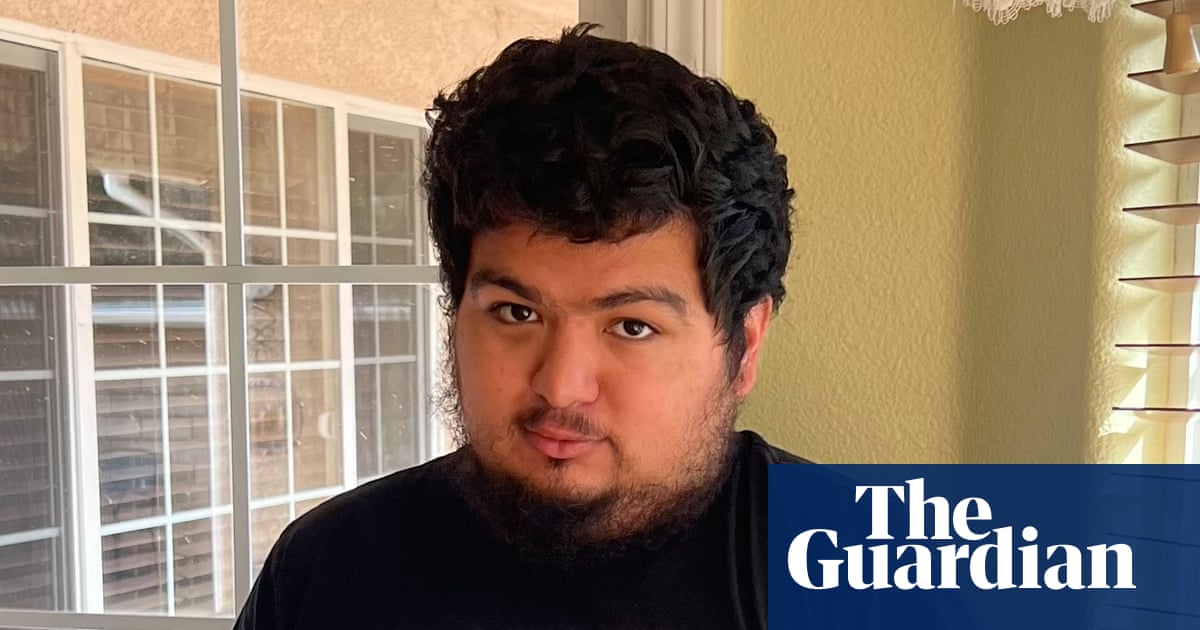
The violent ICE detention of a US citizen with disabilities as he walked to his high school has sparked outrage in California where leaders are condemning the incident as racial profiling and calling on authorities to investigate.
Erik Zepeda, a 20-year-old high school student, was stopped by Immigration and Customs Enforcement (ICE) officers last month in the small agricultural city of Santa Maria, famed for its strawberry harvest, where 79% of residents are Latino. His wrist was broken and later required surgery.
Zepeda, who has disabilities that affect his physical reflexes and ability to communicate verbally, told the Guardian in writing that he was “walking to school the same way I do every day” when the ICE agents “tackled me and handcuffed me (and) hurt me”.
“I thought they were going to kill me,” Zepeda said. “I did not do anything wrong, and they should never have done that. I don’t want this to happen to anyone else.”
An ICE-watch observer who witnessed the incident unfold on 21 October told the Guardian that masked ICE agents approached Zepeda from behind, pinned him face-down on the ground and put him in a car. The agents then drove the student around for a while before letting him out. With a black eye and his wrist in severe pain, Zepeda walked the remaining half mile to his school, where staff called an ambulance.
The observer, who volunteers with a local rapid response network to document ICE activity, asked not to be named due to fears of retaliation from federal officials. To independently verify the observer’s account, the Guardian reviewed dashcam and phone videos that the observer recorded of the incident.
Local activists and US lawmakers are calling the ordeal the latest example of ICE brutality.
“ICE’s assault and wrongful detainment of Erik Zepeda was grotesque and heartbreaking,” said Adam Schiff, a Democratic US senator from California, in a statement to the Guardian. “There must be accountability for what happened to Erik.”
Democratic representative Salud Carbajal, whose central coast district includes Santa Maria, said during a press conference that he was “outraged” by the incident, calling the ICE agents’ conduct “thuggish” and racial profiling “rampant”.
In an Oct. 29 letter to the Department of Homeland Security (DHS) and ICE, Carbajal called for “a full, transparent investigation” into Zepeda’s detention.
The incident comes amid a surge of ICE activity in California that started in early October and has led to multiple hospitalizations. Days earlier, agents broke the arm of Ricardo Gonzalez, also a US citizen, in Long Beach. In videos, Gonzalez appears face-down in a gutter crying out for help while officers kneel on his back.
In the Bay Area, two separate ICE arrests also led to hospitalizations, sparking anti-ICE protests outside of an Oakland hospital.
Santa Maria police chief Christopher Williams told the Guardian that an investigation into the incident was “ongoing” and confirmed that he reported the incident to the county district attorney, the California department of justice, and DHS.
In a statement, Santa Barbara county district attorney John Savrnoch called the incident “deeply troubling.” He said his office was “coordinating with the appropriate authorities to gather information and determine the appropriate next steps.”
JP Cooney and Molly Gaston, former federal prosecutors who are now senior attorneys at legal nonprofit Democracy Forward, are representing Zepeda. They told the Guardian in a statement they “look forward to vindicating Mr Zepeda’s rights in court”.
Glenn Goldin, is a retired special education teacher who formerly taught Zepeda and remains a close mentor to him. He described Zepeda, who lives in a group home for adults with disabilities, as quiet, sensitive and a caring housemate, who loves the Golden State Warriors and likes to spend time scrolling TikTok.
After Zepeda’s terrifying encounter with ICE, Goldin said that he remains shaken and doesn’t plan to return to school for at least several weeks.
Goldin said Zepeda had worked up the courage to begin walking to school by himself last year.
“He’s felt very proud of himself, you know, he’s independent,” Goldin said. “I feel like they took that away from him.”
In response to questions from the Guardian about the incident, an ICE spokesperson said its officers were conducting “a targeted enforcement operation” when they encountered Zepeda, who “they believed matched the description of the criminal illegal alien target”, and that their use of force was justified.
“When the individual resisted officers, refused lawful commands, and assumed a fighting stance with clenched fists, they relied on their training to safely control the situation until they could confirm his identity, whereupon he was released,” the spokesperson said. “Claims that the individual suffered broken bones are FALSE. He never requested medical assistance.”
Cooney and Gaston, Zepeda’s attorneys, said that his hospital discharge records confirmed that he received surgery for his fractured wrist after the incident.
“ICE agents illegally assaulted Mr Zepeda and then issued a false public statement to cover it up,” the attorneys said.
The volunteer observer’s testimony and videos call key aspects of ICE’s version into question. Rather than a targeted operation, the ICE officers’ actions leading up to Zepeda’s detention point to a pattern of spontaneous immigration stops.
In the 20 minutes before ICE officers detained Zepeda, they had already pulled over two separate dark-skinned drivers and then let them go, according to the observer, who provided videos of both encounters to the Guardian.
The first ICE stop occurred around 7:08 am. Two ICE vehicles were stopped alongside a Santa Maria road as agents questioned a driver. After the agents drove away, the driver – who the observer said was a Hispanic man – can be heard saying to the observer, “I’m a US citizen” in a video reviewed by the Guardian.
About 10 minutes later one of the same ICE vehicles pulled over a truck with two people inside and then let them go, the observer’s video shows. The observer said they appeared to be Latino men.
The observer said they continued monitoring the ICE agents, who came to a sudden stop after they drove past Zepeda a few minutes later. Videos reviewed by the Guardian do not show the entire encounter but capture key moments of what unfolded next.
In the observer’s dashcam footage, two masked agents are seen hopping out and quickly approaching Zepeda from behind as he walks along a sidewalk wearing a hoodie as a light rain falls. Zepeda appears to notice the masked officers for the first time when one touches his arm; he immediately shakes his arm loose, just as the dashcam frame shifts away.
The observer estimates that 10 to 20 seconds later they started recording on their phone. In the footage, Zepeda is seen lying face-down on a patch of grass as two officers restrain him. Three additional officers arrive and appear to help handcuff Zepeda. At one point, a voice can be heard shouting: “You’re hurting me.” The officers load him into a second government vehicle and then drive away.
The observer said that during the roughly 10 to 20 seconds not captured on video, Zepeda did not appear to resist at any point. “He looked like he was just astonished,” the observer said.
Two days after the incident, a federal judge blocked immigration agents from stopping people solely on the basis that they appear to be “low-income or working-class and Latino” across the central district of California, which spans seven counties and includes Santa Maria.
The ruling stems from a class action lawsuit over racial profiling during immigration stops. The judge pointed to ICE bodycam footage and text messages – in which federal immigration agents used racial slurs to identify people to target – as evidence of the pattern. The Trump administration has appealed the preliminary injunction.
National Day Laborer Organizing Network staff attorney Lauren Michel Wilfong is part of a legal coalition representing plaintiffs in the case and has been tracking reports of alleged racial profiling by ICE in southern California. Wilfong said that Zepeda’s detention appeared to match several common patterns – masked agents quickly surround a person in a public space, use force to get them into a vehicle before asking questions, and later claim that they matched a target.
“It’s part of an approach of ‘grab first, justify later’. [They] detain people because they appear ‘suspicious’ – and here ‘suspicious’ just means Latino,” Wilfong said.
Rapid response groups first reported the California ICE surge in early October, with ICE arrests as far north as Sacramento and as far south as San Diego.
The nonprofit 805 UndocuFund, which coordinates a rapid response network across three central coast counties, tracked more than 280 arrests in October, up from roughly 150 arrests per month on average during the previous nine months. More than 100 occurred in Santa Maria.
805 UndocuFund executive director Primitiva Hernández said the network had received numerous reports of ICE pulling over Latino drivers.
“We knew it was only a matter of time before something like this happened,” Hernández said of Zepeda’s experience. “Any brown person regardless of their legal status is at risk of being pulled over, stopped and questioned.”
The fact that Zepeda’s detention occurred a half mile from Santa Maria high school has put parents and students on edge, regardless of their immigration status, said Santa Maria city councilmember Gloria Soto.
Last Friday, hundreds of students at Santa Maria High and nearby Lompoc High organized a walkout to protest what happened to Zepeda. The students – some in halloween costumes – chanted “Chinga la migra” and held signs that read “ICE out of 805” in reference to the local area code.
“Their actions send a powerful message,” Soto said. “Our students do not want to live in fear.”
Read the full story at The Guardian ↗
Agents pinned down Erik Zepeda, a 20-year-old with disabilities, and left him with a broken wrist in latest example of ICE brutality as activity surges in California. The violent…
This lens runs the verified story through Cinnamon's AI — wired in the next step.
The violent ICE detention of a US citizen with disabilities as he walked to his high school has sparked outrage in California where leaders are condemning the incident as racial profiling and calling on authorities to investigate.
Erik Zepeda, a 20-year-old high school student, was stopped by Immigration and Customs Enforcement (ICE) officers last month in the small agricultural city of Santa Maria, famed for its strawberry harvest, where 79% of residents are Latino. His wrist was broken and later required surgery.
Zepeda, who has disabilities that affect his physical reflexes and ability to communicate verbally, told the Guardian in writing that he was “walking to school the same way I do every day” when the ICE agents “tackled me and handcuffed me (and) hurt me”.
“I thought they were going to kill me,” Zepeda said. “I did not do anything wrong, and they should never have done that. I don’t want this to happen to anyone else.”
An ICE-watch observer who witnessed the incident unfold on 21 October told the Guardian that masked ICE agents approached Zepeda from behind, pinned him face-down on the ground and put him in a car. The agents then drove the student around for a while before letting him out. With a black eye and his wrist in severe pain, Zepeda walked the remaining half mile to his school, where staff called an ambulance.
The observer, who volunteers with a local rapid response network to document ICE activity, asked not to be named due to fears of retaliation from federal officials. To independently verify the observer’s account, the Guardian reviewed dashcam and phone videos that the observer recorded of the incident.
Local activists and US lawmakers are calling the ordeal the latest example of ICE brutality.
“ICE’s assault and wrongful detainment of Erik Zepeda was grotesque and heartbreaking,” said Adam Schiff, a Democratic US senator from California, in a statement to the Guardian. “There must be accountability for what happened to Erik.”
Democratic representative Salud Carbajal, whose central coast district includes Santa Maria, said during a press conference that he was “outraged” by the incident, calling the ICE agents’ conduct “thuggish” and racial profiling “rampant”.
In an Oct. 29 letter to the Department of Homeland Security (DHS) and ICE, Carbajal called for “a full, transparent investigation” into Zepeda’s detention.
The incident comes amid a surge of ICE activity in California that started in early October and has led to multiple hospitalizations. Days earlier, agents broke the arm of Ricardo Gonzalez, also a US citizen, in Long Beach. In videos, Gonzalez appears face-down in a gutter crying out for help while officers kneel on his back.
In the Bay Area, two separate ICE arrests also led to hospitalizations, sparking anti-ICE protests outside of an Oakland hospital.
Santa Maria police chief Christopher Williams told the Guardian that an investigation into the incident was “ongoing” and confirmed that he reported the incident to the county district attorney, the California department of justice, and DHS.
In a statement, Santa Barbara county district attorney John Savrnoch called the incident “deeply troubling.” He said his office was “coordinating with the appropriate authorities to gather information and determine the appropriate next steps.”
JP Cooney and Molly Gaston, former federal prosecutors who are now senior attorneys at legal nonprofit Democracy Forward, are representing Zepeda. They told the Guardian in a statement they “look forward to vindicating Mr Zepeda’s rights in court”.
Glenn Goldin, is a retired special education teacher who formerly taught Zepeda and remains a close mentor to him. He described Zepeda, who lives in a group home for adults with disabilities, as quiet, sensitive and a caring housemate, who loves the Golden State Warriors and likes to spend time scrolling TikTok.
After Zepeda’s terrifying encounter with ICE, Goldin said that he remains shaken and doesn’t plan to return to school for at least several weeks.
Goldin said Zepeda had worked up the courage to begin walking to school by himself last year.
“He’s felt very proud of himself, you know, he’s independent,” Goldin said. “I feel like they took that away from him.”
In response to questions from the Guardian about the incident, an ICE spokesperson said its officers were conducting “a targeted enforcement operation” when they encountered Zepeda, who “they believed matched the description of the criminal illegal alien target”, and that their use of force was justified.
“When the individual resisted officers, refused lawful commands, and assumed a fighting stance with clenched fists, they relied on their training to safely control the situation until they could confirm his identity, whereupon he was released,” the spokesperson said. “Claims that the individual suffered broken bones are FALSE. He never requested medical assistance.”
Cooney and Gaston, Zepeda’s attorneys, said that his hospital discharge records confirmed that he received surgery for his fractured wrist after the incident.
“ICE agents illegally assaulted Mr Zepeda and then issued a false public statement to cover it up,” the attorneys said.
The volunteer observer’s testimony and videos call key aspects of ICE’s version into question. Rather than a targeted operation, the ICE officers’ actions leading up to Zepeda’s detention point to a pattern of spontaneous immigration stops.
In the 20 minutes before ICE officers detained Zepeda, they had already pulled over two separate dark-skinned drivers and then let them go, according to the observer, who provided videos of both encounters to the Guardian.
The first ICE stop occurred around 7:08 am. Two ICE vehicles were stopped alongside a Santa Maria road as agents questioned a driver. After the agents drove away, the driver – who the observer said was a Hispanic man – can be heard saying to the observer, “I’m a US citizen” in a video reviewed by the Guardian.
About 10 minutes later one of the same ICE vehicles pulled over a truck with two people inside and then let them go, the observer’s video shows. The observer said they appeared to be Latino men.
The observer said they continued monitoring the ICE agents, who came to a sudden stop after they drove past Zepeda a few minutes later. Videos reviewed by the Guardian do not show the entire encounter but capture key moments of what unfolded next.
In the observer’s dashcam footage, two masked agents are seen hopping out and quickly approaching Zepeda from behind as he walks along a sidewalk wearing a hoodie as a light rain falls. Zepeda appears to notice the masked officers for the first time when one touches his arm; he immediately shakes his arm loose, just as the dashcam frame shifts away.
The observer estimates that 10 to 20 seconds later they started recording on their phone. In the footage, Zepeda is seen lying face-down on a patch of grass as two officers restrain him. Three additional officers arrive and appear to help handcuff Zepeda. At one point, a voice can be heard shouting: “You’re hurting me.” The officers load him into a second government vehicle and then drive away.
The observer said that during the roughly 10 to 20 seconds not captured on video, Zepeda did not appear to resist at any point. “He looked like he was just astonished,” the observer said.
Two days after the incident, a federal judge blocked immigration agents from stopping people solely on the basis that they appear to be “low-income or working-class and Latino” across the central district of California, which spans seven counties and includes Santa Maria.
The ruling stems from a class action lawsuit over racial profiling during immigration stops. The judge pointed to ICE bodycam footage and text messages – in which federal immigration agents used racial slurs to identify people to target – as evidence of the pattern. The Trump administration has appealed the preliminary injunction.
National Day Laborer Organizing Network staff attorney Lauren Michel Wilfong is part of a legal coalition representing plaintiffs in the case and has been tracking reports of alleged racial profiling by ICE in southern California. Wilfong said that Zepeda’s detention appeared to match several common patterns – masked agents quickly surround a person in a public space, use force to get them into a vehicle before asking questions, and later claim that they matched a target.
“It’s part of an approach of ‘grab first, justify later’. [They] detain people because they appear ‘suspicious’ – and here ‘suspicious’ just means Latino,” Wilfong said.
Rapid response groups first reported the California ICE surge in early October, with ICE arrests as far north as Sacramento and as far south as San Diego.
The nonprofit 805 UndocuFund, which coordinates a rapid response network across three central coast counties, tracked more than 280 arrests in October, up from roughly 150 arrests per month on average during the previous nine months. More than 100 occurred in Santa Maria.
805 UndocuFund executive director Primitiva Hernández said the network had received numerous reports of ICE pulling over Latino drivers.
“We knew it was only a matter of time before something like this happened,” Hernández said of Zepeda’s experience. “Any brown person regardless of their legal status is at risk of being pulled over, stopped and questioned.”
The fact that Zepeda’s detention occurred a half mile from Santa Maria high school has put parents and students on edge, regardless of their immigration status, said Santa Maria city councilmember Gloria Soto.
Last Friday, hundreds of students at Santa Maria High and nearby Lompoc High organized a walkout to protest what happened to Zepeda. The students – some in halloween costumes – chanted “Chinga la migra” and held signs that read “ICE out of 805” in reference to the local area code.
“Their actions send a powerful message,” Soto said. “Our students do not want to live in fear.”
Read the full story at The Guardian ↗
This lens runs the verified story through Cinnamon's AI — wired in the next step.
- Agents pinned down Erik Zepeda, a 20-year-old with disabilities, and left him with a broken wrist in latest example of ICE brutality as activity surges in California.