Pete Hegseth dismisses reports of deteriorating conditions on USS Abraham Lincoln
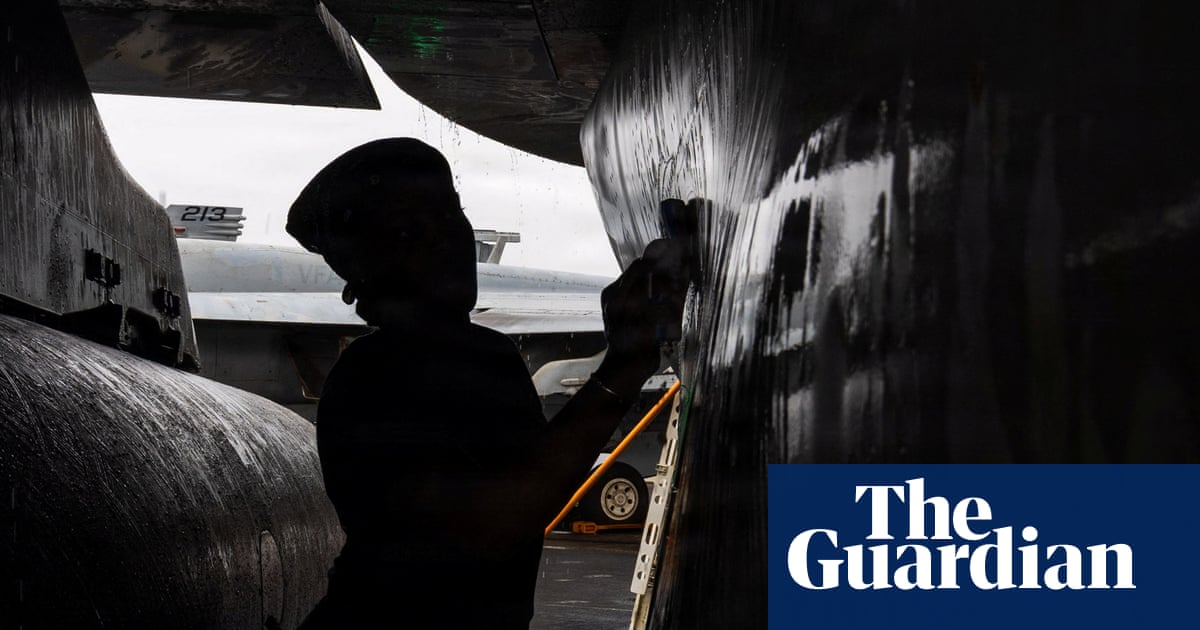
The US defense secretary, Pete Hegseth, insisted a wave of reports describing deteriorating conditions and mental health struggles onboard the aircraft carrier USS Abraham Lincoln “completely misrepresented” the situation, pushing back against growing congressional pressure over the ship’s record-breaking, nearly nine-month deployment.
“We make sure every ship, every crew, every captain has everything we can provide them at every single moment,” Hegseth told reporters during a visit to Panama, adding that “some deployments are longer than others” and praising sailors enduring “high seas” and “austere conditions with less port calls”.
His remarks came a day after Richard Blumenthal, the Democratic senator from Connecticut and a member of the US Senate armed services committee, sent a letter to Hegseth and the acting navy secretary, Hung Cao, demanding a formal accounting of conditions on the carrier. Blumenthal wrote that he had “serious concerns about the increasing length of Carrier Strike Group deployments” and said the Lincoln’s extended deployment raised broader questions about “the Navy’s ability to sustainably generate carrier forces while preserving servicemember well-being”.
In the letter, Blumenthal said sailors had reported “shortages of basic supplies, water contamination, plumbing issues, deteriorating mental health, deck safety concerns” and mail disruptions that left care packages lost in transit for months. He posed six questions to Pentagon leadership, including what metrics the navy uses to track fatigue and morale, and gave officials until 27 August to respond.
“The men and women aboard the Lincoln have answered the call to serve their country,” he wrote, adding: “The Department owes them not only adequate supplies, maintenance, and support during this deployment.”
CNN later reported that a sailor went overboard from the Lincoln last month and was rescued and medically evaluated, citing an unnamed US official. It was not immediately clear how the sailor ended up in the water, or whether they returned to duty.
The reported incident adds to a mounting list of concerns raised by lawmakers and families about the more than 5,000 sailors and marines onboard the carrier.
The Lincoln left its home port of San Diego in November, and was later redirected to the Middle East to support US operations in the war with Iran, now in its sixth month. It has not made a port call in more than 240 days, a modern-day record for consecutive time at sea.
Another US aircraft carrier, the Pacific-based USS George Washington, is currently heading toward the Middle East, according to navy statements and open-source marine data. The Wall Street Journal reported that the carrier is set to replace the Lincoln, citing unnamed US officials.
Jason Crow, a US Democratic representative from Colorado, said: “The strain being put on our sailors and their families is completely unacceptable. It’s not only hurting the health and wellbeing of our servicemembers, it’s affecting military readiness and making us less safe.
“Donald Trump has shown time and time again that he does not care about our servicemembers. The president owes our servicemembers, their families and the American people a plan to end his reckless war with Iran.”
The navy traditionally plans carrier deployments for roughly six to seven months, but that does not mean sailors are normally expected to remain continuously at sea for that long. Carrier deployments are typically broken up by port visits, which the navy describes as opportunities for sailors to take a break from the demands of life at sea, and its 2025 carrier briefing said sailors can work more than 12 hours a day during operations.
after newsletter promotion
A 2024 Naval Postgraduate School study of 873 sailors linked worse mood to shorter, poorer-quality and more fragmented sleep, while a separate navy study from 2024 found 58 submariners averaged 6.6 hours of sleep a day during 30 days under way, with mood declining by the end.
The navy did not immediately return a request for comment. A navy official on Wednesday told the Guardian: “Based on information available to the command, we have not identified an increase in reported suicidal ideation or suicide attempts aboard the ship.”
Stars and Stripes and the Navy Times both reported this week, citing interviews with active-duty sailors and military families, that there had been multiple attempts by crew members to jump from the ship, alongside accounts of exhaustion and declining morale.
The Navy Times spoke with Annabelle Loma, whose husband is serving onboard the Lincoln and was reported to have attempted to go overboard during the deployment. Loma said he feared a dishonorable discharge would end his 13-year career. “That’s not fair, that’s not right,” she said.
Stars and Stripes reported, citing one of the attenders, that a spouse tearfully told officials she had received a message that day from her husband saying he hoped he “doesn’t wake up tomorrow”.
Read the full story at The Guardian ↗
Defense secretary said conditions on aircraft carrier deployed in support of Iran war have been ‘completely misrepresented’. The US defense secretary, Pete Hegseth, insisted a…
This lens runs the verified story through Cinnamon's AI — wired in the next step.
The US defense secretary, Pete Hegseth, insisted a wave of reports describing deteriorating conditions and mental health struggles onboard the aircraft carrier USS Abraham Lincoln “completely misrepresented” the situation, pushing back against growing congressional pressure over the ship’s record-breaking, nearly nine-month deployment.
“We make sure every ship, every crew, every captain has everything we can provide them at every single moment,” Hegseth told reporters during a visit to Panama, adding that “some deployments are longer than others” and praising sailors enduring “high seas” and “austere conditions with less port calls”.
His remarks came a day after Richard Blumenthal, the Democratic senator from Connecticut and a member of the US Senate armed services committee, sent a letter to Hegseth and the acting navy secretary, Hung Cao, demanding a formal accounting of conditions on the carrier. Blumenthal wrote that he had “serious concerns about the increasing length of Carrier Strike Group deployments” and said the Lincoln’s extended deployment raised broader questions about “the Navy’s ability to sustainably generate carrier forces while preserving servicemember well-being”.
In the letter, Blumenthal said sailors had reported “shortages of basic supplies, water contamination, plumbing issues, deteriorating mental health, deck safety concerns” and mail disruptions that left care packages lost in transit for months. He posed six questions to Pentagon leadership, including what metrics the navy uses to track fatigue and morale, and gave officials until 27 August to respond.
“The men and women aboard the Lincoln have answered the call to serve their country,” he wrote, adding: “The Department owes them not only adequate supplies, maintenance, and support during this deployment.”
CNN later reported that a sailor went overboard from the Lincoln last month and was rescued and medically evaluated, citing an unnamed US official. It was not immediately clear how the sailor ended up in the water, or whether they returned to duty.
The reported incident adds to a mounting list of concerns raised by lawmakers and families about the more than 5,000 sailors and marines onboard the carrier.
The Lincoln left its home port of San Diego in November, and was later redirected to the Middle East to support US operations in the war with Iran, now in its sixth month. It has not made a port call in more than 240 days, a modern-day record for consecutive time at sea.
Another US aircraft carrier, the Pacific-based USS George Washington, is currently heading toward the Middle East, according to navy statements and open-source marine data. The Wall Street Journal reported that the carrier is set to replace the Lincoln, citing unnamed US officials.
Jason Crow, a US Democratic representative from Colorado, said: “The strain being put on our sailors and their families is completely unacceptable. It’s not only hurting the health and wellbeing of our servicemembers, it’s affecting military readiness and making us less safe.
“Donald Trump has shown time and time again that he does not care about our servicemembers. The president owes our servicemembers, their families and the American people a plan to end his reckless war with Iran.”
The navy traditionally plans carrier deployments for roughly six to seven months, but that does not mean sailors are normally expected to remain continuously at sea for that long. Carrier deployments are typically broken up by port visits, which the navy describes as opportunities for sailors to take a break from the demands of life at sea, and its 2025 carrier briefing said sailors can work more than 12 hours a day during operations.
after newsletter promotion
A 2024 Naval Postgraduate School study of 873 sailors linked worse mood to shorter, poorer-quality and more fragmented sleep, while a separate navy study from 2024 found 58 submariners averaged 6.6 hours of sleep a day during 30 days under way, with mood declining by the end.
The navy did not immediately return a request for comment. A navy official on Wednesday told the Guardian: “Based on information available to the command, we have not identified an increase in reported suicidal ideation or suicide attempts aboard the ship.”
Stars and Stripes and the Navy Times both reported this week, citing interviews with active-duty sailors and military families, that there had been multiple attempts by crew members to jump from the ship, alongside accounts of exhaustion and declining morale.
The Navy Times spoke with Annabelle Loma, whose husband is serving onboard the Lincoln and was reported to have attempted to go overboard during the deployment. Loma said he feared a dishonorable discharge would end his 13-year career. “That’s not fair, that’s not right,” she said.
Stars and Stripes reported, citing one of the attenders, that a spouse tearfully told officials she had received a message that day from her husband saying he hoped he “doesn’t wake up tomorrow”.
Read the full story at The Guardian ↗
The US defense secretary, Pete Hegseth, insisted a wave of reports describing deteriorating conditions and mental health struggles onboard the aircraft carrier USS Abraham Lincoln “completely misrepresented” the situation, pushing back against growing congressional pressure over the ship’s record-breaking, nearly nine-month deployment.
“We make sure every ship, every crew, every captain has everything we can provide them at every single moment,” Hegseth told reporters during a visit to Panama, adding that “some deployments are longer than others” and praising sailors enduring “high seas” and “austere conditions with less port calls”.
His remarks came a day after Richard Blumenthal, the Democratic senator from Connecticut and a member of the US Senate armed services committee, sent a letter to Hegseth and the acting navy secretary, Hung Cao, demanding a formal accounting of conditions on the carrier. Blumenthal wrote that he had “serious concerns about the increasing length of Carrier Strike Group deployments” and said the Lincoln’s extended deployment raised broader questions about “the Navy’s ability to sustainably generate carrier forces while preserving servicemember well-being”.
In the letter, Blumenthal said sailors had reported “shortages of basic supplies, water contamination, plumbing issues, deteriorating mental health, deck safety concerns” and mail disruptions that left care packages lost in transit for months. He posed six questions to Pentagon leadership, including what metrics the navy uses to track fatigue and morale, and gave officials until 27 August to respond.
“The men and women aboard the Lincoln have answered the call to serve their country,” he wrote, adding: “The Department owes them not only adequate supplies, maintenance, and support during this deployment.”
CNN later reported that a sailor went overboard from the Lincoln last month and was rescued and medically evaluated, citing an unnamed US official. It was not immediately clear how the sailor ended up in the water, or whether they returned to duty.
The reported incident adds to a mounting list of concerns raised by lawmakers and families about the more than 5,000 sailors and marines onboard the carrier.
The Lincoln left its home port of San Diego in November, and was later redirected to the Middle East to support US operations in the war with Iran, now in its sixth month. It has not made a port call in more than 240 days, a modern-day record for consecutive time at sea.
Another US aircraft carrier, the Pacific-based USS George Washington, is currently heading toward the Middle East, according to navy statements and open-source marine data. The Wall Street Journal reported that the carrier is set to replace the Lincoln, citing unnamed US officials.
Jason Crow, a US Democratic representative from Colorado, said: “The strain being put on our sailors and their families is completely unacceptable. It’s not only hurting the health and wellbeing of our servicemembers, it’s affecting military readiness and making us less safe.
“Donald Trump has shown time and time again that he does not care about our servicemembers. The president owes our servicemembers, their families and the American people a plan to end his reckless war with Iran.”
The navy traditionally plans carrier deployments for roughly six to seven months, but that does not mean sailors are normally expected to remain continuously at sea for that long. Carrier deployments are typically broken up by port visits, which the navy describes as opportunities for sailors to take a break from the demands of life at sea, and its 2025 carrier briefing said sailors can work more than 12 hours a day during operations.
after newsletter promotion
A 2024 Naval Postgraduate School study of 873 sailors linked worse mood to shorter, poorer-quality and more fragmented sleep, while a separate navy study from 2024 found 58 submariners averaged 6.6 hours of sleep a day during 30 days under way, with mood declining by the end.
The navy did not immediately return a request for comment. A navy official on Wednesday told the Guardian: “Based on information available to the command, we have not identified an increase in reported suicidal ideation or suicide attempts aboard the ship.”
Stars and Stripes and the Navy Times both reported this week, citing interviews with active-duty sailors and military families, that there had been multiple attempts by crew members to jump from the ship, alongside accounts of exhaustion and declining morale.
The Navy Times spoke with Annabelle Loma, whose husband is serving onboard the Lincoln and was reported to have attempted to go overboard during the deployment. Loma said he feared a dishonorable discharge would end his 13-year career. “That’s not fair, that’s not right,” she said.
Stars and Stripes reported, citing one of the attenders, that a spouse tearfully told officials she had received a message that day from her husband saying he hoped he “doesn’t wake up tomorrow”.
Read the full story at The Guardian ↗
This lens runs the verified story through Cinnamon's AI — wired in the next step.
- Defense secretary said conditions on aircraft carrier deployed in support of Iran war have been ‘completely misrepresented’.
- The US defense secretary, Pete Hegseth, insisted a…