Potential for first Australian oil refinery in 60 years as treasurer braces for inflation from Middle East war
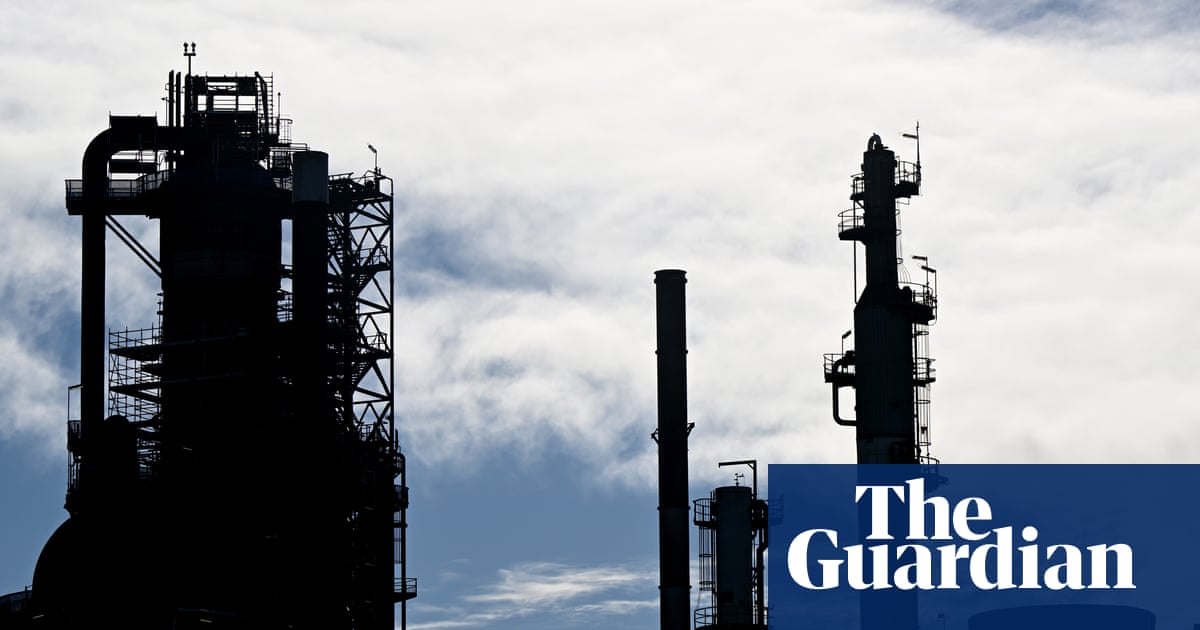
Australia’s first new oil refinery in 60 years could be built in Western Australia under the Albanese government’s long-term strategy to shield the country from future global oil shocks.
The commonwealth and the WA government will fund a $4m early-stage feasibility study into construction of what would be the country’s third large-scale petrol refinery.
A series of refinery closures over the past 25 years means Australia now imports about 90% of its liquid fuels, a vulnerability exposed by the international oil crisis sparked by the US-Israel war on Iran.
The announcement comes as Jim Chalmers, the treasurer, warned the recent escalation of the Middle East conflict posed “a substantial threat to global inflation”.
Treasury officials in a special weekend government briefing warned the collapse of the ceasefire meant oil prices were likely to remain high in the near future.
“The oil market is now more vulnerable, with weaker buffers against future supply shocks,” the officials said.
With petrol and diesel prices up by 25 cents and 50 cents a litre this month, respectively, the rekindling of the conflict has also boosted expectations that central banks will need to do more to bring inflation back under control – piling more pressure on households.
“The longer this drags out the more serious the consequences for inflation and growth here and around the world,” Chalmers said.
Financial markets were pricing a one-in-three chance of a Reserve Bank rate hike on 11 August. That was down from an even chance on Friday after Brent crude, the oil benchmark, tumbled more than US$10 a barrel on Monday to about US$87 after a pause in fighting over the weekend.
Australia’s oil refining industry has struggled to compete with cheaper overseas providers.
There are just two local refineries in operation: Ampol’s Lytton refinery in Brisbane and Viva Energy’s facility in Geelong.
Building a new refinery would cost billions of dollars, and would probably require ongoing government support to stay competitive.
The proposed WA project, were it to go ahead, would be constructed by Perdaman, the large multinational behind a $4.5bn fertiliser plant in the Pilbara. Perdaman would privately fund the project but could be eligible for taxpayer-funded assistance, such as concessional loans.
BP closed an oil refinery in Fremantle, just south of Perth, in 2021.
The prime minister, Anthony Albanese, and WA premier, Roger Cook, will announce funding for the scoping study after visiting Perdaman’s urea plant in Karratha.
“The longer war in the Middle East goes on the greater the impact on Australia will be, and my government will continue to do everything we can to shield Australia from the worst effects – and set us up for the future,” Albanese said in a statement.
The federal government’s $10.7bn fuel security package, announced in May, included $10m to support feasibility studies into potential projects.
The package also funded a $7.5bn facility to secure extra fuel and fertiliser shipments during the Middle East conflict, and $3.2bn to build an extra 1 billion-litre reserve of diesel and jet fuel.
Chris Bowen, the energy minister, described plans to boost domestic refining capacity as “a sensible and prudent response to secure our energy security”.
But the early-stage support for a new oil refinery will probably face push-back from environmentalists, who have criticised the federal government for doubling down on petrol and diesel rather than using the oil shock to reduce Australia’s reliance on fossil fuels.
Read the full story at The Guardian ↗ · The Guardian ↗ · The Guardian ↗
Commonwealth and Western Australia to fund study into construction of large-scale petrol refinery as buffer against fuel vulnerability. Get our breaking news email , free app or…
This lens runs the verified story through Cinnamon's AI — wired in the next step.
Australia’s first new oil refinery in 60 years could be built in Western Australia under the Albanese government’s long-term strategy to shield the country from future global oil shocks.
The commonwealth and the WA government will fund a $4m early-stage feasibility study into construction of what would be the country’s third large-scale petrol refinery.
A series of refinery closures over the past 25 years means Australia now imports about 90% of its liquid fuels, a vulnerability exposed by the international oil crisis sparked by the US-Israel war on Iran.
The announcement comes as Jim Chalmers, the treasurer, warned the recent escalation of the Middle East conflict posed “a substantial threat to global inflation”.
Treasury officials in a special weekend government briefing warned the collapse of the ceasefire meant oil prices were likely to remain high in the near future.
“The oil market is now more vulnerable, with weaker buffers against future supply shocks,” the officials said.
With petrol and diesel prices up by 25 cents and 50 cents a litre this month, respectively, the rekindling of the conflict has also boosted expectations that central banks will need to do more to bring inflation back under control – piling more pressure on households.
“The longer this drags out the more serious the consequences for inflation and growth here and around the world,” Chalmers said.
Financial markets were pricing a one-in-three chance of a Reserve Bank rate hike on 11 August. That was down from an even chance on Friday after Brent crude, the oil benchmark, tumbled more than US$10 a barrel on Monday to about US$87 after a pause in fighting over the weekend.
Australia’s oil refining industry has struggled to compete with cheaper overseas providers.
There are just two local refineries in operation: Ampol’s Lytton refinery in Brisbane and Viva Energy’s facility in Geelong.
Building a new refinery would cost billions of dollars, and would probably require ongoing government support to stay competitive.
The proposed WA project, were it to go ahead, would be constructed by Perdaman, the large multinational behind a $4.5bn fertiliser plant in the Pilbara. Perdaman would privately fund the project but could be eligible for taxpayer-funded assistance, such as concessional loans.
BP closed an oil refinery in Fremantle, just south of Perth, in 2021.
The prime minister, Anthony Albanese, and WA premier, Roger Cook, will announce funding for the scoping study after visiting Perdaman’s urea plant in Karratha.
“The longer war in the Middle East goes on the greater the impact on Australia will be, and my government will continue to do everything we can to shield Australia from the worst effects – and set us up for the future,” Albanese said in a statement.
The federal government’s $10.7bn fuel security package, announced in May, included $10m to support feasibility studies into potential projects.
The package also funded a $7.5bn facility to secure extra fuel and fertiliser shipments during the Middle East conflict, and $3.2bn to build an extra 1 billion-litre reserve of diesel and jet fuel.
Chris Bowen, the energy minister, described plans to boost domestic refining capacity as “a sensible and prudent response to secure our energy security”.
But the early-stage support for a new oil refinery will probably face push-back from environmentalists, who have criticised the federal government for doubling down on petrol and diesel rather than using the oil shock to reduce Australia’s reliance on fossil fuels.
Read the full story at The Guardian ↗ · The Guardian ↗ · The Guardian ↗
Australia’s first new oil refinery in 60 years could be built in Western Australia under the Albanese government’s long-term strategy to shield the country from future global oil shocks.
The commonwealth and the WA government will fund a $4m early-stage feasibility study into construction of what would be the country’s third large-scale petrol refinery.
A series of refinery closures over the past 25 years means Australia now imports about 90% of its liquid fuels, a vulnerability exposed by the international oil crisis sparked by the US-Israel war on Iran.
The announcement comes as Jim Chalmers, the treasurer, warned the recent escalation of the Middle East conflict posed “a substantial threat to global inflation”.
Treasury officials in a special weekend government briefing warned the collapse of the ceasefire meant oil prices were likely to remain high in the near future.
“The oil market is now more vulnerable, with weaker buffers against future supply shocks,” the officials said.
With petrol and diesel prices up by 25 cents and 50 cents a litre this month, respectively, the rekindling of the conflict has also boosted expectations that central banks will need to do more to bring inflation back under control – piling more pressure on households.
“The longer this drags out the more serious the consequences for inflation and growth here and around the world,” Chalmers said.
Financial markets were pricing a one-in-three chance of a Reserve Bank rate hike on 11 August. That was down from an even chance on Friday after Brent crude, the oil benchmark, tumbled more than US$10 a barrel on Monday to about US$87 after a pause in fighting over the weekend.
Australia’s oil refining industry has struggled to compete with cheaper overseas providers.
There are just two local refineries in operation: Ampol’s Lytton refinery in Brisbane and Viva Energy’s facility in Geelong.
Building a new refinery would cost billions of dollars, and would probably require ongoing government support to stay competitive.
The proposed WA project, were it to go ahead, would be constructed by Perdaman, the large multinational behind a $4.5bn fertiliser plant in the Pilbara. Perdaman would privately fund the project but could be eligible for taxpayer-funded assistance, such as concessional loans.
BP closed an oil refinery in Fremantle, just south of Perth, in 2021.
The prime minister, Anthony Albanese, and WA premier, Roger Cook, will announce funding for the scoping study after visiting Perdaman’s urea plant in Karratha.
“The longer war in the Middle East goes on the greater the impact on Australia will be, and my government will continue to do everything we can to shield Australia from the worst effects – and set us up for the future,” Albanese said in a statement.
The federal government’s $10.7bn fuel security package, announced in May, included $10m to support feasibility studies into potential projects.
The package also funded a $7.5bn facility to secure extra fuel and fertiliser shipments during the Middle East conflict, and $3.2bn to build an extra 1 billion-litre reserve of diesel and jet fuel.
Chris Bowen, the energy minister, described plans to boost domestic refining capacity as “a sensible and prudent response to secure our energy security”.
But the early-stage support for a new oil refinery will probably face push-back from environmentalists, who have criticised the federal government for doubling down on petrol and diesel rather than using the oil shock to reduce Australia’s reliance on fossil fuels.
Read the full story at The Guardian ↗ · The Guardian ↗ · The Guardian ↗
This lens runs the verified story through Cinnamon's AI — wired in the next step.
- Commonwealth and Western Australia to fund study into construction of large-scale petrol refinery as buffer against fuel vulnerability.
- Get our breaking news email , free app or…