Power banks and vapes now biggest fire risk on planes
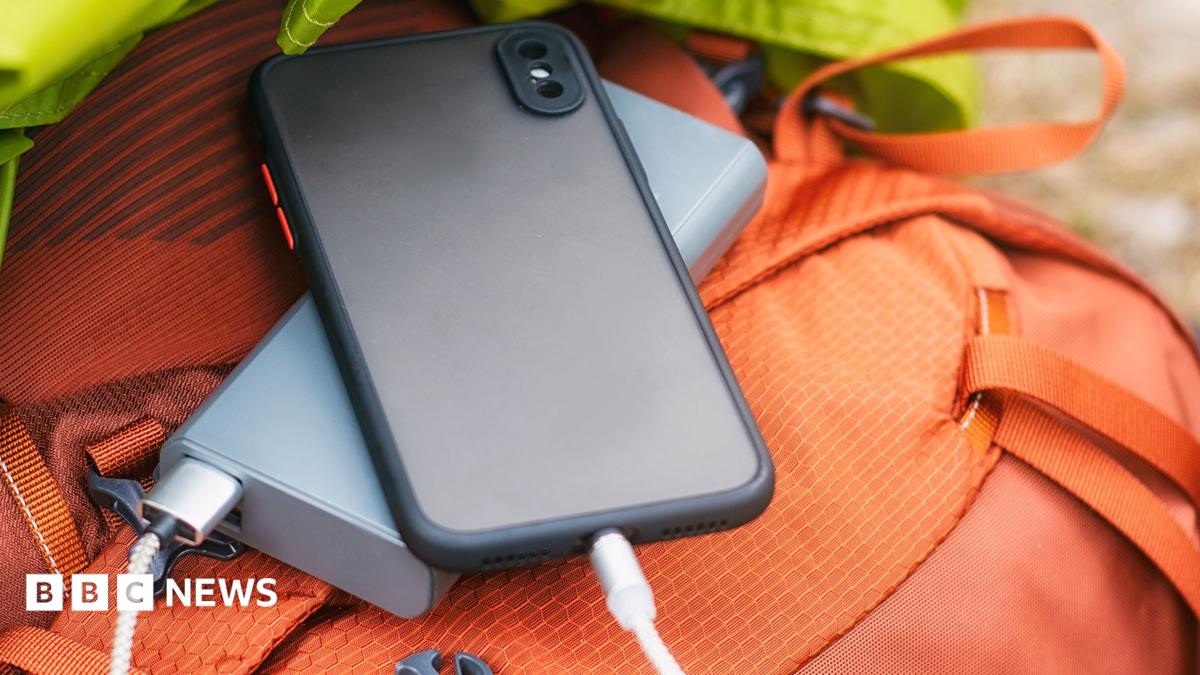
Flight passengers are being warned not to pack power banks or vapes in their hold luggage ahead of the busy summer holiday travel period beginning for parts of the UK.
The fire risk posed by lithium batteries is now the number one safety risk to aircraft, according to the aviation regulator, as the number of devices found in hold bags has nearly doubled in a year.
The Civil Aviation Authority (CAA) says the average person now takes four different lithium powered devices on a flight.
Ahead of the school summer holidays, which begin in Scotland first this week, people are being reminded to take devices in the cabin with them.
The batteries can store huge amounts of energy in a small space, and are now commonly used in lots of electrical items including laptops, vapes, power banks, mobile phones and smart watches.
They're incredibly useful and versatile. But if the batteries overheat or are defective, a fire can result which spreads very quickly and is hard to control.
In 2024, 316 incidents of devices with lithium batteries detected in hold bags were reported to UK authorities. In 2025, that rose to 643.
Reports of devices overheating or malfunctioning also nearly doubled the same year, from 123 to 206.
Most of these issues occurred in the cabin where crew could deal with the situation, but the concern is that if this happens in the hold, the problem may not be discovered until it's too late to control it.
The CAA believes many passengers still aren't aware of the rules.
Passengers are being reminded:
To take items like mobile phones, vapes and power banks on board in the cabin.
Only two power banks per person are allowed on a flight, and they can never be charged onboard.
To turn off laptops completely if they're going to be put in check in bags.
Tim Alderslade, Chief Executive of Airlines UK, says the risk of lithium battery incidents was a "growing challenge" as the number of electronic devices people use increases.
"Whilst pilots and cabin crew are trained to deal with any situation the best outcome is always prevention, which starts when passengers pack their bags," he says.
Giuseppe Capanna, a product safety engineer at the campaigning charity Electrical Safety First, said lithium batteries carry enormous amounts of energy, which is handy for recharging devices.
However, it also means that when things go wrong, they can cause "ferocious" fires which are difficult to put out.
"When these products are packed in your baggage, there is no access to them. So if something goes wrong, they can cause a really devastating fire that can have real dangerous consequences," he said.
While most devices with these batteries are safe, Capanna said it was "substandard versions" bought through third-party sellers that usually caused these problems.
"It is really important that we make sure that we only bring safe, tested products with us on holiday," he added.
Additional reporting from Danielle Codd
Read the full story at BBC ↗
Lithium batteries in portable electronics pose a significant safety consideration for aviation. The Civil Aviation Authority reports that incidents involving these devices in hold luggage have roughly doubled in a year, with 643 reported in 2025 compared to 316 in 2024. Malfunctions and overheating reports also nearly doubled in the same period. Because hold luggage is inaccessible during flight, fires there are difficult to detect and manage. The regulator advises passengers to pack devices like power banks, vapes, and phones in cabin luggage instead. Defective or substandard batteries present the highest risk; most mainstream devices are safe when properly manufactured. Airlines and safety experts emphasise that preventing incidents through passenger awareness is more effective than managing them mid-flight.
Read the full story at BBC ↗
Flight passengers are being warned not to pack power banks or vapes in their hold luggage ahead of the busy summer holiday travel period beginning for parts of the UK.
The fire risk posed by lithium batteries is now the number one safety risk to aircraft, according to the aviation regulator, as the number of devices found in hold bags has nearly doubled in a year.
The Civil Aviation Authority (CAA) says the average person now takes four different lithium powered devices on a flight.
Ahead of the school summer holidays, which begin in Scotland first this week, people are being reminded to take devices in the cabin with them.
The batteries can store huge amounts of energy in a small space, and are now commonly used in lots of electrical items including laptops, vapes, power banks, mobile phones and smart watches.
They're incredibly useful and versatile. But if the batteries overheat or are defective, a fire can result which spreads very quickly and is hard to control.
In 2024, 316 incidents of devices with lithium batteries detected in hold bags were reported to UK authorities. In 2025, that rose to 643.
Reports of devices overheating or malfunctioning also nearly doubled the same year, from 123 to 206.
Most of these issues occurred in the cabin where crew could deal with the situation, but the concern is that if this happens in the hold, the problem may not be discovered until it's too late to control it.
The CAA believes many passengers still aren't aware of the rules.
Passengers are being reminded:
To take items like mobile phones, vapes and power banks on board in the cabin.
Only two power banks per person are allowed on a flight, and they can never be charged onboard.
To turn off laptops completely if they're going to be put in check in bags.
Tim Alderslade, Chief Executive of Airlines UK, says the risk of lithium battery incidents was a "growing challenge" as the number of electronic devices people use increases.
"Whilst pilots and cabin crew are trained to deal with any situation the best outcome is always prevention, which starts when passengers pack their bags," he says.
Giuseppe Capanna, a product safety engineer at the campaigning charity Electrical Safety First, said lithium batteries carry enormous amounts of energy, which is handy for recharging devices.
However, it also means that when things go wrong, they can cause "ferocious" fires which are difficult to put out.
"When these products are packed in your baggage, there is no access to them. So if something goes wrong, they can cause a really devastating fire that can have real dangerous consequences," he said.
While most devices with these batteries are safe, Capanna said it was "substandard versions" bought through third-party sellers that usually caused these problems.
"It is really important that we make sure that we only bring safe, tested products with us on holiday," he added.
Additional reporting from Danielle Codd
Read the full story at BBC ↗
In 2024, 316 incidents of devices with lithium batteries were detected in hold bags; in 2025, that rose to 643 Reports of devices overheating or malfunctioning nearly doubled from 123 to 206 in the same period The Civil Aviation Authority states lithium battery fires are now the number one safety risk to aircraft The average passenger now takes four different lithium-powered devices on a flight Passengers are required to carry power banks, vapes, and mobile phones in cabin luggage, not hold baggage Only two power banks per person are permitted, and they cannot be charged onboard Most lithium battery incidents occur in the cabin where crew can respond, but the concern is that hold incidents may be discovered too late Substandard versions bought through third-party sellers usually cause lithium battery problems Prevention through passenger awareness is more effective than managing incidents during flight
Read the full story at BBC ↗
- Lithium battery incidents in aircraft hold luggage have doubled year-on-year: 316 incidents in 2024 rose to 643 in 2025
- Power banks, vapes, and other lithium-battery devices are now the aviation regulator's top safety concern for aircraft
- Passengers are advised to carry lithium devices in cabin luggage only; hold baggage fires are harder to detect and control
- The average passenger now carries four lithium-powered devices; most people remain unaware of packing rules