Red squirrel sickness reports under investigation
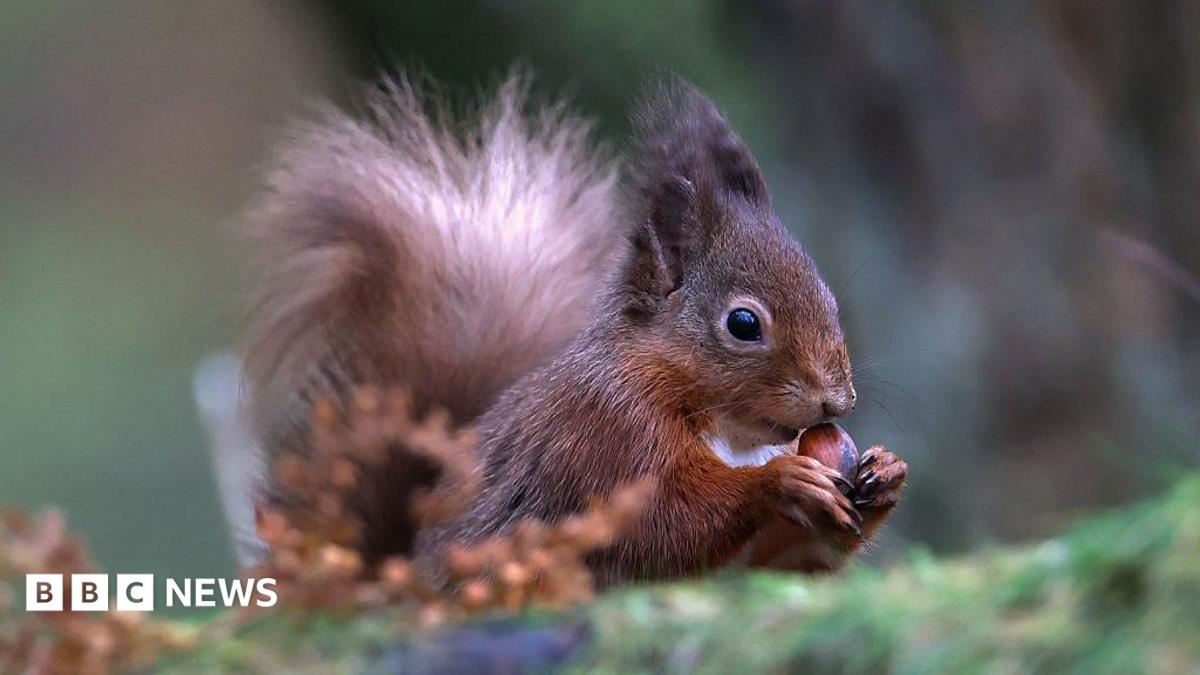
Image source, Getty Images
The Tweeddale group said it had enjoyed a number of successes across its area in helping to protect red squirrels
Tests are being carried out to try to establish the cause of sickness in a number of red squirrels that have been spotted in the Scottish Borders.
So far six reports have been made in the Venlaw area outside Peebles, as well as one in nearby Drumzelier.
One dead squirrel has been recovered and it is being tested in Edinburgh to establish if it was a case of squirrelpox - a disease carried by greys but deadly to reds.
Allan Johnstone, from the Tweeddale Red Squirrel Network, said it was a "terrible disease" which had similar effects on squirrels to myxomatosis in rabbits.
"Squirrelpox is carried by the invasive grey squirrels that were brought into this country at the end of the 1800s," he said.
"Unfortunately, they have spread far and wide throughout the UK and they are singularly the biggest threat to our red squirrel population.
"We are trying very hard to reduce the number of grey squirrels in the Tweeddale area and we have had some amazing successes in the Innerleithen, Traquair and Cardrona areas.
"Nowadays you are more likely to see a red squirrel than you are a grey squirrel."
What stories would you like BBC News to cover from the south of Scotland?
Johnstone said it was important to find out if the latest incidents were a result of squirrelpox.
"It is a particularly horrible disease and usually they [squirrels] last about 10 days before they die," he said.
However, he said there were a number of other diseases that could be responsible so it was important to carry out tests.
The concerns in the Borders follow similar reports in Dollar in Clackmannanshire last week.
Image source, Central Borders Red Squirrel Network
Sick red squirrels have been spotted in the Selkirk area
There are 16 individual groups in the south of Scotland - stretching from Berwick-Upon-Tweed to Stranraer - that attempt to control grey squirrel numbers while promoting the native reds.
However, they face a constant challenge with migrating greys from the central belt and northern England.
As well as the suspected outbreak around Peebles, sick-looking red squirrels have been spotted near Selkirk.
Bill Ferguson, from the Central Borders Red Squirrel Network, said: "Because very little is being done around Edinburgh and Glasgow we have invasive greys coming down from the central belt, putting the red squirrel population in the south of Scotland under threat.
"We would ask everyone to do their bit by taking down bird feeders or anything else in their gardens where grey and red squirrels could congregate.
"There doesn't have to be any interaction between them but if a grey has been on someone's feeder and 10 minutes later a red comes along, they can pick up the virus."
Read the full story at BBC ↗
Authorities in the Scottish Borders are investigating reports of sickness among red squirrels. Seven cases have been documented in and around Peebles and Selkirk, with one dead squirrel sent for testing in Edinburgh to determine the cause. Squirrelpox, transmitted by invasive grey squirrels, is a possible culprit; infected squirrels typically die within 10 days. However, other diseases may be responsible. Comparable reports emerged in nearby Clackmannanshire. Regional conservation networks manage grey squirrel populations to protect native reds, though greys continue to migrate from central Scotland and northern England into the south.
Read the full story at BBC ↗
Image source, Getty Images
The Tweeddale group said it had enjoyed a number of successes across its area in helping to protect red squirrels
Tests are being carried out to try to establish the cause of sickness in a number of red squirrels that have been spotted in the Scottish Borders.
So far six reports have been made in the Venlaw area outside Peebles, as well as one in nearby Drumzelier.
One dead squirrel has been recovered and it is being tested in Edinburgh to establish if it was a case of squirrelpox - a disease carried by greys but deadly to reds.
Allan Johnstone, from the Tweeddale Red Squirrel Network, said it was a "terrible disease" which had similar effects on squirrels to myxomatosis in rabbits.
"Squirrelpox is carried by the invasive grey squirrels that were brought into this country at the end of the 1800s," he said.
"Unfortunately, they have spread far and wide throughout the UK and they are singularly the biggest threat to our red squirrel population.
"We are trying very hard to reduce the number of grey squirrels in the Tweeddale area and we have had some amazing successes in the Innerleithen, Traquair and Cardrona areas.
"Nowadays you are more likely to see a red squirrel than you are a grey squirrel."
What stories would you like BBC News to cover from the south of Scotland?
Johnstone said it was important to find out if the latest incidents were a result of squirrelpox.
"It is a particularly horrible disease and usually they [squirrels] last about 10 days before they die," he said.
However, he said there were a number of other diseases that could be responsible so it was important to carry out tests.
The concerns in the Borders follow similar reports in Dollar in Clackmannanshire last week.
Image source, Central Borders Red Squirrel Network
Sick red squirrels have been spotted in the Selkirk area
There are 16 individual groups in the south of Scotland - stretching from Berwick-Upon-Tweed to Stranraer - that attempt to control grey squirrel numbers while promoting the native reds.
However, they face a constant challenge with migrating greys from the central belt and northern England.
As well as the suspected outbreak around Peebles, sick-looking red squirrels have been spotted near Selkirk.
Bill Ferguson, from the Central Borders Red Squirrel Network, said: "Because very little is being done around Edinburgh and Glasgow we have invasive greys coming down from the central belt, putting the red squirrel population in the south of Scotland under threat.
"We would ask everyone to do their bit by taking down bird feeders or anything else in their gardens where grey and red squirrels could congregate.
"There doesn't have to be any interaction between them but if a grey has been on someone's feeder and 10 minutes later a red comes along, they can pick up the virus."
Read the full story at BBC ↗
Six red squirrel sickness reports have been made in the Venlaw area outside Peebles, and one in nearby Drumzelier. One dead squirrel has been recovered and is being tested in Edinburgh to establish if it was squirrelpox. Squirrelpox is carried by invasive grey squirrels and is deadly to red squirrels. Infected squirrels typically die within about 10 days. Grey squirrels were introduced to Britain at the end of the 1800s and have spread throughout the UK. Grey squirrels are the single biggest threat to the red squirrel population. Similar sickness reports were made in Dollar, Clackmannanshire the previous week. Sixteen conservation groups across south Scotland attempt to control grey squirrel numbers while promoting native reds. Squirrels can transmit squirrelpox through contact with bird feeders and other garden congregating points.
Read the full story at BBC ↗
- Red squirrels in the Scottish Borders are showing signs of illness; six cases reported near Peebles and one near Drumzelier, with a seventh case reported near Selkirk.
- One dead squirrel is being tested to determine if squirrelpox—a disease carried by invasive grey squirrels and fatal to reds—is responsible.
- Similar incidents were reported in Dollar, Clackmannanshire the previous week; local conservation groups are investigating while managing grey squirrel populations across the region.