Riot police deployed to Poland’s constitutional court after judge suspended
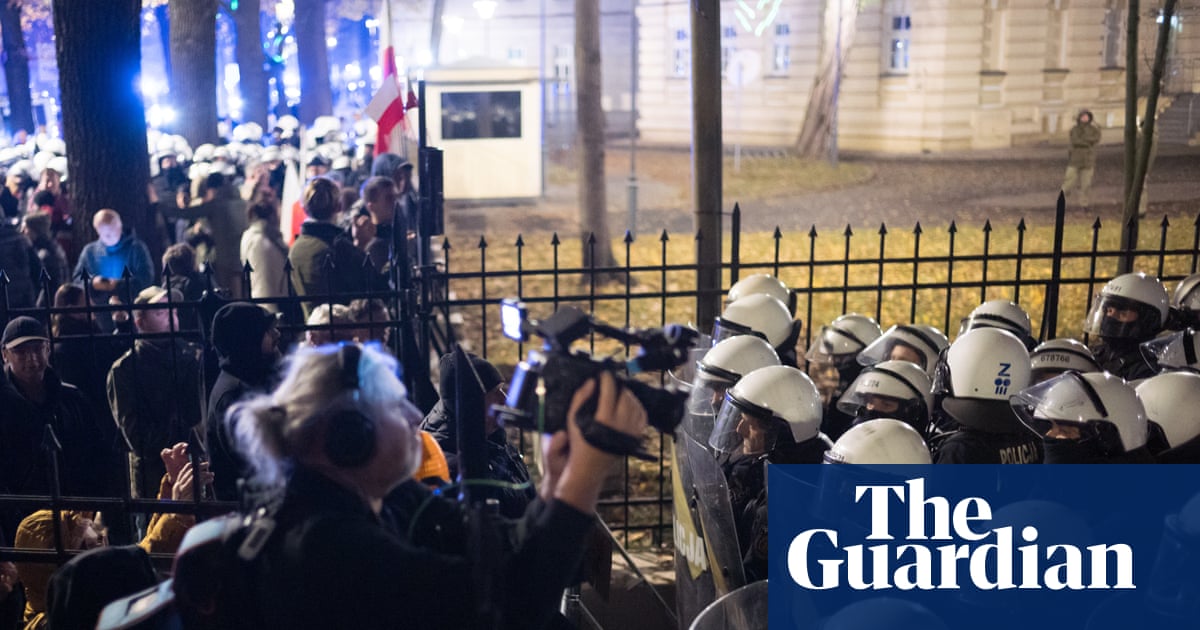 ✓
Riot police were locked in a tense standoff with protesters outside Poland’s constitutional court on Friday night after its top judge was suspended in the latest escalation in a decade-long dispute over the court’s legal status.
The clashes followed a controversial decision by a group of government-appointed judges to suspend the court’s contested president, Bogdan Święczkowski, and his deputy, Bartłomiej Sochański, amid disagreements over the bench’s legitimacy.
The move prompted a furious reaction from the rightwing opposition Law and Justice (PiS) party, with its leader, Jarosław Kaczyński, condemning what he claimed was an “assault” on the court.
The court frequently ruled in favour of Polish legislation over EU law and the European Union accused Poland’s highest court of being too close to the nationalist political power of the time.
The PiS-backed conservative president, Karol Nawrocki, a close ally of Donald Trump, turned his plane around en route to a state visit in Senegal to return to Warsaw and intervene at the court on Friday night.
Hundreds of protesters – including opposition MPs – gathered outside the building to show their support for the suspended judges. Three people were reportedly arrested for trying to force entry through a heavy police presence.
Shortly before 1am on Saturday, Nawrocki appeared outside the court and made his way through the police cordon, with one video showing the president tussling with security and other judges to force his entry into the building. As of 4am local time, the president remained inside the building.
In a clip posted online, Nawrocki was heard saying the government appointees “were not judges of the constitutional court”.
In a statement read out on his behalf outside the court at 5am, Nawrocki criticised “a violation of Poland’s constitutional order”, saying “a constitutional body was seized by force”. He called for security forces to leave the premises.
The latest clash is likely to further polarise the country, setting the scene for a dramatic showdown in next year’s parliamentary election, with polls showing the populist-right with a chance to return to power.
The court has been at the centre of a dispute dating back to 2015, when the outgoing centrist and the incoming rightwing governments moved in quick succession with legally questionable moves to stack the bench with their appointees.
The dispute over the appointments paralysed the court, followed by further attempts to cripple it during the PiS’s eight years of illiberal rule marred by clashes with the EU over the rule of law.
Since returning to power in 2023, Poland’s prime minister, Donald Tusk, has repeatedly pledged to reverse controversial reforms as he sought to mend relations with Brussels, while refusing to recognise the court’s legitimacy in the current form.
However, his efforts have been thwarted by opposition-aligned presidents who used their veto powers and expansive interpretations of their powers to block reforms.
In the latest twist this year, Nawrocki, who unexpectedly won last year’s presidential election against Tusk’s candidate, refused to swear in five judges elected by the current parliament, further complicating the legal situation.
Earlier this month, the Council of Europe’s advisory body on the rule of law, the Venice Commission, said the president’s refusal should not prevent judges from taking up their posts.
On Friday night, a group of judges elected by the current majority moved to suspend Święczkowski, a former minister under PiS, and seize procedural control of the court. Anna Korwin-Piotrowska – who is one of the five judges not accepted by Nawrocki – said she had assumed the top position, citing the longest experience in the judiciary.
Experts are deeply divided in their opinion on the legality of the judge’s suspension. Marcin Matczak, a prominent law expert and outspoken critic of PiS, said he “did not think he would ever end up defending” Święczkowski, but believed the legal basis for his suspension was “non-existent”.
Separately, justice minister Waldemar Żurek said he had asked for Święczkowski and deputy chief Sochański to be stripped of their legal immunity to face prosecution for obstructing the court’s work.
Despite criticism, Tusk insisted that “restoring the rule of law is our duty.”
“After years of PiS’s lawlessness, this is a difficult process, sometimes painful, and it requires decisive action. There is no other way,” he argued.
Earlier this month, he pledged “the court will begin its work in accordance with the constitution, whether people like it or not.”
Poland’s foreign minister Radosław Sikorski told reporters on the margins of a G20 meeting in Atlanta that “the constitutional tribunal was politicised under the previous government.”
“What is happening has the purpose of allowing the majority of duly elected judges to make the tribunal function again,” he said.
Opposition leaders and the court’s social media account accused the government of carrying out a judicial “a coup d’état”. Several European far-right figures, including Britain’s Nigel Farage, Liz Truss and the Netherlands’ Geert Wilders, also condemned the move.
US ambassador to Poland Tom Rose said in a post on X: “The events unfolding tonight … are very serious.”
“Both sides offer sharply different accounts of what happened and why,” he said. “Whatever the facts ultimately establish, thousands gathering outside the tribunal make an already dangerous situation more combustible. The last thing Poland needs is a confrontation that spirals into something far worse.”
Read the full story at The Guardian ↗ · Al Jazeera ↗ · Al Jazeera ↗ · BBC ↗
President Karol Nawrocki seen struggling to gain entry to court building in Warsaw amid long-running row over the court’s legitimacy. Riot police were locked in a tense standoff…
This lens runs the verified story through Cinnamon's AI — wired in the next step.
Riot police were locked in a tense standoff with protesters outside Poland’s constitutional court on Friday night after its top judge was suspended in the latest escalation in a decade-long dispute over the court’s legal status.
The clashes followed a controversial decision by a group of government-appointed judges to suspend the court’s contested president, Bogdan Święczkowski, and his deputy, Bartłomiej Sochański, amid disagreements over the bench’s legitimacy.
The move prompted a furious reaction from the rightwing opposition Law and Justice (PiS) party, with its leader, Jarosław Kaczyński, condemning what he claimed was an “assault” on the court.
The court frequently ruled in favour of Polish legislation over EU law and the European Union accused Poland’s highest court of being too close to the nationalist political power of the time.
The PiS-backed conservative president, Karol Nawrocki, a close ally of Donald Trump, turned his plane around en route to a state visit in Senegal to return to Warsaw and intervene at the court on Friday night.
Hundreds of protesters – including opposition MPs – gathered outside the building to show their support for the suspended judges. Three people were reportedly arrested for trying to force entry through a heavy police presence.
Shortly before 1am on Saturday, Nawrocki appeared outside the court and made his way through the police cordon, with one video showing the president tussling with security and other judges to force his entry into the building. As of 4am local time, the president remained inside the building.
In a clip posted online, Nawrocki was heard saying the government appointees “were not judges of the constitutional court”.
In a statement read out on his behalf outside the court at 5am, Nawrocki criticised “a violation of Poland’s constitutional order”, saying “a constitutional body was seized by force”. He called for security forces to leave the premises.
The latest clash is likely to further polarise the country, setting the scene for a dramatic showdown in next year’s parliamentary election, with polls showing the populist-right with a chance to return to power.
The court has been at the centre of a dispute dating back to 2015, when the outgoing centrist and the incoming rightwing governments moved in quick succession with legally questionable moves to stack the bench with their appointees.
The dispute over the appointments paralysed the court, followed by further attempts to cripple it during the PiS’s eight years of illiberal rule marred by clashes with the EU over the rule of law.
Since returning to power in 2023, Poland’s prime minister, Donald Tusk, has repeatedly pledged to reverse controversial reforms as he sought to mend relations with Brussels, while refusing to recognise the court’s legitimacy in the current form.
However, his efforts have been thwarted by opposition-aligned presidents who used their veto powers and expansive interpretations of their powers to block reforms.
In the latest twist this year, Nawrocki, who unexpectedly won last year’s presidential election against Tusk’s candidate, refused to swear in five judges elected by the current parliament, further complicating the legal situation.
Earlier this month, the Council of Europe’s advisory body on the rule of law, the Venice Commission, said the president’s refusal should not prevent judges from taking up their posts.
On Friday night, a group of judges elected by the current majority moved to suspend Święczkowski, a former minister under PiS, and seize procedural control of the court. Anna Korwin-Piotrowska – who is one of the five judges not accepted by Nawrocki – said she had assumed the top position, citing the longest experience in the judiciary.
Experts are deeply divided in their opinion on the legality of the judge’s suspension. Marcin Matczak, a prominent law expert and outspoken critic of PiS, said he “did not think he would ever end up defending” Święczkowski, but believed the legal basis for his suspension was “non-existent”.
Separately, justice minister Waldemar Żurek said he had asked for Święczkowski and deputy chief Sochański to be stripped of their legal immunity to face prosecution for obstructing the court’s work.
Despite criticism, Tusk insisted that “restoring the rule of law is our duty.”
“After years of PiS’s lawlessness, this is a difficult process, sometimes painful, and it requires decisive action. There is no other way,” he argued.
Earlier this month, he pledged “the court will begin its work in accordance with the constitution, whether people like it or not.”
Poland’s foreign minister Radosław Sikorski told reporters on the margins of a G20 meeting in Atlanta that “the constitutional tribunal was politicised under the previous government.”
“What is happening has the purpose of allowing the majority of duly elected judges to make the tribunal function again,” he said.
Opposition leaders and the court’s social media account accused the government of carrying out a judicial “a coup d’état”. Several European far-right figures, including Britain’s Nigel Farage, Liz Truss and the Netherlands’ Geert Wilders, also condemned the move.
US ambassador to Poland Tom Rose said in a post on X: “The events unfolding tonight … are very serious.”
“Both sides offer sharply different accounts of what happened and why,” he said. “Whatever the facts ultimately establish, thousands gathering outside the tribunal make an already dangerous situation more combustible. The last thing Poland needs is a confrontation that spirals into something far worse.”
Read the full story at The Guardian ↗ · Al Jazeera ↗ · Al Jazeera ↗ · BBC ↗
This lens runs the verified story through Cinnamon's AI — wired in the next step.
- President Karol Nawrocki seen struggling to gain entry to court building in Warsaw amid long-running row over the court’s legitimacy.
- Riot police were locked in a tense standoff…